With the cold winter we have experienced this year, one of the first questions our growers are asking is what will the effect of the cold temperatures be on insect populations this spring.
 Unfortunately, as with many insect questions there is no easy answer. In some cases the colder temperatures will likely reduce populations of certain pests. Insects in the soil or under snow cover will have protection from extreme temperatures which will influence survival. Many insects migrate in over the spring from the south, so they were not here to experience our winter weather. Survival conditions for migratory insects are more dependent on their local over wintering conditions. It is difficult to generalize about the impact of cold temperatures on the crop pests we battle. There are influences of fall tillage, soil characteristics, snow cover and soil temperature that play a role.
The bottom line is that our cold winter weather will not relieve you of your scouting duties. Get out in the field on a regular basis and see what is going on, talk to others to find out what they are seeing, and check back with the Plant and Pest Advisory for updates through the season.
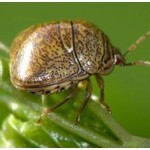 As you may have heard the kudzu bug is knocking on New Jersey’s door. In July of 2013 the kudzu bug was found in Sussex County Delaware, just a relatively small trip across the Delaware Bay from New Jersey. This rather new pest is something our soybean industry needs to keep a watchful eye on. You may have read in different farming publications about the presence of bean platasipid (Megacopta cribraria) or more commonly the kudzu bug in the southeastern US. It is referred to as the kudzu bug because it has a tendency to feed on kudzu. Feeding on kudzu has not been viewed as a bad thing in the south. However, in the southeastern US kudzu bug has become a concern because it is also a pest of soybeans.
 NJAES has a new program dedicated to risk management for