Plasticulture Strawberries – Ultra Niche Crop Series

ultra-niche-strawberry

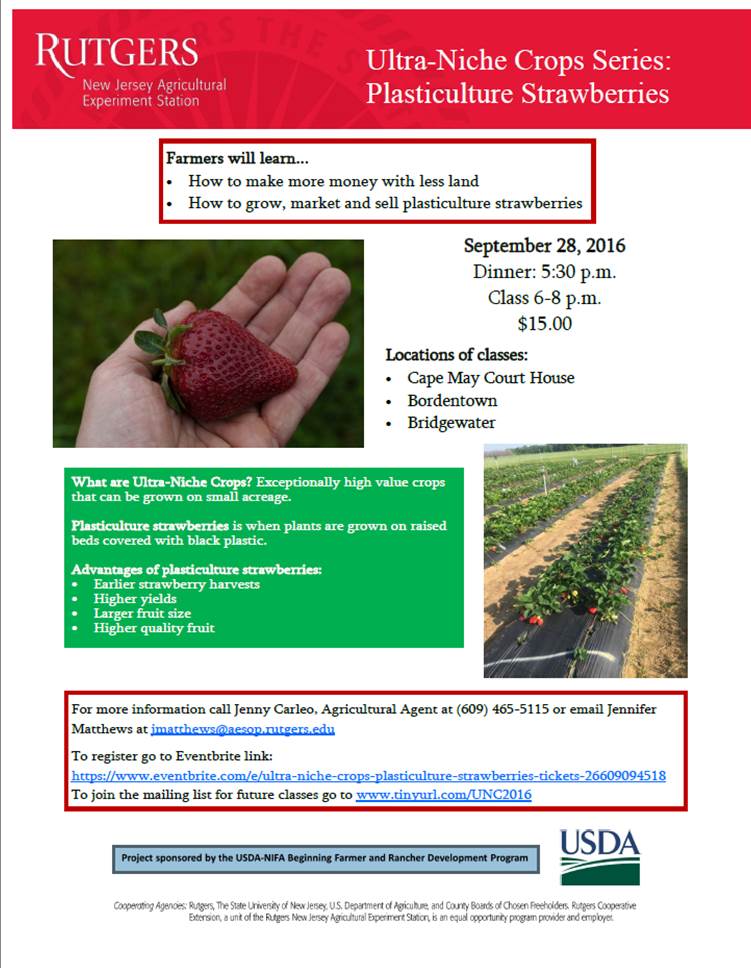
Learn how to grow, market and sell plasticulture strawberries.  Production basics, food safety considerations, post harvest handling specifics, budgeting and buyer preferences.

September 28, 2016  5:30 – 8:00 p.m. at three locations:
– RCE of Somerset County, Bridgewater
– RCE of Cape May County, Cape May Court House
– Rutgers EcoComplex, Columbus

For more information call Jenny Carleo, Agricultural Agent at (609) 465-5115 or email Jennifer
Matthews at jmatthews@aesop.rutgers.edu
To register go to Eventbrite link:
https://www.eventbrite.com/e/ultra-niche-crops-plasticulture-strawberries-tickets-26609094518
To join the mailing list for future classes go to The Ultra-Niche Crop Project
FSMA Produce Grower Certification Training Dates

Six training dates for the FSMA Produce Rule Grower Training Course have been set at locations throughout the state.

Training Dates and Locations
December 14 and 15 – Rutgers Cooperative Extension of Cumberland County, 291 Morton Ave., Millville, NJ 08332
February 9 – New Jersey Agricultural Convention, Harrah’s Resort Hotel, Atlantic City, NJ
February 22 and 23 – Rutgers Cooperative Extension of Mercer County, 930 Spruce St., Trenton, NJ 08648
March 1 and 2 – Rutgers Cooperative Extension of Cumberland County, 291 Morton Ave., Millville, NJ 08332
March 8 and 9 – Marucci Center for Blueberry & Cranberry Research and Extension Center, 125A Lake Oswego Rd., Chatsworth, NJ 08019
March 22-23 – (Tentative) Rutgers Cooperative Extension of Hunterdon County, 314 State Route 12, Bldg. 2  Flemington, NJ 08822

Who Should Attend
Fruit and vegetable growers and others interested in learning about produce safety, Good Agricultural Practices (GAPs), co-management, and the Food Safety Modernization Act (FSMA) Produce [Read more…]

DIY Hand Washing Stations

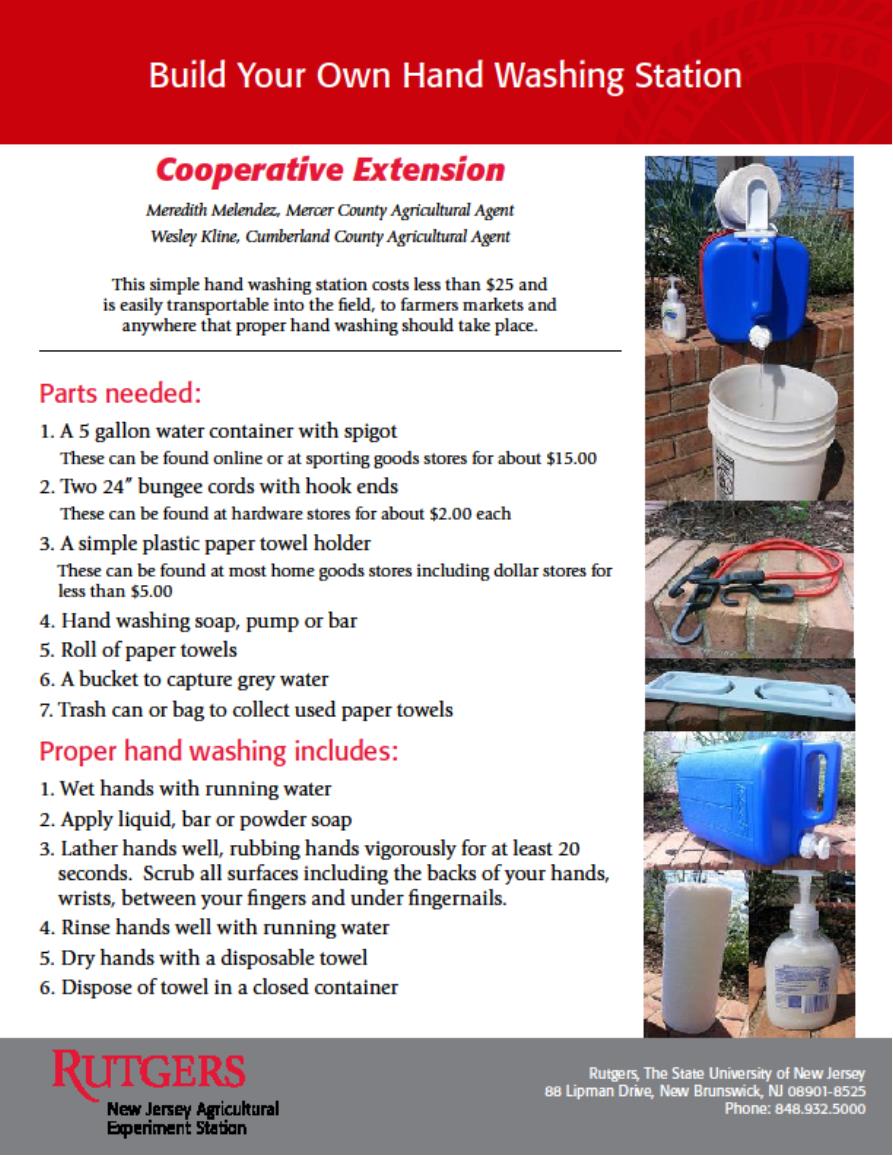
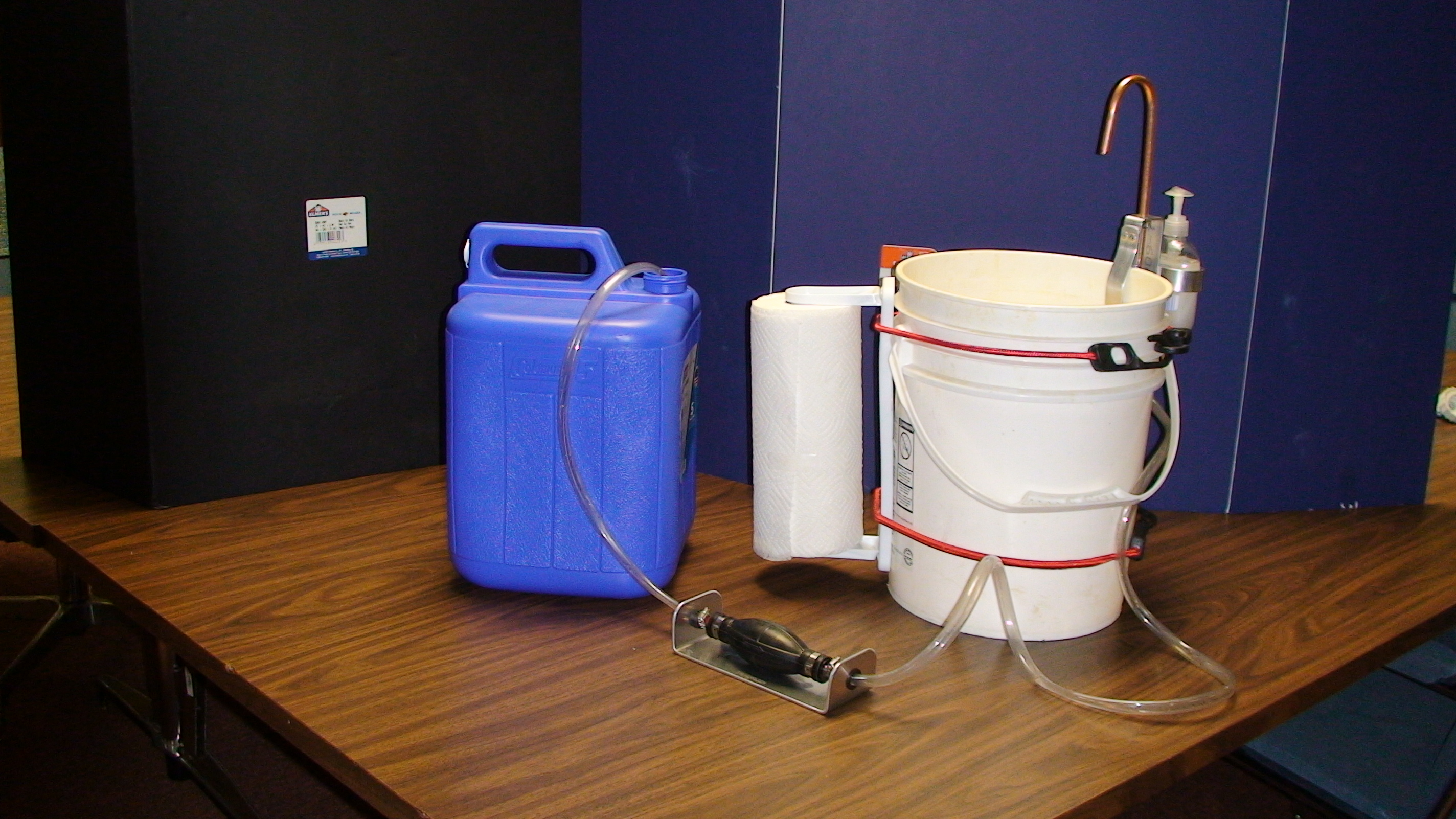
You have heard us say it many times, hand washing is one of the most important ways of reducing the risk of human pathogen contamination of produce.  Hand washing stations should be easy to use, and they do not need to be expensive to be effective.  Portability is important for field work that may take place away from fixed hand washing locations.  A build your own model can cost less than $25.  You need potable water, soap, single use paper towels, a trash receptacle and a method of catching the grey water.  There are lots of options out there, you just need to be a little creative to figure out what will work best for your operation.  The Rutgers info sheet below shows the materials needed to build one portable model.  Other options, such as the pictured hands free clip on station, are available online.

DIY Hand Washing Station

Clip on spigot

Recordkeeping in 2016 Important for FSMA Exemption and Compliance in 2018

The FDA expects fresh produce growers to prove their exemption or need for compliance with the FSMA Produce Rule starting January 2018.  The catch is that they will expect to see records from the previous three years.  Keep this in mind so that if you are asked to show your records in 2018 in relation to the FSMA Produce Rule you will be prepared with records starting in 2016.  The FDA has not yet specified the exact documents that they are looking for.  You should be prepared to show evidence of the total amount of human and animal food sold by the farm.

Organic Options:
Cabbage Maggot & Pest Control Efficacy

A round table meeting of the Organic Farm Advisory group took place this week with discussion on the successes and problems of last season. The need for relative efficacy continues and brings up the chance to revisit a timely article that was the result of last year’s discussion.

What are my organic treatment options and how well do they work? As an organic grower, I sometimes accept less control, and more costly treatment than conventional farmers, but the information on efficacy is unclear. If Rutgers isn’t doing efficacy trials, can you sift through the literature to tell me what others have found that definitely works?

Control of cabbage root maggot (CRM) is a timely example that illustrates the ‘struggle for relative efficacy’ in making organic recommendations when compared with conventional options. Forsythia in bloom–any day now–occurs at about the same time that farmers can expect CRM to damage their transplanted cole crops. Even light CRM infestations can kill small seedlings and transplants, delay crop development, and render root crops unsaleable. Higher populations can kill older plants or reduce yield.

This article discusses:

  • monitoring and control of CRM in cole crops.
  • the use of online weather station degree-day (DD) data to predict CRM activity and timing of treatment – instead of relying on phenology.
  • how the lack of field research capacity makes recommendations difficult for organic pest controls in comparison with conventional controls.
  • why talent scouting (sifting through the literature) is an adjunct to research capacity, not a replacement.

[Read more…]

On-Farm Food Safety Trainings – UPDATED!

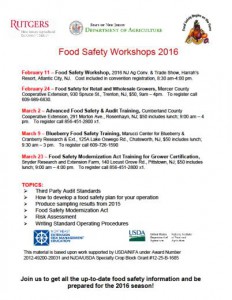
Winter on-farm food safety trainings are currently being offered throughout the state.   Third party audit, Good Agricultural Practices, and opportunities for writing a farm food safety plan are offered this winter.  Registration is required!2016 training schedule

We are no longer offering the certificate based training for the Food Safety Modernization Act Produce Rule, and are waiting on the FDA to release their approved training materials. The FSMA trainings will most likely be held starting in the fall of 2016.  All scheduled on-farm food safety trainings will include an overview of the FSMA so that you can better understand the regulations and its implications for your produce operation.