Sourcing Local NJ Farm Products and Concerns of Food Insecurity

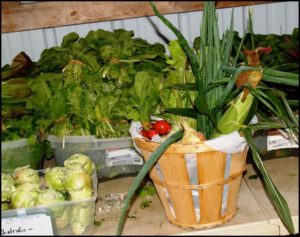
By Michelle Infante-Casella and Stephen Komar, Agricultural Agents-Rutgers Cooperative ExtensionVegetable basket
Where does food come from? Does the U.S. produce enough food to feed all Americans? Let’s stop right there for a minute and go back almost 5 decades.

In the 1970’s gasoline and other energy prices soared causing an American economic crisis. Our country was reliant on foreign oil sources. The US economy struggled, unemployment rates soared, and uncertainties prevailed. Yes, fuel is necessary for transporting people, moving products, for industrial processes and heating homes. However, Americans adapted and made changes to their habits to adjust to the shock of high-energy prices. These changes presented many challenges, but we persevered and over-time the U.S. tapped into domestic resources and the energy industry developed technologies to make us less dependent on foreign energy.

Let’s move ahead to today. This time it is not energy supply at risk, it is literally human lives that are being impacted by a worldwide pandemic. Once again uncertainties – this time food supply and safety are at the top of the list and causing anxiety for many households. Again, the consumer has adapted their preferences and habits in response to this new challenge. Today, consumers still desire fresh, healthy food, but are adapting their shopping habits to include, social distancing, shopping online and other methods to meet their dietary needs.

Going back to our original question, ‘Where does food come from?” To those in the agricultural industry the answer is obvious, but where our food comes from is often not considered by many Americans. The New Jersey Farm Bureau coined the slogan, “No Farmers, No Food”. But how can our farmers meet the changing demands of the consumer in response to the Coronavirus pandemic? Just like the American consumer, New Jersey farmers are changing the way they provide delicious, locally produced food, directly to the consumer.

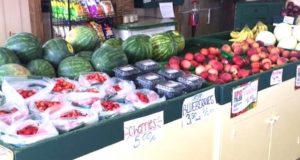
Let’s face it – everyone enjoys visiting a local farm or farmers market. Not only can customers purchase some of the freshest fruits, vegetables and other products directly from the farmers who produced them, they can enjoy spending some time in the beautiful outdoors. Although most people are familiar with the traditional roadside farm stand, there are several unique products being sold by New Jersey’s innovative farmers. Everything from farm-fresh cheeses to locally raised meats like beef and pork, locally produced beverages, salsa and jellies, to farm-fresh poultry products are being produced right in your backyard. Many local farmers have incorporated Center for Disease Control guidelines including enhanced food safety, social distancing and other precautions to help ensure consumer safety. Some farmers are now offering a variety of ordering and payment options and even providing prepackaged delivery to your vehicle curb-side or to your home.

A CSA or community-supported agriculture is a great way to share in the experience of a local farmer. Much like the stock market, CSA members pay a fee in exchange for a “share” of a farmer’s crop. In exchange for their investment in the farming operation, members receive a percentage of the annual harvest while gaining the satisfaction of knowing where their food was produced and watching it come to fruition throughout the growing season. CSA members are rewarded with delicious yields and excellent returns on their investment in the form of farm-fresh products. Some innovative producers are providing virtual tours of their farms to give consumers the on-farm experience from the comfort of their homes. To learn more about CSAs check out the Rutgers Cooperative Extension fact sheet, Community Supported Agriculture: A Farmer’s Overview.

To help get the word out about New Jersey agricultural products some resources are available. The public can use the Find Jersey Fresh webpage or the NJ Farm Bureau webpage Local Farms – Local Food to find nearby farms with retail markets. Additionally, using your own social media pages and other outlets can attract customers. Farming is an essential industry and everyone depends on farmers to provide food. NO FARMERS NO FOOD.


New Jersey Reopens State Parks and Golf Courses

Governor Murphy’s Executive Order No. 133, will be reopening state parks and golf courses, and restoring the authority of county governments to determine whether county parks will be open or closed. The order takes effect at sunrise on Saturday, May 2.

State Parks and Forests:

The order allows State parks and forests to open to the public for passive recreation, including fishing, hunting, boating, canoeing, hiking, walking, running or jogging, biking, birding, and horseback riding. Picnic areas, playgrounds, exercise stations and equipment, chartered watercraft services and rentals, swimming, pavilions, restrooms, and other buildings and facilities, such as visitor centers, interpretive centers, and interior historical sites, shall remain closed at this time. To limit physical interaction, the State parks and forests must implement reasonable restrictions that include:

• Limiting parking to 50% of maximum capacity and prohibiting parking in undesignated areas;
• Prohibiting picnics;
• Requiring social distancing to be practiced except with immediate family members, caretakers, household members, or romantic partners; and
• Banning organized or contact activities or sports; and gatherings of any kind.

The order also recommends that people wear a cloth face covering while in public settings at the parks and forests where social distancing measures are difficult to maintain.

County Parks:

The order opens county parks to the public, except any parks closed by the county prior to Executive Order No. 118 that required all county parks be closed (the county will now have the ability to reopen its parks if it chooses). This will treat county parks the same way as municipal parks – the locality gets to determine whether they are open or closed. County and municipal parks that remain open must abide by the restrictions placed on State parks in today’s Order.

All recreational campgrounds and transient camp sites at campgrounds shall remain closed to the public. Residential campgrounds, including mobile home parks, condo sites, and existing/renewing 2020 yearly seasonal contract sites may remain open. Counties and municipalities can also place restrictions on the ability of residential campgrounds, including mobile home parks, to accept new transient guests or seasonal tenants, as defined by Administrative Order Nos. 2020-08 and 2020-09.

Golf Courses:

The order also opens golf courses so long as they adopt minimum social distancing policies that include:
• Implementing electronic or telephone reservation and payment systems while still providing options for populations that do not have access to internet service or credit cards;
• Extending tee times to sixteen minutes apart;
• Limiting the use of golf carts to one person unless being shared by immediate family members, caretakers, household members, or romantic partners;
• Requiring frequent, and after each use, sanitization of high-touch areas such as restroom facilities, range buckets, golf carts, and push carts;
• Restricting the touching of golf holes and flags;
• Closing golf center buildings, pro shops, and other buildings and amenities;
• Removing bunker rakes and other furniture-like benches, water coolers, and ball washers from the course;
• Discontinuing club and equipment rentals;
• Prohibiting the use of caddies; and
• Limiting tee times to two players unless the foursome consists of immediate family, caretakers, household members or romantic partners.

The golf course may impose additional restrictions as necessary to limit person-to-person interactions. The order also recommends, but does not order, that employees, players, and other individuals on the golf course wear cloth face coverings while on the golf course. Additionally, the order clarifies that miniature golf courses and driving ranges must remain closed.

On-Farm Direct Marketing in 2020 Webinars – Every Tuesday Night in May

Rutgers Cooperative Extension Agricultural Agents are hosting a 4-parFruit standt webinar series, every Tuesday in May from 7:00-8:00PM to assist farmers with on-farm direct marketing operations to develop strategies for the 2020 season. This 4-part, weekly program will present and discuss the following topics:
Session 1 (May 5th): Maintaining Social Distancing and Safe Food Handling Practices: Guidance for Farm Markets – Wesley Kline, Ag Agent, RCE of Cumberland Co. and Meredith Melendez, Ag Agent, RCE of Mercer Co.

Session 2 (May 12th): Sales and Distribution Strategies – William Bamka, Ag Agent, RCE of Burlington Co. and Stephen Komar, Ag Agent, RCE of Sussex Co.

Session 3 (May 19th): U-Pick Operation Guidelines under COVID-19 – Meredith Melendez, Ag Agent, RCE of Mercer Co.

Session 4 (May 26th): Farmer Panel – Strategies We Are Using – (Farmers TBD) Moderators: Michelle Infante-Casella, Ag Agent, RCE of Gloucester County and Meredith Melendez, RCE of Mercer Co.

To Participate online for All 4 Events:
Use the link:  https://go.rutgers.edu/k0d59m8h

Or join by phone:
+1-650-429-3300 USA Toll
Access code: 226 795 368 # and then # again

We suggest visiting at least 15 minutes before the session start time to confirm system requirements 

For more events hosted by Rutgers Cooperative Extension check out the NJAES Events Calendar.

Ask the Ag Agent Weekly Online/Call-In Forum and New Web Page

Ask the Ag Agent was created when COVID-19 forced a new normal in communications nationwide. Rutgers Cooperative Extension Agricultural Agents working with “Ask the Ag Agent” education and outreach are cAsk the Ag agentommitted to the agriculture industry and all interested in growing plants, raising livestock and essential resources related to agriculture. The program now features a new Ask the Ag Agent website with more information.

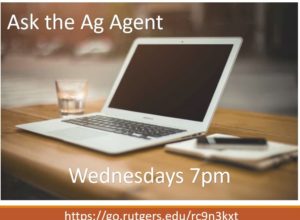
Farmers and others are welcome to join a weekly teleconference each Wednesday night from 7:00pm-8:00pm. Weekly events are hosted by Rutgers Cooperative Extension Agricultural Agents working with the farming industry.

This call-in/WebEx event features updates on farm management, crop conditions, farm industry observations, agricultural agency programs and other topics discussed by farmers, agricultural agents and other agricultural service providers.

Hosted by Bill Bamka, Stephen Komar, Michelle Infante-Casella and Meredith Melendez, this weekly communication provides a forum for discussion for farmers and all involved in NJ agriculture. Agricultural agency personnel, non-profit organizations and others have participated and added additional discussion with farmers.

This event and other events hosted by Rutgers Cooperative Extension can be found on the Rutgers NJAES Events website.

To join the “Ask the Ag Agent” forum each week on a computer/tablet/smartphone via the WebEx Videoconference:

Use the URL: https://go.rutgers.edu/rc9n3kxtiPhone

To join the “Ask the Ag Agent” each week on the Phone:
Call: (650)-429-3300
Access Code: 799-743-872 # followed by #

Penn State Webinar: H-2A Agricultural Workers in Times of Uncertainty

Penn State Cooperative Extension is hosting a free webinar to discuss the H-2A program in Pennsylvania. This may be helpful for NJ Farmers to listen in to find any updates or tips on how to handle this agricultural worker program. You must register to join this online event. In order to register you will need to create an account on the Penn State advertisement page.

Webinar Date: Thu., May 7, 2020
(6:30 PM – 8:00 PM ET)

Registration deadline: May 7, 2020
5:30 p.m.

COVID-19 mitigation efforts, including international travel restrictions and consulate closures, have disrupted the normal functioning of the H-2A visa program for temporary workers. These disruptions to the H-2A program raise questions about the timely arrival of guest workers and the impact on essential food and agricultural businesses. The H-2A Agricultural Workers in Times of Uncertainty Webinar will provide answers and guidance to the many questions surrounding this topic.
The dangers of COVID-19 itself similarly raises questions around how to protect the health and well-being of H-2A visa holders. As front-line workers, the protection of their livelihoods and health are integrally tied to the protection of public health.

Penn State Extension will be holding a townhall-style webinar to address these topics, and to provide answers and guidance to these questions. Join us as we hear from a panel of subject matter experts, including Brook Duer, Staff Attorney at the Penn State Center for Agricultural and Shale Law; Grant Meckley, Pennsylvania Keystone Health’s Agricultural Worker Program; Scott Sheely, Executive Director of the Lancaster County Agriculture Council; and Richard Stup, Agricultural Workforce Specialist at Cornell Cooperative Extension. Also joining us will be Alyssa Charney, Agriculture Legislative Assistant from Senator Casey’s Office.

Attendees will have the opportunity to either send in questions ahead of time, or during the webinar itself, for a Q&A session following the panelists’ overview and update on the H-2A visa program.

There is no cost for this webinar, however registration is required to receive the webinar link. To go to the registration page you can also see https://go.rutgers.edu/if9tsm4h.

Dealing with Stress on the Farm During Trying Times

This is a stressful time for many people in our country and especially on the farm. With constant updates from government officials and media sharing new about the pandemic and the fear of the unknown for the future, it is understandable to feel overwhelmed, stressed and anxious. Seeing other farmers around the nation struggling with crop losses and distribution nightmares makes other farmers wonder what is yet to come. You are not alone and there are resources to help if you are struggling with stress and anxiety.

For assistance contact the Substance Abuse and Mental Health Services Administration’s (SAMHSA) Disaster Distress Helpline at 800-985-5990, the National Suicide Prevention Lifeline at 800-273-8255 or text MHFA to 741741 to talk to a Crisis Text Line counselor.

Farmers often feel they may be mentally and physically tougher than most people. That may be true. However, it is understandable if you are feeling depressed or anxious right now, just like the millions of people across the country who are facing the same worries and challenges. It’s perfectly understandable since most people have never experienced times like we are facing now. It’s extremely important to take care of your mental health. Helping yourself means you will be able to help others in the future.

While times may not change as quickly as we would like, there are easy self-care strategies that can help reduce feelings of depression and anxiety, or prevent anxiety before it even starts.

Here are some tips that may help:
1. Eat healthy foods to keep your body in top working order and avoid foods/beverages that cause issues with underlying health conditions.
2. Exercise reduces symptoms of depression and anxiety. Exercise is not the same as regular activity at work. Take a brisk walk or jog down a farm road, ride a bike, lift weights (even if you need to make your own out of what you have around the farm and start light).
3. Practice relaxation therapy. Focusing on tensing and relaxing muscle groups can help you relax voluntarily when feeling overwhelmed, stressed or anxious. Concentrate on the shoulder and neck regions of the body, where stress often builds.
4. Be kind to yourself. Treat yourself with the same compassion you would a friend and allow others to help as you would help them.
5. Stay connected. Even if you can’t get together face-to-face, you can stay connected to friends, family and neighbors with phone calls, text messages, video chats and social media. If you’re feeling lonely, sad or anxious, reach out to your social support networks – all is kept confidential. Share what you are feeling and offer to listen to friends or family members about their feelings. We are all experiencing this scary and uncPerson holding a fishertain time together.
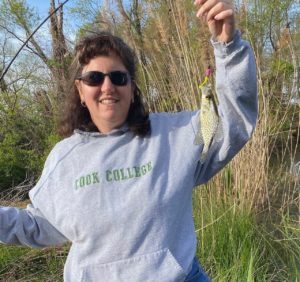
6. Monitor media consumption. While you might want to stay up-to the minute with COVID-19 news, too much exposure can be overwhelming. Balance media consumption with other activities you enjoy, such as playing with pets, reading, cooking, fishing at the farm pond, playing games with family or listening to music.

Adding small changes to your routine each day can make a big difference to your overall mood and well-being. Just remember, if you need help, help is available.