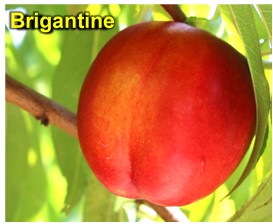
 BRIGANTINE is a new yellow-fleshed nectarine with semi-freestone, ripening July 20-25, just before ‘Summer Beaut’ and ‘Redhaven’. It has a full, glossy scarlet coloring with a slight golden-yellow background. Fruit skin is consistently free from blemishes. It has a nice, sweet, and acidic flavor, and firm, melting flesh. Flesh has traces of red. This is a very productive tree with low susceptibility to bacterial spot, while the fruit has slight to moderate susceptibility to bacterial spot. Fruit hangs well. Fruit characteristics of Brigantine and other late-July nectarines are listed below in Table 1. [Read more…]
July 31, 2025 Hemant Gohil and Daniel Ward
Late-July Nectarine Varieties for New Jersey – New and Standard
July 22, 2025 Hemant Gohil and Daniel Ward
Mid-July Nectarine Varieties for NJ – Silvergem, Silverglo, Easternglo, and Avalon
There are four excellent, yellow and white-fleshed nectarine varieties harvested during mid-July. These varieties were developed at the Rutgers Fruit Breeding program and evaluated over the years at multiple Southern New Jersey locations. The ripening days could be a few days later for central and northern New Jersey. [Read more…]
July 22, 2025 Hemant Gohil and Daniel Ward
Mid-July Peach Varieties – Gala, PF 8 Ball, Summer Serenade, July Rose, and PF Lucky 13
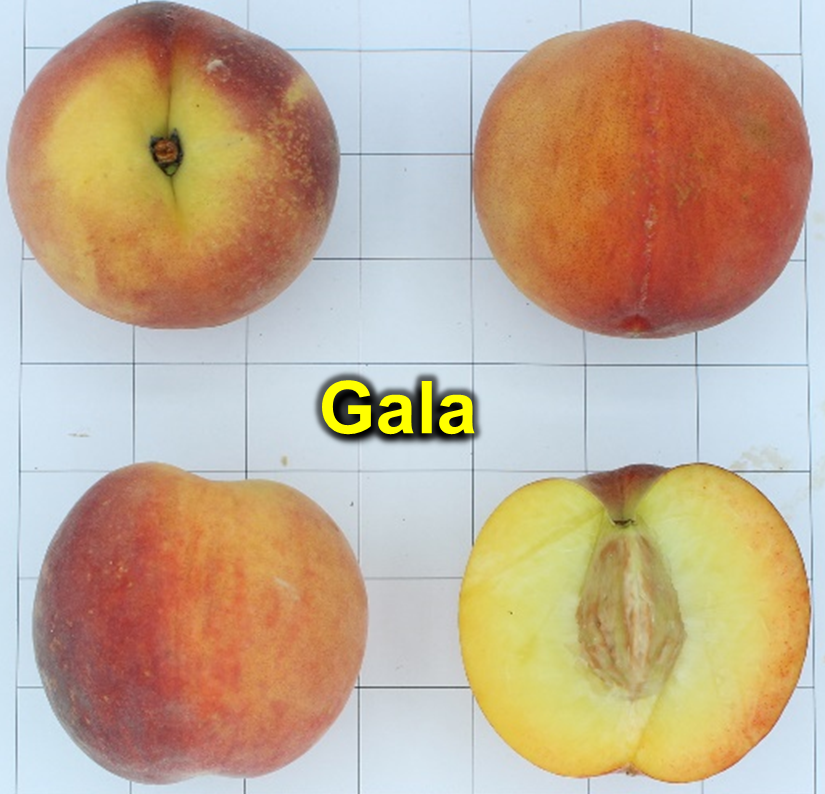 GALA is a medium to medium-large, globose, 70-90% scarlet red over yellow-orange ground color, yellow-fleshed, semi-freestone peach ripening July 11-15, about a week after the Sentry. The flesh is firm, with a sweet and mildly tangy flavor. The tree is vigorous and moderately productive. Note that these varieties were evaluated in southern New Jersey; as a result, the harvest dates could be a few days later for the Central and Northern New Jersey orchards.
Challenges: Gala is a beautiful peach in a great season, but the size and yield could be highly variable. Split pits are a problem even in a normal year, and the first pick may have significant split pits. Fruit has medium susceptibility to bacterial spot.

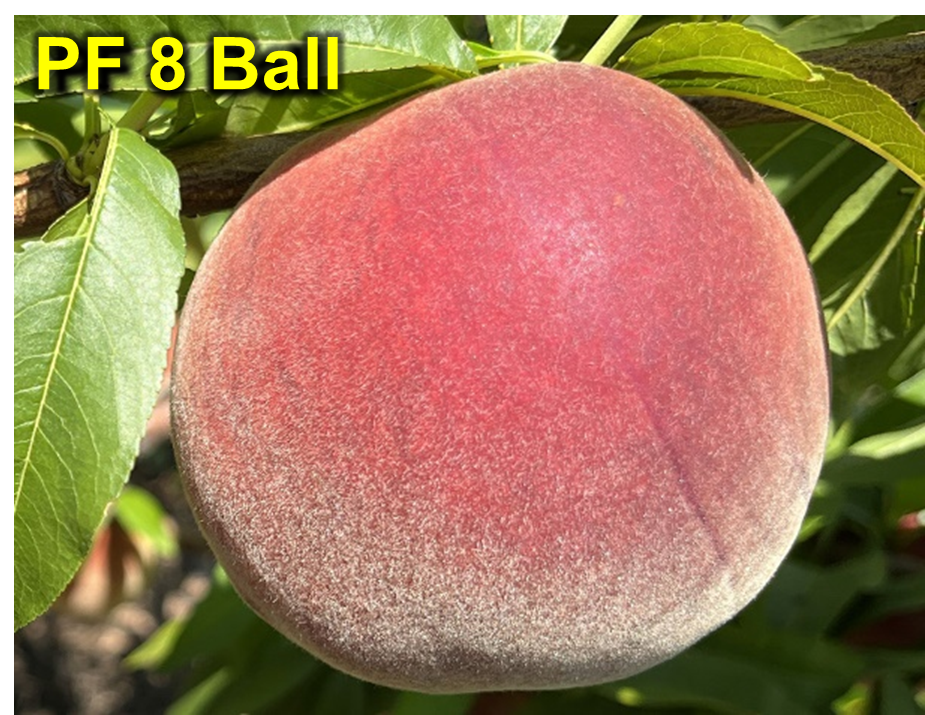 FLAMIN FURY® PF#8 BALL is a large, globose, 70-90% crimson red over greenish-yellow ground color, yellow-fleshed semi-clingstone peach with prominent suture groove, ripening during July 13-18. The fruit is firm, with melting, sweet, juicy flesh, and has a sweet and tangy flavor. The tree is spreading, vigorous, and productive, with medium susceptibility to bacterial spots. A promising variety because of its color and size. A good option to replace Gala peach.
SUMMER SERENADE is a medium-large, globose to ovate, attractive, 50-70% crimson red over yellow-green ground color, yellow-fleshed, semi-clingstone peach ripening from July 13-16, approximately 11 days before Redhaven. The flesh is firm with fair to good flavor. The tree is moderately vigorous and productive, with low susceptibility to bacterial spot. Summer Serenade has a better size than Garnet Beauty and PF 7, with a significant suture groove and flavor like Garnet Beauty.
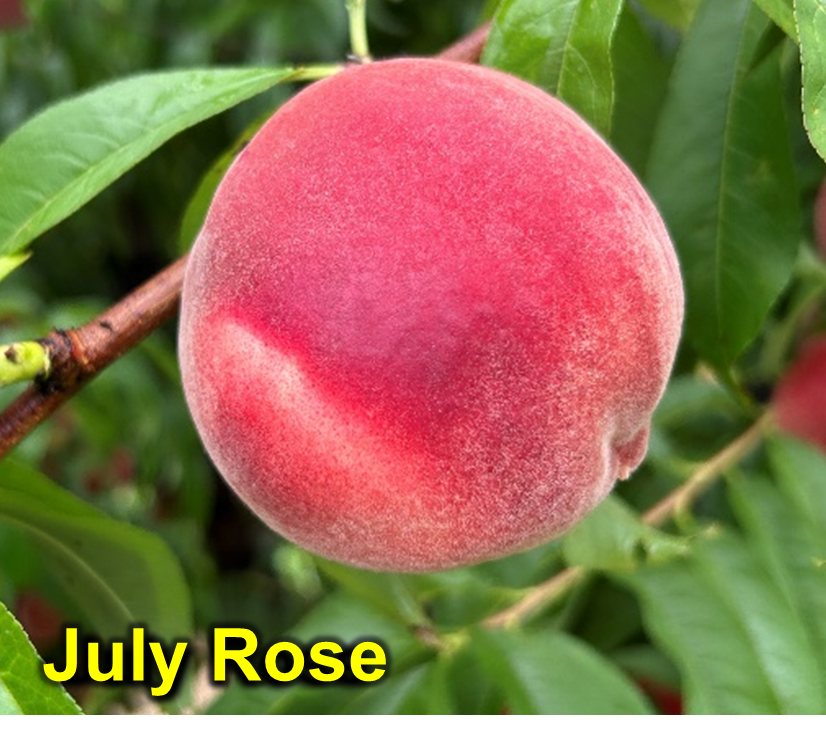 JULY ROSE is a popular white fleshed peach with excellent firmness, cling stone, and low fuzz. Fruit is large and attractive, and ripens between Sugar May and White Lady from 15-20 July. Fruit is always very sweet and sub-acid. It has good fruit and leaf resistance to bacterial leaf spot. Even poorly thinned trees tend to produce large-sized fruit. Moderate fruit or bloom thinning will be required to optimize size and quality. Fruit hangs well and has better cold-hardiness than other white varieties.

 Snowbrite is a good white-fleshed peach that ripens a few days after July Rose but is highly susceptible to bacterial spots. Scarlet Pearl is another good white-fleshed peach. However, it is a cold, tender variety and produces split pits.
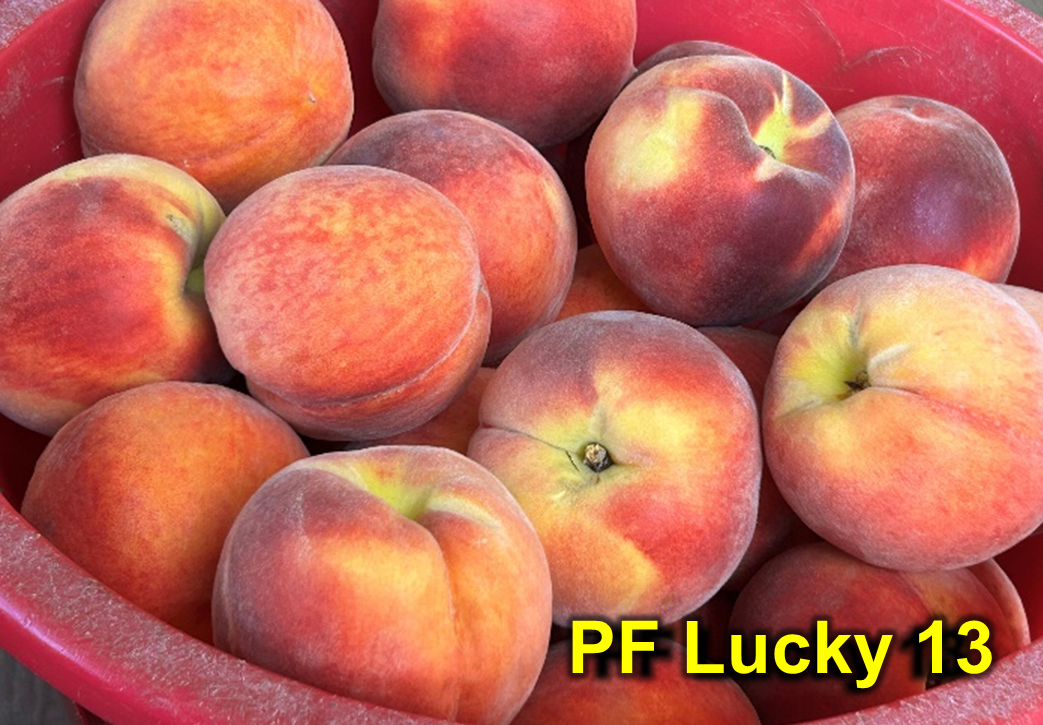
FLAMIN FURY PF LUCKY 13 is a large, globose to slightly ovate, heavy scarlet red over orange-yellow ground color, yellow-fleshed, freestone peach ripening near or earlier than Redhaven. The flesh is crunchy, firm, and sweet and tangy. The tree is vigorous and productive, with slight drop and inking tendencies and low to moderate susceptibility to bacterial spots. This very attractive peach has also shown good size and minimal splits.
Previous related articles
- Early July Peach Varieties: https://plant-pest-advisory.rutgers.edu/early-july-peach-varieties-sentry-glenglo-ruby-prince-garnet-beauty-and-sugar-may/
- Late June Peach Varieties: https://plant-pest-advisory.rutgers.edu/late-june-peach-varieties-for-new-jersey-new-and-standard/
July 15, 2025 Hemant Gohil and Daniel Ward
Early July Peach Varieties – Sentry, Glenglo, Ruby Prince, Garnet Beauty, and Sugar May
 Warmer temperatures and periodic rains in the last few weeks helped early July peach varieties achieve a bigger size. There are excellent peach varieties throughout the harvest season; however, each has a few challenges, and understanding the overall tree and fruit characteristics can help make thinning, harvest, disease management, and post-harvest decisions. The Newer varieties were also compared against standard varieties. Understanding these differences is essential for selecting new varieties or replacing existing ones. Note that these varieties were evaluated in southern New Jersey; as a result, the harvest dates could be a few days later for the Central and Northern New Jersey orchards.
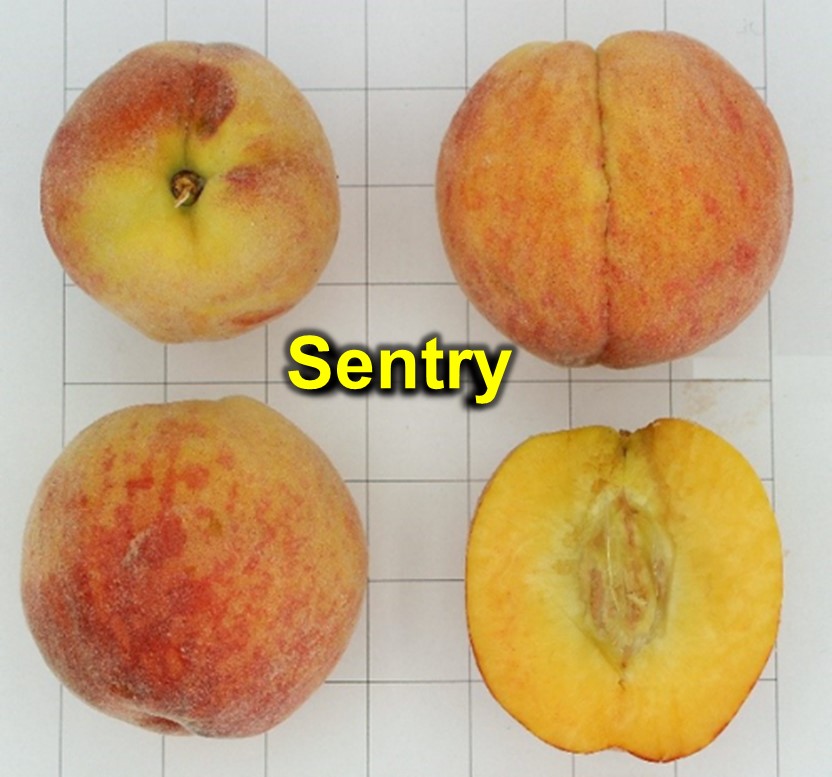
Sentry: It’s a medium-large to large, red over green-yellow ground-colored peach that ripens during the first week of July. The flesh is moderately firm, very sweet, and mildly tangy (Total Soluble Solids (TSS) 11.32 Brix and Titratable Acidity (TA) 2.08 g/l). It is one of the sweeter varieties in this harvest window. In general, the TSS greater than 11 Brix is considered very sweet. It can get bigger up to 3 inches in diameter, however, at the cost of firmness. It has low susceptibility to the bacterial spot.
 Challenges: The main challenge is that fruit has a variable cropping record, but growers prefer it because of its size and taste. Also, a green-yellow background color may give the impression of unripe fruit. Some growers have noticed that older trees of Sentry produced unevenly ripened fruit where one end of the tip was softer while the other end was much firmer. Bigger fruits tend to split. The general recommendation is to avoid letting fruit get bigger than 2 ¾ inches till the Redhaven season.
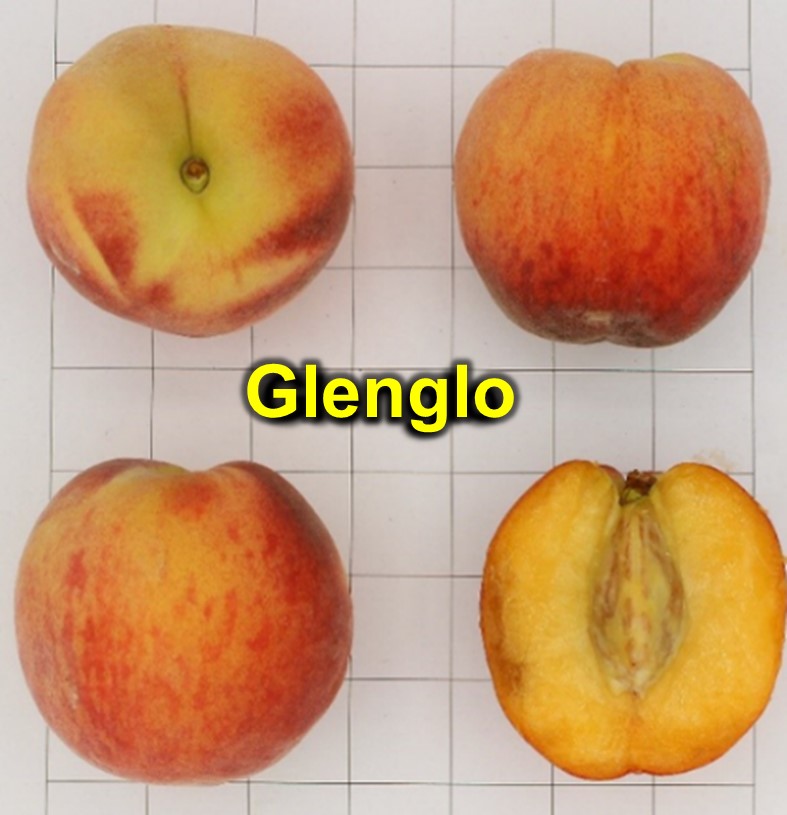
Glenglo: It’s an attractive yellow-fleshed peach that gets harvested a few days after ‘Sentry’. In some years, it gets harvested before Sentry or overlaps with Sentry. The fruit is medium-large in size, sweet, acidic, and mildly tangy (TSS 11 Brix; and TA 2.5 g/l). It has low susceptibility to bacterial Spot. The cold-hardiness is better than Sentry’s. Glenglo is comparable to Sentry; however, it does not have the problem of uneven ripening. It is considered worthy of replacing “Sentry.
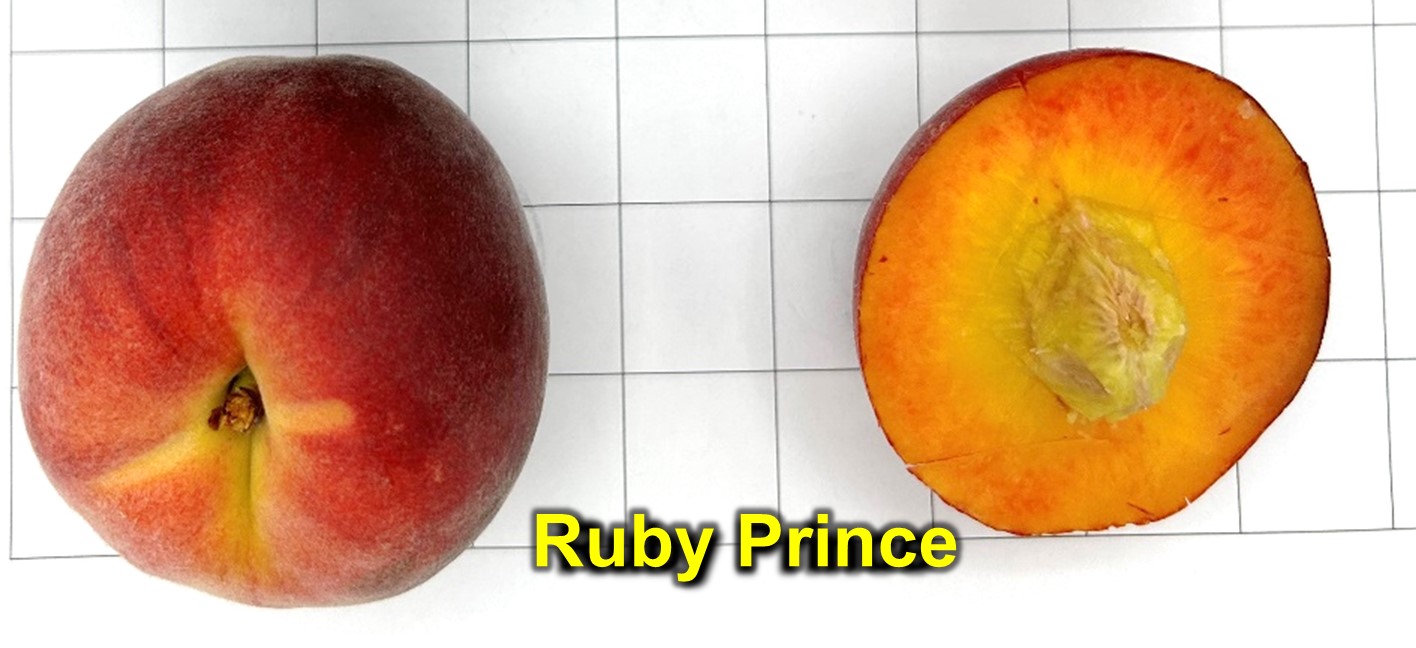
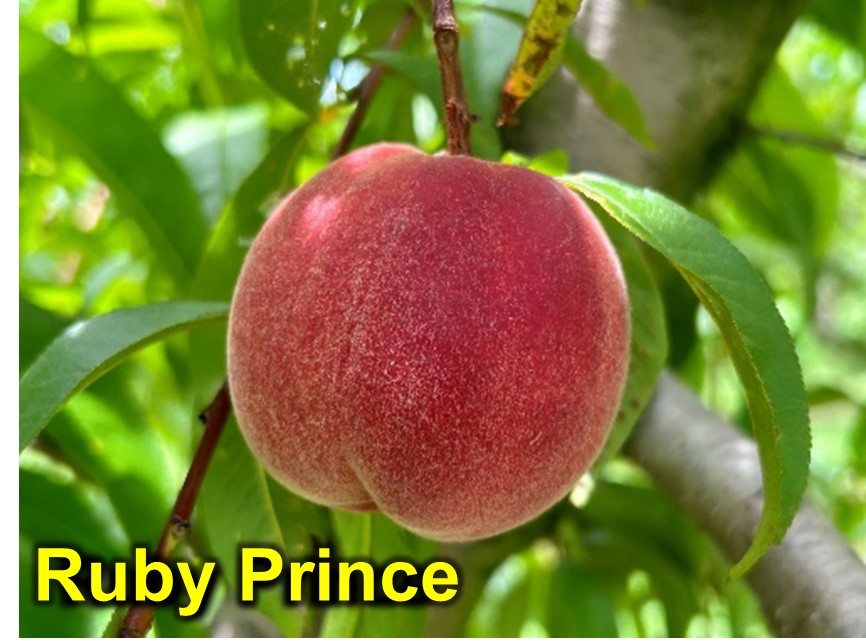
Ruby Prince: It’s a medium-large, globose, and attractive semi-clingstone yellow-fleshed peach variety that ripens a few days after Sentry and Glenglo. The flesh is moderately firm with a sweet and mildly tangy flavor. The scarlet-red over yellow skin color and uniform shape of fruit makes it very attractive variety. It is a worthy replacement of ‘Sentry’. The flesh has greater traces of red. Fruit size is medium to large and uniform.
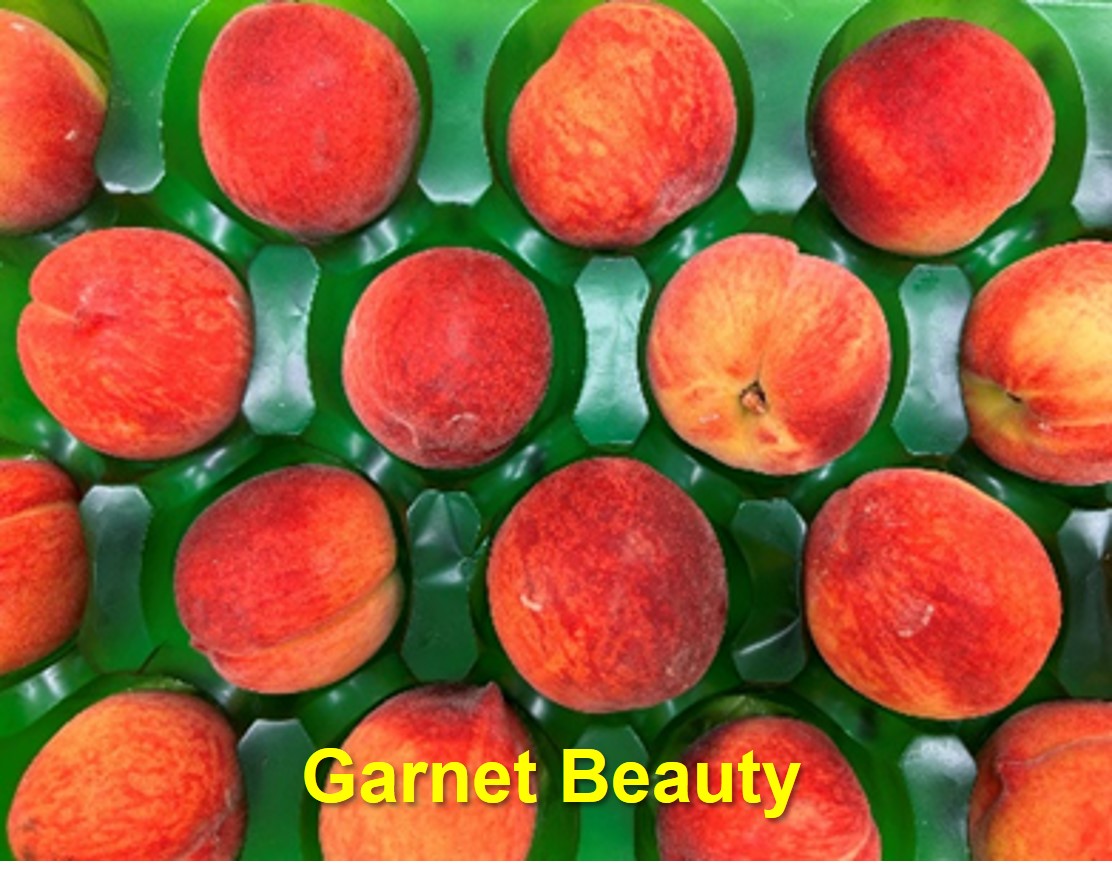 Garnet Beauty is a sport of Redhaven, ripening about 12-14 days earlier. Yellow-fleshed, clingstone, medium-sized peach, relatively hardy with 40-60% red blush. Fruit is high quality, firm, and freestone when fully ripe. The fruit has a prominent suture groove. The tree is vigorous and productive. The flavor is not great compared to other varieties this season.
Other yellow-fleshed peach varieties: Flaming Fury PF7 is a medium to medium-large, semi-freestone yellow-fleshed peach that ripens during the Glenglo season. This is a good-yielding peach variety; however, most other varieties have better sizes.
White-fleshed Peach Varieties.
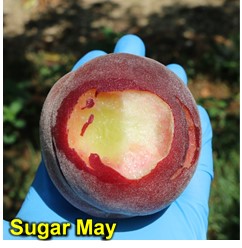
Sugar May is a firm, white-fleshed, clingstone peach ripening around July 7. dark red to purplish red skin color. The flavor is good, but acidic. The tree is vigorous and productive but susceptible to bacterial spot.
Challenges: For the white fleshed peach, it is a little too acidic, and some consumers’ expects white peaches in general to be very sweet and sub-acid. Skin is dark red, so one must bite to determine if it has ripened. The core stays greenish-yellow. As seen in the photo, the first superficial (right) bite has cream flesh; however, the slightly deeper (left) bite has greenish flesh. Also, it is moderately susceptible to bacterial spot.
June 30, 2025 Hemant Gohil and Daniel Ward
Late June Peach Varieties for New Jersey– New and Standard
 The many peach varieties grown in New Jersey were developed in different breeding programs from several peach-growing regions, including the Rutgers Tree Fruit Breeding program. Recent evaluations have examined the known characteristics and challenges growers face in growing these varieties. These are important for making planting, thinning, harvesting, post-harvest handling, and marketing-related decisions. Understanding these differences is important for selecting varieties or replacing existing ones.
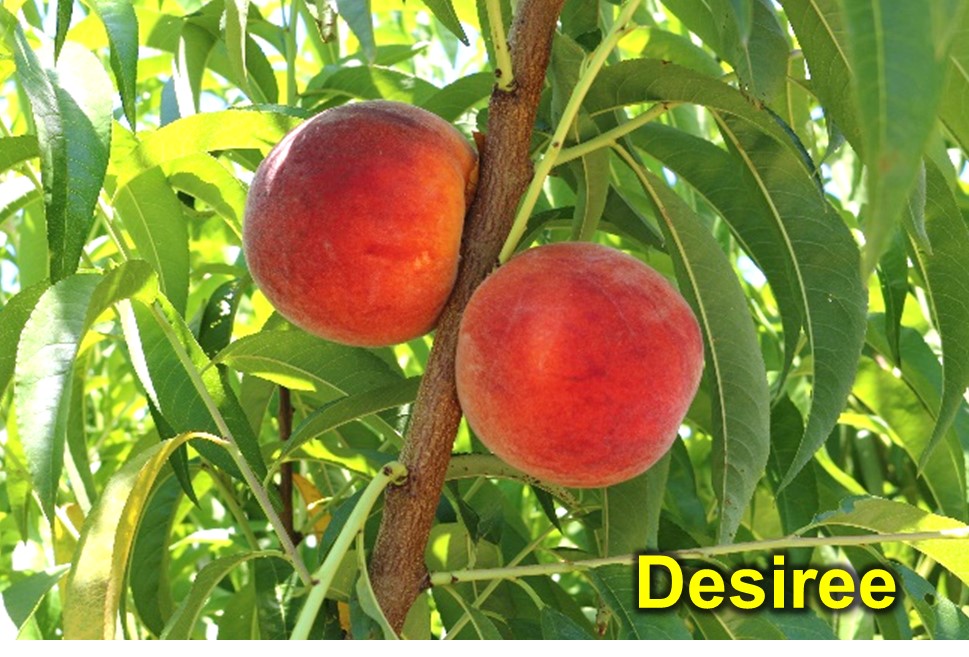
Desiree is a very attractive yellow-fleshed, clingstone peach variety, ripening during the last week of June. The fruit is beautiful and medium to moderately large, which is impressive for the early-season variety. The flesh is firm with a very sweet and tangy flavor. The tree is vigorous, and its leaves have low susceptibility to bacterial spot. The fruit is also having low susceptibility to Bacterial Spot. [Read more…]
May 16, 2025 Hemant Gohil and Daniel Ward
Deer Damage Control in the Vineyard
New Jersey’s high deer population significantly threatens vineyards, particularly those near wooded areas. Deer are a pest, especially on young vines and in the early growing season when food sources are scarce, and tender shoots are emerging. If the vineyard is close to the deer population, management is needed for the long-term productivity of the vineyards.
Identifying the deer damage: Deer browse on leaves and tender shoots using the lower front teeth. Deer do not have upper incisors, so the leaves browsed by deer have a rough, torn, and shredded appearance but no tooth marks (Figure 1). This can cause substantial crop loss and even compromise the health of the vines, specifically if the same vine is damaged over the years (Figure 1). Fortunately, secondary buds of grapevines can grow and produce replacement shoots when the actively growing shoot tip from the primary bud is damaged. A new shoot from a basal bud may not be as productive, however, it will ensure new vegetative growth, sustaining the canopy of the grapevine. [Read more…]
