Vole Management in the Orchard

There has been growing concerns about vole damage in apple and peach orchards throughout northern and southern New Jersey counties. Vole populations are often cyclic, and can reach high populations every 2-4 years. This, combined with poor weed control in orchards, can lead to disastrous effects on trees.

Identification and Habitat

Meadow voles and pine voles are two common types of voles.  Pine voles have small eyes and small, almost inconspicuous ears, while meadow voles have larger eyes and ears. Meadow voles primarily feed in open vegetation, while pine voles prefer underground burrow systems just below the ground surface. Vole diets include many primary food sources in addition to tree bark. However, they can attack fruit trees during fall and winter months when other food sources are scarce.
[Read more…]

Size Peaches with Supplemental Irrigation

NJ peach orchards demand supplemental irrigation when drought weather patterns persist. Peaches gain up to 70% of their final volume during the last 30 days on the tree, so sizing fruit to their full potential requires supplemental irrigation. July and August are critical months for fruit sizing for most varieties. Inadequate irrigation during critical stages of fruit development results in smaller fruits and irreversible size/marketing losses. Irrigating closer to harvest will not increase fruit size. [Read more…]

February Events: Grapevine Pruning Workshop & More

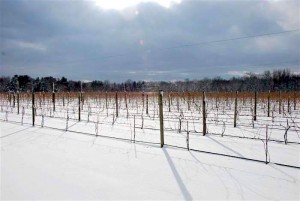
terhune-vines-in-winterDate: Wednesday February 17, 1:00 to 3:00pm

(rain date: February 19)
Location: RAREC Rutgers Agricultural Research & Extension Center
121 Northville Road
Bridgeton, NJ 08302

This winter pruning workshop for beginning as well as experienced grape growers will feature dormant pruning methods demonstrated by Rutgers NJAES and Cooperative Extension experts Hemant Gohil, Gary Pavlis, and Dan Ward.
There is no registration fee however pre-registration is required.
To pre-register, please call or email Joan Medany: (856) 307-6450; jmedany@co.gloucester.nj.us

Don’t Miss the 2016 NJ Ag Convention & Trade Show Wine Grape Sessions

Click link to view 2016 Convention Information & Registration
Tuesday February 9, 2016
[Read more…]

Cool Climate Chardonnay Clones

Chardonnay CA Trip Sept 05 353From The New Jersey Center for Wine Research and Education

This month, Hemant Gohil, Gary Pavlis, and Daniel Ward discuss the origin of Chardonnay and name clones appropriate for cool climates. According to a 2015 survey by Sonoma State University, Chardonnay is the favorite varietal of American wine consumers.
[Read more…]

Winegrape Twilight Meetings: North & South Jersey

Dates: August 12 & 13, 2015
See flyer for locations and agenda.

Click to View Flyer

Click to View Flyer

Performing a Detailed Inspection of Wine Grape Planting Material

Figure 1. A bundle of healthy grafted grape vines. These vines are moist, have healthy roots, and are clearly labeled.

Figure 1. A bundle of healthy grafted grape vines. These vines are moist, have healthy roots, and are clearly labeled.

Spring is a good time to plant new grapevines as the soil is warm and moist enough to support early growth and vines get plenty of time to get established during the growing season that follows. When your order of vines arrives, make sure that your planting material is of good quality before it is planted.

Source Planting Materials from Quality Nurseries

The best way to begin ensuring that you have good, healthy and productive grapevines is to source planting material from nurseries that provide clean materials or certified vines. Planting material from nurseries that follow quality assurance protocols reduces the chances of getting diseased or weak planting material.
Certified material means cuttings come from a source block that was properly managed, subjected to regular inspections for insect pests, disease damage, and tested for virus right from propagation through packaging. These nurseries also go through independent third party audits.

Make sure that planting material comes with documents or labels that will help in tracing plants back to the original source. Each bundle of vines should have proper labels describing primary information such as variety, clone, rootstock and some kind of batch number. Make sure your planting material was shipped promptly after packing and came in a temperature-controlled vehicle. Presently there are no certified nurseries in New Jersey; however, there are several certified nurseries available in California and few in Oregon, Washington and New York. [Read more…]