Nursery and Landscape Pest Scouting Guide: 150-250 Growing Degree-days and Boxwood Blight Risk ( currently = low risk )

Nursery and Landscape Pest Scouting Guide 150-250 GDD50:

Please print or download these resources (click on them)

Remember:

  • To determine your local growing degree-days, please review this postObtaining your local growing degree-day information”
  • The information provided in the downloads gives scouting GDD50 ranges (in growing degree days, base 50F) for specific insect pests harming nursery crop production and maintenance. It is important to note that these GDD50 are not exact, rather provide a range of GDD and subsequent calendar dates that can be used to scout for, and treat for, insect pests.
  • This document supports scouting, it does not replace it. Keeping good notes on pest development will help dial in scouting and treatment efforts at your local level.
  • Forecasting predictions (GDD50 accumulation) for calendar dates of multiple regions of New Jersey (S,N,C) are provided.
  • If you need more information, OR you are regularly seeing specific pest development stages at growing degree-days different than those listed here, please contact Tim Waller at twaller@njaes.rutgers.edu

GREAT RESOURCE from Steve Rettke:Landscape Pest Notes: Some Early Spring Insects/Mites”


Projected GDD50 accumulation as of 4/15/2021
Region Location 4/15/21 1-Apr 1-May 1-Jun 1-Jul Aug. 1st
Southern Upper Deerfield (NJ50) 141 75 230 636 1314 2156
Central Howell / Freehold (NJ10) 94 67 165 513 1135 1929
Northern High Point (NJ59) 50 21 56 268 721 1327
Forecast: NOAA NCEP Coupled Forecast System model version 2 (CFSv2) forecast system (3.5 months) (USPEST.ORG)


Pest Scouting – Growing Degree-day Ranges (150-250 GDD50)
CROP TYPE Common Name Scientific Name GDD Min (50F) GDD Max (95F) Reference Developmental / Target Stage
Malus, Prunus, many Eastern tent caterpillar Malacosoma americanum 90 190 2 Larvae treatment before tents apparent (near 150-GDD50)
Elm, Service berry Woolly elm aphid Eriosoma americana 121 246 2 (6) Control target
Conifer Hemlock woolly adelgid Adelges tsugae 150 150 RU Eggs and 10% hatch
Conifer Spruce spider mite Oligonychus ununguis 150 175 4 1st egg hatch
Conifer Spruce needleminer Endothenia albolineana 150 200 4 1st larvae active
Conifer Balsam gall midge Paradiplosis tumifex 150 300 4 Adults laying eggs
Witchhazel, River birch Spiny witchhazel gall aphid Hamamelistes spinosus 171 6 Control target
Birch Birch leafminer Fenusa pusilla  190 290 RU Larvae (1st generation)
Conifer Spruce spider mite Oligonychus ununguis 190 363 RU Immatures/Adults
Honeylocust Honeylocust pod gall midge Dasineura gleditchiae 192 229 RU Larvae
Holly Holly leafminer Phytomyza ilicis 192 290 RU Egg hatch
Holly *Native holly leafminer Phytomyza ilicicola 192 298 2 Egg hatch
Rhododendron Rhododendron borer Synanthedon rhododendri 192 298 2 Typical treatment window
Larch Larch sawfly Pristophora erichsonii 192 299 2 Typical treatment window
Andromeda Andromeda lacebug Stephanitis takeyai 192 303 RU Adults
Rhododendron Rhododendron gall midge Clinodiplosis rhododendri 192 363 RU Larvae
Willows, Cottonwood, Poplar Imported willow leaf beetle Plagiodera versicolora 192 448 RU Larvae/Adults
Privet Privet thrips Dendrothrips ornatus 192 618 2 Typical treatment window
Lilac, ash, privet, many Lilac / Ash Borer Podosesia syringae 200 299 RU Adults – 1st Treatment
Spruce Spruce budworm Choristoneura fumiferana 200 300 5 Larvae
Elm Elm leafminer Fenusa ulmi 215 240 5 Adult emergence
Wild and cultivated roses Roseslug sawfly Endelomyia aethiops 230 6 Egg hatch / early instars
Deciduous, many Hawthorn lacebug Corythucha cydoniae 239 363 RU Nymphs/Adults
Conifer Arborvitae leafminer Argyresthia thuiella 245 360 RU Larvae Treatments
Prunus American plum borer Euzophera semifuneralis 245 440 5 Adult flight, egg laying
Boxwood Boxwood mites Eurytetranychus buxi 245 600 RU All Stages
Lilac Lilac leafminer Caloptilia syringella 246 363 5 Larvae Treatments
Holly Holly leafminer Phytomyza ilicis 246 448 RU Larvae Treatment
Yew Taxus mealybug Dysmicoccus wistariae 246 618 RU Adults/Crawlers
Conifer Pine sawflies (Red-headed) Neodiprion lecontei 246 1388 RU Larvae (1st generation)
Boxwood Boxwood leafminer Monarthropalpusi flavus 249 6 Adult emergence
Conifer Eastern spruce gall adelgid Adelges abietis 250 310 5 egg hatch, galls begin forming (not a control target)
References RU Rutgers Cooperative Extension – IPM Notes
2 http://ccetompkins.org/resources/using-growing-degree-days-for-insect-management
3 https://extension.psu.edu/ipm-basics-for-christmas-trees#section-2
4 https://www.canr.msu.edu/ipm/agriculture/christmas_trees/gdd_of_conifer_insects
5 https://www.agriculture.nh.gov/publications-forms/documents/landscape-pests.pdf
6 https://extension.umd.edu/ipm/pest-predictive-calendar-landscapenursery
7 https://www.canr.msu.edu/ipm/agriculture/christmas_trees/gdd_of_landscape_insects


Boxwood Blight risk-model information, considerations, and links:

Boxwood Blight Risk Assessment as of 4/15/2021
Region Location CODE 15-April 16-April 17- April 18-April 19-April
Southern Upper Deerfield NJ50 Low  Very Low  Very Low  Very Low  Very Low 
Central Howell / Freehold NJ10 Low  Very Low  Very Low  Very Low  Very Low 
Northern High Point NJ59 Very Low  Very Low  Very Low  Very Low  Very Low 
Please check your local boxwood blight risk at (https://uspest.org/risk/boxwood_app)


Considerations:

Become a Boxwood Blight Advocate to receive quarterly updates (through the Horticultural Research Institution)

Immediate potential for Boxwood Blight activity: Plus a Nursery and Greenhouse growers’ update


There is a potential for new boxwood blight infections in the next few days according to https://uspest.org/risk/boxwood_app.

Protective fungicide applications should remain in effect or be initiated immediately for Boxwood Blight. The disease may be sporulating and spreading amongst plantings if present (or may come into your nursery via shipments) within the next few days. According to https://uspest.org/risk/boxwood_app, this is the first legitimate potential for boxwood blight spread and new infections in 2020 for southern NJ. Please continue preventative/protectant fungicide applications utilizing; chlorothalonil (FRAC Group M05), mancozeb (FRAC Group M03), and QoI-fungicides (FRAC Group 11) in a rotation. Please contact Tim Waller at twaller@njaes.rutgers.edu for more information or questions.

UPDATES: 

Growing Degree-days as of 6/4/20 using NEWA

GDD50 = Growing Degree-Day with min. temp. set to 50F

Upper Deerfield = 548.5 GDD50 ; Howell = 407.5 GDD50 ; Pequest = 335.0 GDD50

How to use growing degree-day resources: https://plant-pest-advisory.rutgers.edu/using-growing-degree-day-calculators-nursery-pest-and-pathogen-updates-important-resource-links/

Pests: The number of accumulated growing degree-days has been rapidly increasing with higher and higher temperatures (approaching normalcy). Throughout New Jersey various adult borers will be emerging, these include; Lilac, Emerald Ash, Banded Ash Clearwing, and Peach Tree borers. Additionally, Ambrosia beetles (multiple species) will be in-flight and actively seeking egg-laying locations. Pyrethroids should be used as preventative sprays but should be targeted to the bases of susceptible hosts such as Magnolias, Yellow bud, Red bud, Japanese maples, Styrax, and Hybrid chestnuts. These Targeted applications are geared towards protecting beneficial insect populations. The eggs of many scale insects are hatching now, leaving their ‘crawler’ stage vulnerable to pesticide applications. Scale insect species to be mindful of; Maskell, Oystershell, Taxus, Euonymus, Prunicola, Oak lecanium, Japanese maple, Cottony maple, Calico, Golden oak, and Juniper scale. Aphids, especially on roses, and mites will be increasing their populations with the warmer weather and should be minded when in high density. Management should utilize an appropriate pesticide rotation when necessary, as these pests are prone to developing pesticide resistance quickly. Four lined plant bugs, basswood lacebug, and multiple leaf and plant hoppers have been reported south of NJ and should be monitored and treated for as appropriate through the coming weeks as many of these insects are capable of vectoring plant viruses. Lilac leafminer, Juniper tip-midge, and Pin oak sawfly may also be an issue in some locations. Red-headed flea beetle will be hatching between 250-480 GDD50, with adults emerging between 500-1000 GDD50. A second generation of larva will then be active between 1,570 to 1860 GDD50, emerging later 1,878 to 2,318 GDD50. Reminder, keep an eye out for the Box tree moth that has been identified approaching the border of US and Canada. This pest has prompted APHIS importation amendments for Boxwood, Euonymus, and Illex. Gypsy moths, Bagworms, Mimosa webworm will be hatching or emerging in many parts of the state very soon, (in some locations they may already have).

Please visit https://njaes.rutgers.edu/pubs/publication.php?pid=E334 for more specific information.

Understanding and approaching plant diseases: The weather as of late has been conducive to plant disease for much of NJ. Higher humidity, increasing temperatures, and prolonged periods of leaf wetness (particularly at night) are considered the factors associated with the ‘sweet spot’ of disease development. Regularly scheduled protectant fungicide applications should be continued if a pathogen or history-thereof is suspected. Compounds should be rotated to guard against pesticide resistance to any one compound (rotating high/medium-risk with low-risk materials). Also, any steps geared towards increasing airflow, reducing wet-feet, limiting mechanical injury, and reducing leaf wetness duration or excessive overhead irrigation during this warm and humid period will benefit disease management efforts.

Please visit: https://njaes.rutgers.edu/pubs/publication.php?pid=E036 for more specific information on individual plant and pathogen species.

Other timely diseases to note: Many needle cast diseases of conifers should be well into a fungicide application schedule, utilizing chlorothalonil, azoxystrobin, basic sulfate coppers, mancozeb, and T-methyl in a rotation of materials. Many of these compounds will also control Pine needle rust that may become prevalent in some locations, especially those locations with high levels of goldenrod or aster weeds. Botrytis and powdery mildew are still a concern in many parts of the state, especially those that are experiencing cooler nighttime temperatures. What fungicide used is dependent on the specific host species in many cases. Please refer to the link above for specific information. Fungal and bacterial leaf spots are very common and often only intensively treated if those plants are to enter the market the next season. However, in areas prone to disease or severe cases (defoliation occurs), treatments should be preventative and conducted throughout the season. Sooty mold grows on the honeydew produced by large populations of sap-sucking insect pests (aphids, scales, leaf/plant hoppers). Controlling the insect pests is our best option to reduce this unsightly disease. In severe casts of sooty mold, plants can be washed free of this fungal growth using mild detergents. Phytophthora diseases are ever present at the nursery, however cultural practices such as sterilized potting media, cleaning tools and machinery regularly, efforts to reduce wet-feet or overwatering, and sterilization or treatment of recycled water can have profound impacts on the expression or spread of Phytophthora diseases. When fungicide applications are required, materials like phosphorus acids, fosetyl-Al (Aliette), mefenoxam (Ridomil), and etridiazole + T-methyl (Banrot) are commonly used. Rotation of these compounds and proper disease identification are incredibly important as many root-rotting pathogens have a strong propensity towards developing pesticide resistance.

Please consider the Rutgers Plant Diagnostics Laboratory for pest/pathogen identification concerns: https://njaes.rutgers.edu/plant-diagnostic-lab/


Online discussions and credit events

NJNLA pesticide credit webinar/course: Invasive Forest Pests: New Threats and Their Management (6/10/20): https://www.njnla.org/events/EventDetails.aspx?id=1383945

Webinar – June 10th, 2020 – 7:00pm to 8:30pm. Invasive Forest Pests: New Threats and Their Management. You must include your email address when registering. Information to join Webinar will be sent just prior to the start. Cost: $35/Member, $50/Non-Member. NJ Pest Credits: 3A (Ornamentals) – 3, PP2 (Private Applicator Category) – 3, 2 (Forest) – 3, 8C (Campgrounds) – 3, 9 (Regulatory) – 3,. CNLP: Environment – 1.5, LTE/LTCO: 1 CEU, NJUCF: 1 CEU and ISA is still pending. 

EPA information pertaining to online credits for licenses expiring in 2020: https://pestmanagement.rutgers.edu/increased-online-ceus-for-licenses-expiring-2020-act-now/

Ask the Agent (every Wednesday @ 7:00pm): https://go.rutgers.edu/t7wjkit1 . A new online forum has been created where anyone can log-on and speak with Rutgers Cooperative Extension agents (multiple agents from multiple counties)

NJNLA- Wine Down Wednesdays (every first and third Wednesday @ 7:00pm-8:00pm). Email: Lori Jenssen @ njnla.director@gmail.com. This is a great opportunity to speak with other green-industry businesses.


Rutgers nursery survey, advisory, and other resources:

Please take the 2020 Nursery Industry Survey: https://forms.gle/dUjLxaiu6qDQYYsRA

The new nursery agents have prepared a preliminary survey aimed at understanding the needs of our growers and clientele, i.e. you. Please take a moment to complete the survey, as this type of information really helps the agents secure grant funding to deal with the problems you actually have. Thank you!

Subscribe to the NJAES YouTube webpage: https://www.youtube.com/user/RutgersNJAES/

RU Sustainable Nursery Production website: https://njaes.rutgers.edu/nursery/

March meeting PDF: https://njaes.rutgers.edu/nursery/documents/2020%20SJ%20Nursery%20Meeting%20Proceedings.pdf

Heads Up, Boxwood Lovers!

A boxwood per day helps keep the doctors away! All of us here in the Plant Diagnostic Lab must be pretty healthy then–since the boxwood blight outbreak in 2013, we get a dose of dead boxwood almost every day.

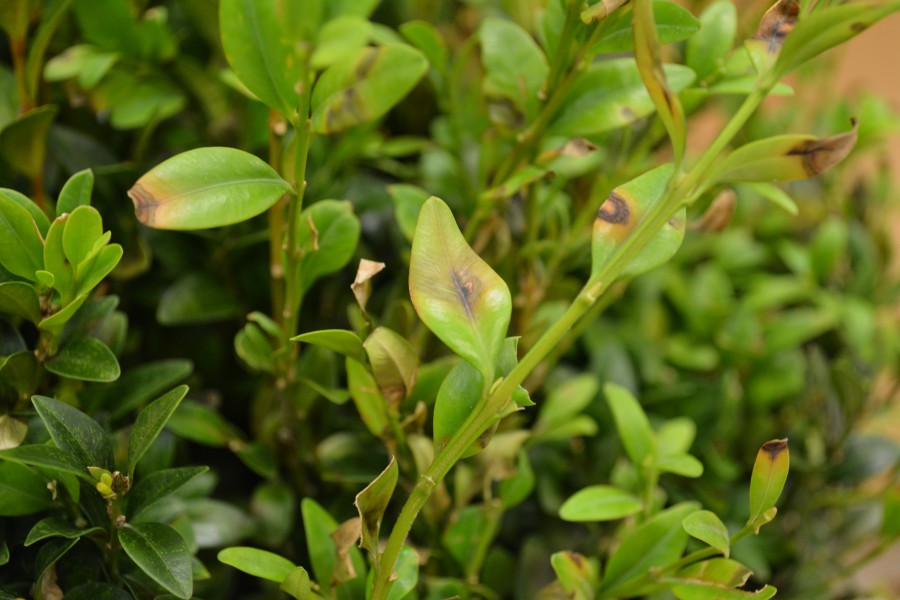
Boxwood blight leaf lesions. Photo: Richard Buckley, Rutgers PDL

Boxwood blight leaf lesions. Photo: Richard Buckley, Rutgers PDL

[Read more…]

It’s Back!

Boxwood samples have been coming into the Plant Diagnostic Laboratory on a daily basis since the winter. Most of them have been diagnosed with winter damage, boxwood leafminer, or Volutella stem and leaf blight. Yesterday, we got our first sample with boxwood blight! The situation was typical of several others in New Jersey – new transplants this spring and then a bunch of dead shrubs mid-summer.

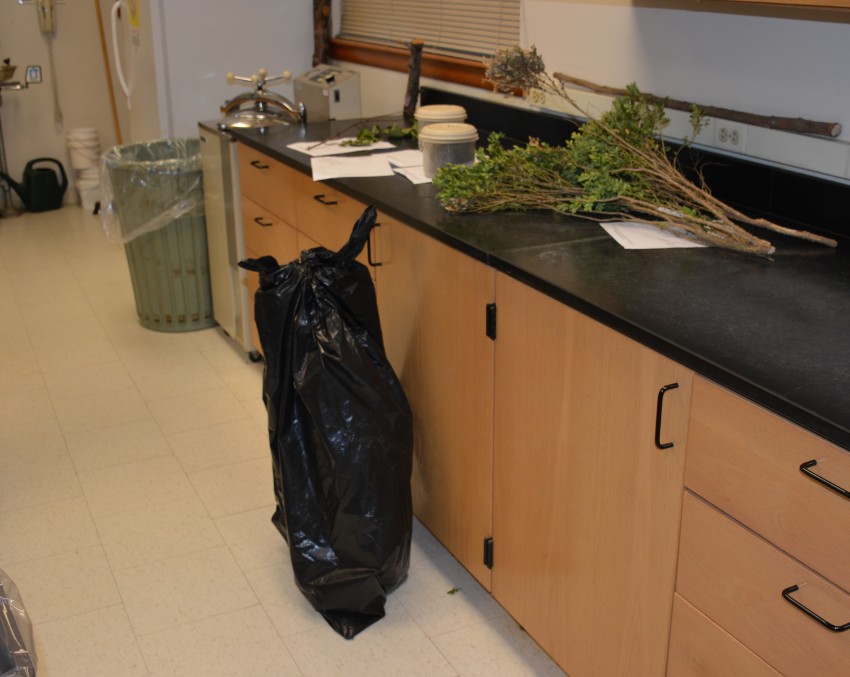
Boxwood blight infected sample is in the black plastic bag. Winter damaged boxwood sample is on the counter. Photo: Richard Buckley, Rutgers PDL

Boxwood blight infected sample is on the floor in the black plastic bag. Winter damaged boxwood sample is on the counter. Photo: Richard Buckley, Rutgers PDL

Just a short note today to keep you on your toes! And by the way, please notice how the sample was submitted – an entire plant, double-bagged…

BBR – Boxwood Blight Revisited

I heard through the grapevine about a site with some dead boxwoods, so I went to take a look and here is what I saw.

Boxwood garden. Photo: Richard Buckley, Rutgers PDL

Boxwood garden. Photo: Richard Buckley, Rutgers PDL

[Read more…]

Boxwoods: Now You See Them, Soon You Won’t!

Samples of boxwood infected with the fungus Cylindrocladium pseudonaviculatum, the cause of boxwood blight, have been confirmed by the Rutgers Plant Diagnostic Laboratory and the New Jersey Department of Agriculture Laboratory in recent days. This is the first report of the disease is New Jersey.

Boxwood blight leaf lesion. Photo: Sabrina Tirpak, Rutgers PDL

Boxwood blight leaf lesion. Photo: Sabrina Tirpak, Rutgers PDL

[Read more…]