Search Results for: corn borer

Vegetable IPM Update 6/26/24

Sweet Corn

European corn borer (ECB) moths have declined in blacklight traps in the northern and central counties, and feeding is also declining as previously infested plantings enter the silk stage and are treated.   Plantings now in whorl stage are showing little feeding.

The highest nightly trap catches of ECB for the week ending 6/26/24 are as follows:

Farmingdale   1
Milltown   1
Pennington   1


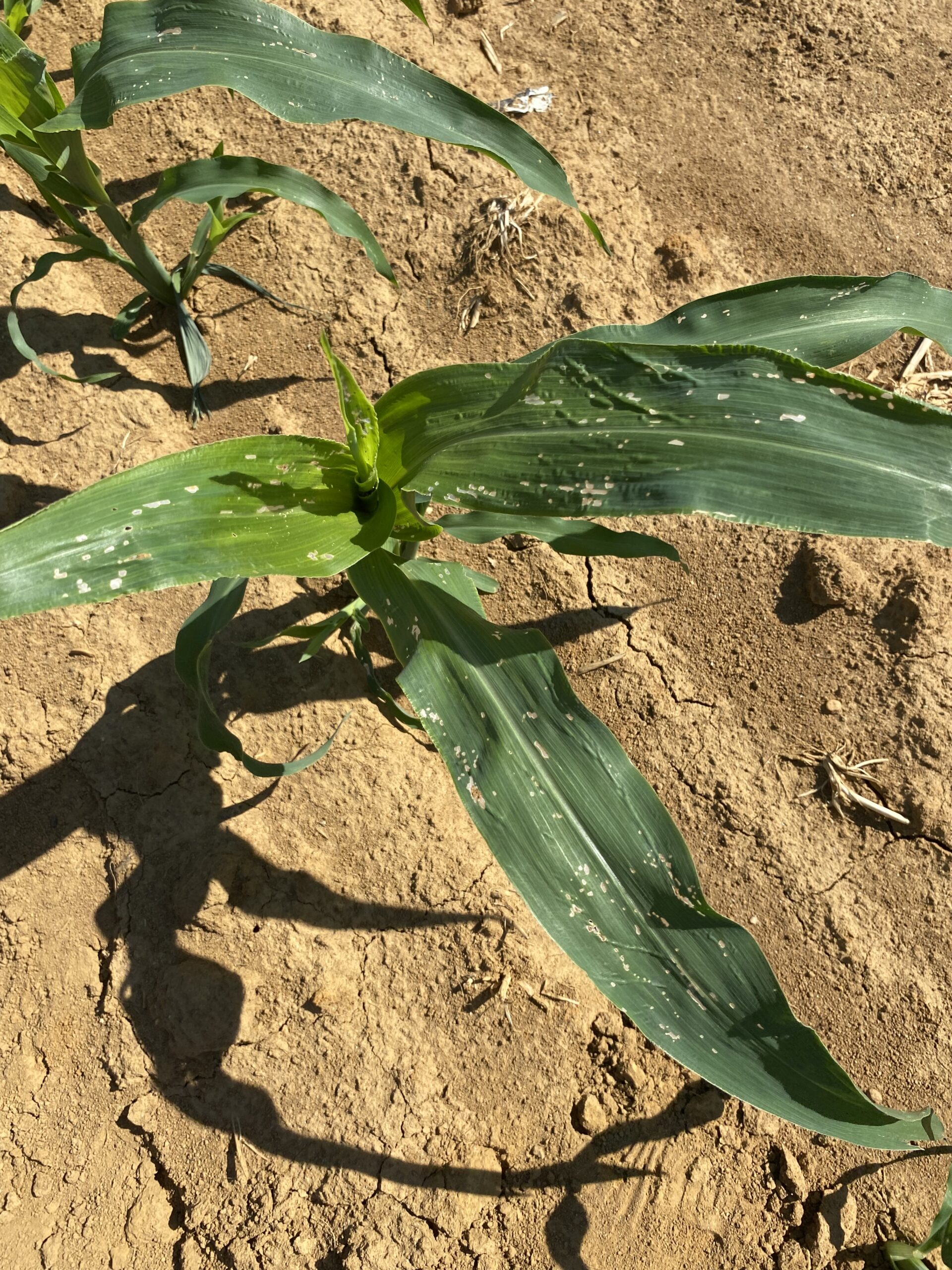
Low level fall armyworm (FAW)  infestations have been detected in a few whorl stage plantings in central counties ranging from Princeton in Mercer County to Farmingdale in Monmouth County.  There are likely more of these infestations in central and southern NJ counties.  The appearance of very scattered clusters of infested plants points to a low number of moths arriving prior to the last weather front.  These individuals will have deposited eggs on small groups of plants, resulting in the feeding pattern we now see.  Many of these fields are below 2% plants infested.  It is possible, however, that some fields in the southern counties have higher infestation levels, so it’s important to check these short whorl plantings at least weekly.

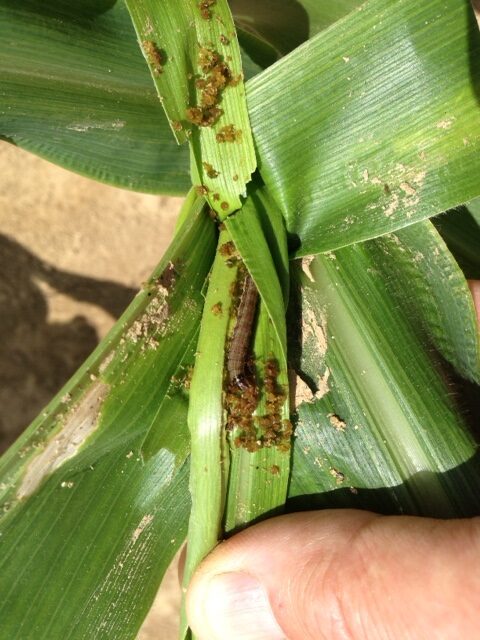
Newly hatched FAW larvae cause holes and scratches on leaves that are similar to ECB feeding, except that they tend to be more concentrated and always lead down into the whorl  (see photo at left).  As the larvae grow, the feeding becomes more destructive, with large ragged holes and obvious droppings deposited in the whorl (see photo at right)Infected plant

We will provide updates on new FAW appearances and severity as reports come in.  FAW are resistant to synthetic pyrethroids.  Effective sprays should include IRAC grp. 5 (spinosyns) or IRAC grp. 28 (diamides).  The carbamate (IRAC grp. 1A) Lannate is also still effective.  Sufficient water should be used in the applications to allow the solution to penetrate the layer of droppings that may have formed above the caterpillar.
[Read more…]

Vegetable IPM Update 6/19/24

Sweet Corn

European corn borer (ECB) moths continue to be captured in blacklight traps in the northern and central counties, although catches are occurring at fewer sites.  The highest feeding levels are in Somerset and southern Hunterdon Counties.   ECB injury is declining as infested plantings pass into the tassel stage and receive the first insecticide application.  Plantings now in whorl stage are showing little feeding.  While ECB has become something of a local phenomenon in NJ, growers should not assume that feeding is below economic levels in their area.  ECB infestations will be present for another 1-2 weeks.

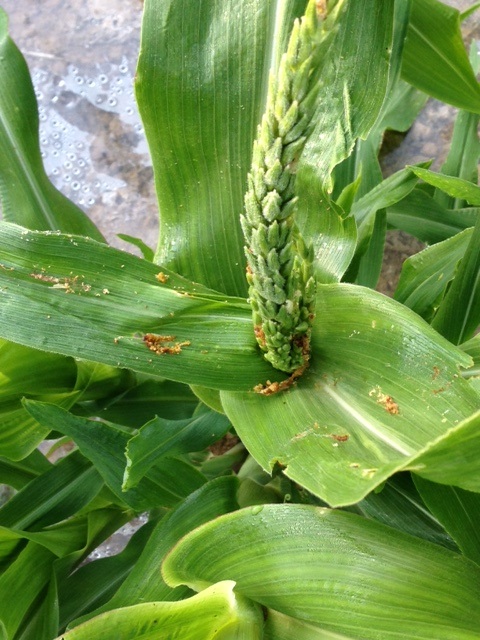
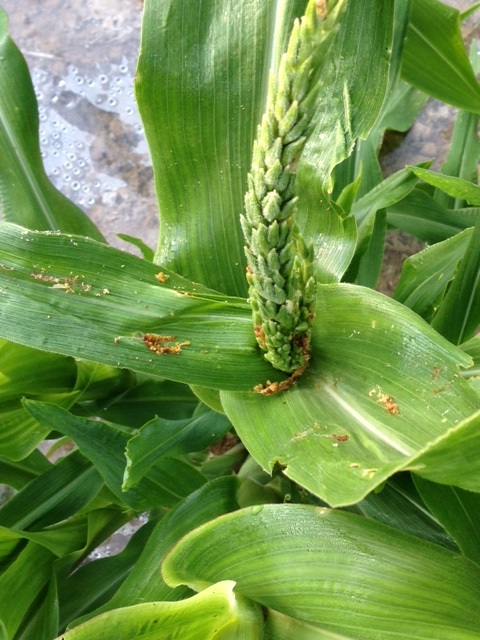
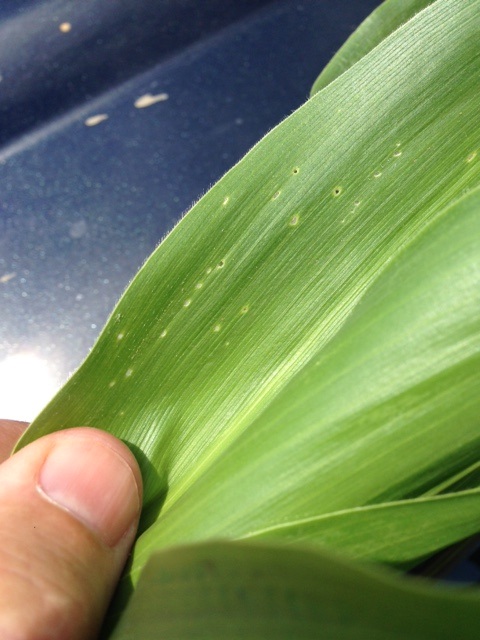
Look for the characteristic “shot-hole” type of feeding (photo  below at right) and consider treating when infested plants exceed 12% in a 50 plant sample.  As plantings proceed to the pre-tassel stage, ECB larvae may be found in emerging tassels (see photo at left)It is a good idea to treat individual plantings as they move into the full tassel/first silk stage one time.  This eliminates any ECB larvae that have emerged with the tassels as they begin to move down the stalk to re-enter near developing ears.


Useful insecticides for this particular application include synthetic pyrethroids (IRAC Grp 3), spinosyns (including OMRI approved Entrust) IRAC Grp 5), and diamides such as Coragen or Vantacor (IRAC Grp 28) or materials such as Besiege which include the active ingredient in Coragen.  Synthetic pyrethroids alone should NOT be used for corn earworm (CEW) protection on silking corn.  Control with these materials is very inconsistent.

The highest nightly trap catches of ECB for the week ending 6/19/24 are as follows:

South Branch   3 Farmingdale   1 Pennington   1
Califon   1 Hillsborough   1 Princeton   1
Clinton   1 Old Bridge   1

[Read more…]

Vegetable IPM Update 6/12/24

Sweet Corn

European corn borer (ECB) moths continue to be captured in blacklight traps in the northern and central counties, with highest moth activity in Middlesex, Somerset and lower Hunterdon counties.  The highest feeding levels are in Somerset and southern Hunterdon Counties.   ECB injury over 20% of plants infested has been found in that area recently.  While ECB has become something of a local phenomenon in NJ, growers should not assume that feeding is below economic levels in their area.   It is typical for feeding percentages to rise as the moth catch declines.  We expect feeding to increase for the next 1-2 weeks before peaking.

Look for the characteristic “shot-hole” type of feeding (photo  below at right) and consider treating when infested plants exceed 12% in a 50 plant sample.  As plantings proceed to the pre-tassel stage, ECB larvae may be found in emerging tassels (see photo at left)It is a good idea to treat individual plantings as they move into the full tassel/first silk stage one time.  This eliminates any ECB larvae that have emerged with the tassels as they begin to move down the stalk to re-enter near developing ears.


Useful insecticides for this particular application include synthetic pyrethroids (IRAC Grp 3), spinosyns (including OMRI approved Entrust) IRAC Grp 5), and diamides such as Coragen or Vantacor (IRAC Grp 28) or materials such as Besiege which include the active ingredient in Coragen.  Synthetic pyrethroids alone should NOT be used for corn earworm (CEW) protection on silking corn.  Control with these materials is very inconsistent.

The highest nightly trap catches of ECB for the week ending 6/12/24 are as follows:

Bellemeade   3 Denville   1 Milford   1
South Branch   2 Georgetown   1 Oldwick   1
Asbury   1 Hillsborough   1 Pennington   1
Dayton   1 Lawrenceville   1 Sergeantsville   1

[Read more…]

Vegetable IPM Update 6/05/24

Sweet Corn

European corn borer (ECB) moth captures are fairly steady at low levels in northern and central county light traps.  Feeding has been detected in some whorl and pretassel stage plantings where scouting is occurring.  Thus far, feeding has been mostly in single digit percentages, although one planting in Somerset County approached 20% plants infested.  Feeding may be expected to rise modestly over the next two weeks.  Whorl corn is the primary target for egg laying.  Feeding may be present  at higher numbers in the southern counties.

European corn borerLook for the characteristic “shot-hole” type of feeding (photo below at right) and consider treating when infested plants exceed 12% in a 50 plant sample.  As plantings proceed to the pre-tassel stage, ECB larvae may be found in emerging tassels (see photo at left)It is a good idea to treat individual plantings as they move into the full tassel/first silk stage one time.  This eliminates any ECB larvae that have emerged with the tassels as they begin to move down the stalk to re-enter near developing ears.


Useful insecticides for this particular application include synthetic peasts on a leafpyrethroids (IRAC Grp 3), spinosyns (including OMRI approved Entrust) IRAC Grp 5), and diamides such as Coragen or Vantacor (IRAC Grp 28) or materials such as Besiege which include the active ingredient in Coragen.  It should be noted that Coragen or Vantacor, used alone, are not toxic to bees that may be visiting corn tassels during this stage.  Synthetic pyrethroids alone should NOT be used for corn earworm (CEW) protection on silking corn.  Control with these materials is very inconsistent.

The highest nightly trap catches of ECB for the week ending 6/05/24 are as follows:

Asbury   1 Lawrenceville   1
Clinton   1 Milford   1
Dayton   1 Oldwick   1
Georgetown   1 Princeton   1
Hillsborough   1 South Branch   1

[Read more…]

Vegetable IPM Update 5/29/24

Sweet Corn

European corn borer (ECB) moth captures have increased in northern and central county light traps.  Numbers are low, as they have been in recent years, and no feeding has been detected on whorl and pre-tassel stage sweet corn as far south as northern Burlington County.  Whorl corn is the primary target for egg laying.  If the peak of the first flight is late, it sometimes results in heavier infestations on 2nd and 3rd plantings than on the first.  Feeding may be present in the southern counties, and should rise over the next 3 weeks.

European corn borerLook for the characteristic “shot-hole” type of feeding (photo below at right) and consider treating when infested plants exceed 12% in a 50 plant sample.  As plantings proceed to the pre-tassel stage, ECB larvae may be found in emerging tassels (see photo at left)It is a good idea to treat individual plantings as they move into the full tassel/first silk stage one time.  This eliminates any ECB larvae that have emerged with the tassels as they begin to move down the stalk to re-enter near developing ears.


Useful insecticides for this particular application include synthetic peasts on a leafpyrethroids (IRAC Grp 3), spinosyns (including OMRI approved Entrust) IRAC Grp 5), and diamides such as Coragen or Vantacor (IRAC Grp 28) or materials such as Besiege which include the active ingredient in Coragen.  It should be noted that Coragen or Vantacor, used alone, are not toxic to bees that may be visiting corn tassels during this stage.  Synthetic pyrethroids alone should NOT be used for corn earworm (CEW) protection on silking corn.  Control with these materials is very inconsistent.

The highest nightly trap catches of ECB for the week ending 5/29/24 are as follows:

Bellemeade   1 Hillsborough   1
Califon   1 Sergeantsville   1
Farmingdale   1 South Branch   1
Georgetown   1

[Read more…]

Vegetable IPM Update 5/22/24

Sweet Corn

A few scattered European corn borer (ECB) moths have been captured in central and northern counties, and this insect is certainly active in southern parts of the state.  Numbers are very low, which is consistent with the last few seasons.   Whorl corn is the primary target for egg laying, but as yet, scouts have reported no signs of feeding injury in the few plantings that are of suitable maturity.  In northern and central counties, corn plantings that were started on/under plastic have reached a size that will support ECB larvae.  We expect to encounter some level of feeding over the next 2-3 weeks, although the majority of plantings have not required insecticide treatments for ECB prior to full tassel in the past several years.

European corn borerLook for the characteristic “shot-hole” type of feeding (photo below at right) and consider treating when infested plants exceed 12% in a 50 plant sample.  As plantings proceed to the pre-tassel stage, ECB larvae may be found in emerging tassels (see photo at left).  It is a good idea to treat individual plantings as they move into the full tassel/first silk stage one time.  This eliminates any ECB larvae that have emerged with the tassels as they begin to move down the stalk to re-enter near developing ears.

Useful insecticides for this particular application include synthetic damaged leafpyrethroids (IRAC Grp 3), spinosyns (including OMRI approved Entrust) IRAC Grp 5), and diamides such as Coragen or Vantacor (IRAC Grp 28) or materials such as Besiege which include the active ingredient in Coragen.  Synthetic pyrethroids alone should NOT be used for corn earworm (CEW) protection on silking corn.  Control with these materials is very inconsistent.

The highest nightly trap catches* of ECB for the week ending 5/22/24 are as follows:

Asbury   1 Georgetown   1
Califon   1 Sergeantsville   1
Farmingdale   1 South Branch   1

*  No blacklight traps are in operation south of the Columbus (Burlington Co.) area this season.

[Read more…]