Search Results for: corn borer

Veg IPM Update: Week Ending 5/11/16

Mites and feeding signs on lower leaf surface. Aphids also present.

Mites and feeding signs on lower leaf surface. Aphids also present.

Two-spotted spider mite (TSSM) infestations have recently been discovered in high tunnels.

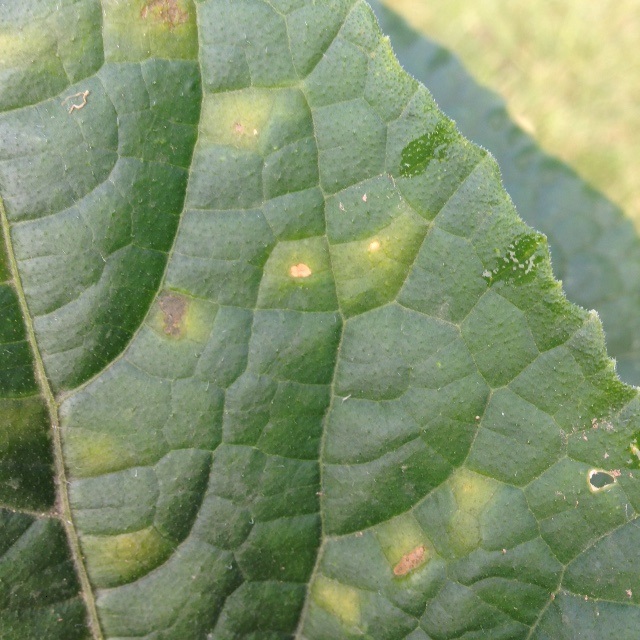
TSSM feeding results in small white pin-spots on the upper leaf surface (see photos).  Mites are actually underneath leaves.  These pests can increase dramatically in the warm, dry environment of the tunnel.

Check 5 plants each in 5 separate locations in the tunnel.  Inspect the entire plant, and be sure to check the underside of leaves that display the whitish mite feeding.  If mites are found, it is best to immediately treat.  TSSM is much more easily managed, when the problem is addressed at low levels.  If allowed to spread throughout the tunnel, TSSM will be much more difficult to control.

See the 2016 Commercial Vegetable Production Recommendations – Pest Management section for materials that are labeled for use in greenhouse structures, including those that are OMRI approved.
[Read more…]

Veg IPM Update: Week Ending 5/3/16

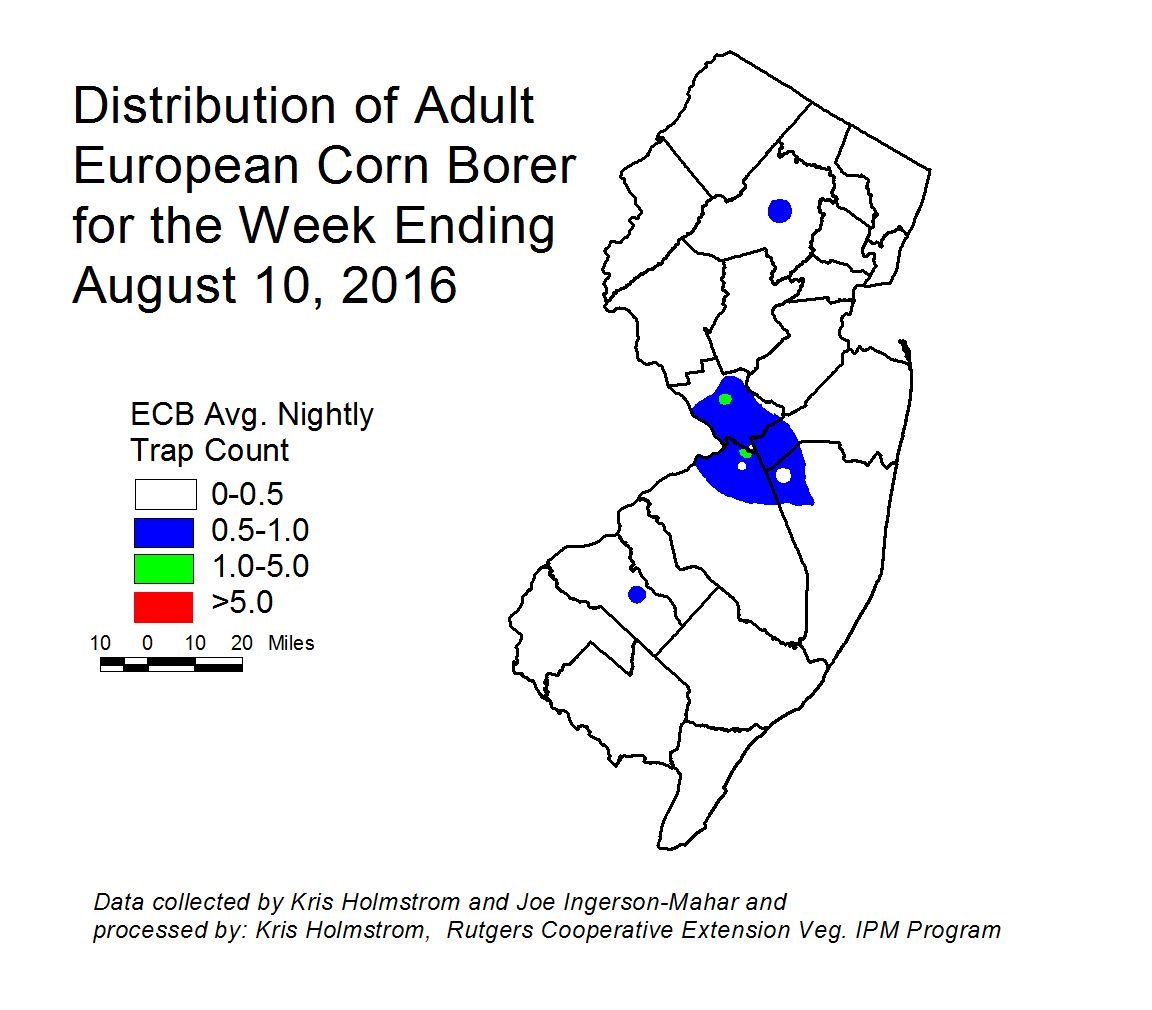
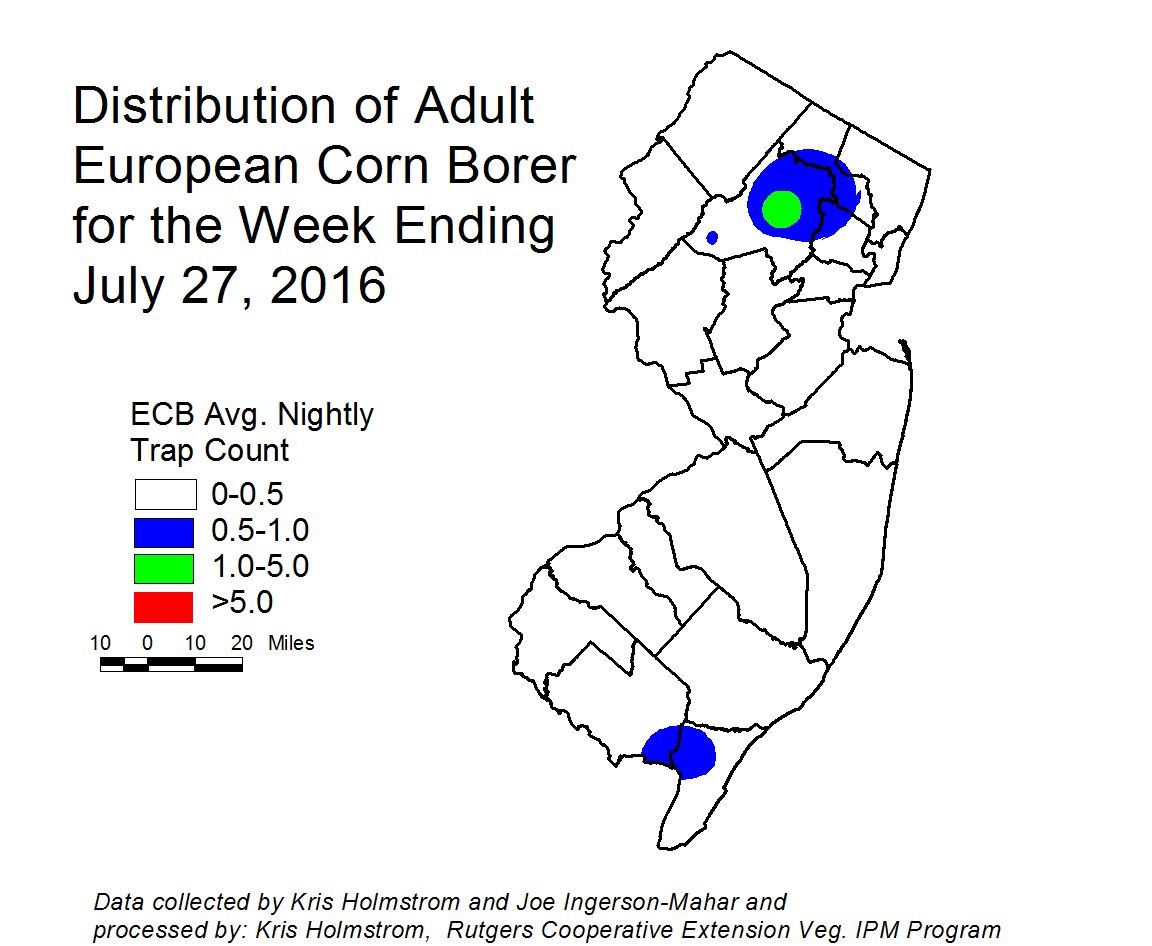
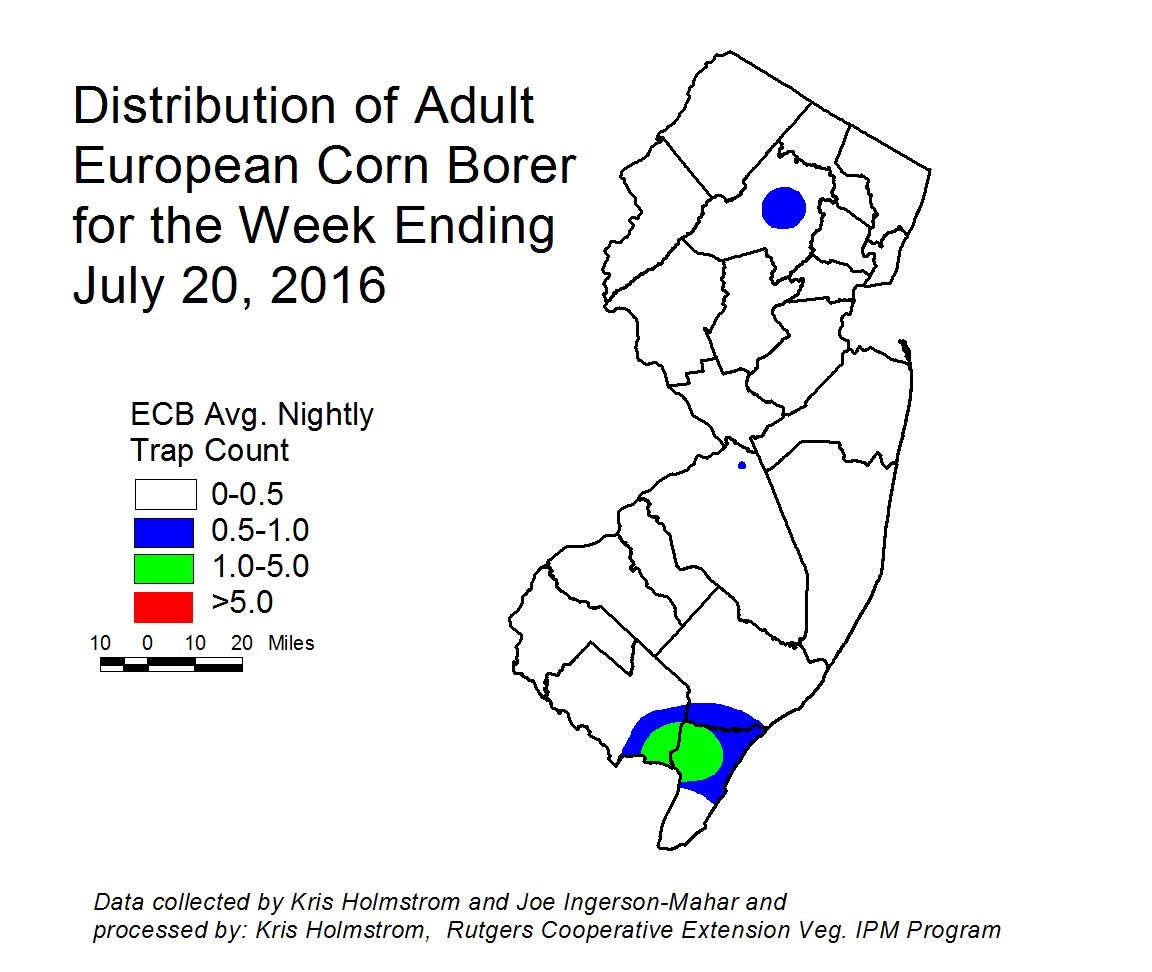
Note: The black light trap network has been deployed and is being monitored by IPM Program personnel. The corn earworm (CEW) pheromone trap network is not yet deployed. As adult European corn borer (ECB) and CEW begin to arrive in traps, population maps of these pests will be published in the Plant and Pest Advisory on a weekly basis. Additionally, maps of the brown marmorated stink bug (BMSB) will also appear in this publication. As the CEW pheromone traps in southern NJ begin to register catches, maps of these pest captures will also be published.

Cole Crops

Last week’s warm, sunny days, resulted in some infestations of crucifer flea beetle. Current cold, wet conditions are less favorable for flea beetle activity. These beetles can build to high populations quickly, especially where wild mustard and related cruciferous weeds are common. Mustard greens, radishes, arugula and Tuscan kale are favored hosts. Extreme feeding on small transplants can cause irreversible damage if not controlled promptly.

While flea beetles may be controlled with foliar applied insecticides, it is possible to get 2-3 weeks of protection by using a soil applied systemic insecticide at planting. This insures good establishment of the transplants without significant flea beetle injury.

Soil applied materials include [active ingredient – trade name (IRAC* code)]:
Clothianidin – Belay (4A)
Cyantranilaprole – Verimark (28)
Dinotefuran – Scorpion/Venom (4A)
Imidacloprid – Admire Pro (4A)

 
As yet, no imported cabbage worm or diamondback moth larvae have been detected in new field plantings. As these pests appear, identification, scouting procedures and control measures will be outlined in the update.

Veg IPM Update: Week Ending 10/7/15

Note: This is the last comprehensive IPM Update for the 2015 season. The trap networks are now being shut down. Limited scouting on late season crops will continue as conditions warrant. Should significant pest issues arise on these crops, information relevant to the pest and crop will be posted.

Sweet Corn

European corn borer (ECB) adults remain almost nonexistent. No map image will be produced. There should be little, if any, remaining impact from ECB this season.

Corn earworm moth (CEW) activity declined significantly over the previous week, with low temperatures prevailing (see CEW Map). At current levels, sweet corn is at reduced threat from CEW infestation.

The highest nightly CEW blacklight trap catches for the previous week are as follows:
Crosswicks  2 Georgetown  1 Sergeantsville  1
Califon  1 New Egypt  1 Tabernacle  1
Chester  1 Newton  1
Dayton  1 Pedricktown  1
cew10072015

Click to View

The blue areas in the blacklight map indicate a 4-day schedule, with clear areas indicating anything from a 5 to 7 day schedule. In general, 5-day schedules are suggested throughout southern NJ at this time.
[Read more…]

Veg IPM Update: Week Ending 9/30/15

Sweet Corn

European corn borer (ECB) adults were nearly nonexistent this past week. No map image will be produced. There should be little, if any, remaining impact from ECB this season.

Corn earworm moth (CEW) activity declined over the previous week, with low temperatures prevailing (see CEW Map). The current warmer, disturbed weather pattern and tropical storm forecast to hit our area within the next week may result in increased activity. At current levels, CEW remains a significant threat to silking sweet corn plantings.

The highest nightly CEW blacklight trap catches for the previous week are as follows:
Crosswicks  2 Georgetown  1 Pedricktown  1
Belvidere  1 Milltown  1 Sergeantsville  1
Chester  1 New Egypt  1 Springdale  1
East Vineland  1 Newton  1 Tabernacle  1

[Read more…]

Veg IPM Update: Week Ending 9/23/15

Click to View

Click to View

Sweet Corn

Cool night temperatures and a declining late European corn borer (ECB) generation have resulted in very few moth captures this past week (see ECB map). Damage from this pest is largely being overshadowed by that of the fall armyworm. Very few plantings remain that are not silking. However, consider treating when the number of infested plants in a 50 plant sample exceeds 12% in any planting that has not reached the silk stage yet.

See the 2015 Commercial Vegetable Recommendations Guide for insecticide choices.

[Read more…]

Veg IPM Update: Week Ending 9/16/15

Click to View

Click to View

Sweet Corn

Only a scattering of European corn borer (ECB) moths are being captured now, with somewhat more consistent catches in Mercer County (see ECB map). Damage from this pest is largely being overshadowed by that of the fall armyworm.

As always, consider treating when the number of infested plants in a 50 plant sample exceeds 12%. Any planting remaining at or above threshold as it proceeds to full tassel should be treated, as this is the last stage at which ECB larvae will be exposed and vulnerable to insecticidal sprays.

See the 2015 Commercial Vegetable Recommendations Guide for insecticide choices.

[Read more…]