Sweet Corn
Warmer evening temperatures have resulted in modest increases in European corn borer (ECB) moth catches in blacklight traps in the northern and central counties. Whorl corn is the primary target for egg laying, and injury over the 12% threshold has been found in Hunterdon County this week. It is likely that there are pockets of feeding throughout the southern counties. Despite relatively low numbers, this pest still poses a threat to plantings now approaching full tassel. It is typical for feeding percentages to rise as the moth catch declines. We expect feeding to increase for the next 1-2 weeks before peaking.
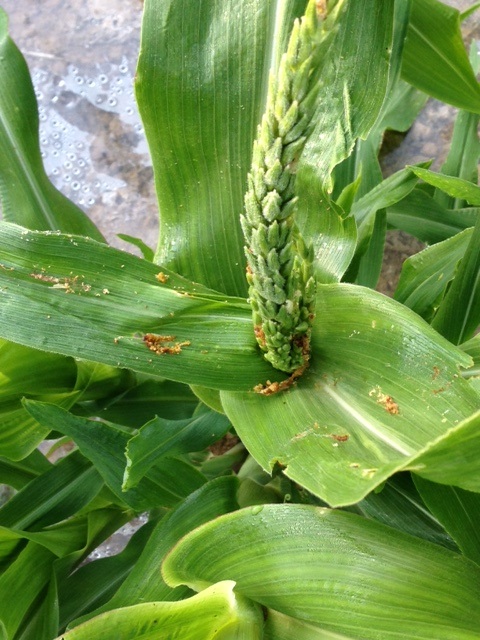
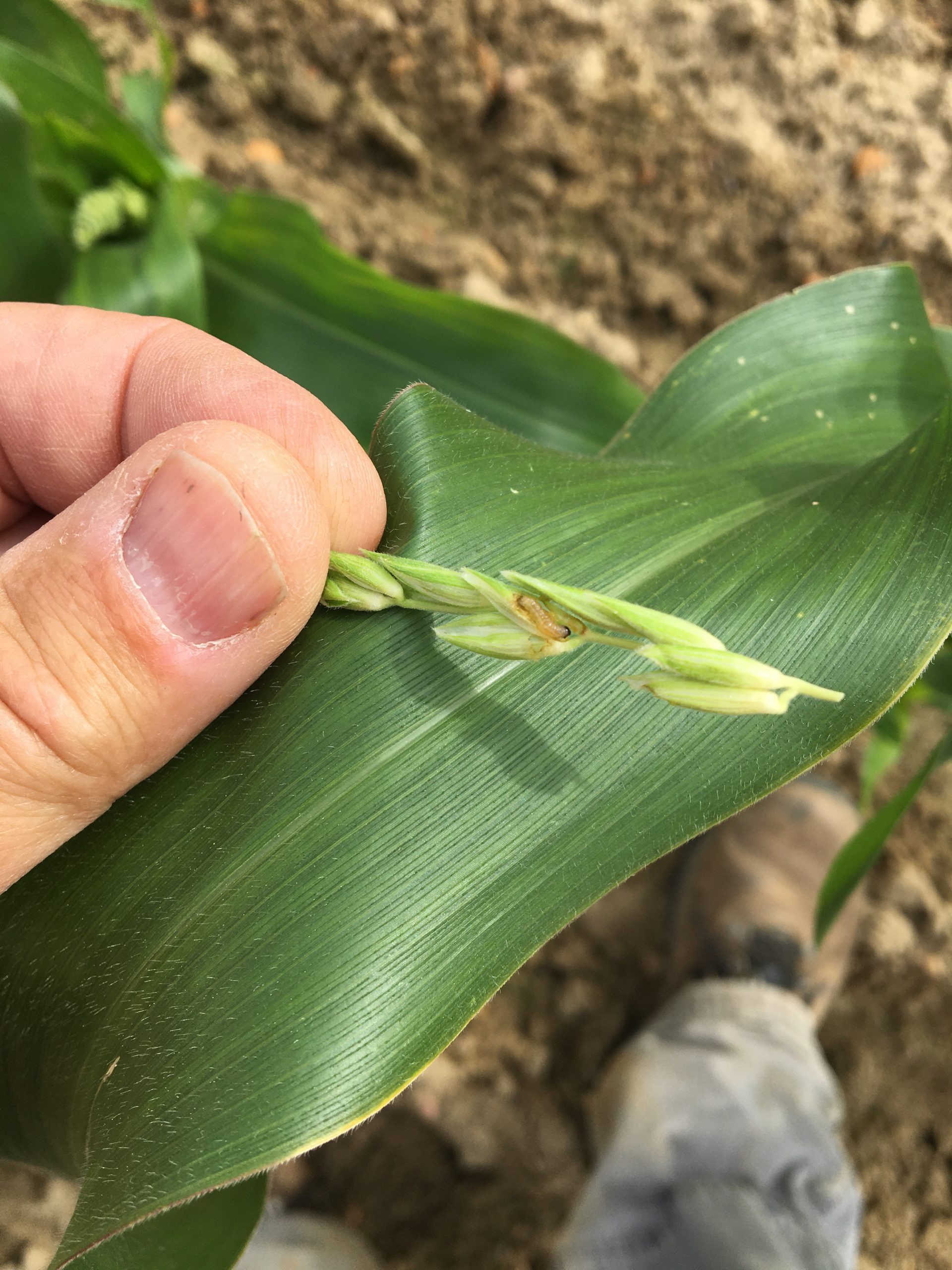 Look for the characteristic “shot-hole” type of feeding (photo below at right) and consider treating when infested plants exceed 12% in a 50 plant sample. As plantings proceed to the pre-tassel stage, ECB larvae may be found in emerging tassels (see photo at left). It is a good idea to treat individual plantings as they move into the full tassel/first silk stage one time. This eliminates any ECB larvae that have emerged with the tassels as they begin to move down the stalk to re-enter near developing ears.
Useful insecticides for this particular application include synthetic 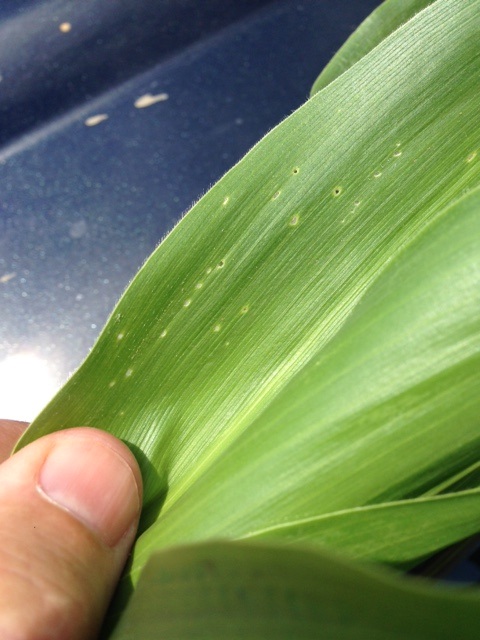 pyrethroids (IRAC Grp 3), spinosyns (including OMRI approved Entrust) IRAC Grp 5), and diamides such as Coragen or Vantacor (IRAC Grp 28) or materials such as Besiege which include the active ingredient in Coragen. Synthetic pyrethroids alone should NOT be used for corn earworm (CEW) protection on silking corn. Control with these materials is very inconsistent.
The highest nightly trap catches of ECB for the week ending 6/07/23 are as follows:
| Sergeantsville 2 | Oldwick 1 |
| Asbury 1 | Port Murray 1 |
| Hillsborough 1 | South Branch 1 |