Landscape, Ornamentals, Nursery, and Turf Edition

Seasonal updates on ornamental, nursery, and turf pests.
Subscriptions are available via EMAIL and RSS.


Companion Website Links:

Rutgers Turf Blog - Articles on turfgrass diseases and cultural practices for the commercial turfgrass industry. Subscription available via RSS.


Rutgers Weather Forecasting - Meteorological Information important to commercial agriculture.

Quality Loss Adjustment (QLA) Program Now Available for Eligible Producers Affected by 2018, 2019 Natural Disasters

The U.S. Department of Agriculture’s (USDA) Farm Service Agency (FSA) has announced that signup for the Quality Loss Adjustment (QLA) Program began Wednesday, Jan. 6, 2021. Funded by the Further Consolidated Appropriations Act of 2020, this new program provides assistance to producers who suffered eligible crop quality losses due to natural disasters occurring in 2018 and 2019. The deadline to apply for QLA is Friday, March 5, 2021. [Read more…]

Diplodia Tip Blight: The Key to Infections is Found Within the Cones

Diplodia Tip Blight (Diplodia pinea) is a fungus disease in the landscape commonly observed on Austrian pines (Pinus nigra), but can also be found infecting mugo, red, black, & Scots pines. This blog will emphasize with photos the infections seen on Austrian pines.

The symptoms of Diplodia Tip Blight are stunted or dead shoots. With extensive infections, almost every branch & twig can be affected as the disease spreads over the years. The lower branches of the Austrian pines are usually infected first. For numerous years, the upper canopy will initially show few symptoms. The fungus kills developing needles in the spring, resulting in dead candles that are deformed & much shorter than the growth found on healthy twigs.

Austrian pine with obvious symptoms from Diplodia Tip Blight infections. (Photo Credit: Steven K. Rettke, Rutgers Coop. Ext.)
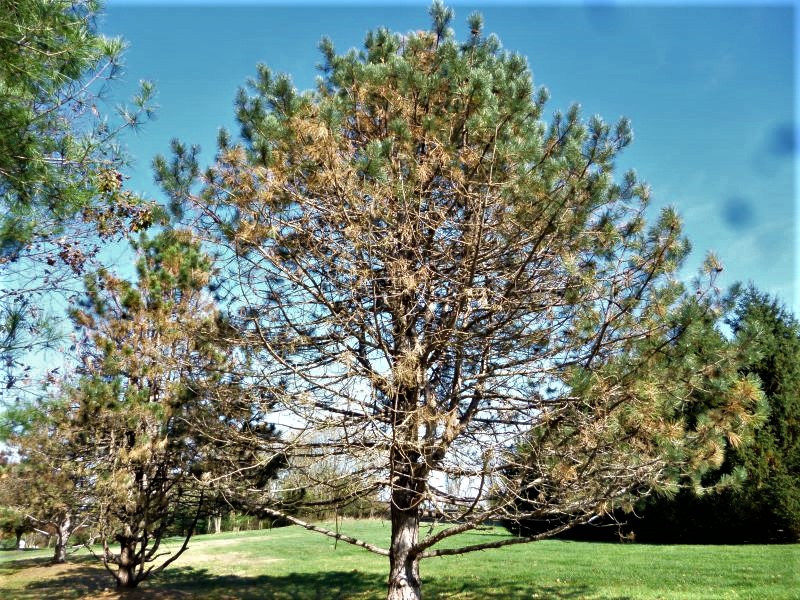
Stunted or dead newly emerged twig shoots on Austrian pine branch. (Photo Credit: Steven K. Rettke, Rutgers Coop. Ext.)


[Read more…]

USDA Extends Crop Insurance Flexibilities Amid Continuing COVID-19 Pandemic

Through today’s announcement, USDA’s Risk Management Agency (RMA) is extending crop insurance flexibilities for producers amid the continuing COVID-19 pandemic. Specifically, relief provided for electronic notifications and signatures is extended through July 15, 2021; organic certification, replant self-certification and assignment of indemnity are extended through June 30, 2021. [Read more…]

Primer on Anti-Transpirant Applications

Purpose

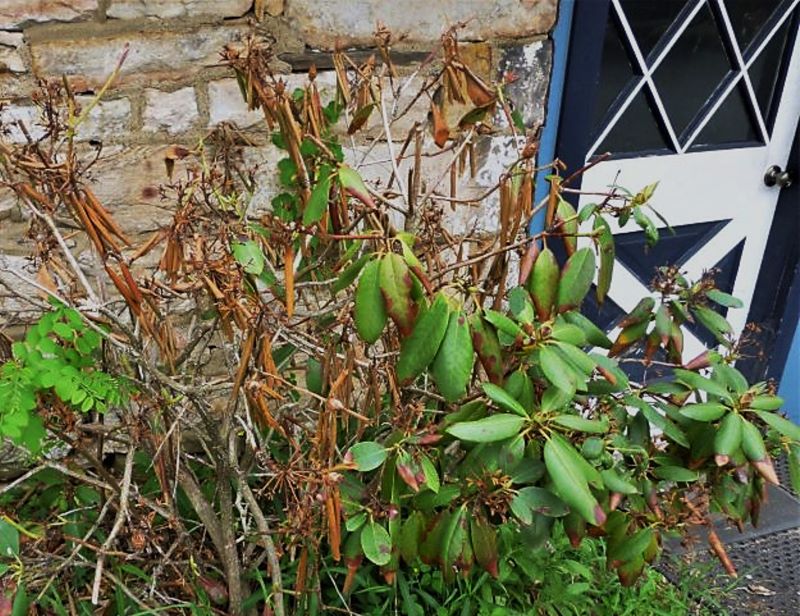
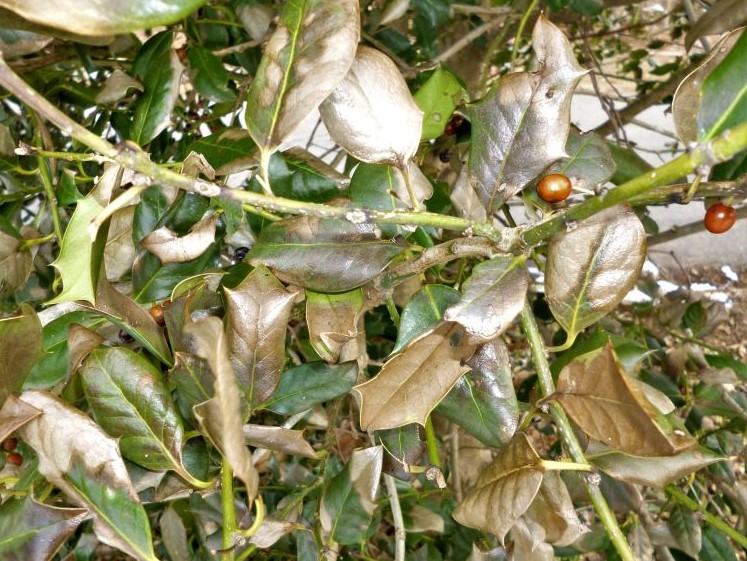
During the weeks of late fall & early winter, many landscapers apply their annual anti-desiccant sprays to broadleaf evergreen plants. Some of the common trade names of these liquid resin, spray-on products include Vapor-Guard, Wilt-Pruf, Stress Guard, and Nu-Film. Although plants go dormant during the winter, evergreens will continue to transpire given certain conditions. These applications help reduce excessive water loss from leaves during the dry winter months when the ground is frozen. An anti-transpirant is a film-forming complex of polyethylene’s and polyterpenes that when applied to foliage will reduce the moisture vapor transmission rate. Although much of the transpiration from leaves occur through small openings (stomates) under the leaves, a significant amount of water loss can also occur directly through the leaf cuticle or epidermis. The anti-transpirants function by increasing cuticle thickness of broadleaf evergreens.

This Rhododendron may have some winter injuries, but the primary cause for the plant decline is from wood borers. (Photo Credit: Steven K. Rettke, Rutgers Coop. Ext.)
Desiccated holly leaves (Winter Burn) with obvious symptoms. (Photo Credit: Steven K. Rettke, Rutgers Coop. Ext.)


[Read more…]

A Primer on Dormant Oil Applications

Dormant Oil Guidelines:

Dormant oils at 2-4% rates in the late fall & late winter seasons can aid in the control of overwintering insects and insect eggs. Consider treating for such pests as aphids (eggs), southern red mites/eggs, spruce spider mites/eggs, oak spider mites (eggs), eriophyid mites/eggs, spruce gall adelgids, lace bugs (deciduous plants), cankerworms (eggs), leaftiers, psyllids, plant bugs, etc.

Some landscapers have been successful applying both late fall and early spring dormant oil treatments to the same plants on the same properties. This is a reasonable approach since a single dormant oil treatment will not provide 100% control and it gives the field technician another opportunity to monitor the landscape for problems.

Dormant oil sprays require excellent coverage & often repeat applications. (Photo Credit: Steven K. Rettke, Rutgers Coop. Ext.)
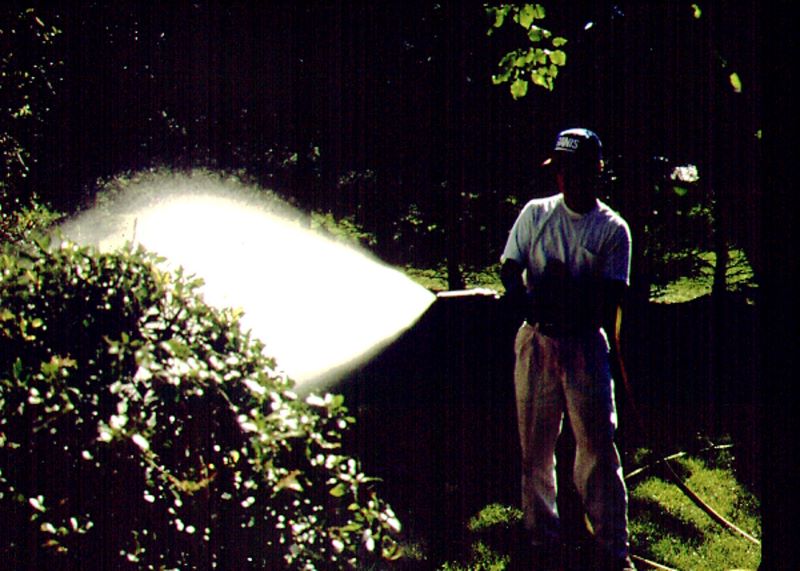
Japanese maple scale infested branch will likely require multiple dormant oil treatments to suppress. (Photo Credit: Steven K. Rettke, Rutgers Coop. Ext.)


[Read more…]

NJDEP Bulletin on Pesticide Licenses Arriving Late Due to COVID: RE-ISSUED with CORRECTION

If you have previously received an email from the NJDEP or others regarding the issuance of paper licenses, please note that the first announcement has been recalled and reissued with a change as noted. This is a courtesy copy of an email bulletin sent by Art Cencetti sent to those on record with email addresses […]
