Landscape, Ornamentals, Nursery, and Turf Edition

Seasonal updates on ornamental, nursery, and turf pests.
Subscriptions are available via EMAIL and RSS.


Companion Website Links:

Rutgers Turf Blog - Articles on turfgrass diseases and cultural practices for the commercial turfgrass industry. Subscription available via RSS.


Rutgers Weather Forecasting - Meteorological Information important to commercial agriculture.

Cool Season Mites Wax as the Warm Season Mites Wane

In the New Jersey region, the late weeks of September & early weeks of October are transition periods for warm season & cool season spider mite species found in landscapes & nurseries. The spruce spider mite & the southern red spider mite are the most common cool season species & they are now “waking-up” from their summer inactive period. Alternatively, the warm season two-spotted spider mite may have stopped feeding or will soon cease. They are rapidly declining & preparing to depart the leaves of their host plants if they have not already done so.

Two-Spotted Spider Mites & Burning Bush

Two-spotted spider mites that produced these stippling symptoms on burning bush this summer are now entering dormancy with the arrival of autumn
(Photo: Steven K. Rettke of RCE)
Spruce Spider Mites & Frasier-Fir

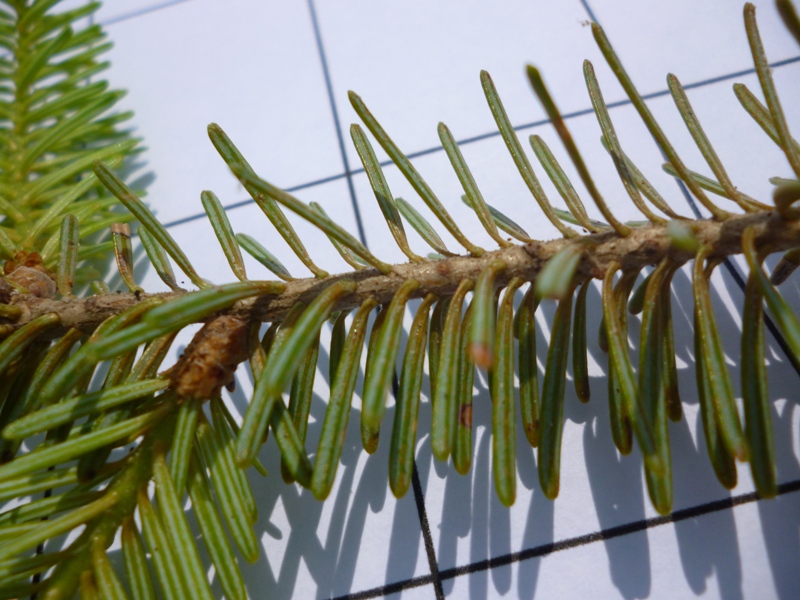
Spruce spider mites that were previously in a summer dormancy are now resuming activity again on this Frasier-fir as the autumn season arrives (Salem County Nursery)    (Photo: Steven K. Rettke of RCE)
[Read more…]

“Rain Shadows”

By Jim Murphy

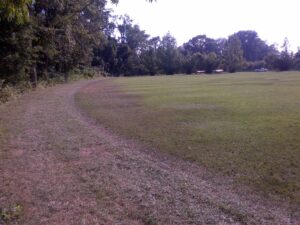
Many people are aware that tree root competition is part of the challenge of maintaining turf within the drip line of trees. But the canopy of trees also contributes to the challenge by capturing and retaining much, and in some cases all, of a rain.

Rain shadows have been evident for some time now but the damage from the soil dryness has reached moderate to severe levels over the last couple weeks. Many of the lighter rainfalls over the last month haven’t wet the grass let alone the soil under large trees at Hort Farm No. 2 in North Brunswick.

The cumulative effects of a “rain shadow” and tree root competition lead to drought stress under trees.

Source: Read More on the Rutgers Turf Blog

Magnolia and Tuliptree Scales: Two Exceptions to the Rule

Magnolia Scales (Neolecanium cornuparvum) & Tuliptree Scales (Toumeyella liriodendri) are both classified within the soft scale group. However, unlike essentially all the other soft scale species they have crawler emergence in August & September instead of in June & July. This fundamental difference is important to recognize in order to time sprays & achieve best controls.

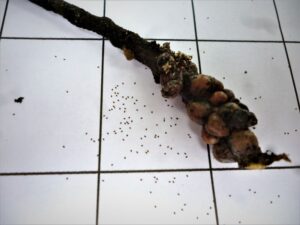
Hatched 1st instar magnolia scale crawlers knocked-off branch onto white paper. (Photo Credit: Steven K. Rettke, Rutgers Coop. Ext.)

[Read more…]

BBR – Boxwood Blight Revisited

I heard through the grapevine about a site with some dead boxwoods, so I went to take a look and here is what I saw.

Boxwood garden. Photo: Richard Buckley, Rutgers PDL

Boxwood garden. Photo: Richard Buckley, Rutgers PDL

[Read more…]

Orange is the New Black

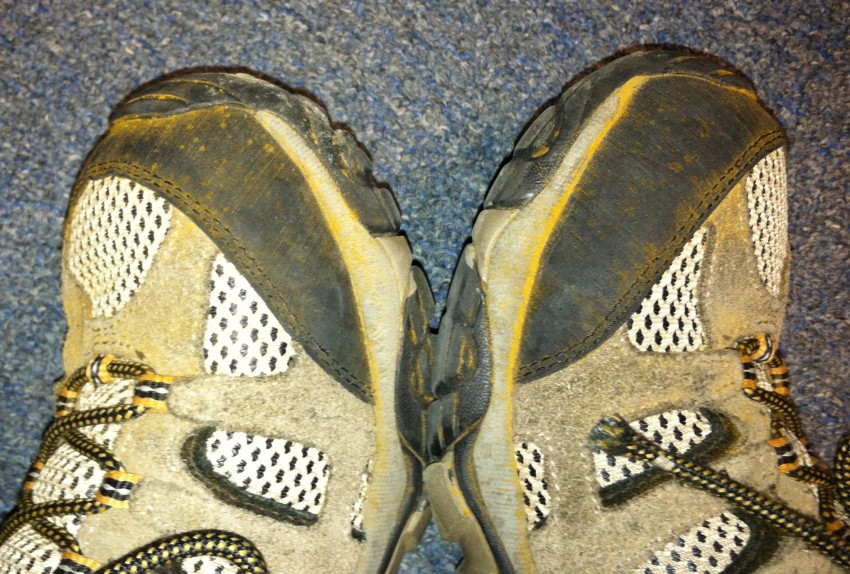
I went out to walk my orange dog this morning and wound up with orange shoes.  And no, the orange dust all over my shoes was not orange dog dandruff, but masses of rust spores.

Rust spores all over my shoes. Photo: Richard Buckley, Rutgers PDL

Rust spores all over my shoes. Photo: Richard Buckley, Rutgers PDL

[Read more…]

Cleaning-up Severe Crabgrass Infestations

By Jim Murphy

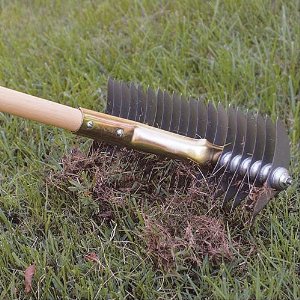
Use crabgrass rake to remove crabgrass infestations in small areas.

Use crabgrass rake to remove
crabgrass infestations in small areas.

If you’ve experience the number of rains that we have in New Brunswick, you are probably seeing plenty of crabgrass. Weather conditions have been ideal for crabgrass in many areas of the state.

You may be asking what can be done to clean-up this weed problem and reduce the impact on renovation practices that you may want to implement at this time of the year. [Read more…]