Landscape, Ornamentals, Nursery, and Turf Edition

Seasonal updates on ornamental, nursery, and turf pests.
Subscriptions are available via EMAIL and RSS.


Companion Website Links:

Rutgers Turf Blog - Articles on turfgrass diseases and cultural practices for the commercial turfgrass industry. Subscription available via RSS.


Rutgers Weather Forecasting - Meteorological Information important to commercial agriculture.

Crabgrass is Emerging

By Jim Murphy

Very small first and second leaves of emerging crabgrass can be seen now in open turf areas.

During the last couple weeks, we have seen crabgrass emerging from open turf areas that were previously infested with crabgrass. Crabgrass emergence will probably occur later than this on better maintained turfs with a dense canopy.
[Read more…]

Seeing Red, Feeling Blue?

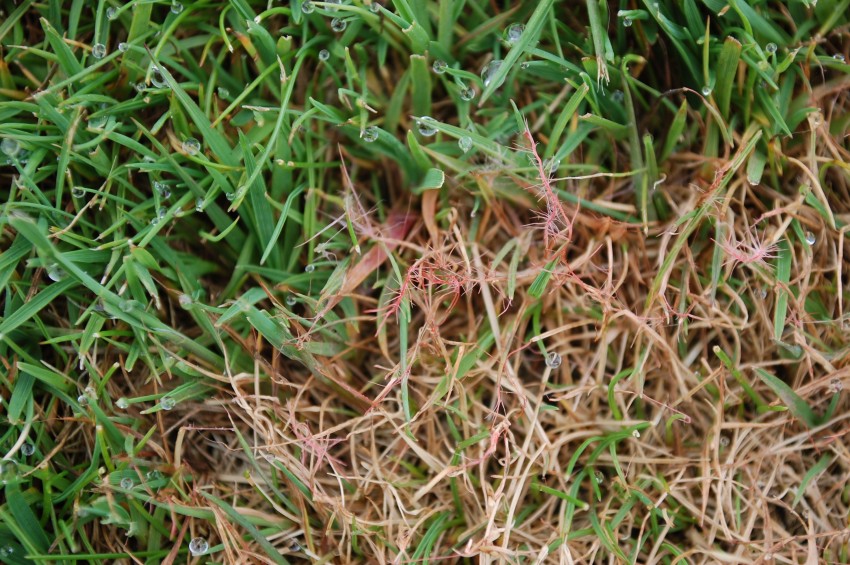
Red thread has been festering in turfgrass for some weeks now, but really blew up over the last few days. As long as there is plenty of moisture – light rain, heavy fogs, dew – and optimal temperatures (60ºF to- 75ºF) – the fungus that causes red thread, Laetisaria fuciformis, will tear up susceptible grasses.

Pseudoclerotia (red threads) of Isaria fusiformis are clearly evident on red thread infected fine fescue.

Pseudosclerotia (red threads) of Isaria fuciformis are clearly evident on red thread infected fine fescue. Photo: Sabrina Tirpak, Rutgers PDL

[Read more…]

Brown Ring Patch

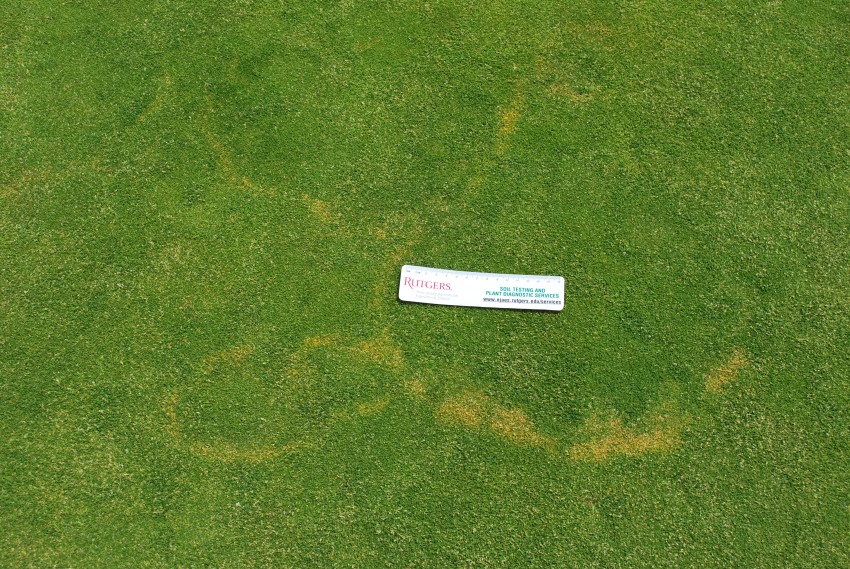
Several samples of brown ring patch found their way into the Plant Diagnostic Laboratory this week. Sometimes confused with take-all, fairy ring, or yellow patch, this relatively newly described malady of Poa annua putting greens is caused by the fungus Waitea circinata.

Brown ring patch on Poa annua

Brown ring patch on Poa annua. Photo: Richard Buckley, Rutgers PDL

[Read more…]

Bizzaro World

The crew of the Plant Diagnostic Laboratory are always on the hunt for new and exciting examples of plant damage. Last week, out walking her dog, Sabrina Tirpak our Principle Technician and photographer happened upon a red maple with these amazing red leaf spots.

Dramatic leaf spots caused by the ocellate maple gall midge, Acericecis ocellaris. Photo: Sabrina Tirpak, Rutgers PDL

[Read more…]

Happy Mothers Day!

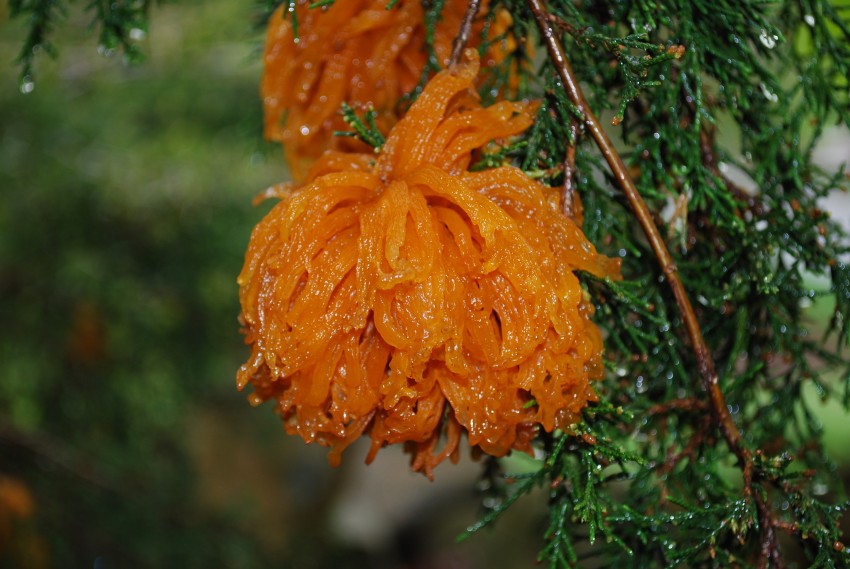
Just like clockwork and in time to thrill your mother for Mothers Day, the telia of the fungus Gymnosporangium juniperi-virginianae appeared on area junipers.

Telia of Gymnosproangium juniperous-virginianae

Telia of Gymnosporangium juniperi-virginianae on Eastern red cedar. Photo: Richard Buckley, Rutgers PDL

[Read more…]

Slow Green-up of Kentucky Bluegrass

By Jim Murphy

There are numerous elite varieties of Kentucky bluegrass (Compact Types) that have excellent tolerance of leaf spot, summer patch, and stripe smut diseases. Many varieties produce a very attractive, dense, compact (low growing) turf with dark green color during the summer.

Some elite varieties of Kentucky bluegrass exhibit slow spring green-up (plot in center foreground).

However, many of these Kentucky bluegrass varieties that are grown and sold as sod have the growth characteristic of long winter dormancy and slow spring green-up. The cool dry weather of this spring has certainly exacerbated this growth response. Full green-up of these varieties typically occurs by mid- to late-May.

Practices that hasten spring green-up of turf include fertilization with moderate amounts (0.4 to 0.7 pounds per 1,000 square feet) of water soluble nitrogen (WSN) and covering the turf with a growth blanket early in the spring (March and April).

Perennial ryegrass and tall fescue will often green-up several weeks earlier than these Compact Type Kentucky bluegrasses. Perennial ryegrass typically will have the earliest green-up.

Of the fine fescues used for turf, creeping red fescue will green-up earlier than Chewings fescue and hard fescue will have the slowest spring green-up. Green-up of creeping red fescue is relatively early and not too different from perennial ryegrass.

Source: Read More on the Rutgers Turf Blog