Landscape, Ornamentals, Nursery, and Turf Edition

Seasonal updates on ornamental, nursery, and turf pests.
Subscriptions are available via EMAIL and RSS.


Companion Website Links:

Rutgers Turf Blog - Articles on turfgrass diseases and cultural practices for the commercial turfgrass industry. Subscription available via RSS.


Rutgers Weather Forecasting - Meteorological Information important to commercial agriculture.

Volunteers Needed for Brown Marmorated Stink Bug Count

Scientists at the USDA are conducting a second year of the “Great Stink Bug Count” and are looking for volunteers from NJ! They are trying to identify characteristics of houses that brown marmorated stink bugs look for when finding overwintering sites. Last year’s count had over 200 volunteers with 44 individuals who counted every day.
BMSB OW

The basics:

  1. Fill out the form
  2. Count the BMSB on the exterior of your home each day
  3. Enter in your count data

Consider participating in the 2014 Great Stink Bug Count!

September 15 – October 15, 2014

You can download particpant forms herehttp://www.stopbmsb.org/2014-count

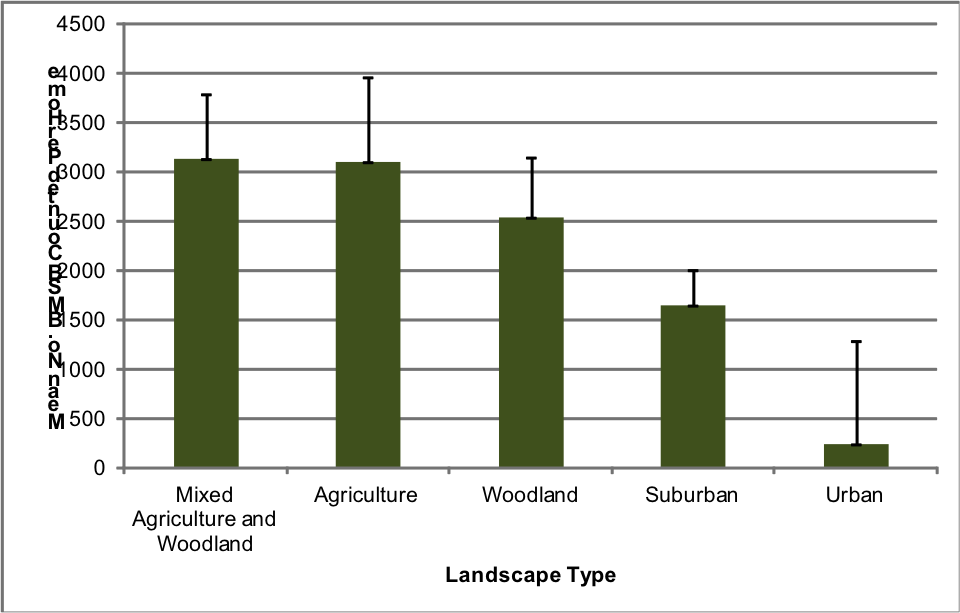
Results from 2013 are the first to document factors that may be important in where bugs chose to overwinter. Last year’s results suggest that landscape factors, specifically agriculture and woodland habitats, may have the greatest influence on the number of BMSB overwintering on a house.

This data will go a long way to helping us figure out important steps to managing BMSB. They are looking for citizen scientists to help out! Please fill out the attached form and send it in if you are interested!
Beware of the Cryptomeria Scale Hiding Beneath a Transparent Cover

Armored scales are generally regarded by green industry plant managers as being one of the more difficult insect pests to control. The Cryptomeria scale (Aspidiotus cryptomeriae ‘Kuwana’) is an armored scale that is notorious for being especially difficult to detect because of the translucent waxy cover. The elongate hemlock scale species resembles this scale, but it has a waxy cover that is caramel brown in color. Although the hosts of Cryptomeria scale can potentially include numerous conifer species, they are most typically found on hemlocks & pines in the landscape and on true firs in production situations such as Christmas tree farms. The damage potential is especially high on true firs.

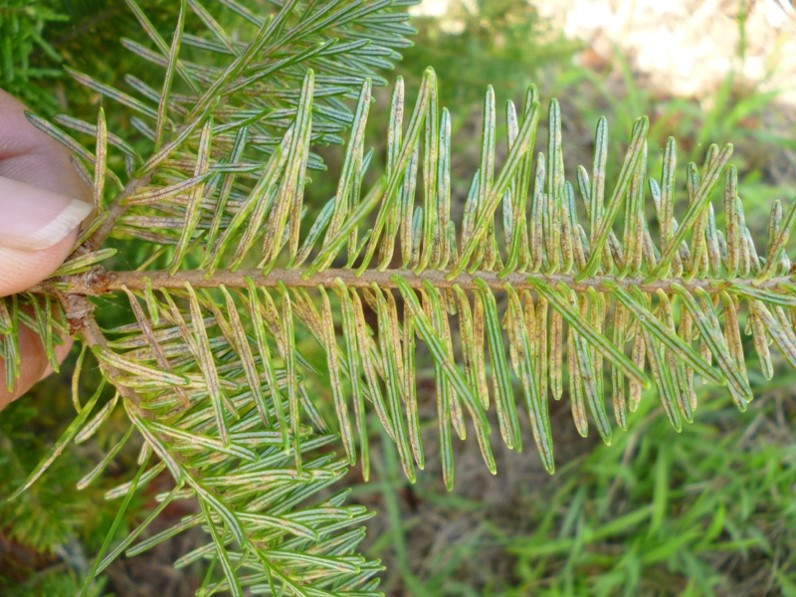
Signs of Cryptomeria Scale Beneath Needles (Photo Credit: Steven K. Rettke)

Signs of Cryptomeria scales beneath needles
(Photo: Steven K. Rettke, RCE)

Chlorotic Banding & Mottling Symptoms Produced By Cryptomeria Scales on Fraser Fir (Photo: Steven K. Rettke)

Chlorotic banding & mottling symptoms produced by Cryptomeria scales on Fraser fir (Photo: Steven K. Rettke)

[Read more…]

Alfalfa and Pachysandra Together Again?

Among the boxwood blight scare come samples of pachysandra with small yellow leaf spots. And rightly so–landscape contractors and residential clients alike are worried that they have a disease in the lowly pachysandra that will move into their fancy boxwood garden. [Read more…]

Another Day in the Neighborhood….

Wow, what a beautiful summer. The weather has been really nice, even a little cool (we are about a week behind normal on some degree day models). The grass is greener this year and everybody is livin’ large. Everybody, but us turfgrass diagnosticians! Until today…

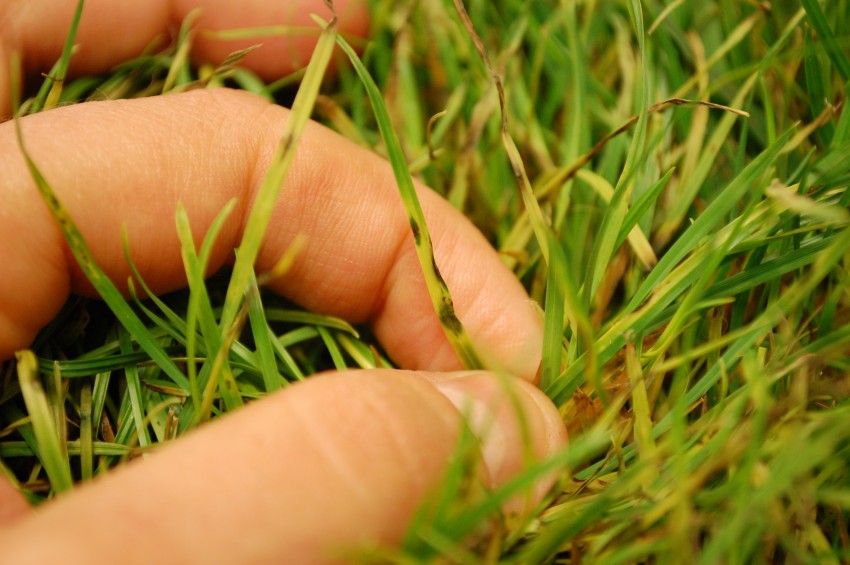
Small grayish-purple leaf lesions indicate an early gray leaf spot infection. Photo: Sabrina Tirpak, Rutgers PDL

Small grayish-purple leaf lesions indicate an early gray leaf spot infection. Photo: Sabrina Tirpak, Rutgers PDL

[Read more…]

It’s Back!

Boxwood samples have been coming into the Plant Diagnostic Laboratory on a daily basis since the winter. Most of them have been diagnosed with winter damage, boxwood leafminer, or Volutella stem and leaf blight. Yesterday, we got our first sample with boxwood blight! The situation was typical of several others in New Jersey – new transplants this spring and then a bunch of dead shrubs mid-summer.

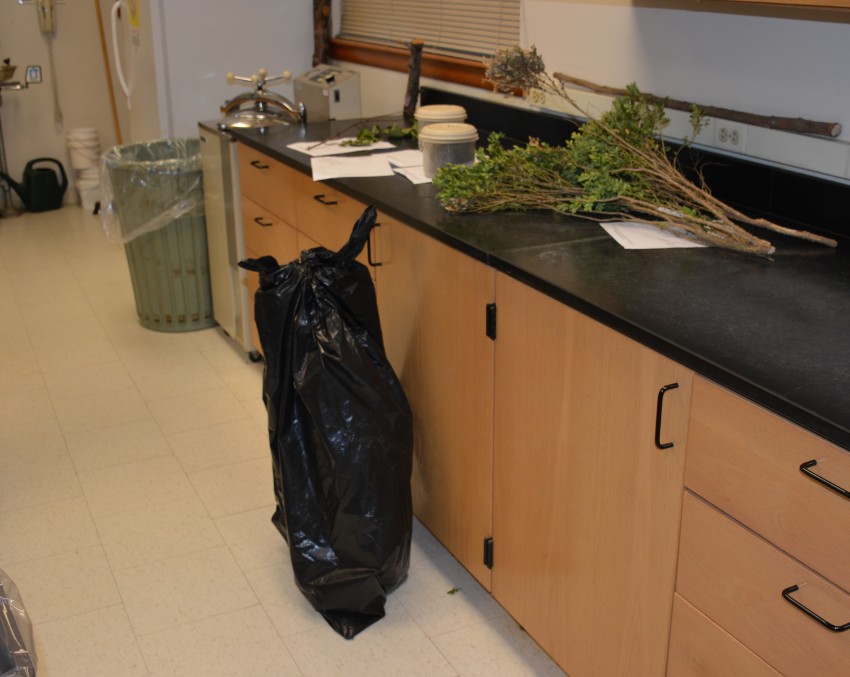
Boxwood blight infected sample is in the black plastic bag. Winter damaged boxwood sample is on the counter. Photo: Richard Buckley, Rutgers PDL

Boxwood blight infected sample is on the floor in the black plastic bag. Winter damaged boxwood sample is on the counter. Photo: Richard Buckley, Rutgers PDL

Just a short note today to keep you on your toes! And by the way, please notice how the sample was submitted – an entire plant, double-bagged…

Plastic Pesticide Container Recycling Earns Pesticide Core Credit

The NJ Dept. of Ag, Helena Chemical, and the Cumberland County Solid Waste Complex are offering a series dates for free plastic pesticide container recycling disposal. These are offered to agricultural, professional and commercial applicators holding a NJDEP Pesticide Applicators License. State, county and municipal government agencies may also participate. Spread the word and recruit participants for this free service – we are hoping to exceed last year’s collections.

The NJ Dept. of Ag will be on-site to inspect the containers and issue one Core Credit to license holders who follow the processing guidelines. To receive Credit, participants must bring their Pesticide License and prepare the containers. Core credits will not be issued to participants who do not prepare containers. Dates and locations are listed below.
[Read more…]