Vegetable Crops Edition

Seasonal updates and alerts on insects, diseases, and weeds impacting vegetable crops. New Jersey Commercial Vegetable Production Recommendations updates between annual publication issues are included.
 
Subscriptions are available via EMAIL and RSS.
 
Quick Links:

NJ Commercial Vegetable Production Recommendations

Rutgers Weather Forecasting - Meteorological Information important to commercial agriculture.

Farm Food Safety: FDA Q&A Printable Summary

The Food Safety Modernization Act will impact most growers in New Jersey.

Over the past weeks, we have posted the Questions and Answers for each of the conference calls focusing on subparts of the proposed Produce Safety Rule of the Food Safety Modernization Act on the PPA Food Safety section. For your convenience, the Q&A’s have been collected into a single PDF.
Food Safety Modernization Act FDA Q & A Sessions Proposed Produce Safety RuleFDA Q&A: Proposed Produce Safety Rule of the Food Safety Modernization Act
Click to View | Download | Print

Veg IPM Update: Week Ending 6/19/13

Vegetable IPM Report 6-19-13 – Click to View | Download | Print

In this report:

  • Sweet Corn
  • Cole Crops
  • Tomatoes
  • Peppers
  • Brown Marmorated Stinkbug
  • Pumpkins and Winter Squash
  • Snap Beans

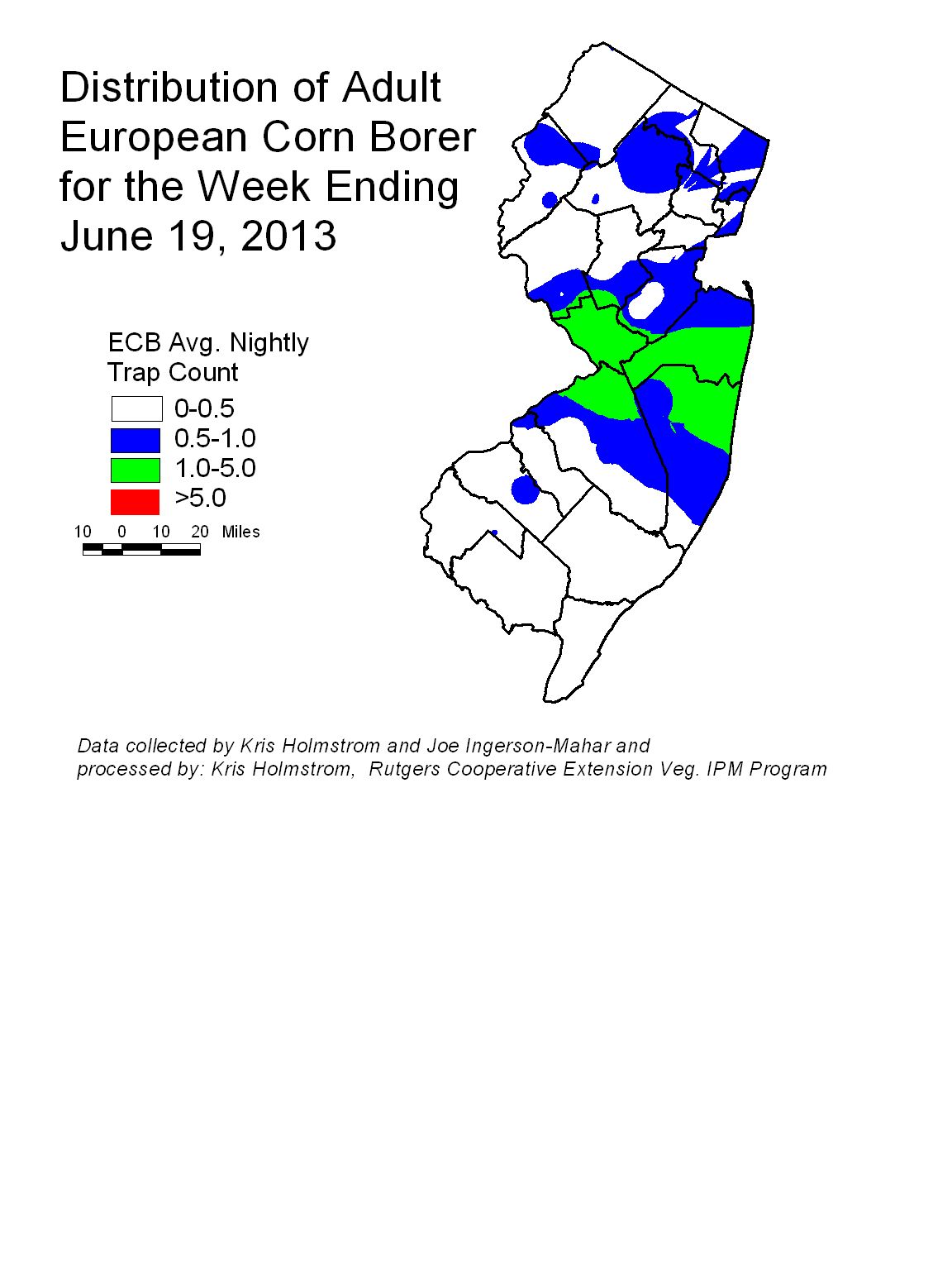
Click on Map to Enlarge

ECB Distribution from Blacklight Network 6/19/13

ECB 6/19/13

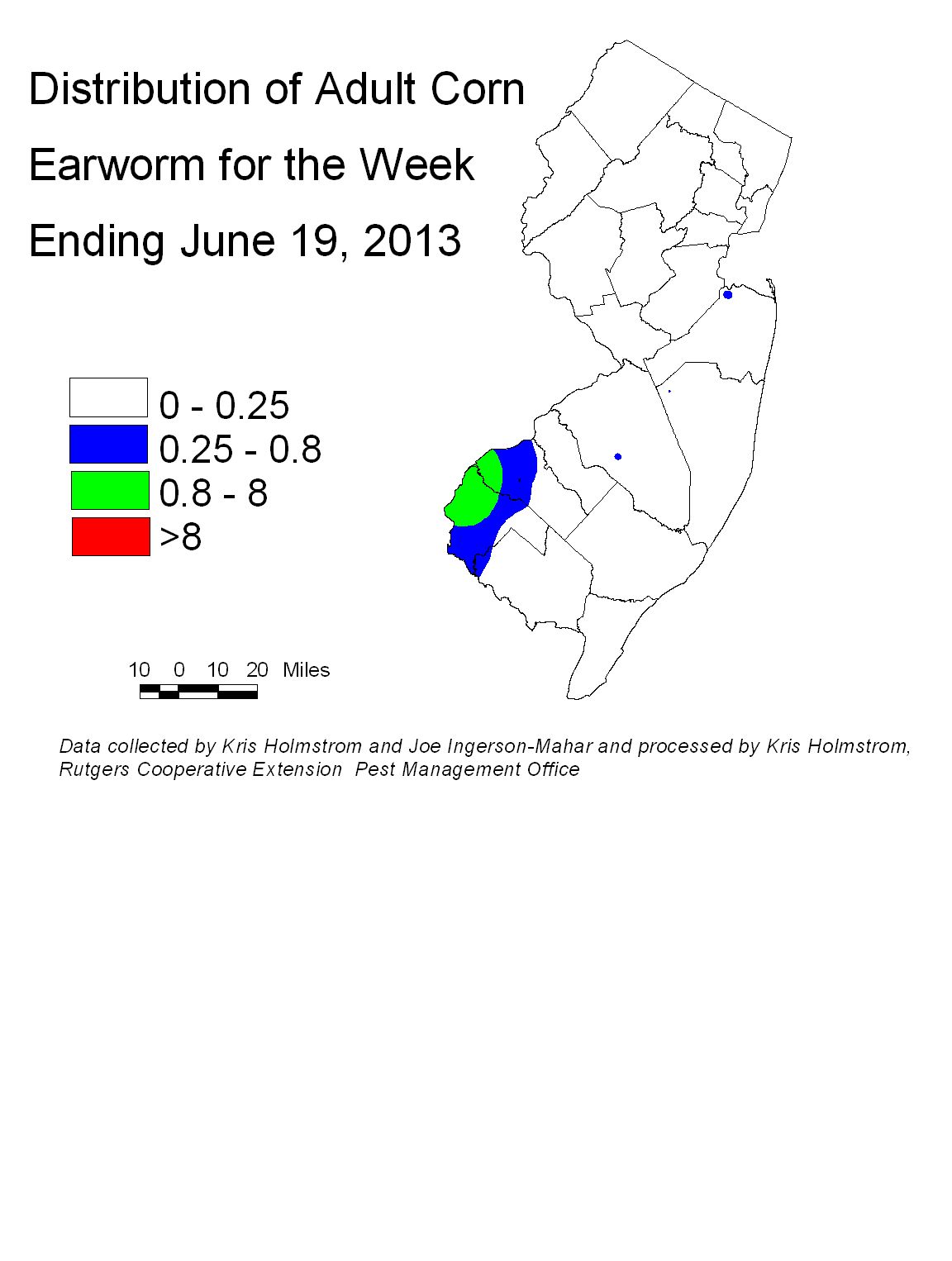
CEW Distribution from Blacklight Traps 6/19/13

CEW (BL) 6/19/13

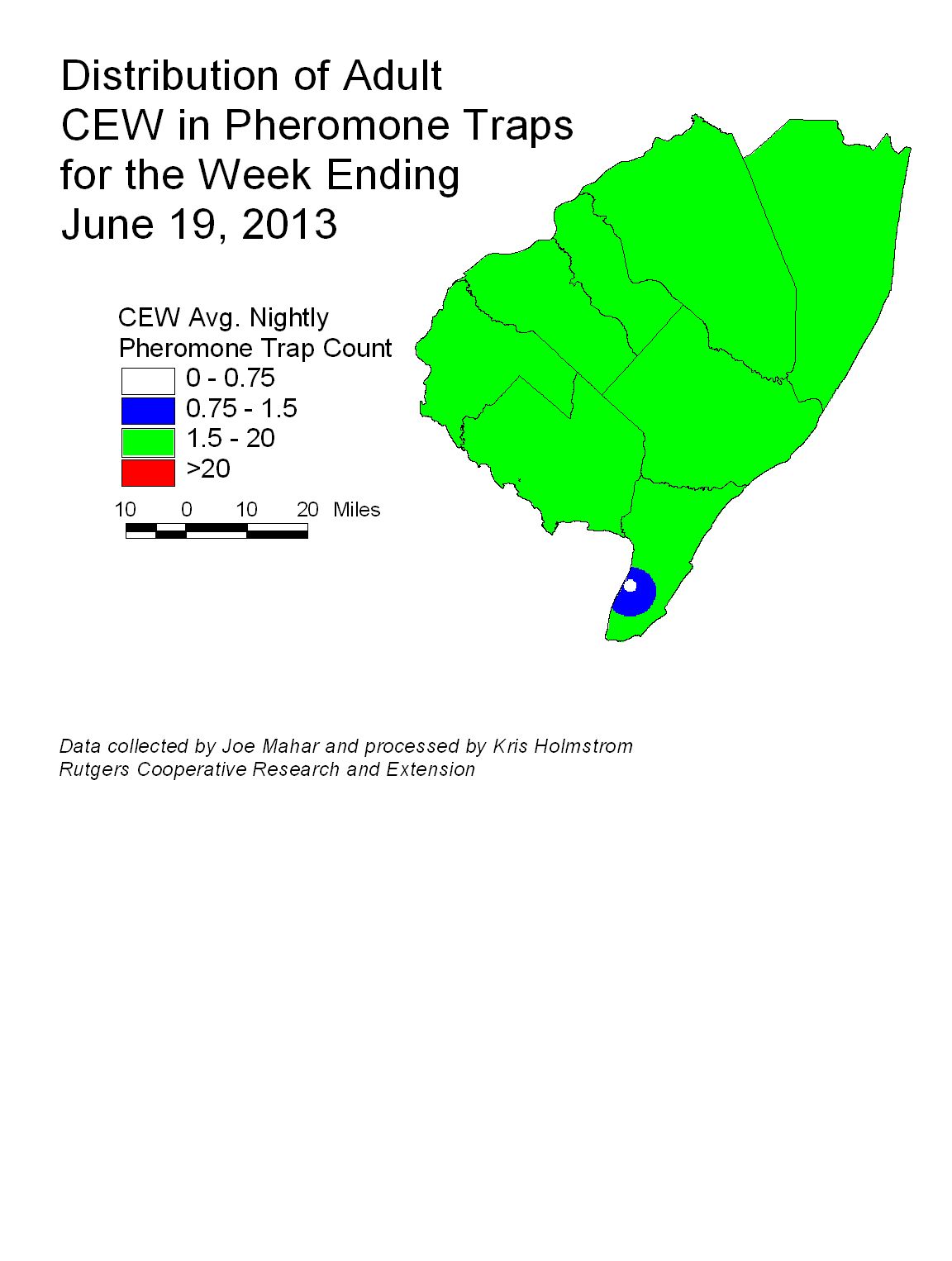
CEW Distribution in Pheromone Network 6/19/13

CEW Pheromone 6/19/13

Edema Developing in Some Brassica’s

Edema is being reported in some brassica crops. Edema is often expressed as off-color swellings or galls that appear on leaves and stems. Edema develops when epidermal cells hold excessive water due to a slowing of evapotransporation when hot, muggy days are followed cooler, wetter weather. Edema develops because the plant takes in more water (due to a high soil moisture content) than it can get rid of causing cells to rupture which results in the blistering of the leaves.

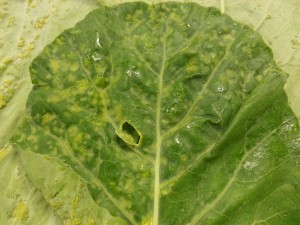
Symptoms of edema on collard leaf. Note the off-color appearance of leaf surface.

Symptoms of edema on top side of
collard leaf.
Note the off-color appearance of leaf surface.

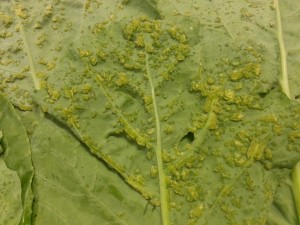
Edema, bottom side of collard leaf. Note the irregular, 'corky appearance caused bythe rupture of leaf cells.

Edema, bottom side of collard leaf.
Note irregular, “corky” appearance due to
leaf cell rupture.

Vegetable Briefs 6-14-13

  • Basil downy mildew has been reported near Vineland!
  • Bacterial leaf spot has been reported on tomato.
  • Phytophthora blight has been reported on summer squash.
  • No late blight has been reported in the region to date. The Late blight found in greenhouse tomatoes in WV two weeks has been reported to be US23. To track late blight in the US please visit http://usablight.org/
  • Want more information on what’s going on, please sign up for the Jersey Vegetable Crop Ag Updates at: http://jerseyvegcropsagupdates.blogspot.com/.

Vegetable Disease of the Week

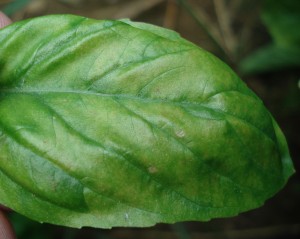
Symptoms of downy mildew on
infected sweet basil leaf

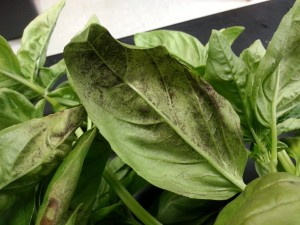
Basil downy mildew sporulating on the
underside of an infected leaf.

Vegetable Disease Update – 6/14/13

  • Basil
  • Pepper
  • Potato
  • Tomato

[Read more…]

Breeding for Basil Downy Mildew Resistance

Rob Pyne1, Kathryn Homa 1,2, Bill Barney1,2, Andy Wyenandt1, and Jim Simon1
1 Department of Plant Biology and Pathology, Rutgers University  2 IR-4 Program

In 2010 a basil variety and breeding line trial was conducted as an initial screen for potential sources of genetic resistance to downy mildew caused by Peronospora belbahrii, a destructive pathogen of basil introduced in the US in 2009. This trial was expanded from 30 to over 40 varieties representing six different Ocimum species in 2011. Varying levels of disease susceptibility were observed with the highest tolerance associated with O. americanum, O. citriodorum, O. gratissimum, and O. tenuiflorum varieties and USDA-GRIN accessions. In contrast, the most severe symptoms and extensive sporulation were consistently observed in O. basilicum accessions, including the popular commercial sweet basil varieties. [Read more…]