Vegetable Crops Edition

Seasonal updates and alerts on insects, diseases, and weeds impacting vegetable crops. New Jersey Commercial Vegetable Production Recommendations updates between annual publication issues are included.
 
Subscriptions are available via EMAIL and RSS.
 
Quick Links:

NJ Commercial Vegetable Production Recommendations

Rutgers Weather Forecasting - Meteorological Information important to commercial agriculture.

IPM Update 09/26/2018

There will be no maps for this edition of the IPM Update.

Sweet Corn

State-wide, European corn borer and fall armyworm have declined in the traps.  There has been little field activity for either moth.

Corn earworm

Corn earworm populations have declined, but based upon blacklight information, most areas of the state will need to continue on a 3-day silk spray schedule for late season sweet corn.  In the pheromone traps of southern NJ, the number of adult males caught has declined indicating a 4-day spray schedule in most locations.

Other vegetable crop pests:

Beet armyworm

Beet armyworm has been generally low in number throughout the summer season.  While there was an increase in trap catches for the Hammonton area this past week, it is not likely to be an economic problem.

Pepper weevil

No other field populations have been detected outside of the Hammonton area.  This will be the last note for this season regarding pepper weevil.

Hawaiian beet webworm

Hawaiian beet webworm on spinach

We have been picking up small numbers of HBWW in the blacklight traps, especially in southern NJ, in the past couple of weeks.  A field was found this week in Cape May County where the HBWW was abundant feeding on pigweed and sugar beets.  The primary host of HBWW is pigweed, but amaranth, spinach, beets, sugar beets, and chard are also fed upon.  The greenish caterpillars feed on the leaves and produce loose webbing which pulls leaves together.  As the larvae mature they become more reddish with longitudinal stripes.  Because localized populations can build up large numbers, farmers should check plantings of susceptible crops for this moth.  If spraying is necessary, refer to the Mid-Atlantic Commercial Production Recommendations for control options.

Soybean Looper in eggplant

An unusual infestation of soybean looper was found in eggplant this past week in the East Vineland area.  The caterpillars resemble cabbage looper but have more distinct white stripes and dark margins on the sides of the head.  Soybean looper can feed on a wide range of plants besides soybean, including tomato and pepper.  This situation stood out for two reasons: 1) that soybean looper was found in the eggplant, and 2) that any caterpillar infestation was found in eggplant requiring control.

soybean loopers on eggplant

Webinar on Best Practices for Pesticide Aerial Application


Office of Pesticides Programs Updates


Register for September 27 Webinar on Best Practices for Pesticide Aerial Application

EPA is hosting a webinar titled “Best Practices for Aerial Application” on September 27, 2018, from 2 – 3:30 pm ET. This webinar is tailored for growers, pesticide applicators, pest management professionals, and other interested stakeholders who work in crop production.

Webinar presenter, Dr. Bradley Fritz, is an agricultural engineer from the United States Department of Agriculture (USDA), and serves as the Research Leader of the Aerial Application Technology Research Unit at USDA’s Agricultural Research Service. The presentation will cover different methods of aerial application, best practices for reducing spray particle drift when using aerial application equipment, nozzle selection, and the use of adjuvants as they relate to aerial application.

Register for the webinar.

Learn more about reducing pesticide drift.


Vegetable Disease Update – 9/18/18

  • Cucurbit downy mildew. All cucurbit growers should scout their fields on a regular basis and inlcude a downy mildew specific fungicide to their weekly maintenance sprays.
  • The 2018 FRAC Table for Cucurbit Downy and Powdery Mildew Control in the mid-Atlantic Region can be found and downloaded for FREE here and is essential for developing control strategies for both diseases.
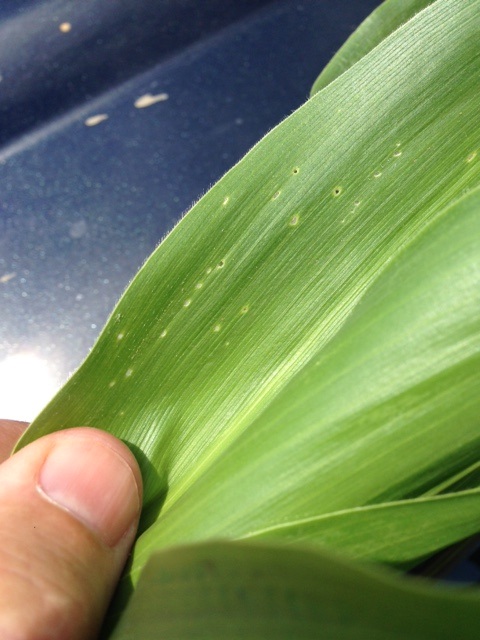
  • Bacterial stalk rot in sweet corn has been reported.
  • Downy mildew has been reported in bok choy. Cole crops, as well as leafy greens, need to be scouted on a regular basis and preventative sprays applied as long as wet weather continues.
  • Pepper anthracnose has been reported. If found in field, weekly fungicide maintenance sprays are needed. Abandoned fields should be mowed down immediately.
  • Alternaria leaf spot has been reported on broccoli.
  • Anthracnose has been reported in turnip.
  • Late blight has been reported on tomato in Western PA. There have been no reports of late blight in the immediate region.
  • Bacterial leaf spot and Phytophthora blight and fruit rot remain active in pepper and cucurbit crops.
  • Cercospora leaf spot has been reported on swiss chard and beets.
  • A nice article by Dr. Beth Gugino, Penn State, on gray mold and late blight in high tunnel tomatoes can be found here.
  • Remember, copper applications on hot days with high relative humidity can cause phytotoxicity on a number of crops.
  • Basil downy mildew is being reported. Recent weather has been ideal for its development. For more information on Rutgers newly-released DMR sweet basils Obsession, Devotion, and Thunderstruck please click here. Follow the Rutgers Basil Downy Mildew Breeding Program on Instagram at #RutgersBasil

IPM Update 09/12/18

Sweet Corn

European corn borer (ECB) moth catches remain low.   Feeding signs in whorl corn are rare.  There will be no map in this edition.  Second generation feeding is often obscured by fall armyworm (FAW) feeding.  Once plants hit full tassel, any ECB larvae present will move downward on the stalk and re-enter the plant near the area where ears are forming.  This can result in direct injury to the ear.  Growers should consider an insecticide application at the full tassel stage to target ECB larvae as they migrate downward.  This application can eliminate larvae that have escaped any earlier insecticide applications. [Read more…]

IPM Update 09/05/18

Sweet Corn

European corn borer (ECB) moth catches remain low.   Feeding signs in whorl corn are rare.  There will be no map in this edition.  Second generation feeding is often obscured by fall armyworm (FAW) feeding.  Once plants hit full tassel, any ECB larvae present will move downward on the stalk and re-enter the plant near the area where ears are forming.  This can result in direct injury to the ear.  Growers should consider an insecticide application at the full tassel stage to target ECB larvae as they migrate downward.  This application can eliminate larvae that have escaped any earlier insecticide applications. [Read more…]

Fall control of perennial weeds with herbicides

Late summer and fall are perfect times to work on tough-to-control perennial weeds such as Virginia creeper vine, bindweed, green-brier, Canada thistle, goldenrod, and poison ivy. These perennials are among the most difficult weeds to eradicate, especially because of their ability to generate new shoots from their root systems. Successful management strategies will mostly rely on herbicide that can move from the leaf to the below-ground plant parts. Timely initial application and consistency at controlling any regrowth with follow-up spot treatments are crucial for long-term control of these weeds.

3 different species of weeds that affect blueberries

Field bindweed (upper left), goldenrod (lower left) and green-brier (right) are some tough weed species of NJ blueberry and will warrant extra time for achieving successful control

Glyphosate (Roundup or other generic products) is the only postemergence herbicide labeled on blueberry that can provide good control of perennial weeds. Late summer and fall are good times for applying glyphosate as plant sap movement is mostly directed toward the roots where nutrients will be stored in anticipation of next season. Therefore, large volume of glyphosate can easily be translocated from the leaves to the roots, improving the efficiency of the herbicide at killing below-ground storage organs. It is VERY IMPORTANT for glyphosate to be applied when weed leaves are still green before fall colors appear.

Use extreme care not to contact crop green tissues (stems and leaves) with glyphosate. Glyphosate absorbed by crop green leaves and bark moves within the plant and can severely damage or kill above-ground and below-ground parts of annual crop and perennial treess. Weeds such as bindweed, Virginia creeper, and greenbrier may need to be pulled out of the trees so they can be treated safely. This may seem too slow to be practical, but consider what these weeds cost in lost income. For example, blueberry bushes covered by Virginia creeper vine may yield just 20% of their potential. This easily equates to a $5 to $10 loss per bush. The loss is incurred each year and increases as the vines spread to neighboring bushes. Investing 15 minutes to carefully pull vines out of that bush and safely treat them on the ground is money well spent.

Glyphosate should be applied through low pressure spot treatment to limit drift movements. Glyphosate absorption will be improved if ammonium sulfate (17 lbs / 100 gal water) is added to your spray mixture. For effective control, at least 50% of the foliage should be wet with glyphosate applied as a 2% solution (see your product’s label for rate necessary to reach this concentration).

Consider also “cut stump” applications for Virginia creeper or poison ivy that have large diameter stems. Apply a 2% glyphosate solution to the cambium (inner bark area) IMMEDIATELY after cutting the stem. Don’t let time for cutting to dry as this would prevent glyphosate absorption and translocation to below-ground plant parts.

Always apply glyphosate on weeds that are actively growing and not under drought stress.

Always refer to the commercial product label for rates and additional information.