Vegetable Crops Edition

Seasonal updates and alerts on insects, diseases, and weeds impacting vegetable crops. New Jersey Commercial Vegetable Production Recommendations updates between annual publication issues are included.
 
Subscriptions are available via EMAIL and RSS.
 
Quick Links:

NJ Commercial Vegetable Production Recommendations

Rutgers Weather Forecasting - Meteorological Information important to commercial agriculture.

OSHA-NIOSH Heat Safety Tool App

Thanks to our Univ of FL colleague Gene McAvoy for sharing news about this new tool. Would have been very valuable during July’s record heat wave, but there will still be hot, humid days ahead when this will help.
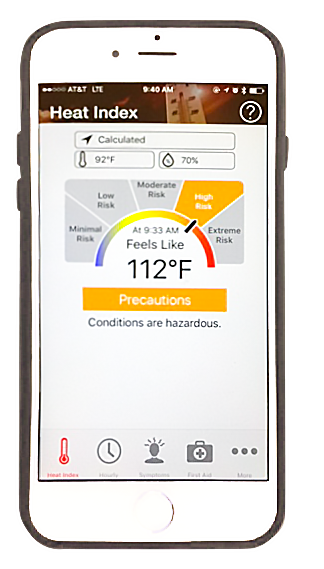
OSHA-NIOSH Heat Safety Tool App screenshotWhen you’re working in the heat, safety comes first! With the OSHA-NIOSH Heat Safety Tool, you have vital safety information available whenever and wherever you need it – right on your mobile phone – for planning outdoor work activities based on how hot it feels throughout the day. Featuring real-time heat index and hourly forecasts, specific to your location, as well as occupational safety and health recommendations from OSHA and NIOSH.

The App allows workers and supervisors to calculate the heat index for their worksite, and, based on the heat index, displays a risk level to outdoor workers. Then, with a simple “click,” you can get reminders about the protective measures that should be taken at that risk level to protect workers from heat-related illness-reminders about drinking enough fluids, scheduling rest breaks, planning for and knowing what to do in an emergency, adjusting work operations, gradually building up the workload for new workers, training on heat illness signs and symptoms, and monitoring each other for signs and symptoms of heat-related illness.

Working in full sunlight can increase heat index values by 15 degrees Fahrenheit. Keep this in mind and plan additional precautions for working in these conditions.

The OSHA-NIOSH Heat Safety Tool features:
– A visual indicator of the current heat index and associated risk levels specific to your current geographical location
– Precautionary recommendations specific to heat index-associated risk levels
– An interactive, hourly forecast of heat index values, risk level, and recommendations for planning outdoor work activities in advance
– Editable location, temperature, and humidity controls for calculation of variable conditions
– Signs and symptoms and first aid information for heat-related illnesses

The OSHA NIOSH Heat Index App is available in English and Spanish at the Apple App Store or Google Play. To access the Spanish version, set the phone language to Spanish.

Stay informed and safe in the heat, check your risk level.

For more information about safety while working in the heat, see OSHA’s heat illness webpage, including online guidance about using the heat index to protect workers.
Vegetable IPM Update 8/26/20

Sweet Corn

European corn borer (ECB) adults continue to be very low, and no map will appear in this edition.

The highest nightly trap catches of ECB for the week ending 8/26/20 are as follows:

Cinnaminson   1
Downer   1
Medford   1


Fall armyworm (FAW)
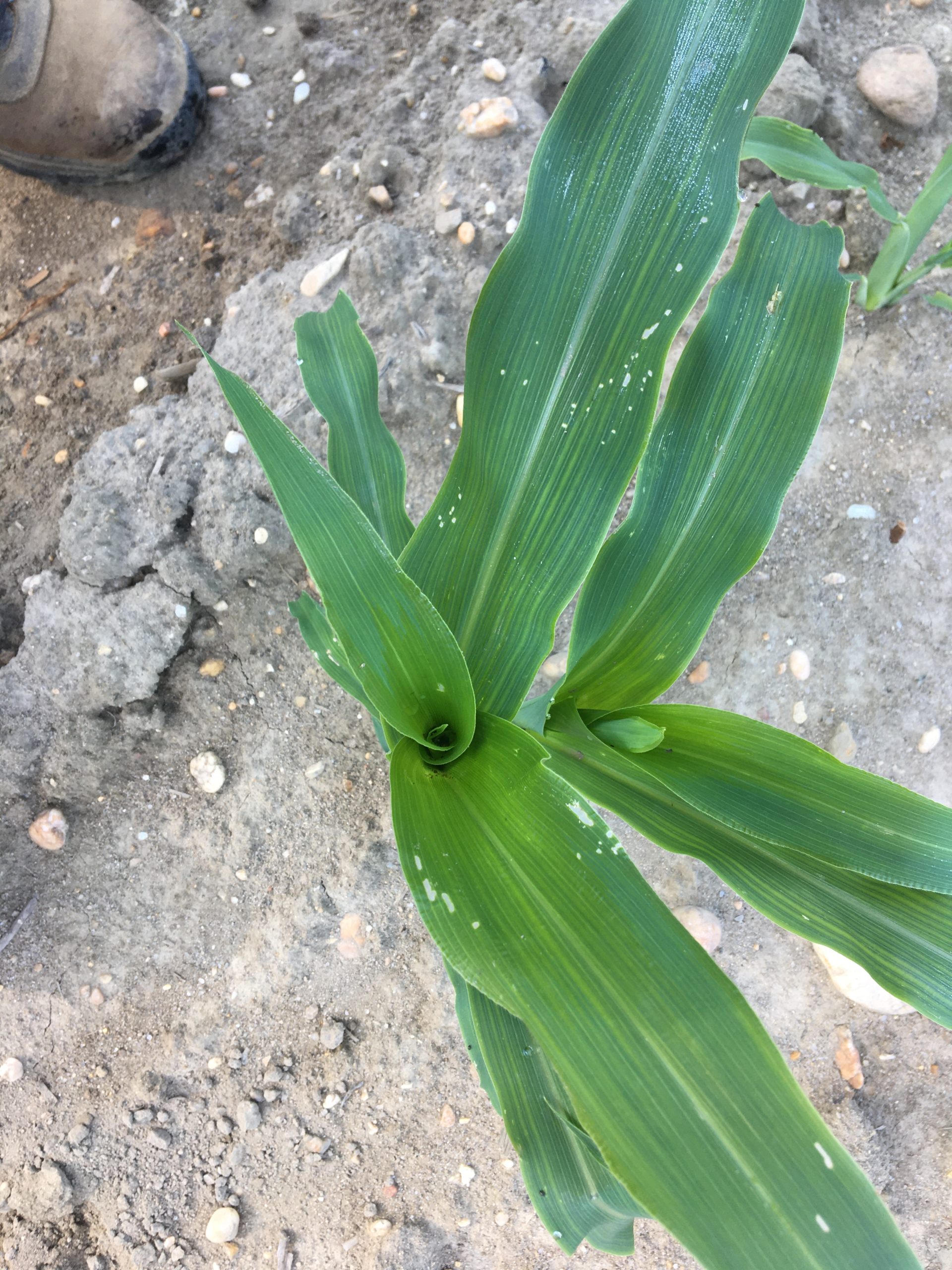
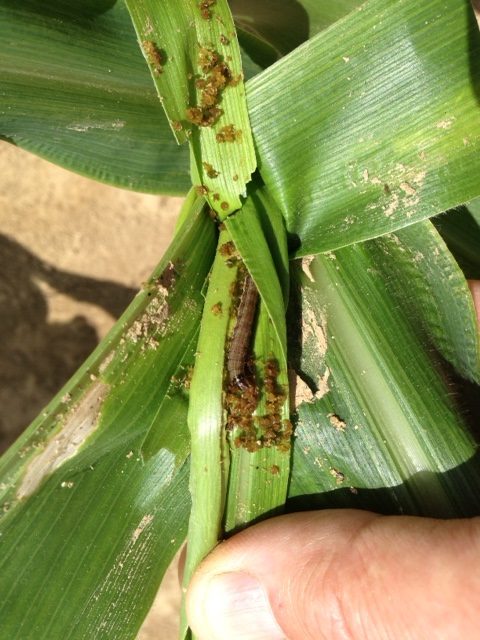
larval infestations have stabilized at low to moderate levels.  Infestations generally are in the teens to low 20% range, but  FAW could increase dramatically with the arrival of  storms, resulting in significant injury to whorl and even seedling stage corn.  Injury from newly hatched larvae shows up as “window panes” or areas where leaf tissue has been eaten down the the lower epidermis (see photo at far left).  This injury leads down into the whorl.  As larvae gain size, they begin to consume leaf tissue in its’ entirety, creating ragged holes and lots of droppings (see photo at near left).  FAW can be tough to manage because it is resistant to synthetic pyrethroid insecticides (IRAC 3A) and because larvae are often covered by their own droppings, making contact with the insecticide more difficult.  Treat when 12% or more plants exhibit FAW injury alone, or in combination with ECB injury.


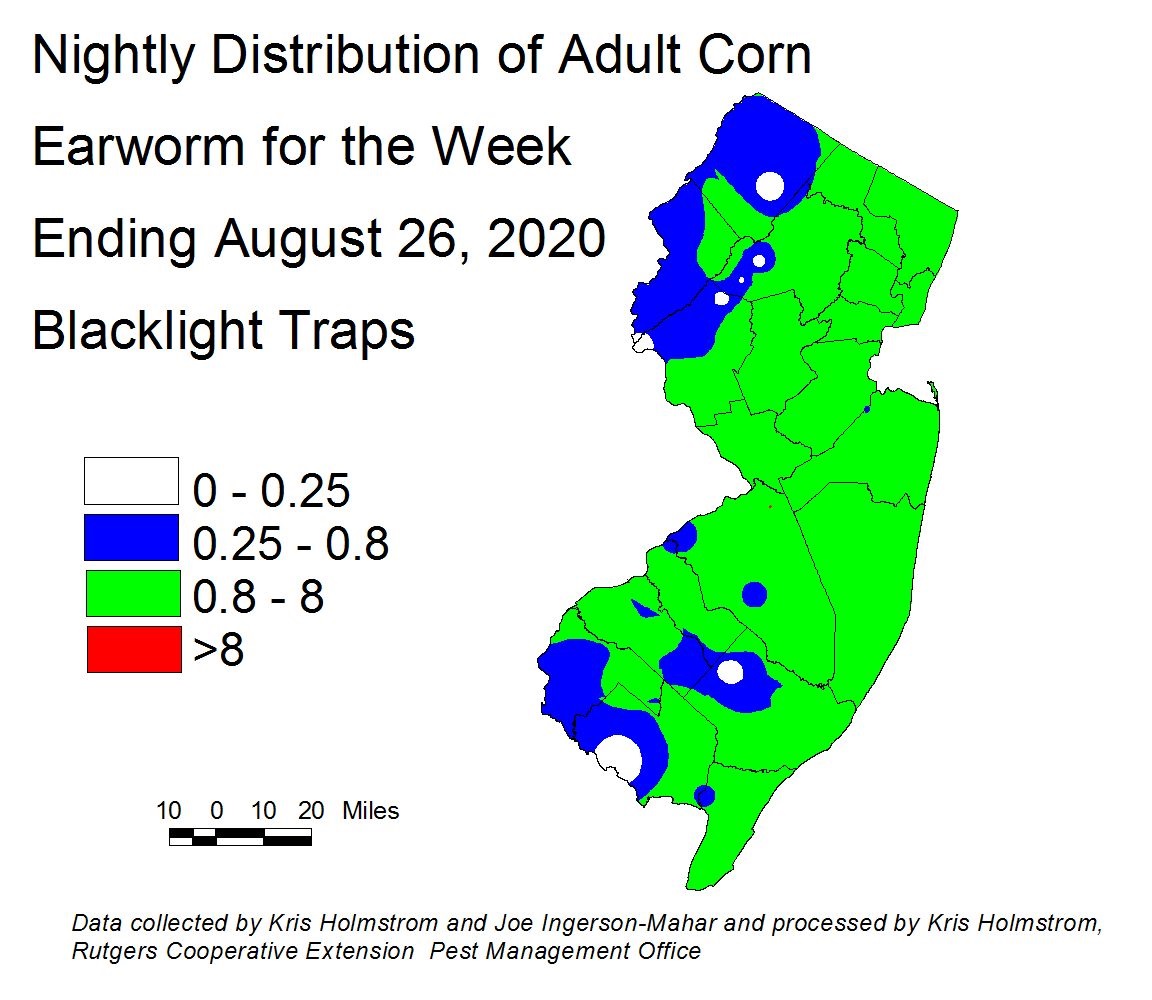
Corn earworm (CEW) moth captures have increased in central and southern New Jersey blacklight traps over the past week.  Trap catches, both blacklight and pheromone, are showing signs of a possible large increase within a week.  The current population poses a significant risk to silking corn.  Catches remain somewhat variable (see map at left), with green areas on this map representing a 3-day spray schedule.  Note that there continues to be disagreement between blacklight and pheromone trap maps with regard to the southwestern counties.  See pheromone trap information below.


The highest nightly trap catches of CEW in black light traps for the week ending 8/26/20 are as follows:

Georgetown   13 New Egypt   5 Matawan   4
Green Creek   11 Princeton   5 Morristown   4
Farmingdale   8 Crosswicks   4 Allamuchy   3
Allentown   5 Denville   4 Hillsborough   3

[Read more…]

COVID-19 Safety Tips for Agritourism Operations

Kids riding in back of a tractor

Continued community transmission of COVID-19 presents challenges to many businesses, including on-farm agritourism operations. The Rutgers Cooperative Extension Agritourism Working Group developed farm assessment resources titled, Considerations for Agritourism Operations During the COVID-19 Pandemic, to assist producers with agritourism activities as part of their on-farm marketing strategies. Considerations listed are designed to help operators evaluate business and management strategies that align with State executive orders and federal/state/local safety guidelines enacted to reduce possible transmission of COVID-19.

Key considerations include:

  • Remain apprised of/and compliant with executive orders issued by the Governor to reduce COVID-19 transmission, including those establishing limits on public indoor and outdoor gatherings, as well as requirements for face coverings and social distancing;
  • Monitor guidelines issued by the Centers for Disease Control and Prevention (CDC) and State/local authorities to reduce community transmission of COVID-19;
  • Clearly communicate farm rules and visitor expectations—prior to arrival and during farm visits—through website and social media posts, promotional materials, staff instruction, and farm signage;
  • Ensure that all farm staff undertake a daily screening for symptoms of COVID-19 and avoid coming to work if they are symptomatic, have tested positive for the virus, or have been in close contact with anyone who has tested positive for COVID-19;
  • Train employees on all personal and farm safety protocols developed to minimize risks of COVID-19 transmission;
  • Organize agritourism activities and manage visitor flows to maintain adequate social distancing on the farm. This includes carefully evaluating farm/attraction capacity limits, identifying areas of anticipated high visitor volume (e.g., parking areas, restrooms, sales areas, foodservice, attraction entrances and exiting areas, etc.), and taking measures to reduce pedestrian “bottlenecks,” large congregations, and cross-flow contact when guests are entering/leaving areas;
  • Instruct employees and visitors to wear appropriate face coverings;
  • Provide adequate and appropriately stocked/maintained hand washing and hand sanitizer stations in key areas (e.g., sales areas, outside restroom facilities, foodservice areas, key thoroughfares, entrances/exists, etc.);
  • Establish regular cleaning and disinfection procedures for frequently touched surfaces or objects;
  • Construct physical barriers, if needed, to reduce potential contacts between staff and visitors (e.g., Plexiglass partitions in sales areas);
  • Explore options for pre-registration to control visitor volumes and pre-payment or touchless payment options to reduce contact between staff and visitors; and
  • Discourage unnecessary customer handling of farm products prior to purchase.

This resource and other tools to help agritourism operators evaluate and strengthen the management of their operations, identify safety concerns and manage liability are available at the New Jersey Agricultural Experiment Station’s agritourism resource site: http://agritourism.rutgers.edu/training/

Webinars: Considerations for Agritourism Operations During the COVID-19 Pandemic

Monday, August 31, 2020 07:00 PM
And
Tuesday, September 1, 2020 07:00 PM

For more information see: https://agritourism.rutgers.edu/training/

The Rutgers Cooperative Extension Agritourism Working Group developed considerations to assist NJ farmers with agritourism operations on their farms during the COVID-19 pandemic. This document is designed to help operators manage strategies for compliance with State executive orders and federal/state/local safety guidelines. The team will host 2 webinars on 8/31 and 9/1 at 7:00PM to discuss the considerations and provide an opportunity for farmers with agritourism operations to network

To Participate:
Click the link below. We suggest visiting at least 10 minutes before the session start time to confirm system requirements
https://go.rutgers.edu/sfk96jlp

Or participants can join in by phone:
1-646-558-8656
Meeting ID: 912 2343 8378

For more events hosted by Rutgers see: https://events.rutgers.edu/njaes/

Vegetable IPM Update 8/19/20

Sweet Corn

European corn borer (ECB) adults remain very low, and no map will appear in this edition.

The highest nightly trap catches of ECB for the week ending 8/19/20 are as follows:

Downer   1
Matawan   1


Fall armyworm (FAW)
larval infestations continue at a fairly steady rate, except for coastal Monmouth County, where infestations exceeding 60% were found in whorl and seedling stage sweet corn.  This infestation was likely associated with the tropical storm of two weeks ago.   FAW could increase dramatically with the arrival of these storms, resulting in significant injury to whorl and even seedling stage corn.  Injury from newly hatched larvae shows up as “window panes” or areas where leaf tissue has been eaten down the the lower epidermis (see photo at far left).  This injury leads down into the whorl.  As larvae gain size, they begin to consume leaf tissue in its’ entirety, creating ragged holes and lots of droppings (see photo at near left).  FAW can be tough to manage because it is resistant to synthetic pyrethroid insecticides (IRAC 3A) and because larvae are often covered by their own droppings, making contact with the insecticide more difficult.  Treat when 12% or more plants exhibit FAW injury alone, or in combination with ECB injury.


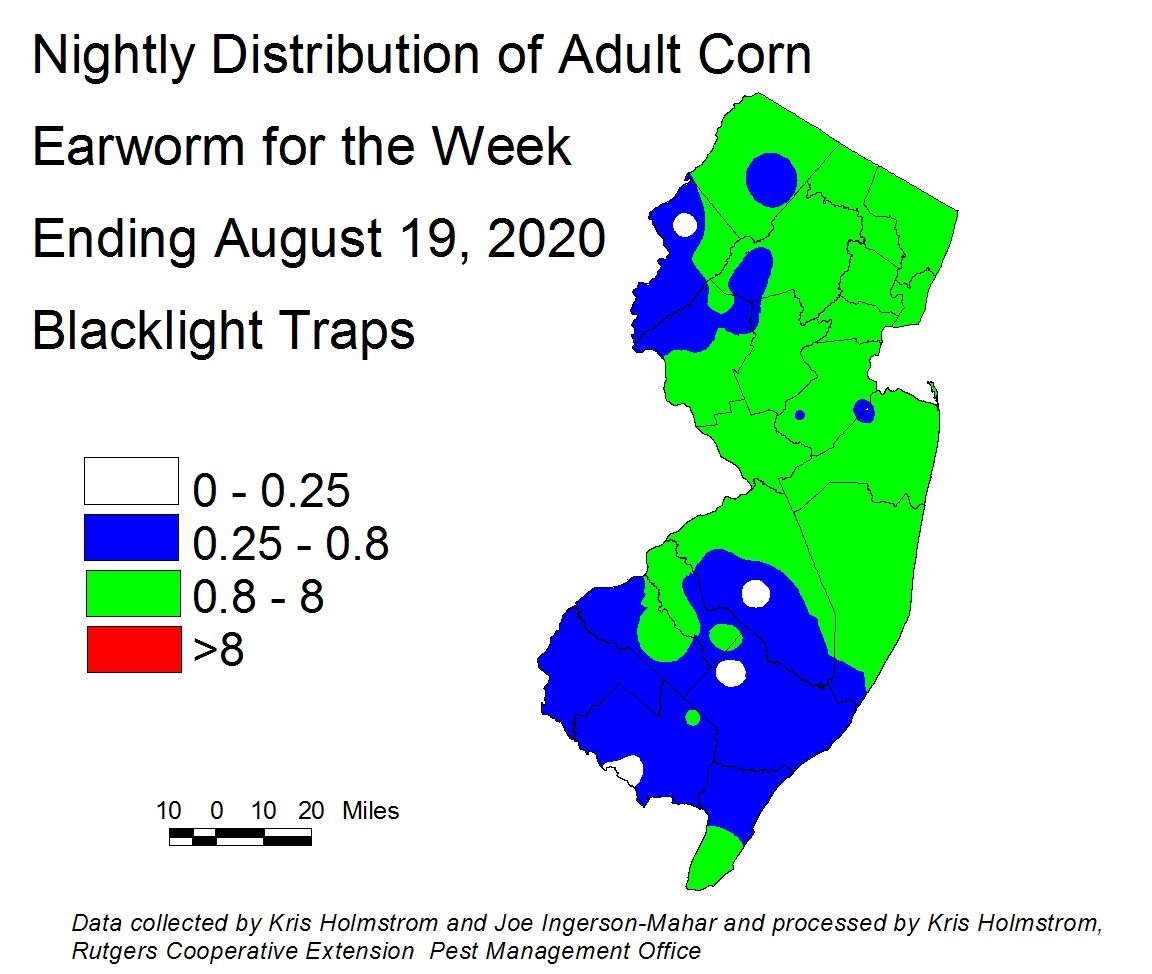
Corn earworm (CEW) moth captures have increased significantly in central and northern New Jersey blacklight traps over the past week.  This moderate mid-Summer population poses a significant risk to silking corn.  Catches remain somewhat variable (see map at left), with green areas on this map representing a 3-day spray schedule.  Note that there continues to be disagreement between blacklight and pheromone trap maps with regard to the southwestern counties.  See pheromone trap information below.


The highest nightly trap catches of CEW in black light traps for the week ending 8/19/20 are as follows:

Bellemeade   5 Lawrenceville   3 Matawan   2
Morristown   3 Georgetown   2 New Egypt   2
Princeton   3 Hackettstown   2 Pennington   2
Allamuchy   3 Hillsborough   2 South Branch   2

[Read more…]

CFAP Webinars for Additional Eligible Commodities

Join the USDA Farm Service Agency this afternoon, Wednesday August 19th at 3 pm, for the “Coronavirus Food Assistance Program Producer Webinar: Additional Eligible Commodities Added.” USDA Farm Service Agency will discuss additional commodities that are now eligible for the Coronavirus Food Assistance Program (CFAP), providing detailed examples on nursery crops, specialty crops, cut flowers, eligible aquaculture, and more. Registrations for this webinar are being accepted here.

The New Jersey Farm Service Agency (FSA) will be hosting an informational Nursery/Cut Flowers Stakeholders Webinar on Thursday, August 20th at 10 am regarding nursery and cut flowers eligibility for the Coronavirus Food Assistance Program (CFAP). This webinar will be held by a virtual Teams Meeting. Instructions on how to enter a Teams meeting using a computer or smartphone can be viewed here. If you are unable to attend virtually via Teams, you may dial in to hear the presentation. Slides to be presented are available here, although they are subject to modification prior to the event.

Please contact Lindsay Caragher at Lindsay.Caragher@usda.gov or 609-438-3133 with any questions about Teams Meeting or the webinar in general.

USDA’s Farm Service Agency is accepting applications through September 11, 2020 for the CFAP program which helps offset price declines and additional marketing costs because of the coronavirus pandemic.