Fruit Crops Edition - Wine Grape Section

Seasonal updates on diseases, insects, weeds impacting small fruit (blueberry, cranberry, and wine grape). Fruit Pest Alerts are also available via this category feed.
 
Subscription is through the general Fruit feed available via EMAIL and RSS.

Fruit IPM Report: Week Ending 7/20/13

Fruit IPM Report 7-20-13 – Click to View | Download | Print

Early Season Thrip Injury in Peach

Early Season (top) and Late Season (silvering)  Thrips Injury on Peach

In this report:

  • Brown Marmorated Stink Bug
  • Peach
  • Apple
  • Grape
  • Scouting Calendar
  • Blueberry
  • Trap Counts

Brown Marmorated Stink Bug

BMSB adults nymphs and egg masses are present in orchards, although far from a uniform pattern. Black light trap captures indicate a significant increase in trap captures over the past 2 weeks, but individual insects may be difficult to find in many locations. Early pickings of Sentry show significant feeding damage, depending on tree location. We are monitoring this insect in commercial orchards with a several methods. These include random 3 minute counts, 3 minute counts on transect lines, use of a new USDA experimental pheromone in several trap types, and the black light traps in the vegetable IPM network. The bottom line for growers is that every treatment should include a BMSB active material. These treatments should be frequent. If treatments are applied on more than a 7 day schedule, then a 7 day border spray should supplement whole block treatments. Pyrethroid insecticides (permethrin, Baythroid, Mustang, Warrior, Danitol) can be very effective, but with the high temperatures we are having, they should be avoided this week. The neonicotinoids, Belay and Actara can also be very effective. Lannate has a short residual, but can have knock down ability.

We are hoping that the 2 best insecticides will be able to be used soon. These are dinotefuran (Venom and Scorpion) and bifenthrin (Brigade and Bifenture). These products had section 18 labels during 2012 (Venom and Scorpion had them in 2011), and were requested again for 2013. Although Venom and Scorpion are currently labeled in peach and nectarine, they are not labeled in apples. Nor are they labeled at the rate required to control BMSB, which is almost double the current labeled rate. The current maximum rate for Scorpion is 7 oz/A, and 10-12 oz/A is needed for BMSB control. The current maximum rate for Venom is 4 oz/A, and 6-6.9 oz/A is needed for BMSB control. Section 18 label requests originate in the individual states (usually a DEP) and are authorized by EPA in Washington, D.C. The bifenthrin package is currently in Washington. The dinotefuran package is with the NJDEP and has yet to be submitted. Brigade and Bifenture are the best materials we have for BMSB control. Since there will be a 14 day PHI, and a maximum of 2 applications not less than 30 days apart, let’s hope we get them soon, or they will see only minimal use.

Fruit IPM Report: Week Ending 7/12/13

Fruit IPM Report 7-12-13 – Click to View | Download | Print

Periodical Cicada: Shoot Flagging

Periodical Cicada: Shoot Flagging

In this report:

  • Peach
  • Apple
  • Grape
  • Scouting Calendar
  • Blueberry
  • Trap Counts

Fruit IPM Report: Week Ending 7/5/13

Fruit IPM Report 7-5-13 – Click to View | Download | Print

In this report:

  • Peach
  • Apple
  • Grape
  • Scouting Calendar
  • Blueberry
  • Trap Counts

Fruit IPM Report: Week Ending 6/29/13

Fruit IPM Report 6-29-13 – Click to View | Download | Print

In this report:

  • Peach
  • Apple
  • Grape
  • Scouting Calendar
  • Blueberry
  • Trap Counts

Fruit IPM Report: Week Ending 6/22/13

Fruit IPM Report 6-22-13 – Click to View | Download | Print

In this report:

  • Peach: Oriental Fruit Moth; Tufted Apple Budmoth; Brown Rot
  • Apple: Obliquebanded Leafroller; European Red Mites; Codling Moth
  • Aphids: Spirea and Apple (green) Aphids
  • Brown Marmorated Stink Bug
  • Summer Diseases: Sooty Blotch and Fly Speck; White Rot and Black Rot; Anthracnose
  • Pear: Pear Rust Mite
  • Grapes: Grape Berry Moth
  • Scouting Calendar
  • Blueberry: Spotted Wing Drosophila; Oriental Beetle; Leafrollers and other Leps; Aphids; Putnam Scale; Cranberry Fruitworm; Blueberry Maggot
  • Trap Counts

Spotted Wing Drosophila Found in Blueberries

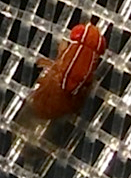
The first spotted wing drosophila adult was found on Tuesday, June 11, in a small field in Burlington County. The trap was placed between the commercial planting and the woods border. This finding, along with the coloring of early varieties, initiates a 7 day insecticide program now required for insect free berries. More on SWD management in the future.

Addendum: Summary of Fax Alert sent subsequent to June 12 post above.
Trapping for SWD began 3 weeks ago using 4 different types of attractants. The first positive trap was collected on 6/10 in Burlington County with a single male. On 6/13, 2 females were picked up at another site near the first one. We expect most other locations to test positive soon. This indicates that flies will be mating and laying eggs on ripening fruit. We assume that the population is low at the present time, but will build up over the next several weeks. This will be reflected in higher trap captures at additional sites. However, we also feel that population pressure must be suppressed over the entire season in order to avoid ‘out of control’ populations that result in infested fruit. Therefore Growers Must Be On A 7 Day Treatment Schedule Using Materials That Are Effective For SWD Control.

Last season this pest was responsible for wormy fruit contamination at many farms including some that were treating for the risk, however the level of contamination was in general proportion to the quality of the spray program. We expect SWD pressure to be at least as strong as last season. Data collected last season also demonstrated that pressure was present in all of our growing areas. Due to the serious risk of SWD we are recommending that ALL farms begin a 7 day treatment program now. Of course several factors may alter the need for a strict “7 day” program such as rainfall and the residual properties of the pesticide. The attached table will provide most of the information about your pesticide options so that you can make the best decisions for your particular situation. Please note that 2 neonicotinoid materials (Assail and Actara) are included in the SWD list. Conflicting research has shown some activity by these materials. These materials have some efficacy, but are weak SWD insecticides. We feel that their place in a SWD program is only early in the SWD season when populations are low, and you may still need something with aphid activity. If you use either Assail or Actara, use them only in the first spray (last week and this week). They are of no practical use for SWD control as the population increases. SWD may prefer shaded areas and therefore may pose greater risk in the sheltered zones of the bush (interior/low). For this reason it is important to achieve the best possible coverage practical for your situation.