Fruit Crops Edition

Seasonal updates on diseases, insects, weeds impacting tree fruit and small fruit (blueberry, cranberry, and wine grape). Fruit Pest Alerts are also available via this category feed.
 
Subscriptions are available via EMAIL and RSS.

Fruit IPM Report 4-24-2015

Download PDF version

Peach

Brown Rot: Blossom infections from the brown rot fungus can occur whenever pistils are exposed and a favorable climate exists. Infections can occur during any wetting period when temperatures are between 41 and 86°F. However optimum conditions for infection occur with wetting and temperatures in the mid 70’s. During long wetting periods (several days or more) blossoms can be infected regardless of temperature. Generally infections that occur when conditions are sub optimal are less severe. Blossoms and fruitlets will remain susceptible until the pistil desiccates (sometime between petal fall and shuck split).

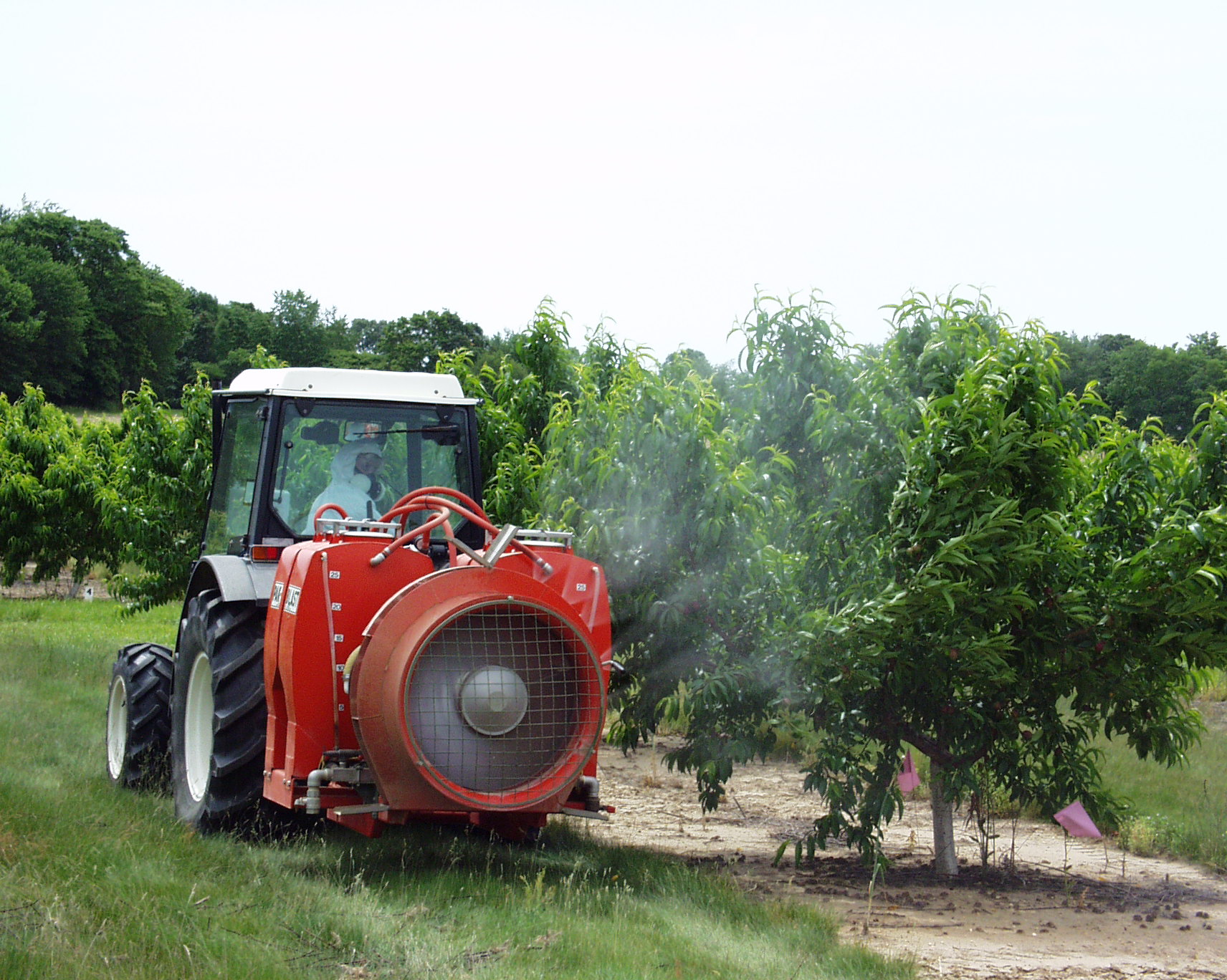
Petal Fall Insect Complex: An OFM biofix was set in southern counties on 4/20. Treatments for the first flight will be due at 170-200 degree days after the first trap captures or “biofix.” This timing usually coincides with late petal fall to shuck split. Be sure all petals are off before applying insecticides. Imidan, Lannate, and synthetic pyrethroids (Asana, Ambush/Pounce, Danitol, Mustang/ Mustang Maxx, Warrior, Baythroid) are rated for control of petal fall insect pests. Diamide and diamide mixes are also labeled, and include Altacor, Belt, Voliam Flexi and Voliam Express, Belt and Tourismo, and the new diamide, Exirel. When used alone the diamides are only effective against Leps. such as OFM. Exirel is a second generation diamide and will also control PC, but must be used at the higher rate to do so. This makes it expensive to use. The spinosyn, Delegate is effective for OFM and other Leps, and thrips if they are present in nectarines. Experience has shown that the pyrethroids may be weak at lower rates against plum curculio (PC), especially in hot weather. If using any of the pyrethroids, use a high rate in order to control both OFM and PC. Rotate pyrethroids (IRAC group 3) and O.P.’s (IRAC group 1B) with different chemistries for resistance management. The key arthropod targets at petal fall are OFM, PC and various catfacing insects, primarily tarnished plant bug and native stinkbugs.
[Read more…]

Weather Alert from NJ Dept of Ag: Open Burn Approval

At the request of the NJ Dept of Agriculture, DEP Commissioner Martin today approved open burning and the use of smudge pots for tonight and Friday because of the extreme cold temperatures forecasted for those evenings. This approval mirrors the approval from 2012. Copies of the approval and restriction memo plus the list of Critical Temperatures for Frost Protection of Various Crops are attached.

Fruit IPM Report 4-15-2015

Download PDF version

Peach:

Brown Rot: Blossom infections from the brown rot fungus can occur whenever pistils are exposed and a favorable climate exists. Infections can occur during any wetting period when temperatures are between 41 and 86°F. However optimum conditions for infection occur with wetting and temperatures in the mid 70’s. During long wetting periods (several days or more) blossoms can be infected regardless of temperature. Generally infections that occur when conditions are sub optimal are less severe. Blossoms and fruitlets will remain susceptible until the pistil desiccates (sometime between petal fall and shuck split).
[Read more…]

2015 NJ Commercial Pest Control Recommendations

Updated for 2015, the commercial blueberry and cranberry pest control recommendations for NJ are available for download from Rutgers NJAES.

Commercial Blueberry Pest Control Recommendations for New Jersey, 2015
Oudemans, P.
Majek, B.
Pavlis, G.
Polk, D.
Rodriguez-Saona, C.
Ward, D.

Commercial Cranberry Pest Control Recommendations for New Jersey, 2015
Oudemans, P.
Majek, B.
Rodriguez-Saona, C.

Wine Grape IPM School: March 31

Date: March 31, 2015
Location: RAREC, 121 Northville Road, Bridgeton, NJ 08302
 
Wine Grape IPM Flyer

Rutgers University and the NJ Center for Wine Research and Education will be hosting a “Grape IPM School” on March 31st in Bridgeton, NJ. Experts from Michigan, Virginia and Ohio will be joining Rutgers to share their knowledge about key insect pests, diseases and weed identification. This workshop is aimed at growers of all experience levels.

Please pre-register (856-455-3100 or bradbury@aesop.rutgers.edu)
Space is limited. See attached flyer for details.

Grape IPM School Flyer

Grape IPM School March 31, 2015

With all the snow and cold weather it’s hard to believe that it’s March already and Spring is right around the corner! It’s time to start planning your pest management programs.

For the first time, we are hosting an all-day “Grape IPM School”. The aim of this “school” is to introduce and update wine grape growers of all experience levels to the key pest issues they face. We will discuss the basics of Integrated Pest Management (IPM) and how to apply it to your vineyard. We have invited regional experts who will share their expertise on how to use IPM to scout for and manage grape berry moth, grape root borer, plant viruses and diseases, among others.

Please join us at the Rutgers Agricultural Research and Extension Center (RAREC), 121 Northville Rd., Bridgeton on MARCH 31st.  Mark your calendars, more details to follow….