Fruit Crops Edition - Cranberry Section

Seasonal updates on diseases, insects, weeds impacting small fruit (blueberry, cranberry, and wine grape). Fruit Pest Alerts are also available via this category feed.
 
Subscription is through the general Fruit feed available via EMAIL and RSS.

Cranberry: Root-feeding Pests

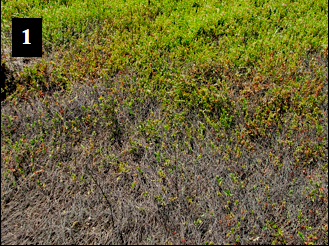
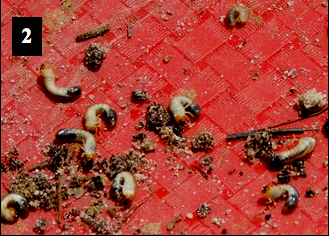
Occurrence of root-feeding insects will manifest by the presence of dead patches. Pull dead vines and search through the root zone and soil for grubs and worms.

If your beds have damage caused by root-feeding insects, you should consider treatment with Imidacloprid (e.g. Admire Pro, Alias 4F, Alias 2F) immediately after bees are removed. Admire Pro (imidacloprid) is labeled for the control of cranberry rootworm, white grubs (Phyllophagaspp.), and other scarabs in cranberries.

Damaged, Dead Patches in Cranberry

Damaged, Dead Patches in Cranberry

Phyllophaga Grubs

Phyllophaga Grubs


[Read more…]

Marucci Research in Cranberry: Insecticide Trials Against Blunt-nosed Leafhoppers

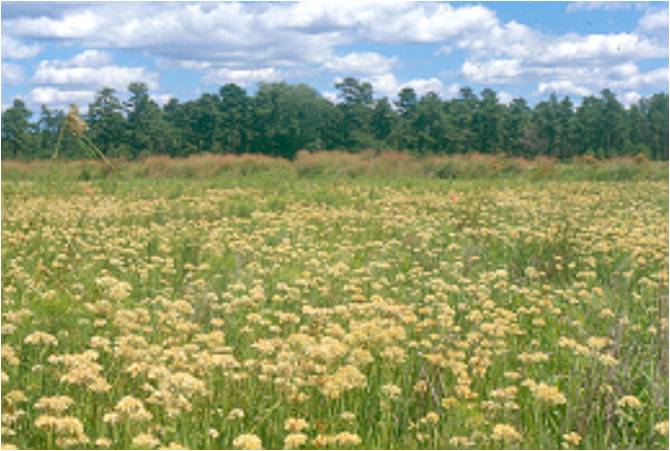
Semi-field bioassay testing efficacy of insecticides on leafhoppers.

Semi-field bioassay testing efficacy of
insecticides on leafhoppers.

Recently we conducted an experiment to test the efficacy of a newly-registered insecticide (Closer SC) in cranberries against blunt-nosed leafhopper nymphs.

Closer (Dow Agrosciences) is an insecticide for the control of sap-feeding insects, including leafhoppers, aphids, and whiteflies. It has both systemic and translaminar activity, belongs to a new class of insecticides (the sulfoximines), and has minimal impact on beneficial organisms.

Insecticide control for leafhoppers is best achieved pre-bloom when targeting the nymphal stage, i.e., immatures. Broad-spectrum insecticides (e.g. Lorsban) are currently recommended for their control. Thus, Closer may provide an alternative to broad-spectrum insecticides and likely be more compatible with biological control because it has less of an impact on natural enemies. [Read more…]

Cranberry: Insect Update 6/28/2013

As we approach the end of bloom, growers should consider the need for any post-bloom applications. The main pest targets for these applications are mainly Sparganothis fruitworm and spotted fireworm. [Read more…]

Farm Food Safety: FDA Q&A Printable Summary

The Food Safety Modernization Act will impact most growers in New Jersey.

Over the past weeks, we have posted the Questions and Answers for each of the conference calls focusing on subparts of the proposed Produce Safety Rule of the Food Safety Modernization Act on the PPA Food Safety section. For your convenience, the Q&A’s have been collected into a single PDF.

Food Safety Modernization Act FDA Q & A Sessions Proposed Produce Safety RuleFDA Q&A: Proposed Produce Safety Rule of the Food Safety Modernization Act
Click to View | Download | Print

Cranberry: Insect Update 6/17/2013

Bloom has started. If insects have been effectively managed prior to bloom, we recommend no sprays at this time. A reminder: when bees are present your only choices of insecticides are the Insect Growth Regulators –IGR- (e.g. Confirm and Intrepid) or Bt products (e.g. DiPel).

From now until August, we recommend monitoring insect populations using pheromone traps. [Read more…]

On-Farm Research in Cranberry: SPARG Trap Design & Color

In 2012 we started a study to compare the efficacy of different trap designs (delta versus wing traps) and colors (white versus red) on Sparganothis fruitworm (SPARG) adult captures. We found that red delta traps (Trécé Pherocon VI) are more effective than white delta traps. White delta traps also catch greater number of honey bees, and it is possible that this saturates the sticky traps. We are continuing this work and testing this hypothesis in 2013. Results from these studies will be presented at future grower meetings.

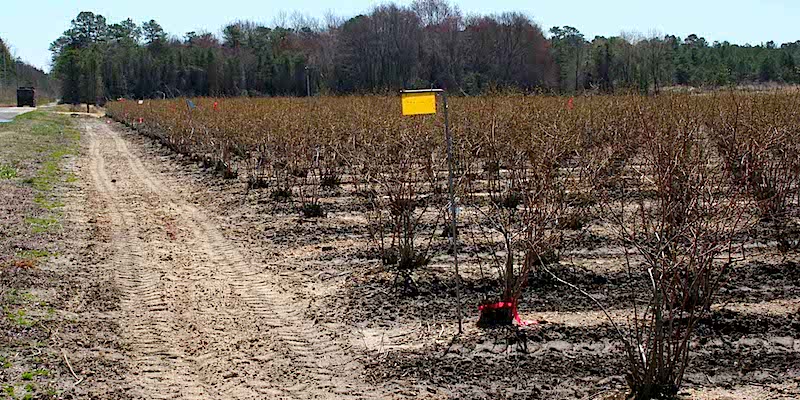
Experiment set-up to test effect of trap design and color on Sparganothis fruitworm captures.

Experiment set-up to test effect of
trap design and color on
Sparganothis fruitworm captures.

Data show red delta traps to be more effective than white delta traps in catching adult Sparanothis fruitworm.

Data show red delta traps to be more effective than white delta traps in catching adult Sparanothis fruitworm.