- Cucurbit downy mildew has been confirmed on cucumber in southern NJ this week. This is the first report in the state this growing season. All cucumber growers should scout their fields on a regular basis and consider adding a downy mildew specific fungicide to their weekly maintenance sprays.
- The 2018 FRAC Table for Cucurbit Downy and Powdery Mildew Control in the mid-Atlantic Region can be found and downloaded for FREE here.
- There have been no new reports of late blight in the region.
- Basil downy mildew has been reported in retail pots and in fields in southern New Jersey.
- Bacterial leaf spot and Phytophthora blight have been confirmed in pepper.
- Cercospora leaf spot was found on fenugreek this past week.
- The extremely hot, dry weather this past week should help mitigate diseases such as downy mildew. Remember, copper applications when temperatures and relative humidity are above 90 may cause phytotoxicity in some crops.
July 3, 2018 Andy Wyenandt
Vegetable Disease Update – 7/3/18
July 2, 2018 Andy Wyenandt
Cucurbit Downy Mildew ALERT – 7/2/18
Cucurbit downy mildew was confirmed on cucumber near Pedricktown in Salem County, New Jersey on 7/2/18. This is the first report of CDM in New Jersey this growing season. All cucumber growers are encouraged to add downy mildew specific fungicides to their weekly maintenance spray programs. All growers should scout cucumber plantings as well as all other cucurbit crops for symptoms. To track the progress of cucurbit downy mildew in the US through the CDMpipe website through NCSU please click here.
June 15, 2018 Andy Wyenandt
Cucurbit Downy Mildew ALERT – 6/22/18
Cucurbit downy mildew was confirmed on cucumber in Dorchester County, Maryland on 6/21/18. This is the first report of CDM in the mid-Atlantic region this growing season. All cucumber growers are encouraged to add downy mildew specific fungicides to their weekly maintenance spray programs. All growers should scout cucumber plantings as well as all other cucurbit crops for symptoms. To track the progress of cucurbit downy mildew in the US through the CDMpipe website through NCSU please click here.
June 14, 2018 Andy Wyenandt
Vegetable Disease Update – 6/14/18
- Dickeya dianthicola has been confirmed on ‘Norwis’ potato in New Jersey from seed originating from Prince Edward Island. This is the first report of Dickeya on potato in NJ this growing season. All potato growers should continue to scout their fields on a regular basis. Please contact your county agent if you find suspect plants.
- Pectobacterium spp. has been confirmed in southern NJ in ‘Dark Red Norland’ potato originating from P.E.I and in ‘Atlantic’ originating from Maine.
- Late blight was reported on tomato being sold as transplants in a retail operation last week near northeast Philadelphia. There has been no new information to date. Growers of tomato and potato should continue with their regular fungicide maintenance programs.
- Basil downy mildew was reported in potted basil being sold at a retail location in southern New Jersey.
- Bacterial leaf spot has been confirmed in pepper.
May 30, 2018 Andy Wyenandt
Vegetable Disease Update – 5/30/18
- Downy mildew was confirmed on pea last week. The cool, damp weather the past week has been ideal for downy mildew development on spring crops.
- Soft rot, caused by Pectobacterium spp., was detected on planted potato seed last week in southern New Jersey.
- Bacterial leaf spot in romaine lettuce was found in the past week.
- The heavy rains and damp, cool weather have been ideal conditions for early-season damping off caused by Pythium and Phytophthora as well as downy mildew development on spring greens. Growers should continue to scout on a regular basis and remain proactive in their fungicide programs as long as current weather patterns continue.
- Cucurbit downy mildew has been reported on cucumber as far north as central North Carolina this week.
- No Late blight has been reported in region to date.
April 24, 2018 Andy Wyenandt
Controlling Septoria Leaf Spot and Bacterial Leaf Blight in Parsley
Septoria leaf spot (SLS) in Parsley can cause significant losses in fields where it has become established. Like other Septoria’s, the leaf spots produced on parsley look much like the leaf spots produced on tomatoes and other crops. Septoria leaf spot overwinters from year to year on infected debris so long crop rotations of 2 or more years are important to help reduce disease pressure. During the season, SLS will spread rapidly with each subsequent rainfall and/or overhead irrigation event. Therefore, early detection and preventative fungicide applications are key to successfully controlling SLS. Unfortunately, very few fungicides are currently labeled making control difficult.
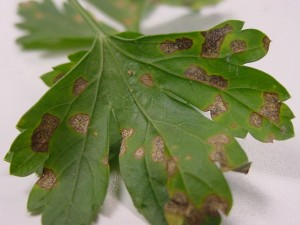
Septoria leaf spot of Parsley
