Botrytis, or gray mold, caused by the fungus, Botrytis cinerea, can cause significant losses in high tunnel and greenhouse tomato production if not controlled properly. The pathogen can rapidly spread during periods when structures are closed and when relative humidity remains high for long periods of time. This often occurs when outside weather remains cool and damp while heating is needed. Gray mold is favored by temperatures from 64° to 75°F and requires only high humidity (not leaf wetness) to become established. The pathogen has a large host range and once established in an enclosed structure it can be very difficult to control (UMASS). The fungus can survive/overwinter as mycelia or sclerotia in plant debris and in organic soil matter (NCSU).
Identifying and controlling botrytis in high tunnel and greenhouse tomato production
Identifying and controlling leaf mold in high tunnel & greenhouse tomato production
Leaf mold occasionally appears in high tunnel or greenhouse tomato production in New Jersey. However, under ideal conditions the disease will develop in field-grown crops. The fungus will cause infection under prolonged periods leaf wetness and when relative humidity remains above 85%. If relative humidity is below 85% the disease will not occur. Therefore, the proper venting of high tunnels and greenhouses on a regular basis is important. The pathogen can survive (overwinter) as a saprophyte on crop debris or as sclerotia in the soil. Conidia (spores) of the fungus can also survive up to one year in the soil.
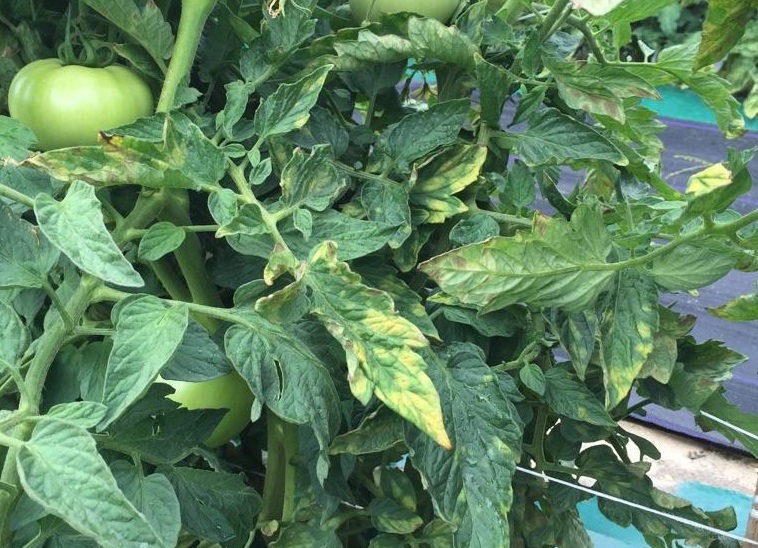
Symptoms of leaf mold on infected tomato plant. Note bright yellow leaves and olive-green spores developing on undersides of leaves.
Identifying white mold in greenhouse & high tunnel tomato production
White mold, or timber rot, is caused by the soil-borne fungal pathogen, Sclerotinia sclerotiorum.
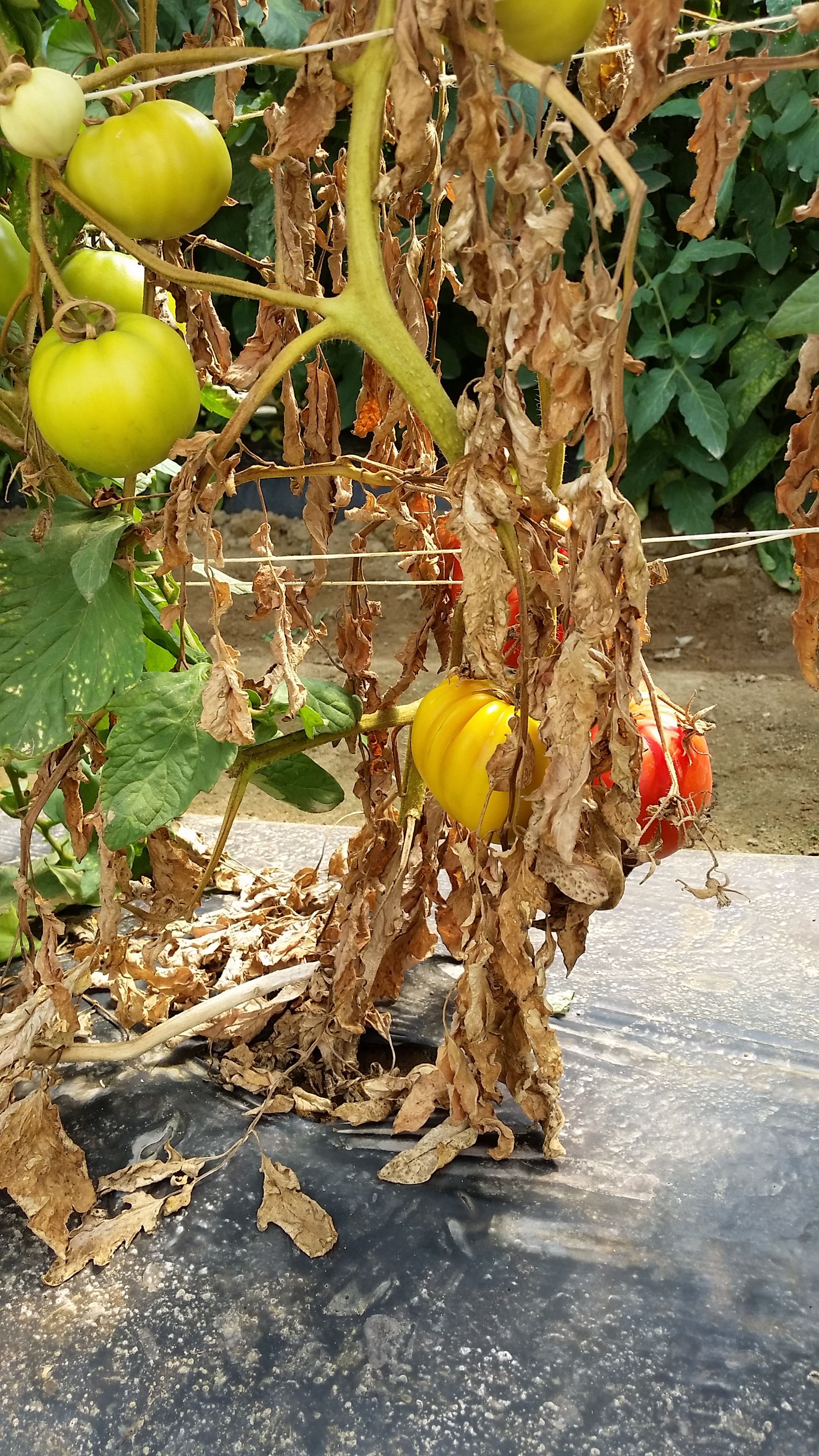
High tunnel tomato plant with main stem infected by white mold.
The photo on right shows a high tunnel tomato plant with main stem infected by white mold. Over time the entire plant will slowly collapse looking similar to a wilt or root rot pathogen as the water supply is cut off to the plant.
White mold is common and once introduced into a field or high tunnel it can very difficult to control. The pathogen produces black sclerotia on the surface and inside infected stems. Sclerotia, if they make their way back into the soil, can survive for years causing significant problems.
Infected stems will turn a light brown color and dry up becoming brittle. If the main stem is infected the entire plant will collapse looking like a wilt or root rot issue.
Under hot, humid conditions white fungal growth will develop on the surface of the stems and in some cases sclerotia will develop on the outside of the stem. Breaking open the stem will reveal numerous black sclerotia.
All infected plants and or plant material need to be removed from the greenhouse or high tunnel immediately and disposed of properly. Preventative protectant fungicide programs beginning at flowering will help control white mold. Cool, wet weather and poor air circulation favors disease development.
There are a number of control options for conventional and organic growers listed in Table E-11 in the 2020/2021 mid-Atlantic Commercial Vegetable Production Recommendations Guide.
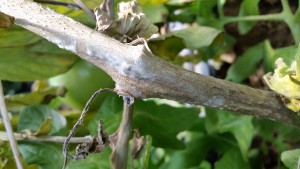
Tomato stem infected by white hold. Note the fungal growth on the surface of the stem.
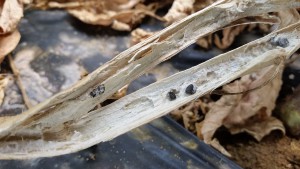
White mold of tomato. Note the black sclerotia developing inside the brittle stems.
Phytophthora and pythium control during wet weather
Most of New Jersey has been plagued by heavy regular rains and pop-up thunderstorms making conditions ideal for pathogens such as Phytophthora and Pythium. Unfortunately, Pythium and Phytophthora blight can be found on most farms in the southern part of the state. Poor crop rotations with susceptible hosts only make matters worse. The Phytophthora pathogen has an increasing host range that now includes snap and lima beans; and all crops, other than a few resistant bell pepper cultivars, lack any resistance to the pathogen.
Control of Phytophthora blight and Pythium are extremely difficult (even with the use of fungicides) in the wet weather conditions. In the past few years a number of new fungicides, with new active ingredients, have become commercially-available for use on multiple crops. Mefenoxam or metalaxyl, both once widely-used to effectively control Phytophthora blight has been hit by resistance issues around much of Southern New Jersey the past decade. Growers with a known history of mefenoxam-insensitivity on their farm should use Presidio, Previcur Flex, or Ranman plus a Phosphite fungicide in rotation in their drip application programs. Importantly, if mefenoxam has not been used in particular fields on any crop for a number of years (more than 5+) the fungus may revert back to being mefenoxam-sensitive and control with these products may return. Mefenoxam, metalaxyl, Previcur Flex, and the phosphites are the most systemic of the group and should readily be taken up the by plant via application through the drip. Presidio has locally systemic and has translaminar activity and should offer some protection of the root system via drip. Ranman has protectant activity and thus will offer some root protection where it comes into contact with. Orondis Gold (oxathiapiprolin + mefenoxam, 49 +4) is the newest fungicide available with a new active ingredient in a new FRAC group. Additionally, in past research trials, mefenoxam, Orondis Gold, Presidio, Previcur Flex, Ranman, Revus and the phosphites in rotation and/or tank mixes have offered very good control of the fruit rot phase of phytophthora blight.
[Read more…]
Controlling purple blotch in leeks and onion
Purple blotch – Purple blotch, caused by Alternaria porri, may survive on infected plant material in overwintered plantings and may cause problems in spring transplanted fields and seedbeds. Symptoms of Purple blotch include tannish-brown, elongated, concentric, circular lesions with chlorotic margins with lesions running parallel with leaf veins. As the weather begins to warm up and spring showers arrive Purple blotch may become problematic in some fields. Spores are produced and new plants infected during periods of warm (77-85°F) humid weather. Symptoms appear 1 to 4 days after infection and black spores are produced in new lesions within 5 days. Spores are produced at night and released in the morning as humidity decreases. The spores are spread by wind and splashing rain or irrigation. Typical lesions occur when the leaf wetness duration is >16 hours. Control of Purple blotch begins with preventative fungicide applications.
| Code | Product Name | Product Rate
|
Active Ingredient(s)
(*=Restricted Use) |
PHI
(d) |
REI
(h) |
Bee
TR |
| Apply the following preventatively prior to the onset of disease. Do not apply chlorothalonil more than 3 times per season. | ||||||
| M05 | chlorothalonil 6F | 1.5 to 3.0 pt/A | chlorothalonil | 14 | 12 | N |
| Tank mix or rotate the above with one of the following FRAC code 3, 7, or 11 fungicides when conditions favor disease development or when symptoms are present in the field. Rotate fungicides with different modes of action. | ||||||
| 3 | Folicur 480SC | 4.0 to 6.0 fl oz/A | tebuconazole | 7 | 12 | N |
| 3 + 9 | Inspire Super 2.82EW | 16.0 to 20.0 fl oz/A | difenoconazole + cyprodinil | 7 | 12 | — |
| 3 + 11 | Quadris Top 1.67SC | 12.0 to 14.0 fl oz/A | difenoconazole + azoxystrobin | 7 | 12 | — |
| 7 | Endura 70W | 6.8 oz/A | boscalid | 7 | 12 | — |
| 7 | Fontelis 1.67SC | 16.0 to 24.0 fl oz/A | penthiopyrad | 0 | 12 | L |
| 7 + 11 | Pristine 38WG | 10.5 to 18.5 oz/A | boscalid + pyraclostrobin | 7 | 12 | — |
| 11 | Cabrio 20EG | 8.0 to 12.0 oz/A | pyraclostrobin | 7 | 12 | N |
| 11 | azoxystrobin 2.08F | 6.0 to 12.0 fl oz/A | azoxystrobin | 4 | 0 | N |
Applications of azoxystrobin, Cabrio, or Pristine at high rates will also help suppress Downy mildew.
Spear Damage in Asparagus
Spear damage in asparagus can be caused by diseases such as Phytophthora spear and crown rot and purple spot. However, other environmental factors during the spring can damage spears as they emerge from the soil.
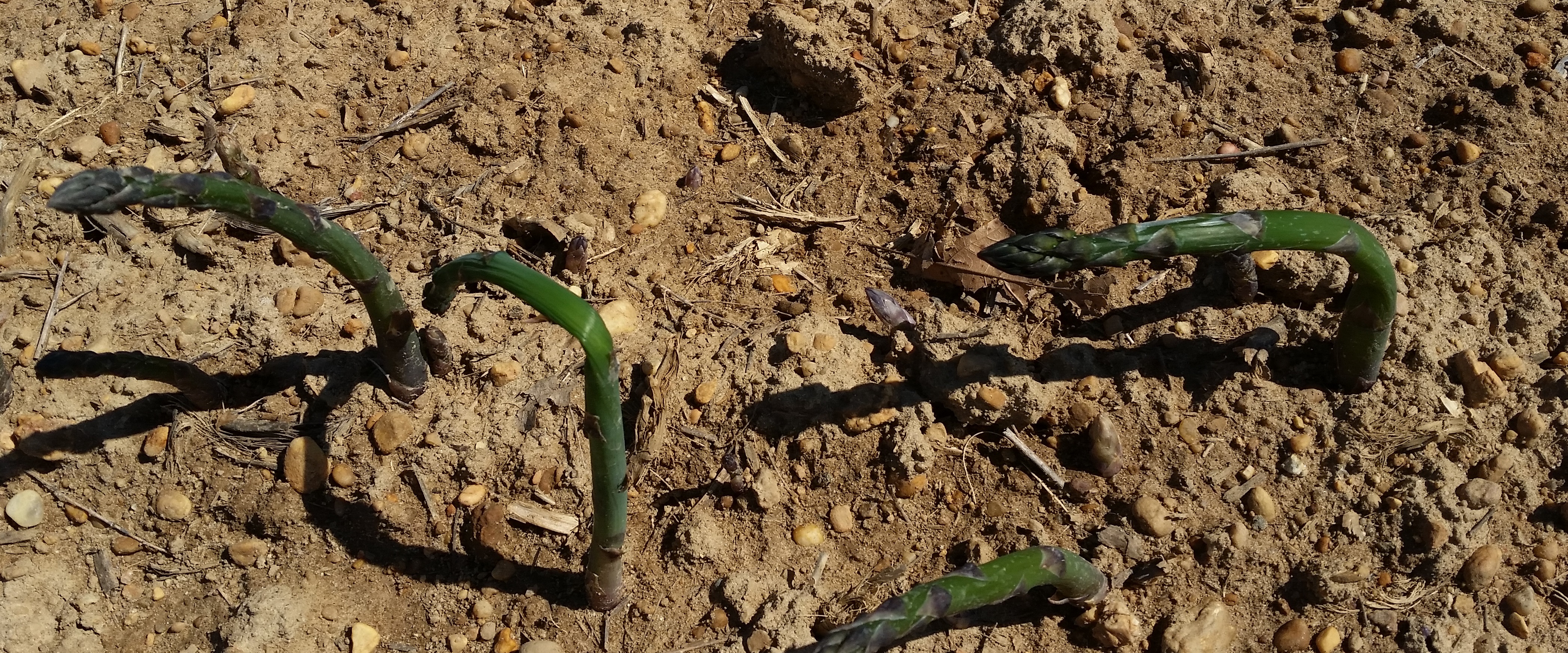 Fig 1a. Freeze injury in asparagus. (Photo by Tom Orton) 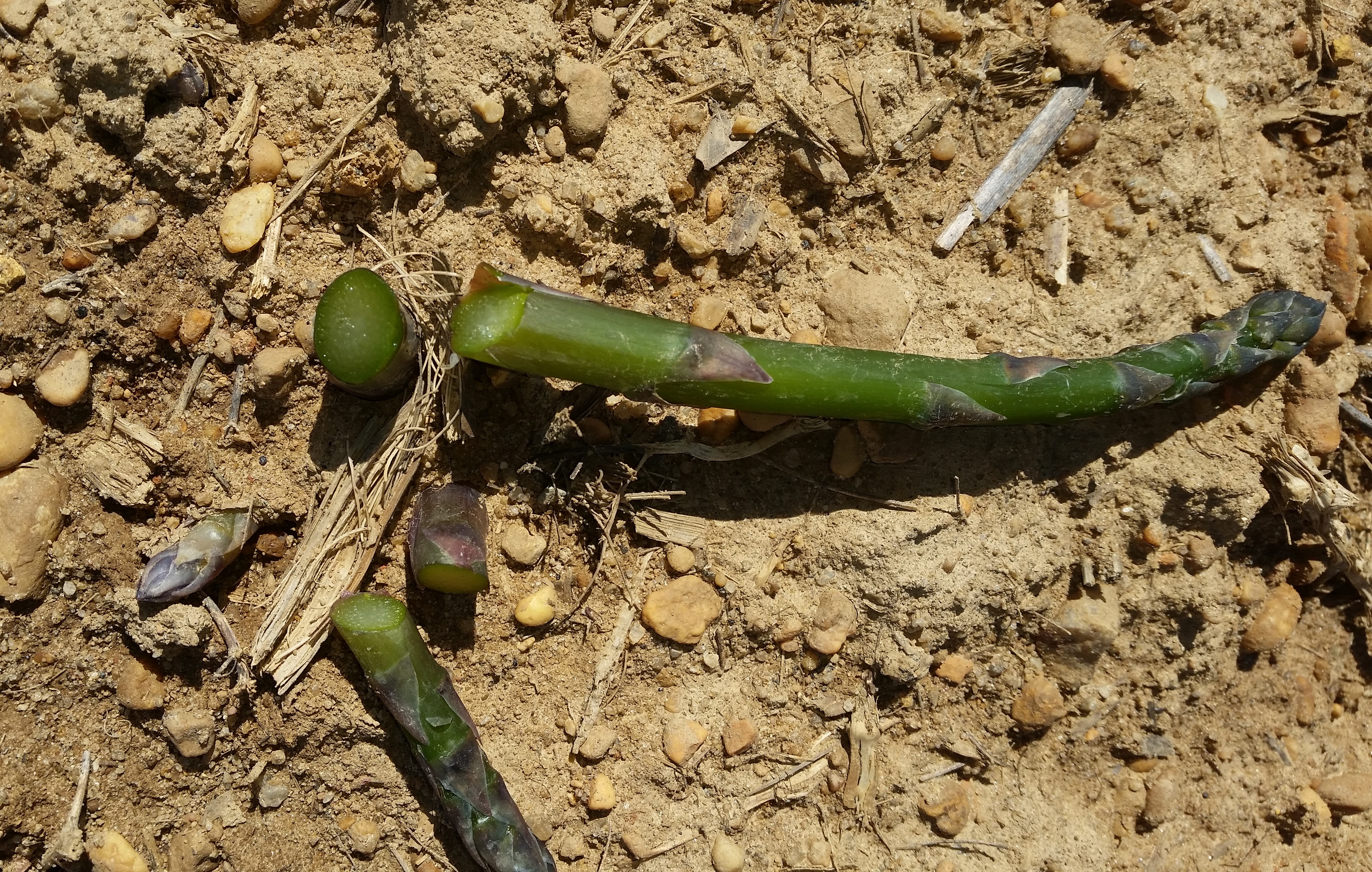 Fig 1b. Freeze injury in Asparagus. Note the color of the interior of the spear. (Photo by Tom Orton) |
Freeze Injury – About 10 days ago temperatures dipped well below freezing for a night or two, and combined with the higher than normal temperature this spring, some asparagus fields that had already started to produce spears were hit with injury. Affected spears will be bent/distorted and begin to breakdown and rot (Fig. 1a).
Cutting frozen spears will show the discoloration of the spear caused by the freeze (Fig. 1b). |
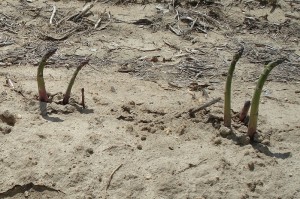 Fig. 2. Wind damage of asparagus spears. Notice how all spears are pointed in the same direction |
Wind – Periods of heavy winds during emergence will cause spears to bend.Winds can cause one side of the spear to dry out quicker than the other causing the spear to bend and point in the direction of the prevailing wind. An asparagus planting is suffering from wind damage if most of the bent spear heads in the bed are pointing in the same direction (Fig.2). |
