Blueberry Pest in Detail: Leafminers

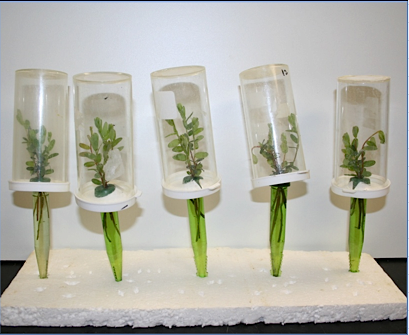
Teepee shelters containing Blueberry Leafminer

Teepee shelters containing Blueberry Leafminer.
Only 1 larva is found per leaf.

The blueberry leafminer is generally not considered an economic pest problem mainly because larvae experience high levels of parasitism in most blueberry fields. Larval parasitism can reach levels up to 80%. Use of broad-spectrum insecticides can have a severe effect on the natural enemy populations of the leafminer.

Because of potential contamination, the blueberry leafminer might be a problem if you are processing more blueberries than usual. Blueberry leafminer larvae may become a contaminant, especially in machine-harvested fruit, as larvae drop from the bushes together with the harvested fruit. Under this special circumstance, treatment may be justified. Otherwise, we do not see the need to treat for this insect. [Read more…]

ACGA 2013 Summer Field Day

American Cranberry Growers Association 2013 Summer Field Day
Date: Thursday, August 15

Location: Rutgers P.E. Marucci Center for Blueberry & Cranberry Research & Extension, Chatsworth, NJ

Parking will be available at the Center’s shop (across cranberry bogs).
Transportation for tours will be provided at the Center.

Agenda
[Read more…]

Cranberry: Root-feeding Pests

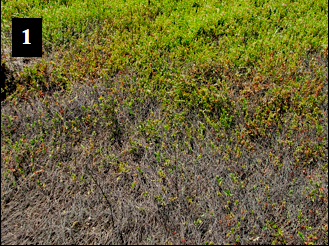
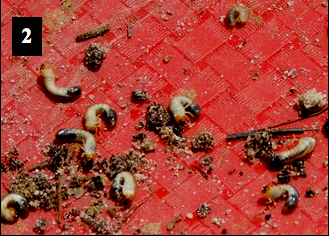
Occurrence of root-feeding insects will manifest by the presence of dead patches. Pull dead vines and search through the root zone and soil for grubs and worms.

If your beds have damage caused by root-feeding insects, you should consider treatment with Imidacloprid (e.g. Admire Pro, Alias 4F, Alias 2F) immediately after bees are removed. Admire Pro (imidacloprid) is labeled for the control of cranberry rootworm, white grubs (Phyllophagaspp.), and other scarabs in cranberries.

Damaged, Dead Patches in Cranberry

Damaged, Dead Patches in Cranberry

Phyllophaga Grubs

Phyllophaga Grubs


[Read more…]

Marucci Research in Cranberry: Insecticide Trials Against Blunt-nosed Leafhoppers

Semi-field bioassay testing efficacy of insecticides on leafhoppers.

Semi-field bioassay testing efficacy of
insecticides on leafhoppers.

Recently we conducted an experiment to test the efficacy of a newly-registered insecticide (Closer SC) in cranberries against blunt-nosed leafhopper nymphs.

Closer (Dow Agrosciences) is an insecticide for the control of sap-feeding insects, including leafhoppers, aphids, and whiteflies. It has both systemic and translaminar activity, belongs to a new class of insecticides (the sulfoximines), and has minimal impact on beneficial organisms.

Insecticide control for leafhoppers is best achieved pre-bloom when targeting the nymphal stage, i.e., immatures. Broad-spectrum insecticides (e.g. Lorsban) are currently recommended for their control. Thus, Closer may provide an alternative to broad-spectrum insecticides and likely be more compatible with biological control because it has less of an impact on natural enemies. [Read more…]

Cranberry: Insect Update 6/28/2013

As we approach the end of bloom, growers should consider the need for any post-bloom applications. The main pest targets for these applications are mainly Sparganothis fruitworm and spotted fireworm. [Read more…]

Thoughts on Managing “The Big Three” Blueberry Insect Pests

The Big Three Insect Pests of BlueberryAs we go forward growers will want to have effective programs for the management of all of The Big Three insects at this time: Blueberry Maggot (BBM), Aphids, and Spotted Wing Drosophila (SWD).
[Read more…]