Archives for August 2023

Vegetable IPM Update 8/30/23

Sweet Corn

Fall armyworm (FAW) infestations in whorl stage plantings remain a presence, although in many scouted fields in northern and central counties, the incidence of FAW has declined.  Re-infestation rates are fairly low, even in coastal areas.    This may not be the case in southern counties.  Growers are advised to check whorl and seedling stage corn plantings weekly for signs of FAW.  Consider treating if infestation rates exceed 10%.  This pest is capable of significant injury to sweet corn plants, resulting in severe stunting and failure to produce viable ears.  Note that growers of Attribute II type genetically engineered corn are unlikely to see damage from FAW.
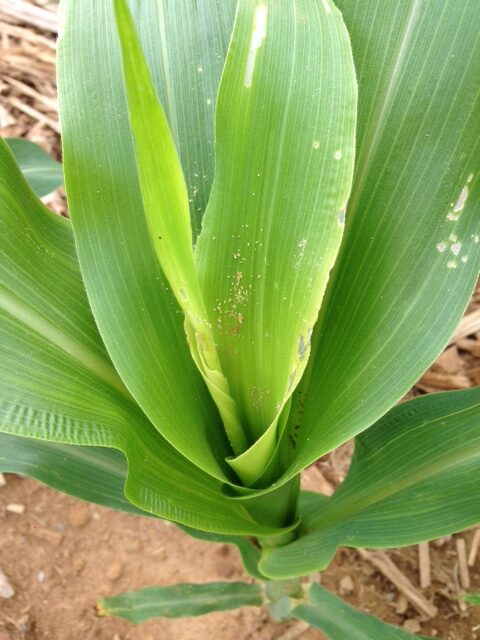
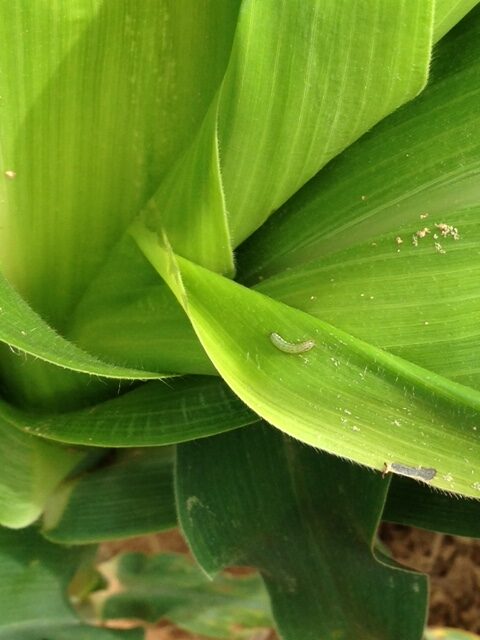
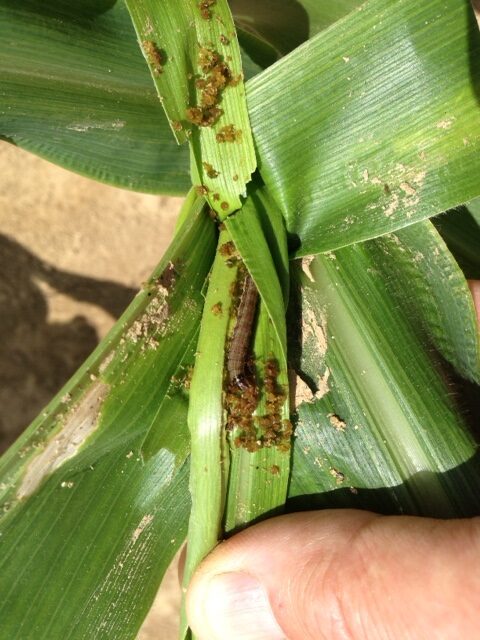
Newly hatched FAW larvae cause holes and scratches on leaves that are similar to European corn borer (ECB) feeding, except that they tend to be more concentrated and always lead down into the whorl  (see photos at left).  As the larvae grow, the feeding becomes more destructive, with large ragged holes and obvious droppings deposited in the whorl (see photo at right)

We will provide updates on new FAW appearances and severity as reports come in.  FAW are resistant to synthetic pyrethroids.  Effective sprays should include IRAC grp. 5 (spinosyns) or IRAC grp. 28 (diamides).  The carbamate (IRAC grp. 1A) Lannate is also still effective.  Sufficient water should be used in the applications to allow the solution to penetrate the layer of droppings that may have formed above the caterpillar.
 

[Read more…]

Vegetable Disease Update: 08-24-23

Cucurbit Downy Mildew Alert – Pumpkin, Butternut, Spaghetti Squash – 8/24/23

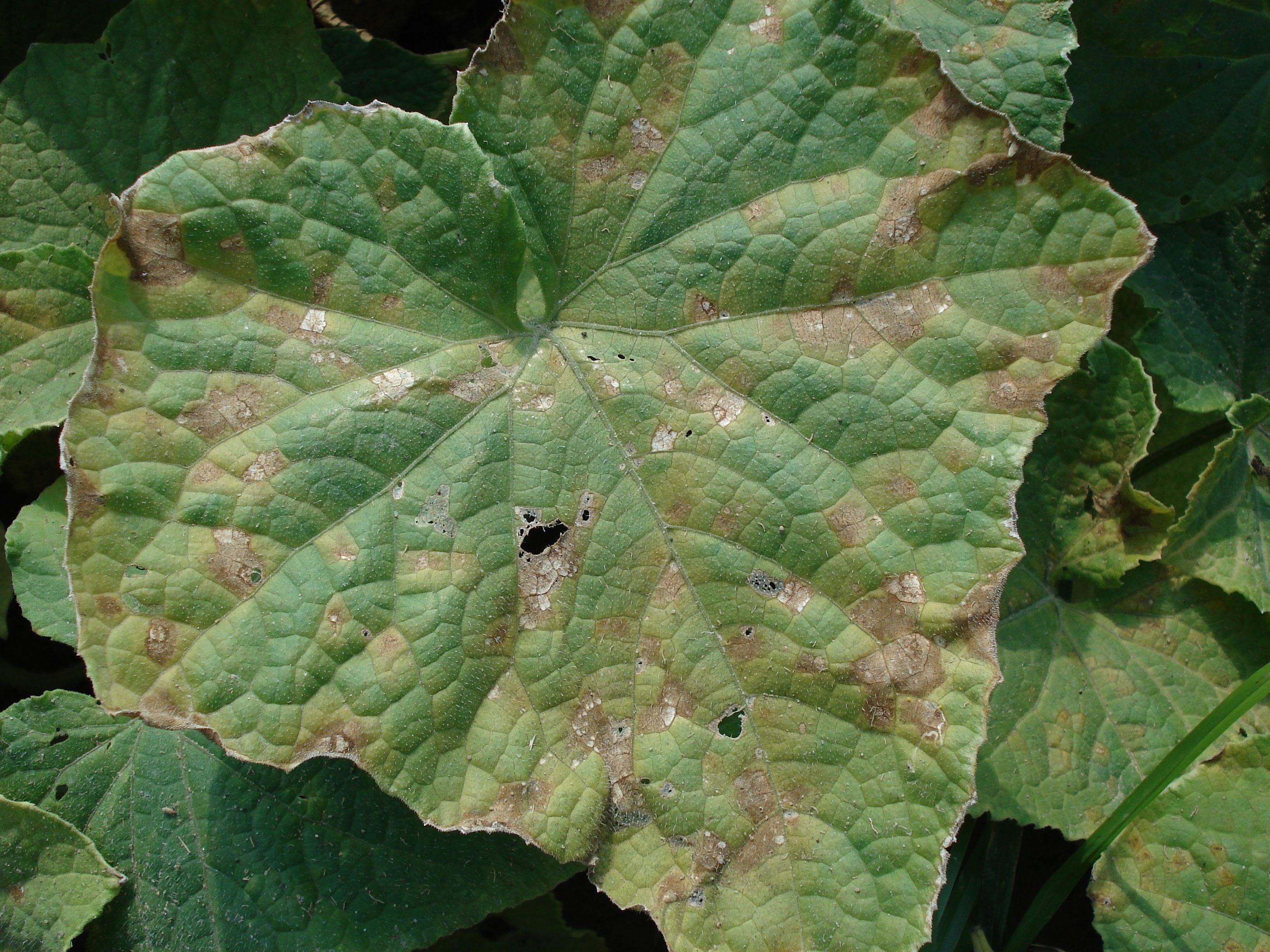
Cucurbit downy mildew has been confirmed on pumpkin, butternut, and spaghetti squash in Northern New Jersey (Morris County). This is the first report of CDM on pumpkin, butternut and spaghetti squash in New Jersey this growing season. CDM has previously been reported on cantaloupe in Salem County on July 7th and on cucumber in Gloucester County (7/1) and in Atlantic County (6/13)  in southern New Jersey.  All cucurbit growers should scout on a daily basis and initiate a preventative fungicide program immediately. Remember, some CDM isolates fall into Clade I which predominately infect watermelon, pumpkin, and squash, where CDM isolates in Clade II predominately infect cucumber and cantaloupe. We now have both Clades present in New Jersey!

For more information on CDM, the clades, and CDM control please click here.

Vegetable IPM Update 8/23/23

Sweet Corn

Fall armyworm (FAW) infestations in whorl stage plantings remain a presence, although in many scouted fields in northern and central counties, the incidence of FAW has declined.  Treated fields are not typically experiencing re-infestation.    This may not be the case in southern counties.  Growers are advised to check whorl and seedling stage corn plantings weekly for signs of FAW.  Consider treating if infestation rates exceed 10%.  This pest is capable of significant injury to sweet corn plants, resulting in severe stunting and failure to produce viable ears.  Note that growers of Attribute II type genetically engineered corn are unlikely to see damage from FAW.

Infested plantInfested plantNewly hatched FAW larvae cause holes and scratches on leaves that are similar to European corn borer (ECB) feeding, except that they tend to be more concentrated and always lead down into the whorl  (see photos at left).  As the larvae grow, the feeding becomes more destructive, with large ragged holes and obvious droppings deposited in the whorl (see photo at right)Plant with droppings

We will provide updates on new FAW appearances and severity as reports come in.  FAW are resistant to synthetic pyrethroids.  Effective sprays should include IRAC grp. 5 (spinosyns) or IRAC grp. 28 (diamides).  The carbamate (IRAC grp. 1A) Lannate is also still effective.  Sufficient water should be used in the applications to allow the solution to penetrate the layer of droppings that may have formed above the caterpillar.
 

[Read more…]

Tree Fruit IPM Report for August 25, 2023

Peach:

Borers:  Where mating disruption dispensers are used there should be no need for butt sprays. If mating disruption was not used, the only other options are pyrethroids with a label for the use. The New Jersey Commercial Tree Fruit Production Guide recommends either Asana or Pounce. Pyrethroids lack a long residual so our recommendation would be a late August/early September butt spray followed by an additional application in mid to late September. Since this would be a labor intensive practice it would be most efficient to give priority younger and most productive orchards. Remember to follow the label as to the maximum allowable amount per season of either material.

Apples and Pears

Brown Marmorated Stink Bugs: Brown Marmorated Stink bugs are nearly absent in orchards statewide, likewise native stinkbug populations have been very low. If stinkbugs are a concern for your orchard, see the NJ Tree Fruit Production guide for effective materials. If treatment is needed for orchards near harvest. Venerate has a +++ rating for stink bugs and a 0 day PHI. In tests conducted by Dr. Neilsen’s lab, Venerate always performed better when applied at half the highest labeled rate.

Codling Moth (CM): Second generation treatments according to the degree day model are now over. Additional treatments should be made if trap captures are over 5 moths/trap. Most orchards have very low CM pressure, however a few orchards have had continuing trap captures above threshold.

Summer Diseases: Disease control is over for early season apple varieties. Mid to late season varieties will need further applications on a two week schedule until mid september for sooty blotch and fly speck.

Lesser Appleworm: In 2022 some orchards in southern counties have had internal worm damage that we think was Lesser Apple Worm. This sporadic pest sometimes shows up in late summer and fall. The damage is similar to codling moth. Larvae complete their life cycle quickly and often by the time damage is seen the larvae is already gone. Typically LAW will feed in the fruit calyx and not go into the flesh, however they may also feed on fruit flesh excavating a small hole under the skin and occasionally tunneling into the fruit. Control options are the same as for codling moth. LAW can be monitored using traps baited with OFM pheromone.

Grape

Bunch Rots: Disease management continues to focus on downy and powdery mildew and also turns to bunch rot management. Refer to the NJ Commercial Grape Production Guide as well as the linked presentation from Dr. Nita in Virginia.

Grape Berry Moth: The timing for the third generation is past. In some hot summers a fourth generation may occur, however no further treatments should be needed, especially where insecticides are being applied for SLF and SWD.

Drosophila’s and Sour Rot: SWD adults are being caught in and around commercial vineyards. As the sugars start to increase in early verities like Chardonnay, be aware of Spotted Wing Drosophila combined with native fruit fly species. These populations increase at this time of year and help spread sour rot. Sour rot will only be pres ent when you also have injured fruit. Fruit splits and various insects can help cause that initial injury. It is thought that the spotted wing drosophila (SWD), because of its saw-like ovipositor, can help cause this initial injury, helping to make the fruit more attractive to native drosophilid species.  After injury the fruit serves as a food source for ethanol-producing yeasts and acetic acid producing bacteria, the causal agents of sour rot. This in turn attracts more fruit flies to lay more eggs and spread the decay. Good canopy management for air circulation is useful to reduce sour rot incidence. However, this must be combined with insecticides and antimicrobials. A treatment regime that consists of weekly applications of an insecticide (Mustang Maxx (or other pyrethroid), Malathion, Delegate/Entrust, Verdepryn).  Add Oxidate 2.0 if fruit cracking from rain or other causes is observed. Since it is important to rotate insecticide classes when treating this often, growers should use no pyrethroid or other insecticide class more that 2 times in a row. These treatments should be started before the onset of visible sour rot and fruit fly presence.

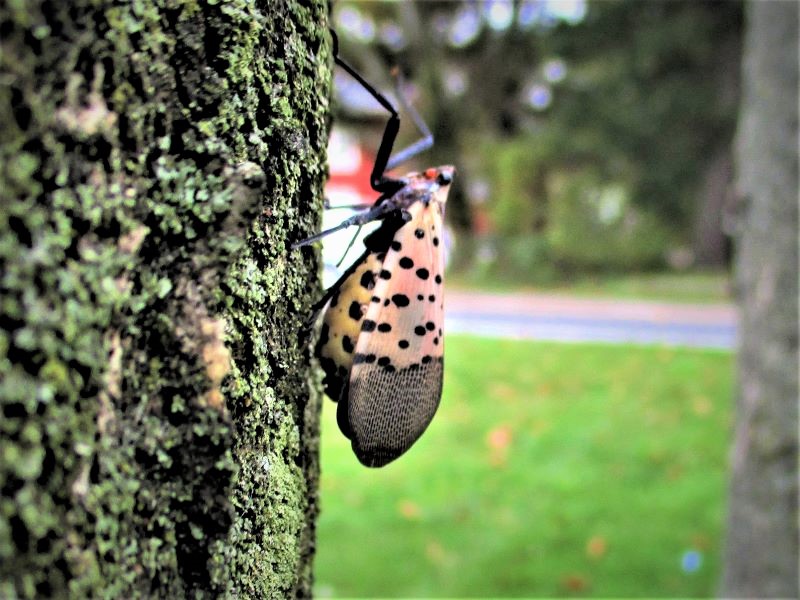
Spotted Lantern Fly: Spotted lantern fly adults are not yet appearing in vineyards, however they should be soon. When the first adults are observed, border treatments with effective materials should be adequate since most adults will be found on vineyard edges and populations will be low. As we move into September adult migration will increase and at that point growers should apply materials with long residual efficacy (refer to the table from Penn State below.) More information on biology and control can be found from Penn State.

Landscape Pest Notes: Some Late Summer Pests & Concerns

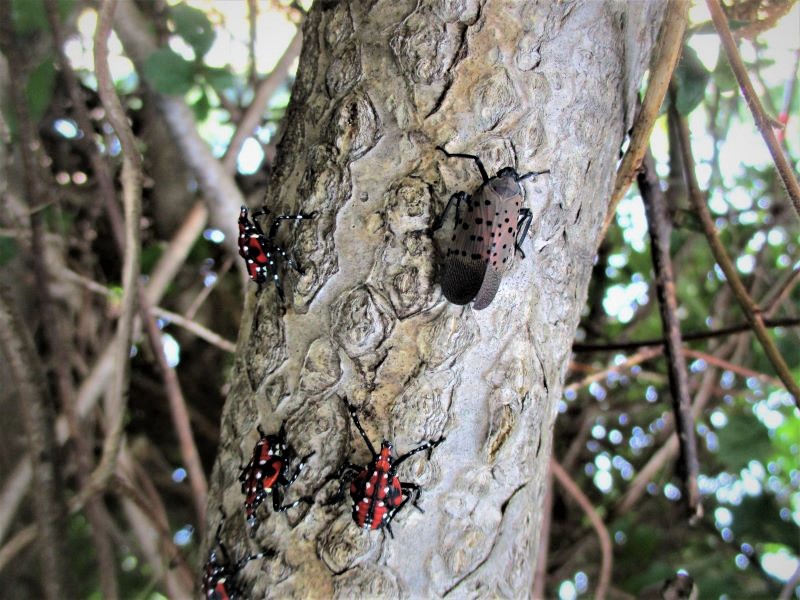
SPOTTED LANTERNFLY (Lycorma delicatula)(1st Flying Adults = 1700 GDD): There are still some red-colored 4th instar nymphs being observed but most areas of NJ are now seeing the adult stage of this invasive planthopper. Adult spotted lanternflies will initiate a migration period beginning in late August that will continue into the weeks of September. It is during this time that this insect will become a major nuisance in residential sites & also within more urban areas. Although spotted lanternfly adults are better hoppers than flyers, they are proficient gliders & are capable of traveling a few miles. Throughout these late weeks of summer, the insects are searching for ideal trees to feed on & then potentially lay overwintering egg masses.

Spotted lanternfly adult & 4th instar nymph

Spotted lanternfly adult & 4th instar nymphs. By late August, NJ will have these stages active. (Photo Credit: Steven K. Rettke, Rutgers Coop. Ext.)

Adult female & male spotted lanternflies.

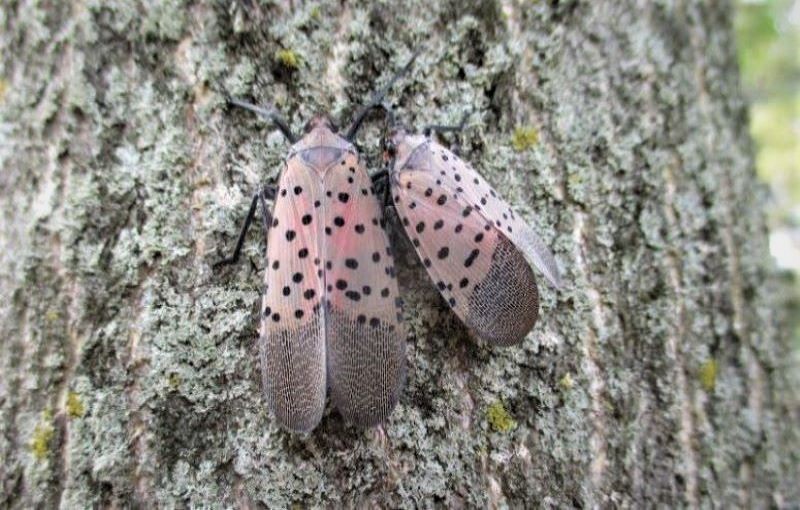
Adult female & male spotted lanternflies. Females will typically be 20% larger than males. They will pair-up & be side-by-side during the mating weeks of the fall. Sometimes an additional male or two will also be close by, “seeking the attention of the female.” (Photo Credit: Steven K. Rettke, Rutgers Coop. Ext.)


Some of the most common trees selected will include tree-of-heaven, red maple, black walnut, willow, birch, & grapes. Eggs Masses can potentially begin to be laid in mid-September, but the majority of adult females will not start egg-laying until the end of the month & will continue into the month of November. The majority of the egg masses are laid during October. With large deciduous trees, between 85-90% of eggs will be found above 10 feet off of the ground. Typically, they are laid in clusters underneath larger scaffold branches & at branch collars. Each female will usually lay two egg masses that contain 30-50 eggs each. Most adults will be killed with the onset of colder temperatures in late November. The NJ winters are rarely cold enough to kill the overwintering eggs.

Spotted lanternfly gravid female. The enlarged yellow-colored abdomen indicates this female will soon begin to lay egg masses. (Photo Credit: Steven K. Rettke, Rutgers Coop. Ext.)

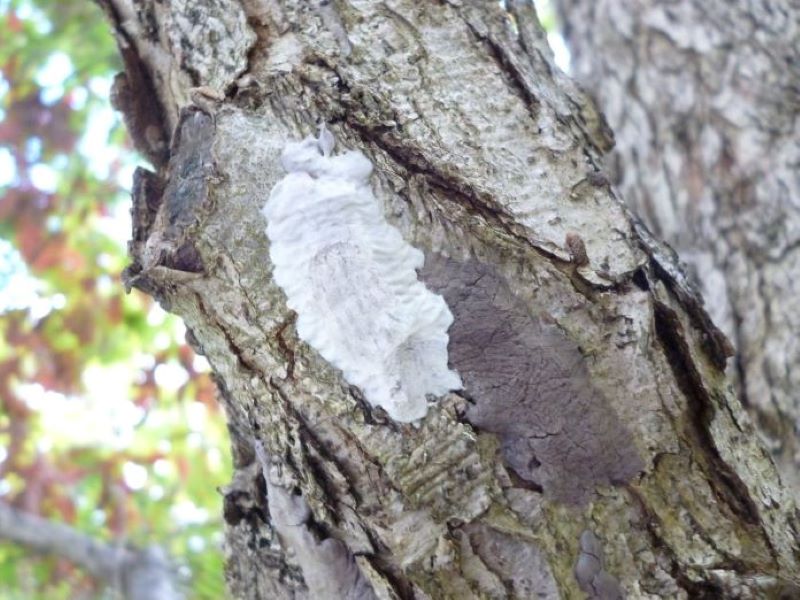
Spotted lanternfly egg masses

Spotted lanternfly egg masses. The white colored egg mass is only a few hours old. After less than a day the egg mass will turn a darker gray color & blend in with the bark of the tree. The masses contains 30-50 eggs each. (Photo Credit: Steven K. Rettke, Rutgers Coop. Ext.)


[Read more…]