Archives for June 2021

Recognizing Angular Leaf Spot in Cucurbits

Angular leaf spot is common in New Jersey and the region. It often shows up during cooler, wet weather and isolated rain.
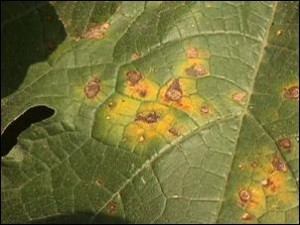
Symptoms of angular leaf spot in cucurbit.
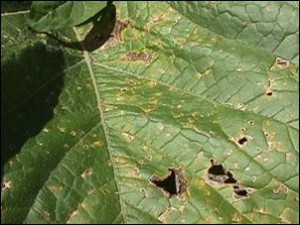
Symptoms of angular leaf spot in cucurbit.

Angular leaf spot of pumpkin. Note the 'shot holes' in the leaf.

Angular leaf spot of pumpkin. Note leaf ‘shot holes’.

Angular leaf spot will first appear as, small water-soaked lesions which will expand until they reach a larger leaf vein resulting in the angular looking symptoms on leaves. Under heavy disease pressure, the bacteria will infect fruit causing small, water-soaked circular spots. In many cases once weather conditions become dry again, infected tissue in leaves will die and fall out leaving the characteristic ‘shot hole’ symptoms. Control of angular leaf spot begins with the application of labeled rates of fixed copper plus mancozeb to help suppress the spread of the disease until hot, dry weather returns.
Rutgers Resources to Help Your Customers Safely Preserve Your Farm Fresh Produce

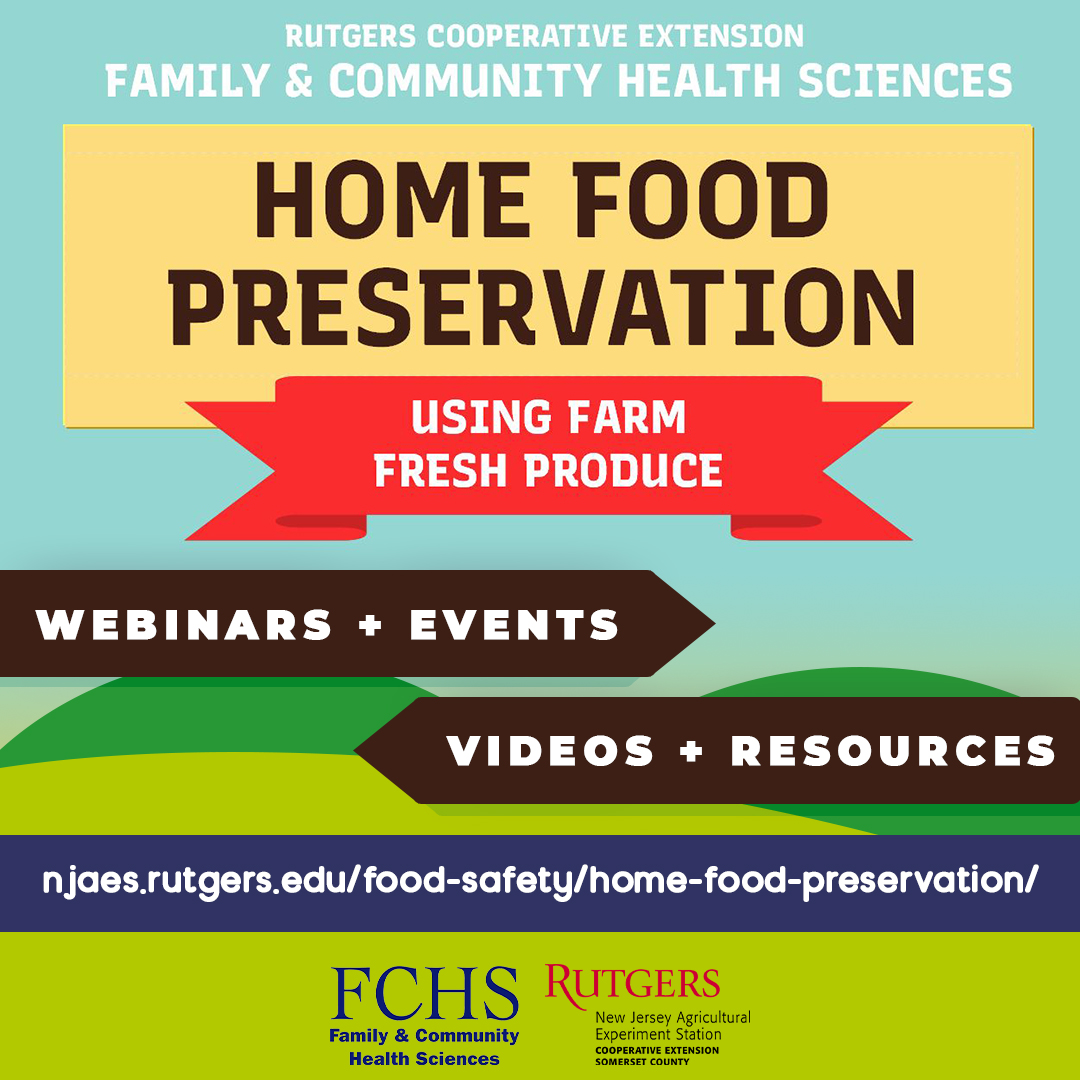
Home Food PreservationOur Ag & Natural Resources (ANR) Chair Nick Polanin shared that our Rutgers Cooperative Extension Family & Community Health Science Department (FCHS) has developed social media posts (below) and the attached mini posters for use by on-farm & community farm markets to promote safe home food preservation. These direct users to the NJAES home food preservation webpage. The posters are provided in full color and less color versions for websites or printing.

Face Book:  Please share this Facebook  post:  https://www.facebook.com/SCNJFCHS/posts/2008602745963285

Instagram text to copy & paste the jpg photo attached  and the following text:

Preserve Your Farm Fresh Produce

With the help of @fchs.rutgers, you can now access a harvest of free information for preserving your farm fresh produce!

Filled with webinars, events, videos, and all kinds of other resources, the home food preservation website is great for making everything easy to understand and digest, all while helping you learn through tutorial, expert publications, and more.

You can access the full site here:  njaes.rutgers.edu/food-safety/home-food-preservation/

This is also a valuable way of finding specific classes or speakers, as well as learning more about your county’s local FCHS office, their programs and events.

Avoiding Plectosporium blight in cucurbit fields.

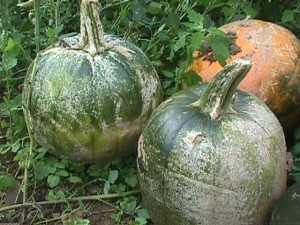
Plectosporium blight, also known as Microdochium blight or White speck, caused significant problems in some pumpkin fields last summer in New Jersey. The soil-borne fungal pathogen, although somewhat uncommon, can unexpectedly show up in some years and cause significant losses if left uncontrolled. The fungus survives in the soil on decaying plant debris where it can remain saphrophytic by surviving off organic matter. Infection is characterized by the production of numerous light tan to “bleached” spindle shaped lesions that develop on vines and the undersides of infected leaves. Heavily infected vines and leaves can die leading to premature defoliation and subsequent sunscald on fruit. In cases of heavy disease pressure, spores that are produced on the bottom sides of leaves fall and infect the topsides of fruit laying beneath the canopy. Infection of stems leads to premature browning and drying reduce their longevity. Fruit infection, in most cases, remain mostly cosmetic in nature reducing fruit quality and may predispose fruit to other opportunistic fruit rots. Plectosporium blight often shows up during periods of prolonged wet weather where the soil remains wet for extended periods. “Hot spots” typically appear in fields before the pathogen is further spread by driving rains and wind.

From a production standpoint, stay away from fields with known history of the disease for as long as possible; provide adequate spacing between plants in- and between rows (i.e., avoid the overcrowding of plants); avoid over (preplant) fertilization that can lead to thick, dense canopies; avoid overhead irrigation (if possible); avoid planting in area of a field that remains heavily shaded where soils tend to dry too slow.

Controlling Plectosporium blight begins with regular scouting, recognizing symptoms, and identifying “hot spots” in the field. Protectant fungicides, such as chlorothalonil, as well as those used in weekly maintenance spray programs for cucurbit powdery mildew control will help control Plectosporium blight as long they applied on a weekly schedule with a high volume of water with thorough coverage. To help improve control on the undersides of leaves, a FRAC code 11 fungicide such as Quadris Top or Pristine, can be added to the tank mix. Remember, FRAC code 11 fungicides have translaminar activity and will move from the top surface of the leaf to the bottom. Growers who grow powdery mildew resistant varieties need to remember to scout their fields regularly even if cucurbit powdery mildew has not been detected on the farm or if regular maintenance sprays haven’t begun.


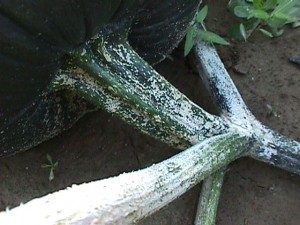
White speck lesions covering pumpkin

White speck lesions covering the surface of immature and mature pumpkin fruit. White speck will only cause cosmetic injury to fruit.

White speck on vine and stem of infected pumpkin plant

White speck on vine and stem of infected pumpkin plant. Note the numerous small, white diamond shaped lesions.


Lightning strike awareness for pasture producers

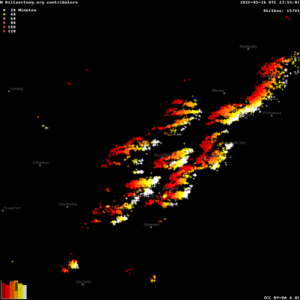
The intense lightening storm of May 26th that impacted most of New Jersey is a reminder that pastured livestock are also at risk from more than heat exhaustion as summer progresses.

Network for Lightning and Thunderstorms

Network for Lightning and Thunderstorms in Real Time map by Blitzortung.org for the storm system that moved across New Jersey on May 26th.

Measures to protect livestock from predators, sun exposure and dehydration should take lightening strikes into consideration. Lightening can kill animals by direct and indirect pathways and start fires in tinder dry grasses. A true act of nature, lightening deaths are random but producers can take steps to minimize losses from man-made structures, trees and water sources.

Tree shade: Lightening electricity seeks the path of least resistance. Different trees contain different amounts of sap and water making some a better conductor of lightening than others. “Among the most common tree species that get hit by lightning are oak, gum, maple, poplar, and pine trees.”  – https://www.americanarborists.net/tree-tips/2017/june/what-to-do-if-your-tree-is-struck-by-lightning-/

Cotton woods are a type of poplar. A single cottonwood can intake between 50 and 200 gallons of water every day, making them a potential risk to livestock during severe storms. In general, the more surface roots a tree has the more danger to livestock crowded around the tree. Rows of trees theoretically spread out the possibility of lightening strikes and less livestock are crowded under a single tree. Avoid having livestock in pastures on high ground with trees during these storms.

Poorly drained areas: Naturally occurring wet areas and wet areas associated with irrigation pumps and rigging increase the potential risk to livestock from lightening strikes. Grazing of livestock in and around these structures and others like solar panels should be restricted when severe storms are forecasted.

Fence and metal gate grounding: When lightening strikes the voltage will follow electric fence wires back to the charger and then into the ground rod. Grounding rods are recommended to be in the ground five feet to dissipate lightening safely. If livestock are crowded up against fence or have their heads through metal gates, they become the grounding rod. Woven electrified fence increases the surface area that animals may come in contact with.The charger itself may not survive a lightening strike. Fence chargers are expensive investments, turn off the charger and disconnect it prior to severe storms when feasible.

Metal water troughs: In crowded pens, metal and even rubber water troughs are a lightening injury risk to livestock. Again, this is due to the animal becoming the conduit to the water soaked ground. General guidelines suggest animals should be separated (not forced to congregate due to enclosure size) at least 50 feet from water troughs during lightning storms.

Temporary shelters: Temporary shelters to limit sun exposure and prevent heat exhaustion should be properly grounded and made of materials that limit electrical conductivity. Emergency shelters made of hay bale rings and metal panel gates with plywood or tarp roofs during high heat warnings should be temporary; and removed when lightning storms are forecasted.

Roosts: Chickens will roost where they are when dusk arrives. Evaluate pasture poultry locations for areas that chickens are using to roost and take measures to limit their roosting on objects that conduct electricity.

Buried commercial utility lines. I lost a first calf heifer to a lightening strike a few years back. A tree in a cemetary nearly a mile away along the same path as the phone line took a direct hit as did another tree on the opposite end of the pasture. The cow was standing directly over the buried unmaintained line and died instantly. Note the copper line was installed more than fifty years ago and through heave and thaw presumably had a crack in the insulation at that location. As farm usage and ownership changes over the decades, be familiar with what is buried on your farm in utility right of ways that may no longer be maintained.

Lightening insurance. Farmers can cover their losses by adding lightening protection to their policy. USDA also covers eligible lightening losses under their Livestock Indemnity Program. For general information see this 2009 article  https://www.fsa.usda.gov/Internet/FSA_File/29229200909.pdf and contact your local FSA office for current program requirements.

For more information on insulating your farm against lightening, see ‘Lightning Protection for Farms’ by National Ag Safety Database. https://nasdonline.org/1882/d001825/lightning-protection-for-farms.html

Sparganothis Fruitworm Degree-Day Update: as of June 06, 2021

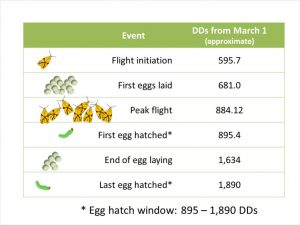
Based on our degree-day model for Sparganothis fruitworm, flight initiation is expected at around 596 DD (see chart). As of June 06, Sparganothis has accumulated 706 DD (using March 1 as biofix; based on Wisconsin conditions) or 554 DD (using April 15 as biofix; a more realistic biofix based on the time when winter flood is removed from New Jersey beds). This indicates that flight activity has likely just started or will start in the next few days. Growers are advised to place pheromone traps for monitoring this pest as soon as possible if they haven’t done so already.

Degree-day model for Sparganothis fruitworm

Degree-day model for Sparganothis fruitworm

Hot, Dry Weather and Transplant Death

Transplants that are not allowed to harden-off for a few days outside prior to setting in the field may suffer significantly. It is important to expose all transplants to some normal weather conditions before transplanting so they can become acclimated to light intensity as well as the wind and other field conditions. [Read more…]