Archives for May 2014

Potato Disease Forecasting Report 5-9-14

Potato Disease Forecasting Report 5-9-14 – Click to Download

We will be tracking DSVs for Late blight development and calculating P-days for initiating the first early blight fungicide application.

The first late blight fungicide application is recommended once 18 DSVs accumulate from green row. Green row typically occurs around the first week in May in southern New Jersey. An early season application of a protectant fungicide such as mancozeb (Dithane, Manzate, Penncozeb) or Bravo (chlorothalonil) as soon the field is accessible is suggested. Please be vigilant and keep a look out for suspect late blight infections on young plants. No late blight has been reported in our region to date.

Remember the threshold for P-days is 300!  Once 300 P-days is reached for your location early blight fungicide applications should be initiated. Growers who are interested in using this model should chose the location above that is closest in proximity to their farming operation and should regularly check the Cornell NEWA website (http://newa.cornell.edu/) where this information is compiled from. Click on Pests Forecasts from the menu, select your weather station, and click on tomato diseases, set accumulation start date and a table of daily and total DSVs will be generated.
Tomato Disease Forecasting Report 5-9-14

5-9-14 Tomato Report – Click to Download

Disease severity values (DSVs) for early blight, septoria leaf spot, and tomato anthracnose development are determined daily based on leaf wetness (due to rainfall, dew) and air temperature.

On a daily basis DSV values can range from 0 to 4 where 0 = no chance for disease development to 4 = high chance for disease development.
DSVs are accumulated during the production season.

Fungicide applications are based on an individually determined DSV threshold. The first fungicide application for the control of these three diseases is not warranted until 35 DSVs have accumulated from your transplanting date. After that, growers can base fungicide applications on different DSV thresholds.

Small Farm Post-Harvest Practices Workshop

Date: Tuesday, May 20, 2 PM to 4:30 PM
Location: Webinar presentation @ Rutgers Cooperative Extension Office of Mercer County, 930 Spruce Street, Trenton, NJ
Followed by on-farm portion @ Z Food Farm, 3501 Princeton Pike, Lawrence, NJ

Improving post-harvest practices can help minimize produce damage and maximize the amount of quality produce that can be sold at market. Evaluating current post-harvest practices and identifying low-cost improvements is an important part of farm planning, and should be done as early in the season as possible.

Z FOODRutgers Cooperative Extension of Mercer County and NOFA-NJ welcome Lee Stivers from Penn State Extension as she joins us remotely giving a presentation on post-harvest handling procedures for high-quality, marketable produce via webinar.

The webinar workshop portion will be followed by a farm tour of Z Food Farm’s post-harvest handling set-up. Z Food Farm is a small certified organic farm located in Lawrenceville, NJ.
[Read more…]

Quinstar 4L for Weed Control in Cranberries

Quinstar 4L has a section 3 label for use in cranberries, and is useful for the control of dodder, yellow loosestrife and many other weeds in cranberries in New Jersey.
[Read more…]

Weed Control in Re-Used Plastic Mulch

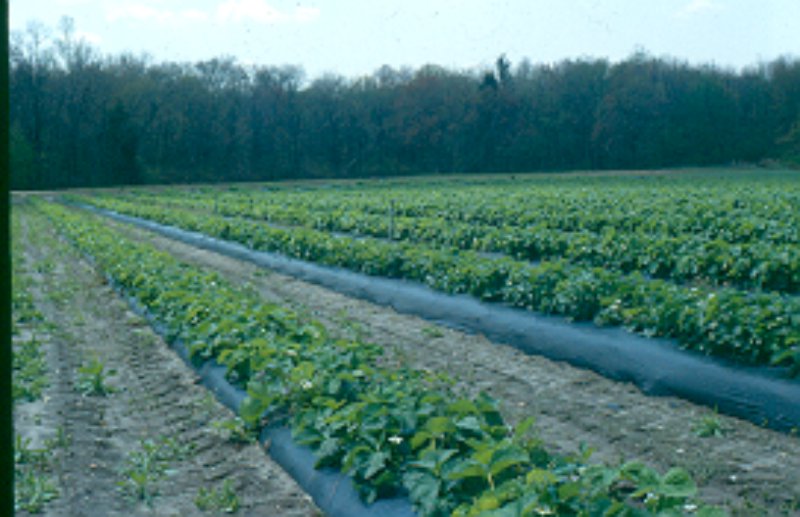
Plastic mulch and trickle irrigation is expensive. Re-using the mulch after the first crop can be cost effective.

Plastic mulch and trickle irrigation are expensive.
Re-using the mulch for a second crop after the first can be an effective way to spread the cost.

When the cost of supplies and labor are evaluated, re-using a field with trickle irrigation and black plastic mulch is an attractive idea, but weed control can be a problem.
[Read more…]

NABREW Conference June 23-26, 2014

NABREW

Click Image to View Flyer

North American Blueberry Research and Extension Workers Conference
Date: June 23-26, 2014
Location: Sheraton Atlantic City Convention Center Hotel, Atlantic City, NJ

Every 4 years, research and extension workers from throughout North America and abroad meet to exchange ideas and research results on current blueberry issues. This year’s conference is being hosted by Rutgers University and USDA at the Sheraton Atlantic City Convention Center Hotel, New Jersey.

New Jersey is “Where it all began” – where highbush blueberries were first bred and cultivated. In addition to updates on current extension and research activities, there will be tours of a winery, blueberry production areas and packing facilities. The program will highlight new varieties, and the management of diseases and invasive pests like spotted wing drosophila (SWD).
Program information can be found on our web site,
http://www.group-res.com/NABREW/default.aspx