Sweet Corn
European corn borer (ECB) catches continue to be very low, and no map will appear in this edition. There have been a few traps that have begun to record minor increases, however. ECB feeding in NJ sweet corn plantings is also low. Check 5 plants each in 10 random locations for a 50 plant sample. Look for “shot-hole” injury, and consider treating when the number of infested plants in a 50 plant sample exceeds 12%. As infested plants proceed to the pre-tassel stage, live larvae and damage may be found in the emerging tassels. Once plants hit full tassel, ECB larvae will move downward on the stalk and re-enter the plant near the area where ears are forming. This can result in direct injury to the ear. Growers should consider an insecticide application at the full tassel stage to target ECB larvae as they migrate downward. This application can eliminate larvae that have escaped any earlier insecticide applications. [Read more…]
Veg IPM Update: Week Ending 7/19/17
Veg IPM Update: Week Ending 7/12/17
Sweet Corn
European corn borer (ECB) catches remain very low, and no map will appear in this edition. Feeding in NJ sweet corn plantings is also low, with remaining larval infestations only on pre-tassel stage corn in the northern counties. Check 5 plants each in 10 random locations for a 50 plant sample. Look for “shot-hole” injury, and consider treating when the number of infested plants in a 50 plant sample exceeds 12%. As infested plants proceed to the pre-tassel stage, live larvae and damage may be found in the emerging tassels. Once plants hit full tassel, ECB larvae will move downward on the stalk and re-enter the plant near the area where ears are forming. This can result in direct injury to the ear. Growers should consider an insecticide application at the full tassel stage to target ECB larvae as they migrate downward. This application can eliminate larvae that have escaped any earlier insecticide applications. [Read more…]
Veg IPM Update: Week Ending 7/05/17
Sweet Corn
European corn borer (ECB) catches continue to be extremely low, and no map will appear in this edition. Feeding in NJ sweet corn plantings is highly variable, but with second and third plantings now reaching the silk stage, we find that later plantings have much less damage. Check 5 plants each in 10 random locations for a 50 plant sample. Look for “shot-hole” injury, and consider treating when the number of infested plants in a 50 plant sample exceeds 12%. As infested plants proceed to the pre-tassel stage, live larvae and damage may be found in the emerging tassels. Once plants hit full tassel, ECB larvae will move downward on the stalk and re-enter the plant near the area where ears are forming. This can result in direct injury to the ear. Growers should consider an insecticide application at the full tassel stage to target ECB larvae as they migrate downward. This application can eliminate larvae that have escaped any earlier insecticide applications. [Read more…]
Veg IPM Update: Week Ending 6/28/17
Sweet Corn
European corn borer (ECB) catches have dropped to nearly nothing, and no map will appear in this edition. Feeding in NJ sweet corn plantings is highly variable, with some plantings exceeding 40%, but these occurrences are generally where there were higher moth catches during the first flight. Feeding overall is lower than expected for the first generation. Check 5 plants each in 10 random locations for a 50 plant sample. Look for “shot-hole” injury, and consider treating when the number of infested plants in a 50 plant sample exceeds 12%. As infested plants proceed to the pre-tassel stage, live larvae and damage may be found in the emerging tassels. Once plants hit full tassel, ECB larvae will move downward on the stalk and re-enter the plant near the area where ears are forming. This can result in direct injury to the ear. Growers should consider an insecticide application at the full tassel stage to target ECB larvae as they migrate downward. This application can eliminate larvae that have escaped any earlier insecticide applications. [Read more…]
Veg IPM Update: Week Ending 6/21/17
Sweet Corn
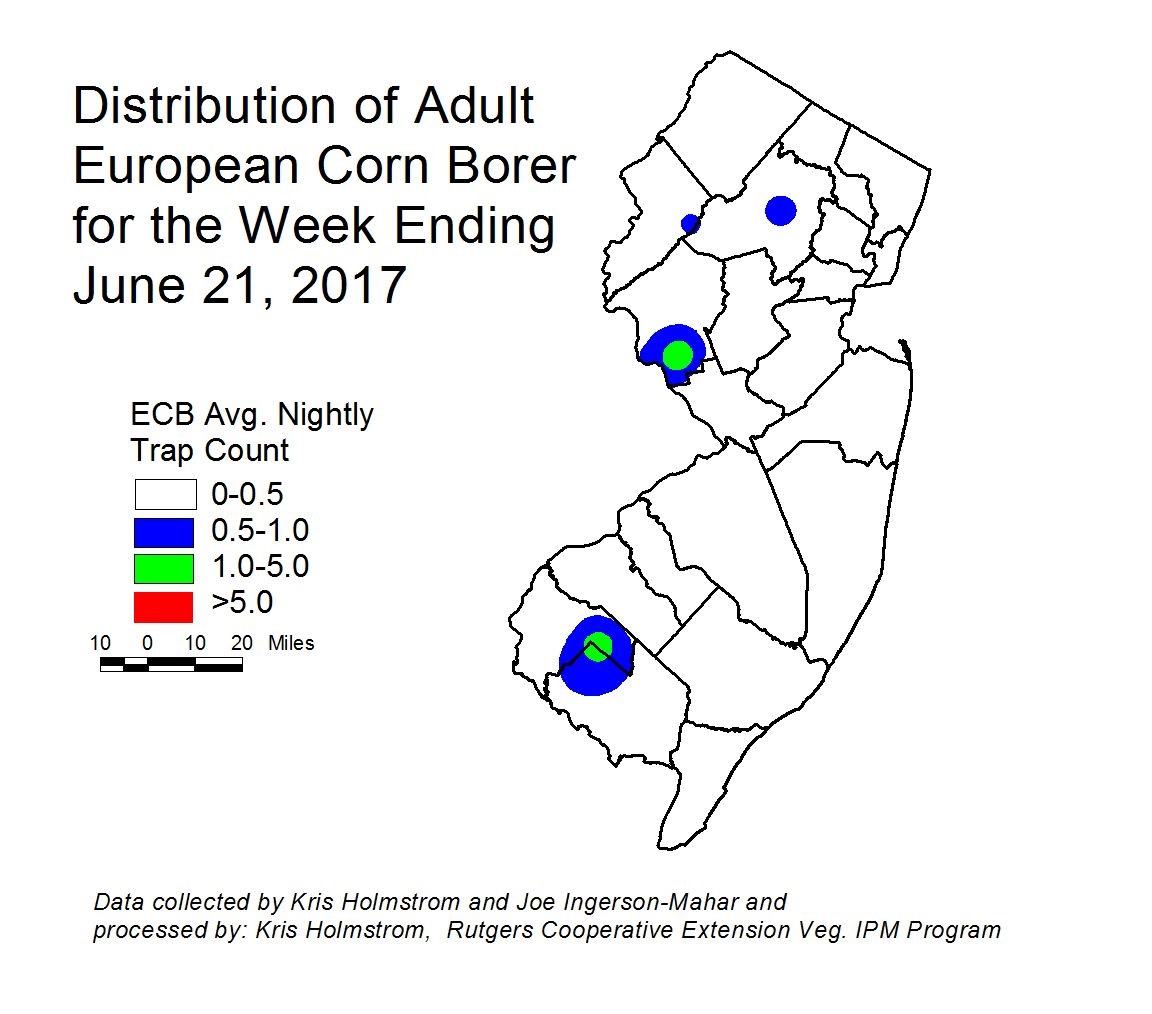 European corn borer (ECB) catches remain low generally, with a few remaining hot spots in southern Hunterdon County and on the Cumberland-Salem border (see ECB map). Feeding in NJ sweet corn plantings has risen, with some plantings exceeding 40%. Check 5 plants each in 10 random locations for a 50 plant sample. Look for “shot-hole” injury, and consider treating when the number of infested plants in a 50 plant sample exceeds 12%. As infested plants proceed to the pre-tassel stage, live larvae and damage may be found in the emerging tassels (see bottom photo at right). Once plants hit full tassel, ECB larvae will move downward on the stalk and re-enter the plant near the area where ears are forming. This can result in direct injury to the ear. Growers should consider an insecticide application at the full tassel stage to target ECB larvae as they migrate downward. This application can eliminate larvae that have escaped
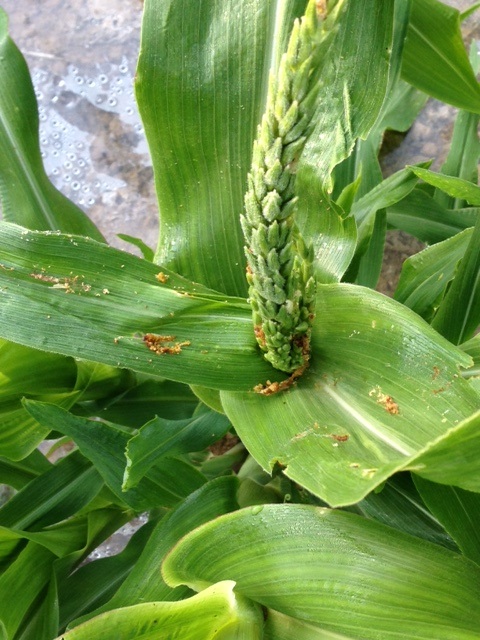 any earlier insecticide applications. [Read more…]
Veg IPM Update: Week Ending 6/14/17
Sweet Corn
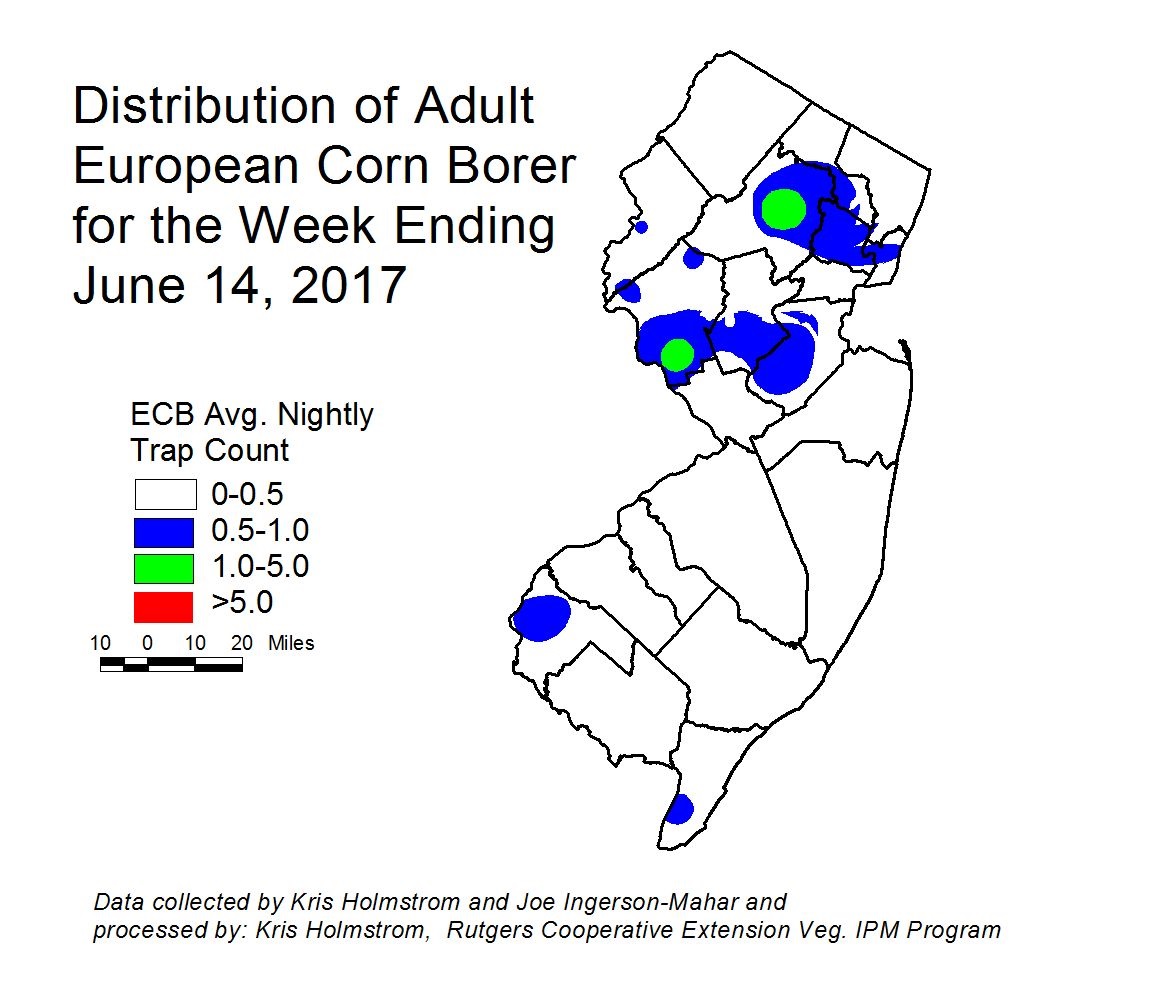 European corn borer (ECB) catches have stabilized, with significant catches remaining in central Morris County and in southern Hunterdon County (see ECB map). Feeding in NJ sweet corn plantings is increasing in occurrence, although severity of individual infestations has not risen dramatically. Overall, activity is lower than expected this year, likely due to adverse weather conditions. Feeding rates in the 20% range are common. Check 5 plants each in 10 random locations for a 50 plant sample. Look for “shot-hole” injury, and consider treating when the number of infested plants in a 50 plant sample exceeds 12%. As infested plants proceed to the pre-tassel stage, live larvae and damage may be found in the emerging tassels (see bottom photo at right). Once plants hit full tassel, ECB larvae will move downward on the stalk and re-enter the plant near the area where ears are forming. This can result in direct injury to the ear. Growers should consider an insecticide application at the full tassel stage to target ECB larvae as they migrate downward. This application can eliminate larvae that have escaped any earlier insecticide applications. [Read more…]
