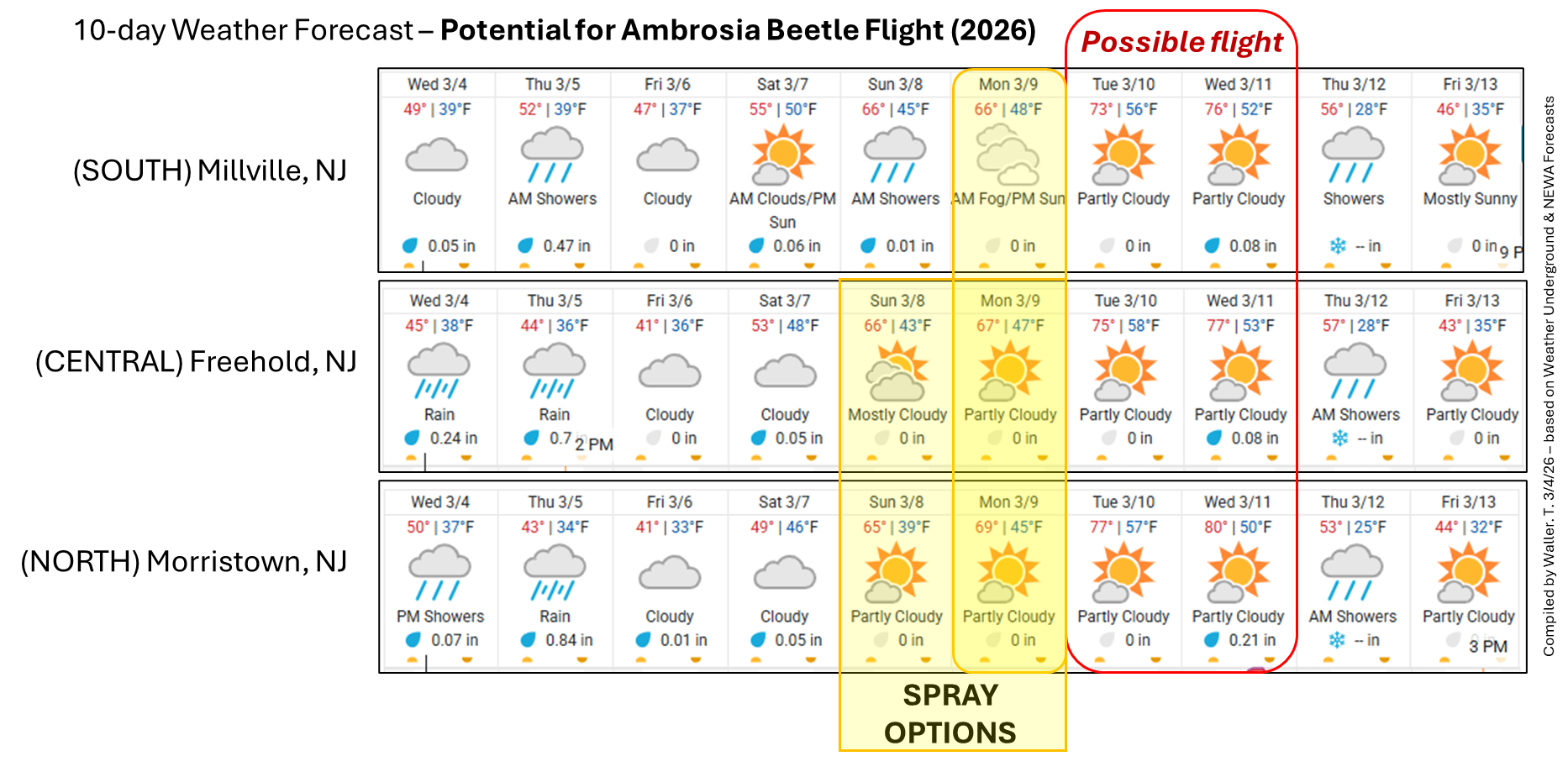
The last few seasons we have seen an upswing in ambrosia beetle activity in nursery production, principally in field grown nursery stock of thin barked trees (commonly – dogwood, honey locust, magnolia, maple, redbud, zelkova, styrax, Prunus spp.). Based on evidence from multiple lines of trap collection data throughout the United States, adult female flights appear to be correlated to consecutive days (2-3) of 70F temperatures (highs) with daily average air temps around 65F (max+min/2). That is extremely close to what we will have throughout most areas of NJ early next week, based on 10-day weather forecasts. Note: this is historically very early for treatment of this pest and it will get colder the following days, however, we have missed control opportunities over multiple years so take treatment into consideration if you regularly encounter this pest.
Consider using pyrethroids in your production areas next Monday or Tuesday (weather dependent) if this pest has been a regular problem.
Contact insecticides:
- Pyrethroids [3A]: –thrins (bifenthrin, permethrin, etc.) – Pyrethroids longer lasting residual activity is why these materials are so effective against ambrosia beetles.
- Systemic insecticides DO NOT WORK
Stay informed:
- Sign up for the 2026 – Rutgers Ornamental IPM Program – click here to sign up
- First webinar 4/14/26
- Program is free, but registration is required – Registration includes:
- Site visit to your ornamental nursery/farm from Rutgers agents
- Delivered printed IPM resources (Guides, factsheets, bulletins)
- Free pheromone & sticky trap kit + guidance on setup/monitoring (for commercial nursery/greenhouse and Christmas tree farms)
- Access to live bi-weekly webinars (Zoom)
- (First session TUESDAY 4/14 @ 12PM)
- Every Second and Fourth, Tuesday, April through September
