- Cucurbit downy mildew has been confirmed on cucumber in New Jersey. To date, cucurbit downy mildew has been reported on cucumber and melon in the mid-Atlantic region. All cucumber growers need to add a downy mildew-specific fungicide to their weekly fungicide programs. All cucurbit growers need to scout on a regular basis.
- There have been no new reports of Late blight in tomato or potato.
- Dickeya dianthicola has been confirmed in 12 states to date. All potato growers are encouraged to scout fields and report any suspect plants/tubers. The best method for keeping your potato operation Dickeya-free is to adopt your own 0% Dickeya-tolerance policy. Click here for the latest Dickeya update.
- Pepper anthracnose is being reported in southern New Jersey.
- Cucurbit powdery mildew is active on all cucurbit crops.
Search Results for: pepper anthracnose'
August 15, 2016 Andy Wyenandt
Vegetable Disease Briefs – 8/15/16
May 4, 2016 Andy Wyenandt
Wet Weather Ripe for Strawberry Fruit Rots
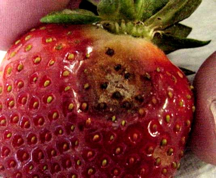
Anthracnose Fruit Rot of Strawberry
Fruit rots in strawberry can cause significant losses if not recognized early and controlled. The use of good cultural practices such as: keeping fields weed-free and promoting good drainage; long crop rotations, and preventative fungicide applications are critical.
Pathogens such as anthracnose, gray mold (Botrytis), and leather rot can become systemic problems in strawberry plantings once established. All three fungal diseases are soil-borne and once in fields can be difficult to manage over the lifetime of the planting.
For growers new to strawberry production and/or those just looking for valuable resource(s), please visit Cornell University’s strawberry production website here. An Organic Strawberry Production Guide is also available.
The use of mulch (matted rows) to prevent/reduce soil splashing and keeping fruit from coming into direct contact with the soil surface can be beneficial in organic production systems where conventional fungicides cannot be used. Use of long crop rotations and staying away from areas of the farm with known instances of any of these pathogens is also important. Remember that same species of Colletotrichum that causes fruit rot in pepper and other crops can also infect strawberry.
August 28, 2015 Andy Wyenandt
Vegetable Disease Briefs – 8/28/15
- Downy mildew remains active on all cucurbit crops. All cucurbit growers should include downy as well as powdery mildew specific fungicides in their weekly maintenance sprays. Please remember different modes-of-Action (i.e., FRAC groups) to help manage fungicide resistance develop in both pathogens. To track the progress of CDM in the US please visit http://cdm.ipmpipe.org/
- There have been no new reports of late blight in New Jersey since 8/14. Remember as fall approaches and night temperatures become cooler and light fogs begin to develop conditions for late blight development improve. All abandoned tomato blocks/fields need to be disked under as soon as harvesting is done or sprayed with gramoxone to kill all living foliage. To track late blight in the US please visit http://usablight.org/
- Bacterial leaf spot remains active on pepper and tomato crops. Bacterial canker on tomato has also been reported.
- Pepper anthracnose has been reported. All pepper blocks/fields where anthracnose is present and harvesting is completed need to disked under and/or sprayed with gramoxone as soon as possible. Infected plant material left in the field will only serve as a source of inoculum for further spread of the disease.
August 26, 2015 Kris Holmstrom and Joe Ingerson-Mahar
Veg IPM Update: Week Ending 8/26/15
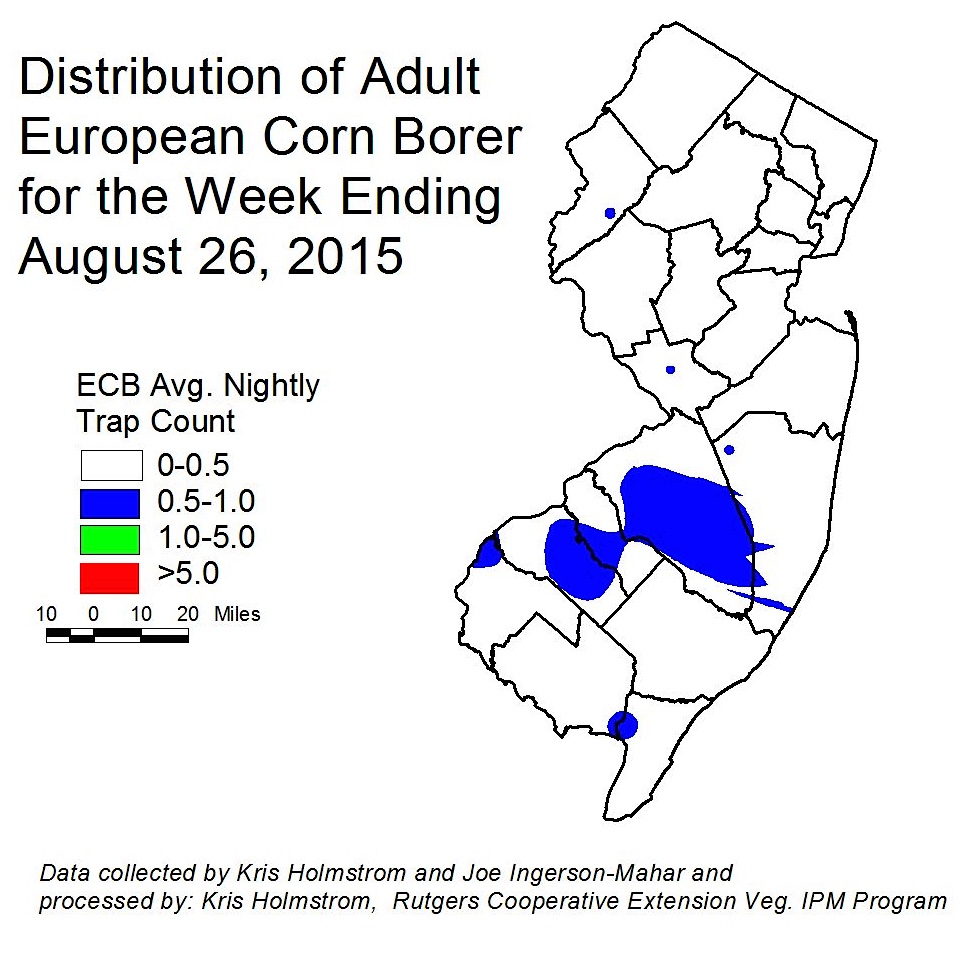
Click to View
Sweet Corn
European corn borer (ECB) adult catches have become somewhat more consistent in southern NJ over the past week, but with very few individuals captured north of Burlington County (see ECB map). This late summer flight appears to be a fairly week one. As always, consider treating when the number of infested plants in a 50 plant sample exceeds 12%. Any planting remaining at or above threshold as it proceeds to full tassel should be treated, as this is the last stage at which ECB larvae will be exposed and vulnerable to insecticidal sprays.
See the 2015 Commercial Vegetable Recommendations Guide for insecticide choices.
August 11, 2015 Andy Wyenandt
Vegetable Disease Briefs – 8/11/15
- Bacterial leaf spot race 6 has been confirmed on bell pepper in the Vineland area. This has major implications since all widely-grown peppers (bell and non-bell) in New Jersey do not have resistance to this race. All bell peppers growers need to scout on a regular basis and know what BLS resistance packages are present in the varieties they are growing.
- There have been no new reports of late blight in New Jersey since 7/8 although it has been reported in other States in the region. To track late blight in the US please visit http://usablight.org/
- Cucurbit downy mildew has been reported on cucumber in New Jersey and on cucumber and butternut squash. All cucurbit growers should include downy as well as powdery mildew specific fungicides in their weekly maintenance sprays. To track the progress of CDM in the US please visit http://cdm.ipmpipe.org/.
- Basil downy mildew remains active across the region.
- Pepper anthracnose has been reported.
July 20, 2015 Andy Wyenandt
Vegetable Disease Briefs – 7/20/15
- There have been no new reports of late blight in New Jersey since 7/8. To track late blight in the US please visit http://usablight.org/
- Cucurbit downy mildew has been reported on cucumber in New Jersey and on cucumber and butternut squash in PA this past week. To track the progress of CDM in the US please visit http://cdm.ipmpipe.org/.
- Bacterial leaf spot is being reported on pepper and tomato.
- Basil downy mildew remains active across the region.
- Phytophthora blight has been reported on multiple crops.
- Pepper anthracnose has been reported in southern New Jersey.
