Organic Farm Advisory

The Plant & Pest Advisory serves NJ growers by reporting on important pests and recommending responses that are grounded in reproducible trials.

Articles in this section contain information helpful to the NJ commercial organic grower.
Sharing organic practice trial results between land-grant universities is a cost effective way to create a common knowledge base built on the strengths of individual programs. In the sidebar, find institutions with programs in organic agriculture which augment knowledge developed at the Rutgers New Jersey Ag Experiment Station.

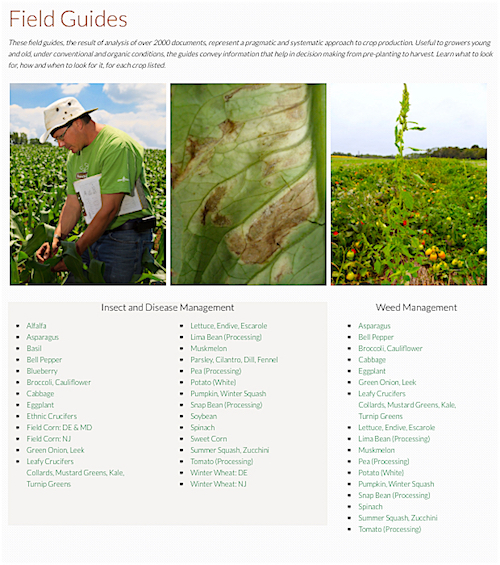
Rutgers Cooperative Extension Field Guides: These concise guides help with decision making from pre-planting to harvest. For each crop listed, learn what pests to proactively look for as the season progresses, how to look for them, and when to take action.

Field Guide List

Strawberry Fruit Rots 2015

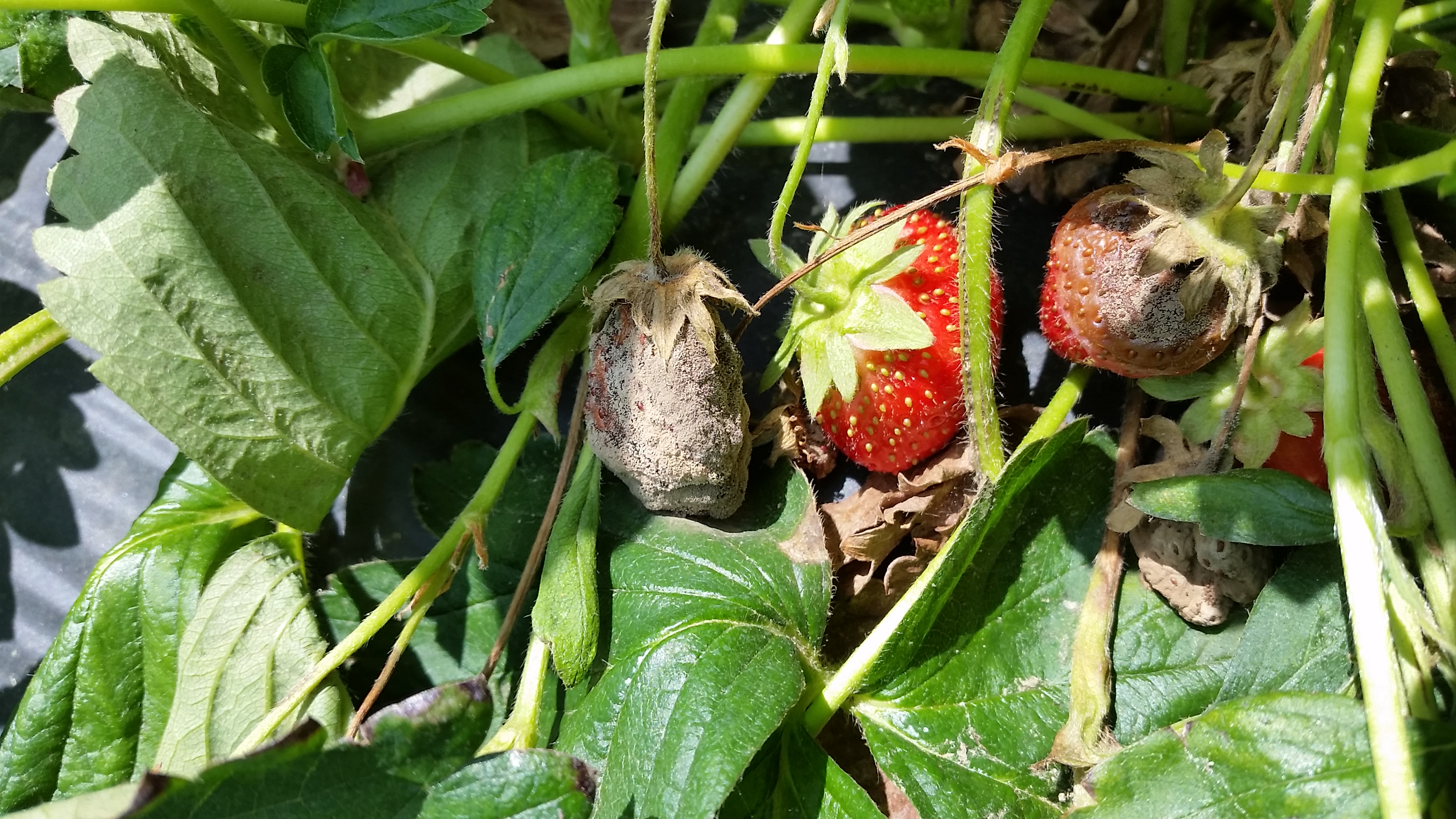
Anthracnose fruit rot of strawberry

Anthracnose Fruit Rot of Strawberry

Fruit rots in strawberry can cause significant losses if not recognized early and controlled. The use of good cultural practices such as: keeping fields weed-free and promoting good drainage; long crop rotations, and preventative fungicide applications are critical.

Pathogens such as anthracnose, gray mold (Botrytis), and leather rot can become systemic problems in strawberry plantings once established. All three fungal diseases are soil-borne and once in fields can be difficult to manage over the lifetime of the planting.

The use of mulch (matted rows) to prevent/reduce soil splashing and keeping fruit from coming into direct contact with the soil surface can be beneficial in organic production systems where conventional fungicides cannot be used. Use of long crop rotations and staying away from areas of the farm with known instances of any of these pathogens is also important. Remember that same species of Colletotrichum that causes fruit rot in pepper and other crops can also infect strawberry.

[Read more…]

Damping-off: Important Early-season Pathogens

It is extremely important to know which pathogen is causing damping-off problems and which fungicide to properly apply. The key to controlling damping-off is being proactive instead of reactive. Always refer to the fungicide label for crop use, pathogens controlled, and application rates.

Damping-off is caused by a number of important vegetable pathogens and is very common during the spring. Damping-off can kill seedlings before they break the soil line (pre-emergent damping-off) or kill seedlings soon after they emerge (post-emergent damping-off). Common pathogens that cause damping-off include Pythium, Phytophthora, Rhizoctonia and Fusarium spp.

Control of damping-off depends on a number of factors. First, is recognizing the conditions which may be leading to the problem (i.e., weather/greenhouse growing conditions) and second, identifying the pathogen causing the problem.

Conditions Favoring Damping-off

Although all four pathogens are associated with damping-off, the conditions which favor their development are very different. In general, Phytophthora and Pythium are more likely to cause damping-off in cool, wet or overwatered soils that aren’t allowed to dry out due to cloudy weather or cooler temperatures. Conversely, Rhizoctonia and Fusarium are more likely to cause damping-off under warmer, drier conditions especially if plug trays are kept on the dry side to help reduce transplant growth. [Read more…]

Controlling Septoria Leaf Spot in Parsley

Septoria leaf spot in parsley can cause significant losses in fields where it has become established. Like other Septoria’s, the leaf spots produced on parsley look much like the leaf spots produced on tomatoes and other crops.

Parsley SLS

Parsley: Septoria Leaf Spot

Septoria leaf spot overwinters from year to year on infected debris so long crop rotations of 2 or more years are important to help reduce disease pressure. During the season, SLS will spread rapidly with each subsequent rainfall and/or overhead irrigation event. Therefore, early detection and preventative fungicide applications are keys to successfully controlling SLS. Unfortunately, very few fungicides are currently labeled making control difficult.

Parsley growers who have significant septoria leaf spot issues every year and have seen poor control in fields where FRAC code 11 fungicides have been used considerable in the past should consider no longer using them due to potential resistance issues. Fungicide programs should include Fontelis at a high rate (16.0 to 24.0 fl oz/A) tank mixed with a copper rotated on a weekly basis with Merivon (5.5 fl oz) plus copper. Fontelis has a 3 day PHI and a 72.0 fl. oz season max. Merivon has a 1 day PHI and 33.0 fl. oz season max. Organic farmers should use an OMRI-approved copper fungicide on a regular basis to help suppress septoria leaf spot.

Suppressing Soil-borne Pathogens in Organic Transplant Production

Pathogens such as Fusarium, Pythium, Phytophthora, Thielaviopsis and Rhizoctonia that cause pre- and post-emergent damping-off can cause serious problems in organic transplant production.

Remember, Phytophthora and Pythium are more likely to cause damping-off in cool, wet soils. Conversely, Rhizoctonia and Fusarium are more likely to cause damping-off under warmer, drier conditions. In general, Pythium tends to kill seedlings before they emerge whereas Rhizoctonia and Fusarium tend to kill seedlings after emergence. There are exceptions to the rules, but none the less, all damping-off pathogens can cause serious losses if not identified and controlled properly. Remember seeds or transplants that sit in cold, wet soils for prolonged periods of time are more prone to damping-off. Outside weather conditions also play an important role in potential disease development in spring transplant production. Most importantly, daily watering schedules need to be monitored and/or adjusted so as not to overwater during cool, cloudy periods or underwater during bright, warm, sunny days. Always do your watering early enough in the day so leaves are dry going into the overnight. [Read more…]

Commercial Vegetable Twilight Meeting April 23, 2015

The Rutgers Cooperative Extension Agricultural Agents of Atlantic, Cumberland and Gloucester Counties invite you to the first commercial vegetable twilight meeting of the 2015 season to discuss early spring crop pest control, label updates and management topics. Feel free to bring plant, insect, disease, or weed samples to the meeting to have them identified, or perhaps you can stump the experts. Please bring samples in sealed plastic bags.
Pesticide Recertification Credits have been requested for this meeting.

Date: Thursday, April 23, 2015 7:00 p.m. – 9:00 p.m.
Location: East Vineland Fire Hall, Landis Ave. across from the Savoy Restaurant
(park behind the building and enter conference room door in rear)

Agenda

  • 7:00pm Weed Control – Review of the Basics
    –Rick VanVranken, RCE Atlantic
  • 7:30pm Economic Benefits of Maintaining Native Pollinator Habitat
    –Elizabeth Schuster, Environmental Economist, The Nature Conservancy
  • 7:50pm NRCS Programs Supporting IPM/Organic Transition/Pollinator Habitat
    –Nicholas Saumweber, District Conservationist, NRCS
  • 8:10pm Early Season Insect Pests and Insecticide Updates
    –Joe Mahar, Vegetable IPM Coordinator
  • 8:30pm Vegetable Disease Control Options for Spring Crops
    –Dr. Andy Wyenandt, RAREC
  • 9:00pm Pesticide Regs & Worker Protection Standards Update for the Coming Season
    –Michelle Infante-Casella, RCE Gloucester
  • 9:30pm Questions & Answers

New Jersey Soils and Copper Fungicide Use

During my field visits to Mercer County organic farms, growers often express concerns about negative soil health impacts from copper based fungicides. In an effort to evaluate soil copper use and the resulting soil copper levels, soil was sampled at fifteen farms throughout the state.

NJ Sampled Soils

Soils sampled for copper levels.

Both conventional and organic farms participated in this study which was funded by The Phillip Alampi Fund. Two composite samples were taken from each farm, one where copper fungicides had been applied and one where copper fungicides had never been used. Total and soluble copper levels were higher on copper applied soils compared to the non-copper applied soils. Even though copper levels were higher in these soils, the levels were not high enough to cause plant toxicity symptoms, reduce plant growth, nor were the soils showing signs of reduced microbial activity.

Best management practices developed for copper based fungicides use:

[Read more…]