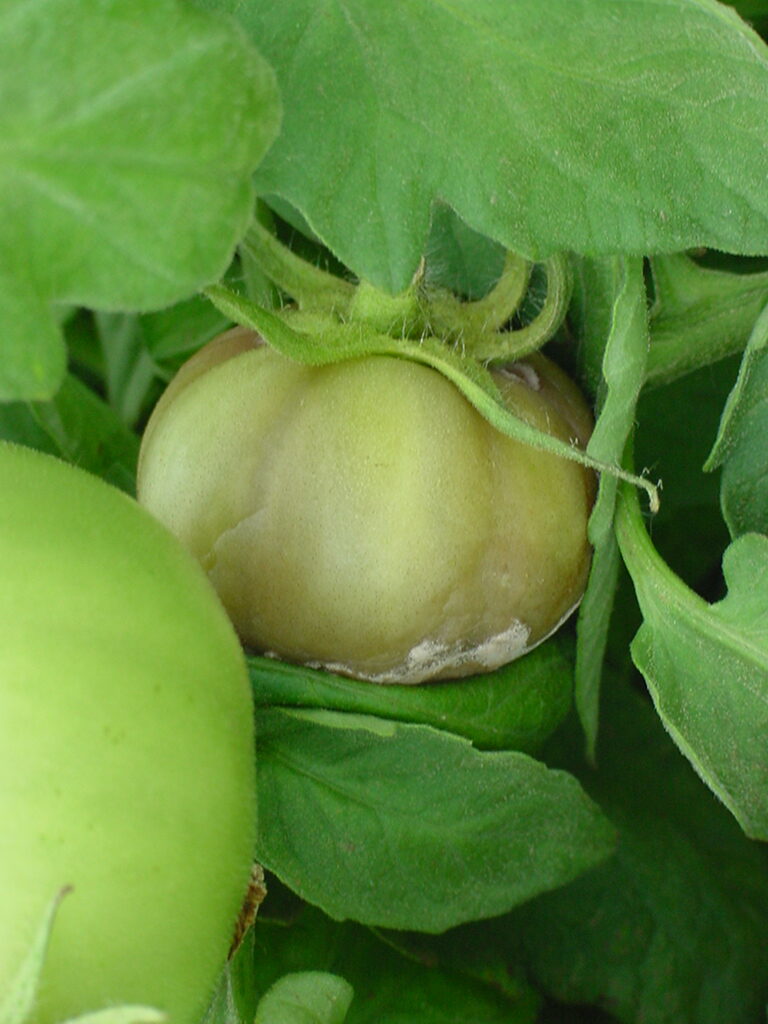
Since 2011 the vegetable working group has teamed up with Cornell University’s NEWA to bring tomato and potato late blight and early blight forecasting to vegetable growers throughout New Jersey. Over 50 weather stations from Sussex to Cape May County now offer disease as well as insect forecasting services for numerous important pests. [Read more…]
Vegetable Crops Edition
Seasonal updates and alerts on insects, diseases, and weeds impacting vegetable crops. New Jersey Commercial Vegetable Production Recommendations updates between annual publication issues are included.
Subscriptions are available via EMAIL and RSS.
Quick Links:
 NJ Commercial Vegetable Production Recommendations
Rutgers Weather Forecasting - Meteorological Information important to commercial agriculture.
May 19, 2024 Andy Wyenandt
Identifying and controlling Botrytis in high tunnel and greenhouse tomato production
Botrytis, or gray mold, caused by the fungus, Botrytis cinerea, can cause significant losses in high tunnel and greenhouse tomato production if not controlled properly. The pathogen can rapidly spread during periods when structures are closed and when relative humidity remains high for long periods of time. This often occurs when outside weather remains cool and damp while heating is needed. Gray mold is favored by temperatures from 64° to 75°F and requires only high humidity (not leaf wetness) to become established. The pathogen has a large host range and once established in an enclosed structure it can be very difficult to control (UMASS). The fungus can survive/overwinter as mycelia or sclerotia in plant debris and in organic soil matter (NCSU).
May 18, 2024 Andy Wyenandt
Diagnosing Important Diseases In Tomato – Reference Guide
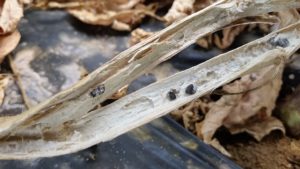
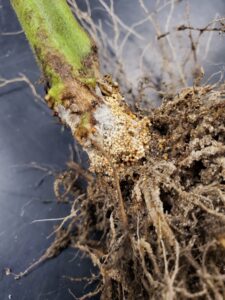
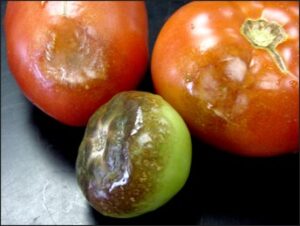
The following images consist of important diseases in tomato. These images can be used as a quick reference for diagnosing important fungal and bacterial pathogens. For best results, please turn your device (i.e., cell phone) sideways. For information on commercial control recommendations, please visit the tomato section of the 2022/2023 Mid-Atlantic Commercial Vegetable Production Guide. Additional information for home gardeners is located at the bottom of the Table.
| Early blight | Septoria leaf spot | Anthracnose fruit rot |
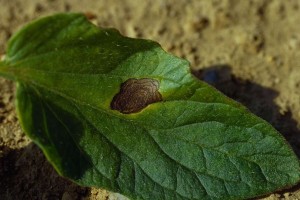 |
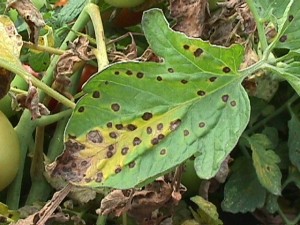 |
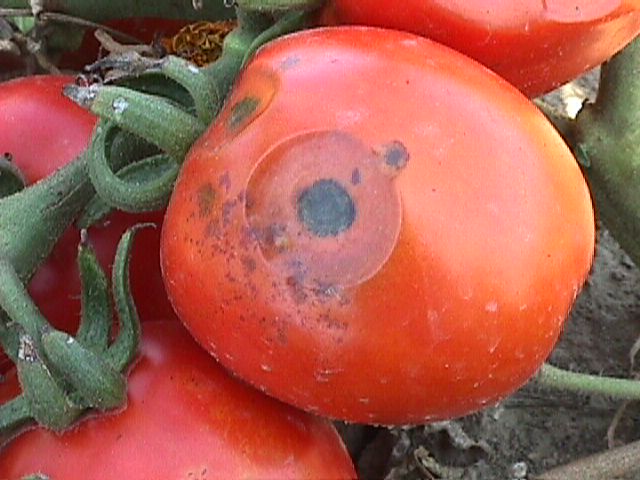 |
| Early blight lesion on fruit | Ground rot infected green fruit | Ground rot sporulating on fruit |
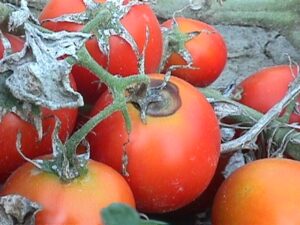 |
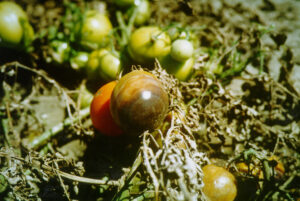 |
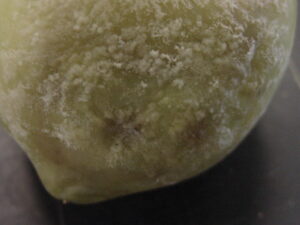 |
| Bacterial leaf spot | Bacterial canker | Bacterial speck |
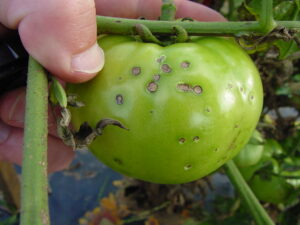 |
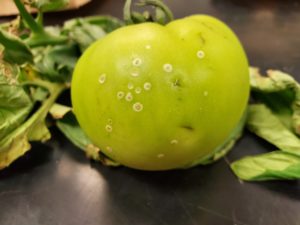 |
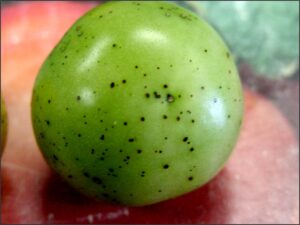 |
| White mold | Southern blight | Late blight on foliage |
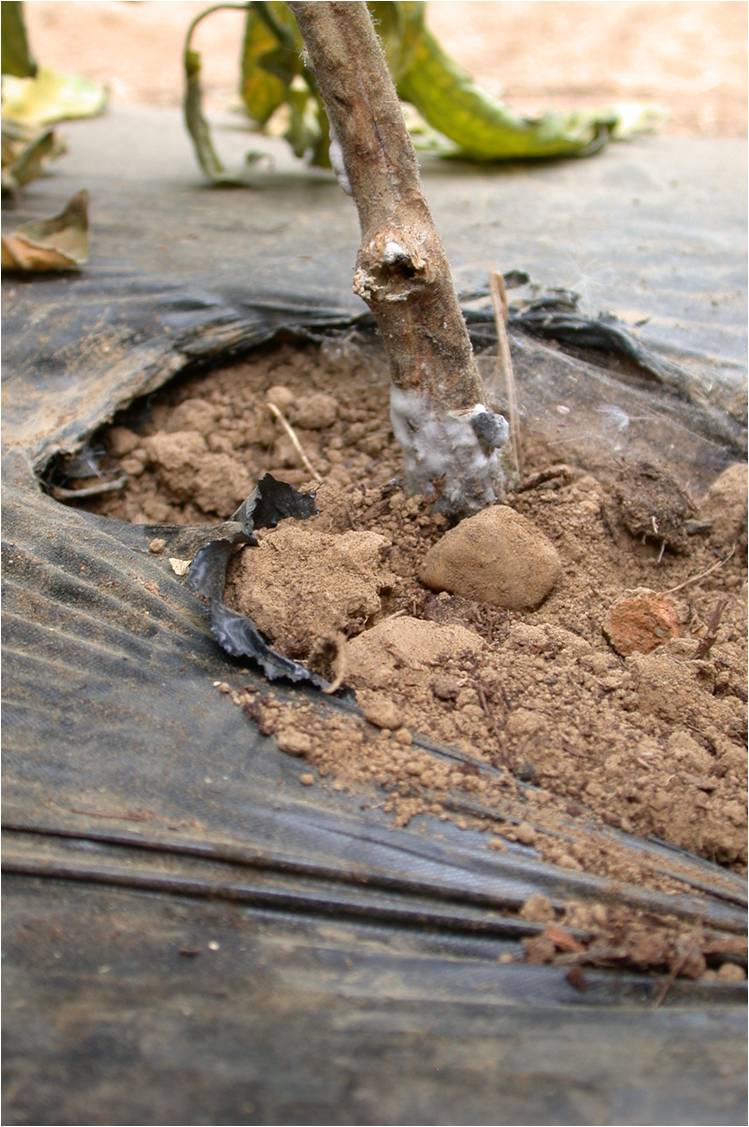 |
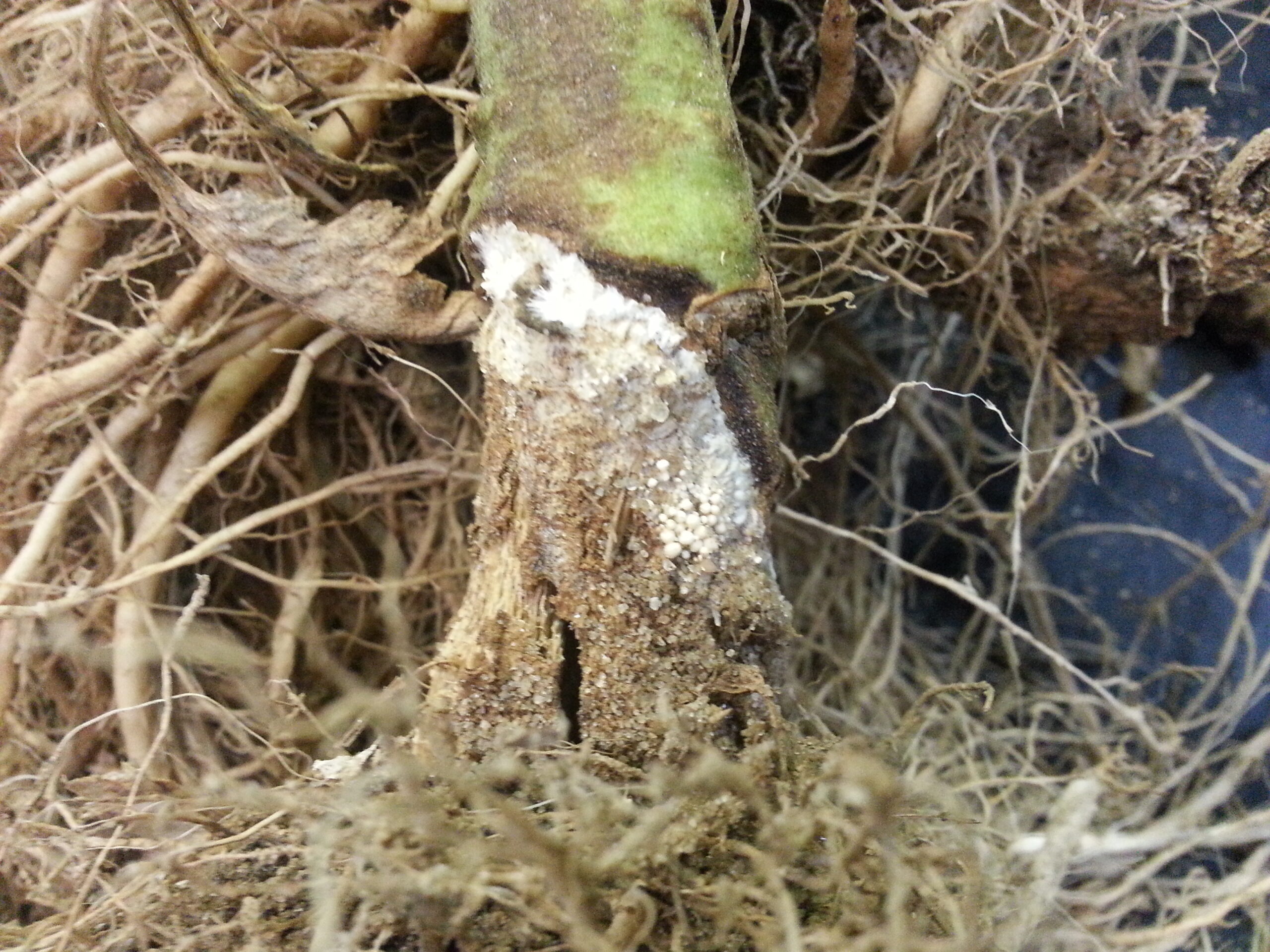 |
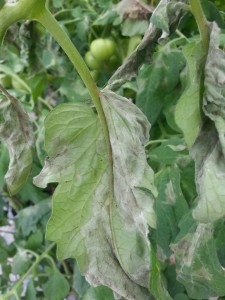 |
| White mold sclerotia in infected stem | Southern blight sclerotia on infected stem | Late blight infected fruit |
 |
 |
 |
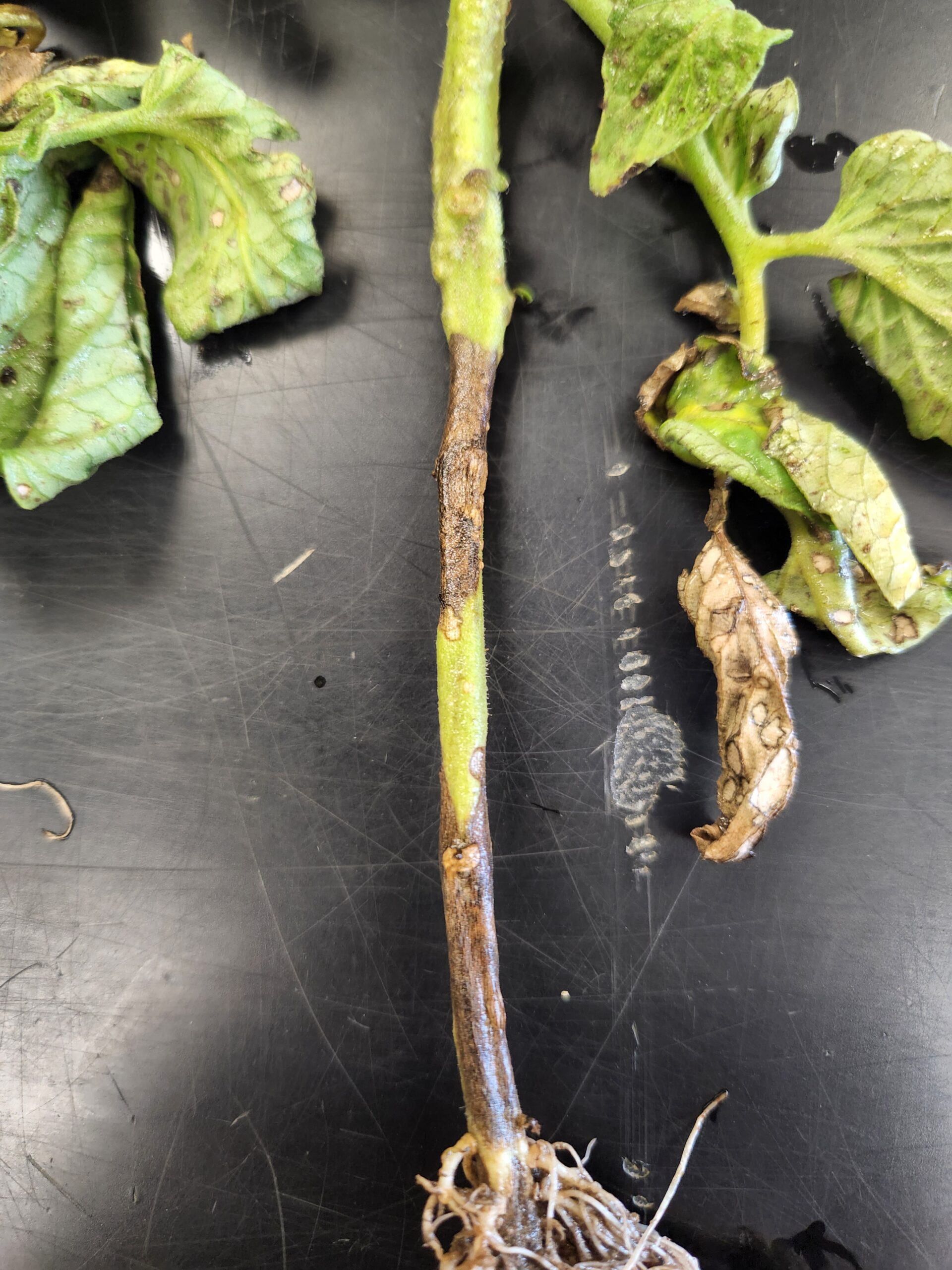
| Collar Rot caused by Alternaria spp. | ||
 |
For the homeowner or non-commercial grower there are a number of Rutgers/NJAES Fact Sheets available on-line:
For other Rutgers University/NJAES Fact Sheets for tomato please click here.
May 17, 2024 Andy Wyenandt
Diagnosing Southern Blight and White Mold in Tomato and Pepper
There have been a few reports of Southern blight (Sclerotinia rolfsii) and White mold (Sclerotinia sclerotiorum) on tomato and pepper in New Jersey. Southern blight is much more common in vegetable areas south of the state where summer temperatures remain hotter (above 90°F) for longer periods of time. Like white mold, it can survive in the soil for many years. Symptoms of Southern blight include infection at the base of the stem at the soil line. The resulting infection will girdle the plant causing wilt and death. The fungus will produce white, cottony mycelium and very small, spherical sclerotia which are often have a tannish, brown color.
White mold is more common than Southern blight in New Jersey, and like Southern blight, once introduced into a field or high tunnel it can very difficult to control. The pathogen produces large black sclerotia on the surface and inside infected stems. If sclerotia of either pathogen make their way back into the soil, both can survive for years causing significant problems.
All infected plants need to be removed immediately and disposed of properly to help reduce the chances of sclerotia returning to the soil.
For more information on chemical control please see the 2024/2025 Mid-Atlantic Commercial Vegetable Production Recommendations Guide.
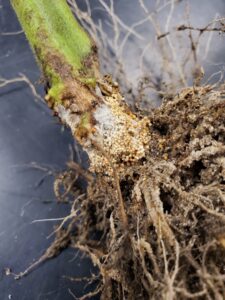
Symptoms of Southern blight on infected pepper plant. Note the numerous, small white to tan colored sclerotia on the stem.
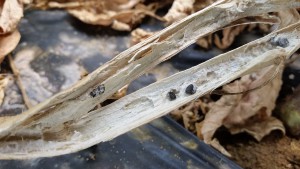
White mold of tomato. Note the large black sclerotia developing inside the brittle stems.
May 16, 2024 Andy Wyenandt
Understanding and controlling Rhizoctonia root rot
Even though much of New Jersey has had wet weather recently, which is more favorable to Pythium and Phytophthora development, Rhizoctonia root rot has been reported over the past few weeks in a number of crops. Rhizoctonia root rot, caused by Rhizoctonia solani, is an important soil-borne fungal pathogen with a very large host range. The pathogen can survive saprophytically on living or dead plant material (organic matter) or as sclerotia in the soil (for more than 3 years). Disease development is favored by warm temperatures, dry (or very well drained) soils and stressed plants. Symptoms of Rhizoctonia root rot may begin as stunted plant growth (with poor root systems) with the appearance of brown lesions at the base of the stem causing wilting with lesions eventually girdling the stem and killing the infected plant. Rhizoctonia root rot infections only extend about an inch above the soil surface (Figure 1), unlike Phytophthora blight infection which can extend much farther up the stem. [Read more…]
May 15, 2024 Kris Holmstrom
IPM Update 5/15/24
Sweet Corn
IPM personnel have deployed black light and corn earworm (CEW) pheromone trap networks in central and northern New Jersey counties. As we start our summer field technicians, trap checks are limited. However, even with cool weather and few traps visited, there have been low catches of CEW in several pheromone traps. While this is of little consequence now, it does suggest that local overwintering is a possibility. We have experienced increasing CEW populations in recent years at the time our early plantings silk (mid-June), and the presence of moths in early May points to more of the same this year.
Black light trap derived maps for European corn borer (ECB), CEW and brown marmorated stink bug (BMSB) will not appear in the Plant and Pest Advisory, as there is no statewide blacklight trap network. Data from existing black lights in the central and northern counties will appear in table format, with associated information on the relevance of the populations. Provided that data from the southern CEW pheromone traps is available on a regular basis, maps will be generated for this pest/trap type. Limited collections from traps thus far have not contained any target pests.
Slugs
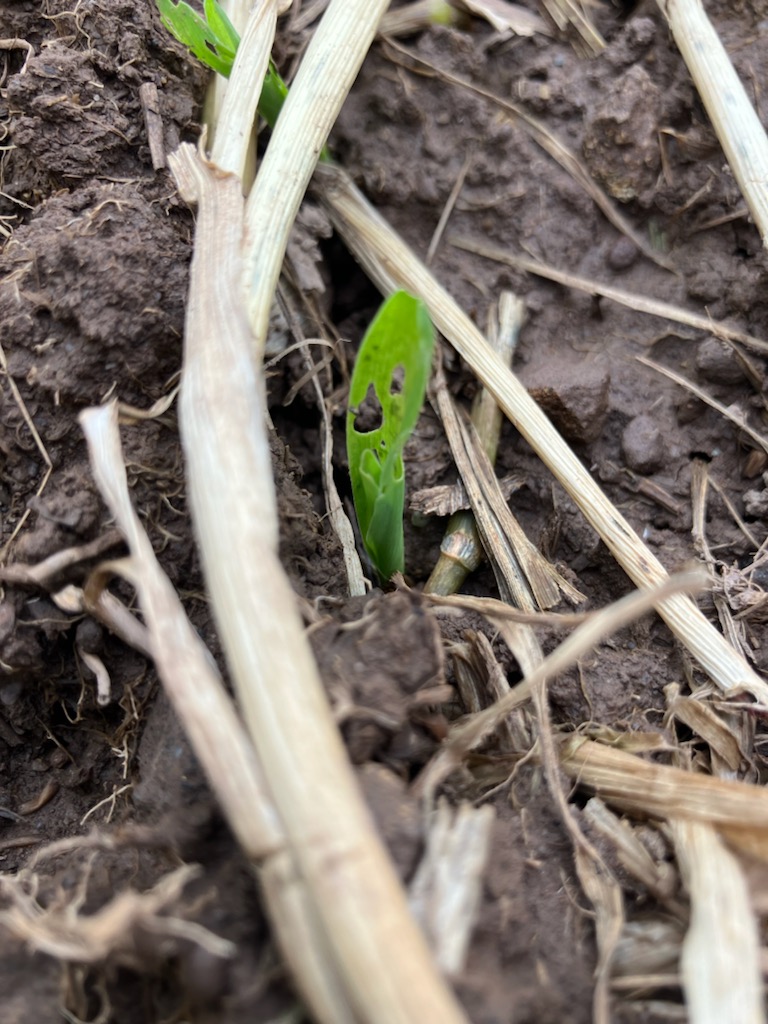 With recent cool wet weather, slug damage (photo at left, by J. Compton) to various crops, including sweet corn has begun to appear. No till or zone till situations give slugs ample hiding places under the surface layer of debris. Plastic mulch can also protect slugs as long as weather remains cool. They are largely active at night but can be found on crop plants anytime conditions are very wet. Most slugs are not as large as the specimen in the picture at right, but even small
 garden slugs can do significant damage to seedlings. Be sure to monitor fields during wet and cool conditions. The presence of slugs and their damage may require an application of slug bait to the affected areas. Various slug baits are available, but labels should be consulted to determine which product is permissible on the affected crop. Check the Pest Management section in the 2024 Commercial Vegetable Production Guide for products.