Transplants that are not allowed to harden-off for a few days outside prior to setting in the field may suffer significantly. It is important to expose all transplants to some normal weather conditions before transplanting so they can become acclimated to light intensity as well as the wind and other field conditions. [Read more…]
Vegetable Crops Edition
Seasonal updates and alerts on insects, diseases, and weeds impacting vegetable crops. New Jersey Commercial Vegetable Production Recommendations updates between annual publication issues are included.
Subscriptions are available via EMAIL and RSS.
Quick Links:
 NJ Commercial Vegetable Production Recommendations
Rutgers Weather Forecasting - Meteorological Information important to commercial agriculture.
May 25, 2015 Andy Wyenandt
Vegetable Diseases of the Week – 5/25/15
This week: Anthracnose fruit rot and botrytis fruit rot of strawberry.
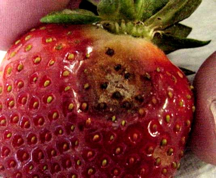
Anthracnose fruit rot of strawberry.
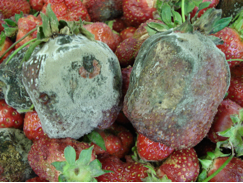
Botrytis fruit rot of strawberry
May 25, 2015 Andy Wyenandt
Vegetable Disease Briefs – 5/25/15
- There have been no new reports of basil downy mildew in NJ this past week.
- Rhizoctonia has been found in a number of newly transplanted crops where the root ball has remained on the dry side. It’s important to get drip irrigation or overhead going on newly transplanted crops as soon as possible during extended hot, dry weather.
- No reports of cucurbit downy mildew or late blight in region to date.
May 20, 2015 Kris Holmstrom and Joe Ingerson-Mahar
Veg IPM Update: Week Ending 5/20/15
Sweet Corn
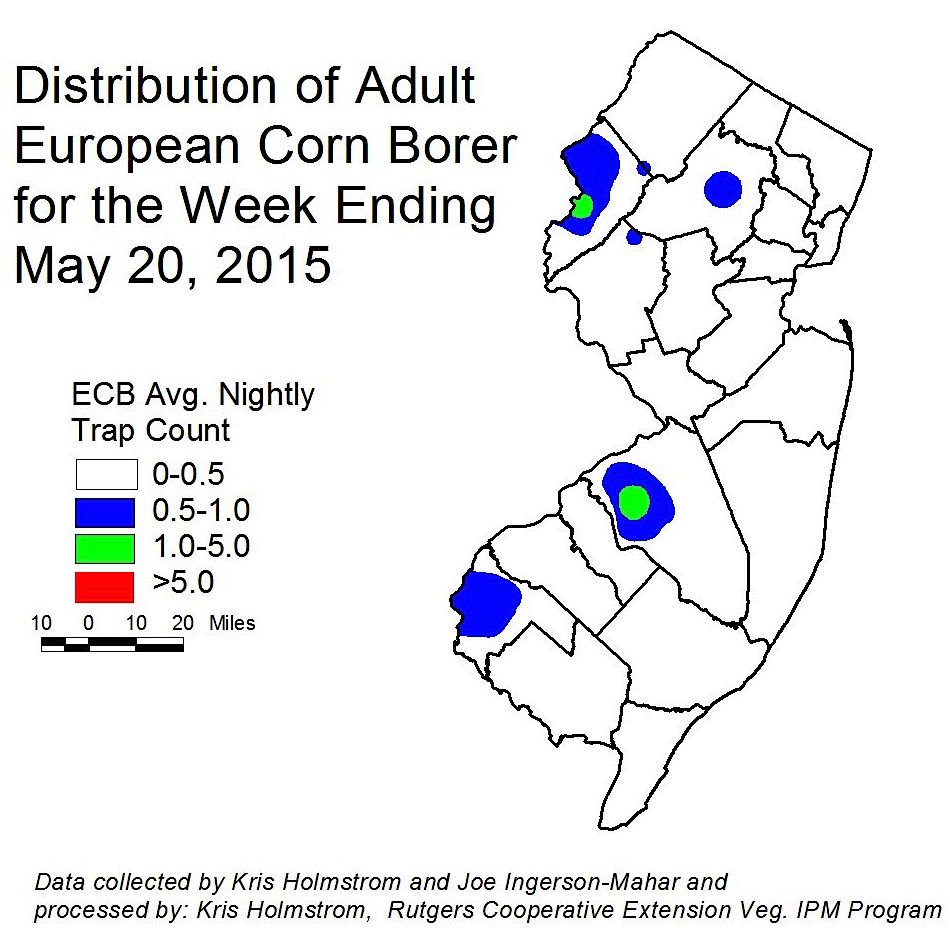
Click to View
Most early sweet corn plantings are too young to support ECB larval infestations. However, over the next two weeks we should begin to see feeding in the most advanced plantings. Be sure to begin monitoring the earliest plantings for ECB feeding while they are still in the whorl stage. For detailed information see:
| The highest nightly ECB catches for the previous week are as follows: | ||
| Belvidere 2 | Allamuchy 1 | Port Colden 1 |
| Blairstown 2 | Califon 1 | Sergeantsville 1 |
| Denville 2 | Centerton 1 | Tabernacle 1 |
| Medford 2 | Pedricktown 1 | Woodstown 1 |
May 17, 2015 Andy Wyenandt
Vegetable Diseases of the Week – 5/17/15
This week: Bacterial leaf spot of bell pepper; Leather rot of strawberry; and Phytophthora crown rot of eggplant.
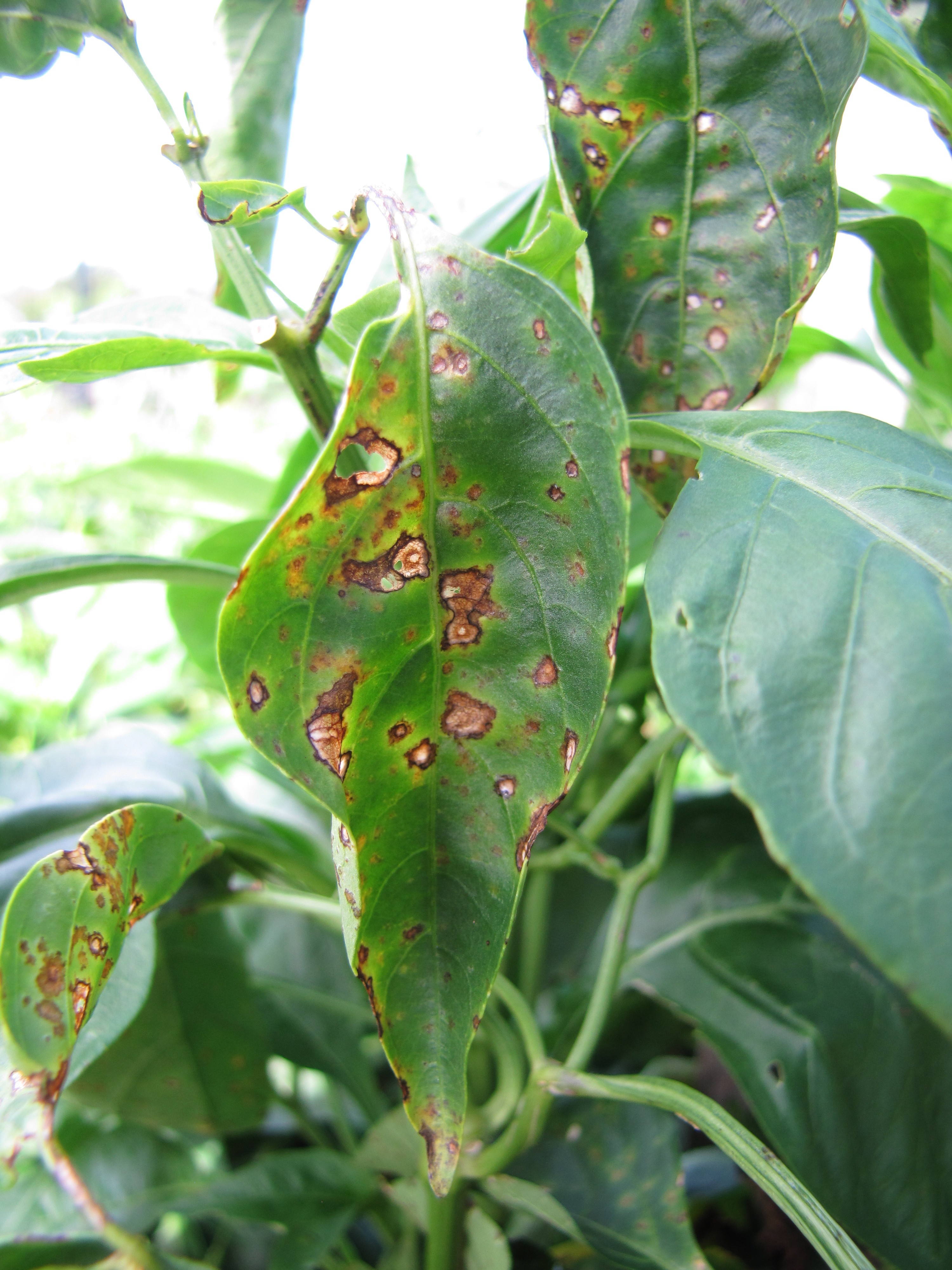
Bacterial leaf spot of bell pepper
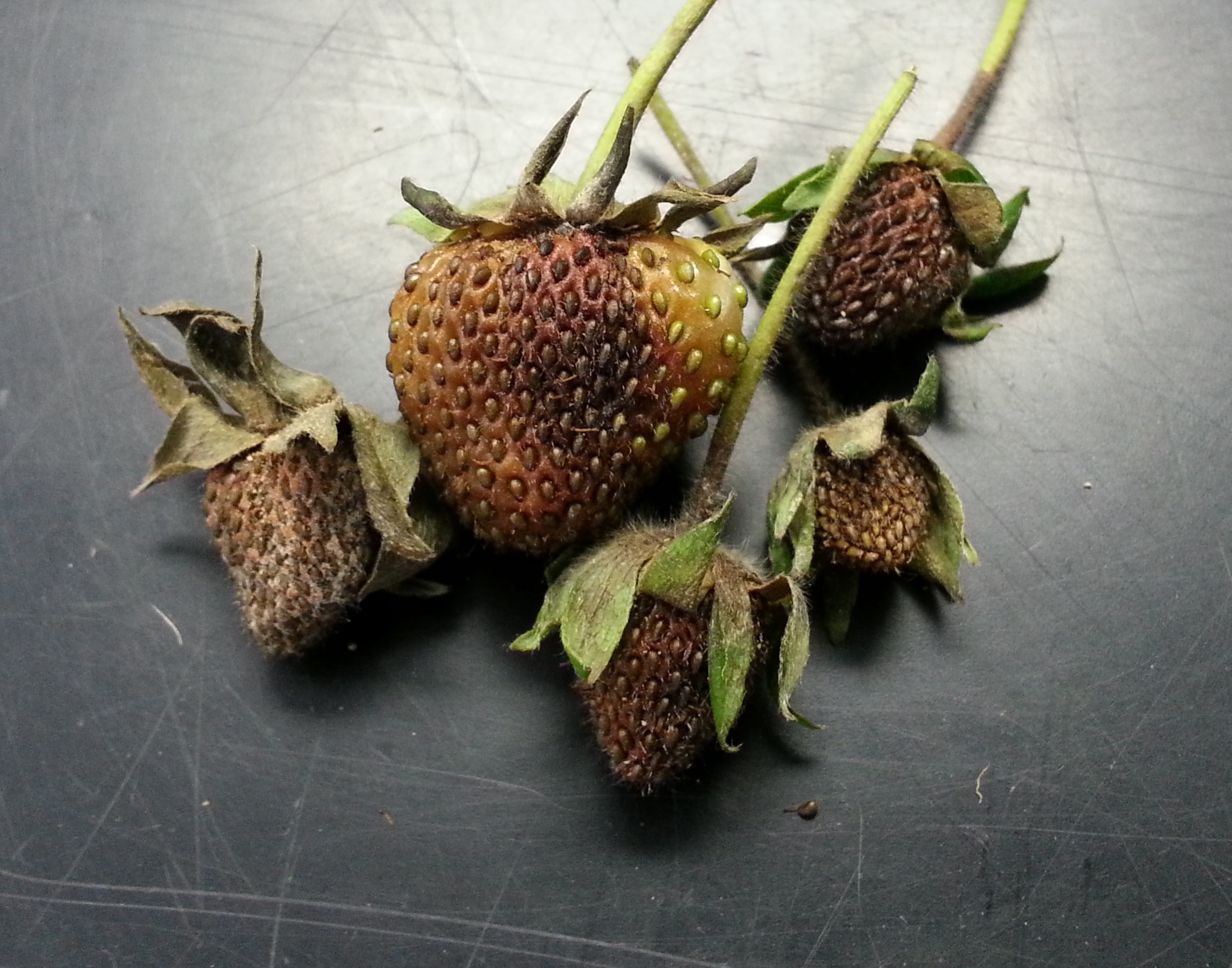
Leather rot of immature strawberry fruit
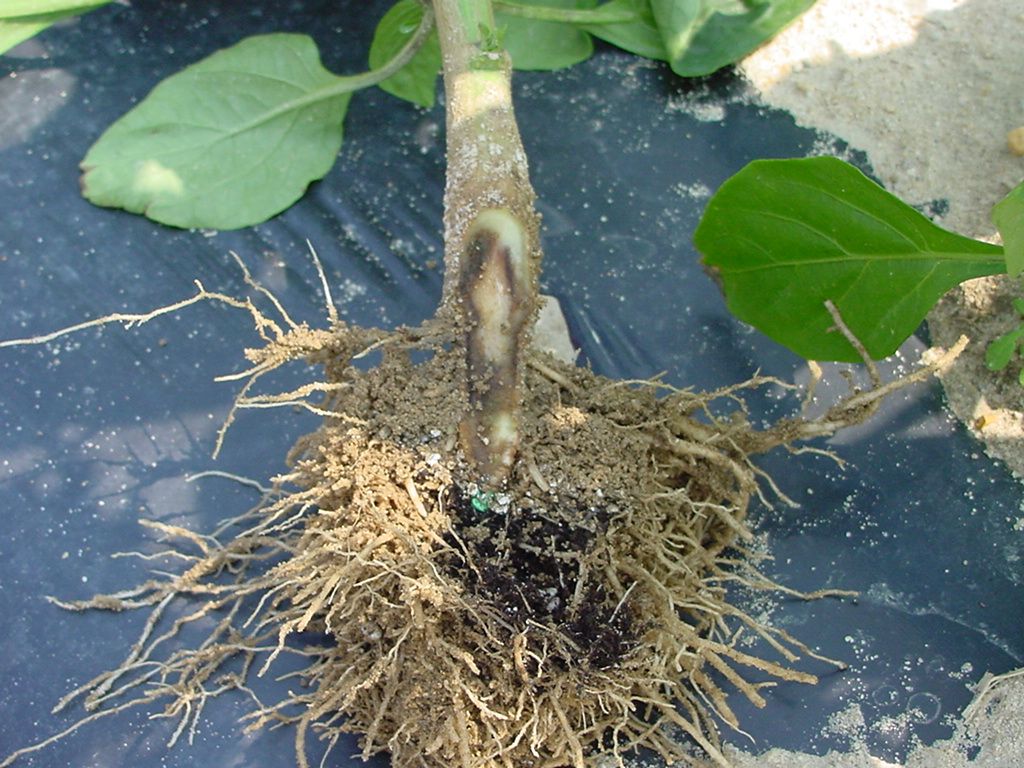
Phytophthora crown rot of eggplant.
May 17, 2015 Andy Wyenandt
Vegetable Disease Briefs – 5/17/15
- There have been no new reports of basil downy mildew in New Jersey this past week.
- Late blight has been reported as far north as Northern Florida this spring.
- Cucurbit downy mildew has been reported as far north as Southern Georgia this spring.

