Vegetable Crops Edition

Seasonal updates and alerts on insects, diseases, and weeds impacting vegetable crops. New Jersey Commercial Vegetable Production Recommendations updates between annual publication issues are included.
 
Subscriptions are available via EMAIL and RSS.
 
Quick Links:

NJ Commercial Vegetable Production Recommendations

Rutgers Weather Forecasting - Meteorological Information important to commercial agriculture.

Vegetable IPM Update 6/09/21

2021 Vegetable IPM Program Personnel

Kris Holmstrom and Joe Ingerson-Mahar would like to acknowledge the IPM Field Technicians for this season:

Rhea Bolar

Claire Chapeau

Jeff Kane

Jake Newcombe

Gabriel Torres

Without the assistance of these individuals, much of the information presented in this publication would be unobtainable.  We are grateful for all their help and hard work.

Sweet Corn

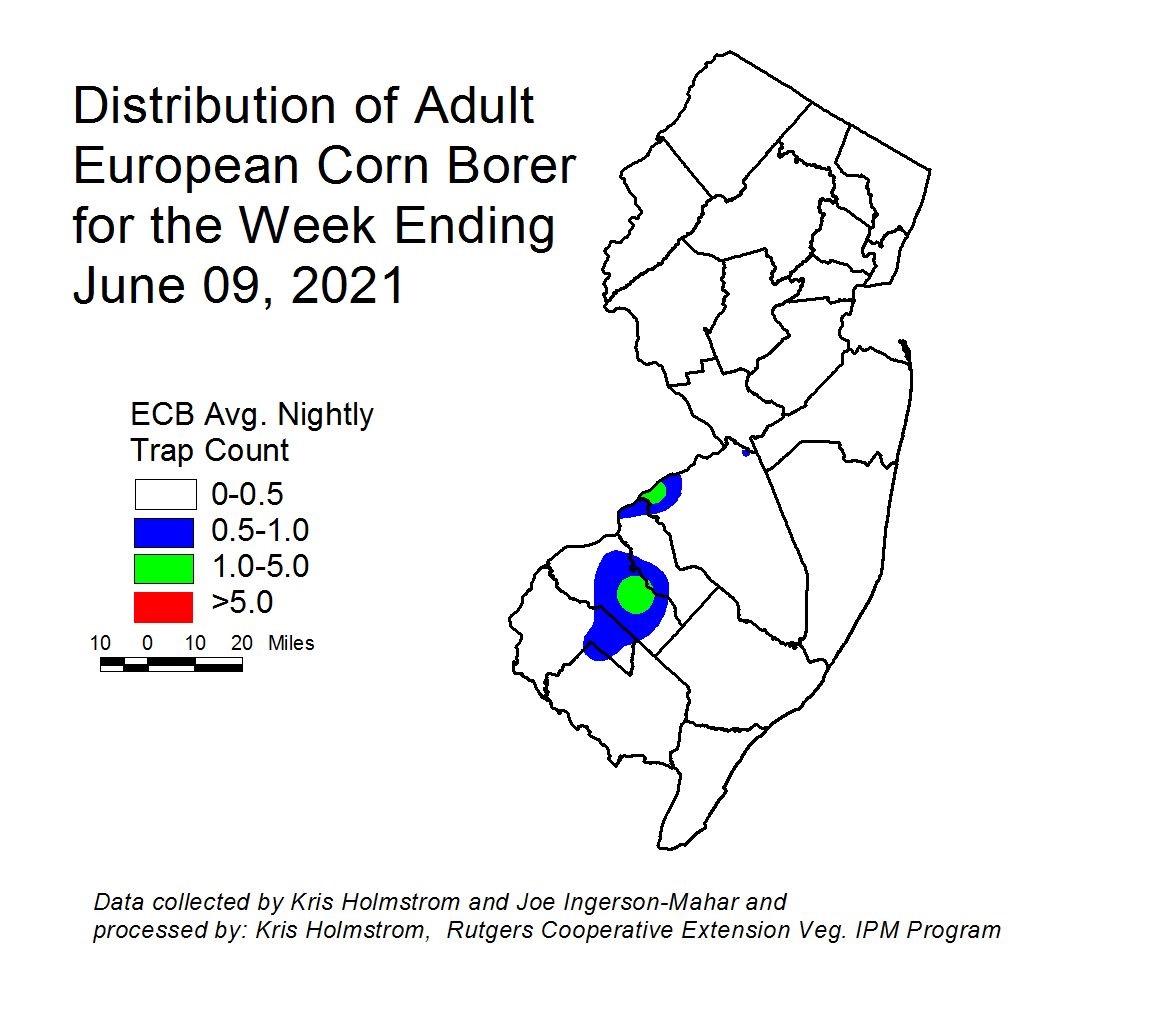
Low numbers of European corn borer (ECB) moths continue to be captured in parts of the state.  Hot weather over the past week has not increased catches, indicating that this initial flight may be nearing its’ end.  The highest adult activity is currently Gloucester and western Burlington counties (see map at right).  Whorl corn is the primary target for egg laying, and injury as high as 18% of plants infested has been found in Hunterdon County this week.  It is typical for feeding percentages to rise as the moth catch declines.  We expect feeding to increase for the next 1-2 weeks before peaking.
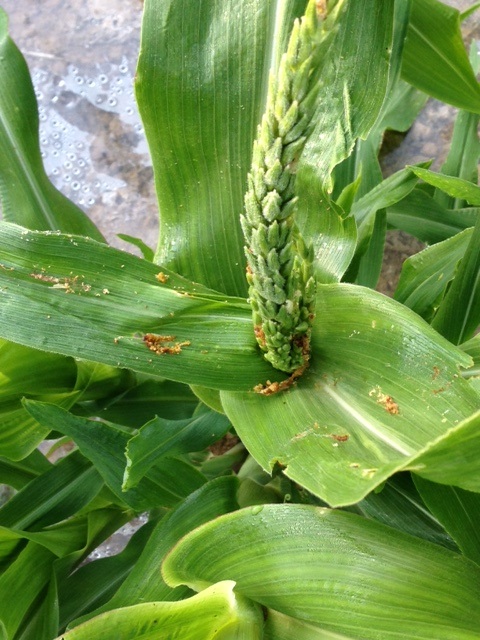
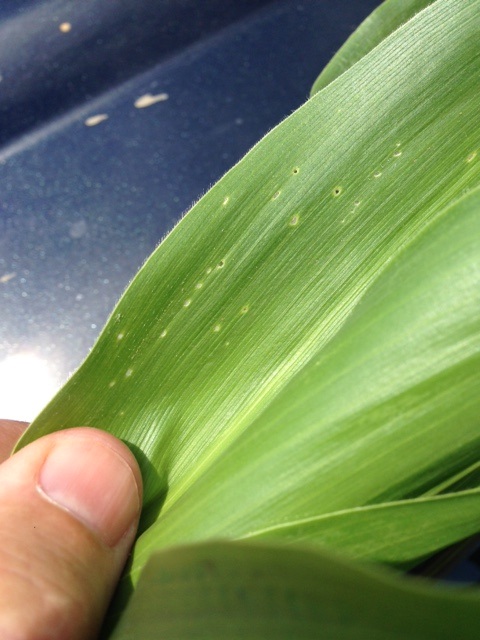
Look for the characteristic “shot-hole” type of feeding (photo below at right) and consider treating when infested plants exceed 12% in a 50 plant sample.  As plantings proceed to the pre-tassel stage, ECB larvae may be found in emerging tassels (see photo at left)It is a good idea to treat individual plantings as they move into the full tassel/first silk stage one time.  This eliminates any ECB larvae that have emerged with the tassels as they begin to move down the stalk to re-enter near developing ears.


Useful insecticides for this particular application include synthetic pyrethroids (IRAC Grp 3), spinosyns (including OMRI approved Entrust) IRAC Grp 5), and diamides such as Coragen or Vantacor (IRAC Grp 28) or materials such as Besiege which include the active ingredient in Coragen.  Synthetic pyrethroids alone should NOT be used for corn earworm (CEW) protection on silking corn.  Control with these materials is very inconsistent.
The highest nightly trap catches of ECB for the week ending 6/09/21 are as follows:

Cinnaminson   2 Centerton   1 Green Creek   1
Downer   2 Crosswicks   1 Milford   1
Asbury   1 East Vineland   1 Oldwick   1
Califon   1 Eldora   1 Sergeantsville   1

[Read more…]

Destroying cucurbit plantings after harvesting is a must to help mitigate downy mildew

It’s a little early in the season but now is a good time to start thinking about ways to help mitigate cucurbit downy mildew pressure later on. All cucurbit fields, especially cucumber and other summer squash fields should be destroyed immediately after the last harvest to help limit potential inoculum sources for cucurbit downy mildew, especially in later plantings.

For a review of CDM control please click here.

To track the progress of CDM on your phone or PC please visit the CDM forecasting website.

Needs Assessment Survey for RU Ready to Farm Beginner Farm Training Program

The Rutgers Cooperative Extension Training Program-RU Ready to Farm is looking for input from beginner farmers on what types of subjects they would like to see covered. The 2022 season of RU Ready to Farm will feature in person workshops that are open to the general beginner farmer community, and the focus and content of these workshops will be designed according to community need and interest. If you have been farming for fewer than 10 years and would like to contribute to the development of this workshop series, the survey can be found here: RU Ready to Farm Needs Assessment

For more information about the RU Ready to Farm program, visit: https://rubeginnerfarmer.rutgers.edu/


Basil downy mildew found in southern New Jersey – ALERT 6/8/21

Basil downy mildew has been confirmed in potted sweet basil being sold by a box-store in Cumberland County in southern New Jersey. This is the second report of BDM in the state and region this growing season. All basil growers are encouraged to scout their fields or greenhouses on a daily basis and should consider initiating a preventative fungicide program. [Read more…]

Recognizing Angular Leaf Spot in Cucurbits

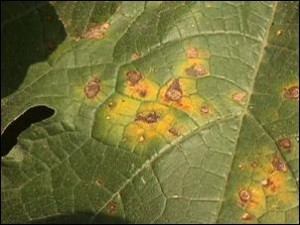
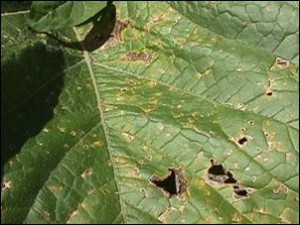
Angular leaf spot is common in New Jersey and the region. It often shows up during cooler, wet weather and isolated rain.

Symptoms of angular leaf spot in cucurbit.

Symptoms of angular leaf spot in cucurbit.

Angular leaf spot of pumpkin. Note the 'shot holes' in the leaf.

Angular leaf spot of pumpkin. Note leaf ‘shot holes’.

Angular leaf spot will first appear as, small water-soaked lesions which will expand until they reach a larger leaf vein resulting in the angular looking symptoms on leaves. Under heavy disease pressure, the bacteria will infect fruit causing small, water-soaked circular spots. In many cases once weather conditions become dry again, infected tissue in leaves will die and fall out leaving the characteristic ‘shot hole’ symptoms. Control of angular leaf spot begins with the application of labeled rates of fixed copper plus mancozeb to help suppress the spread of the disease until hot, dry weather returns.

Avoiding Plectosporium blight in cucurbit fields.

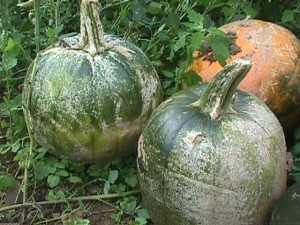
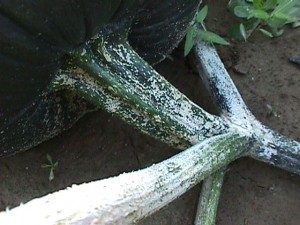
Plectosporium blight, also known as Microdochium blight or White speck, caused significant problems in some pumpkin fields last summer in New Jersey. The soil-borne fungal pathogen, although somewhat uncommon, can unexpectedly show up in some years and cause significant losses if left uncontrolled. The fungus survives in the soil on decaying plant debris where it can remain saphrophytic by surviving off organic matter. Infection is characterized by the production of numerous light tan to “bleached” spindle shaped lesions that develop on vines and the undersides of infected leaves. Heavily infected vines and leaves can die leading to premature defoliation and subsequent sunscald on fruit. In cases of heavy disease pressure, spores that are produced on the bottom sides of leaves fall and infect the topsides of fruit laying beneath the canopy. Infection of stems leads to premature browning and drying reduce their longevity. Fruit infection, in most cases, remain mostly cosmetic in nature reducing fruit quality and may predispose fruit to other opportunistic fruit rots. Plectosporium blight often shows up during periods of prolonged wet weather where the soil remains wet for extended periods. “Hot spots” typically appear in fields before the pathogen is further spread by driving rains and wind.

From a production standpoint, stay away from fields with known history of the disease for as long as possible; provide adequate spacing between plants in- and between rows (i.e., avoid the overcrowding of plants); avoid over (preplant) fertilization that can lead to thick, dense canopies; avoid overhead irrigation (if possible); avoid planting in area of a field that remains heavily shaded where soils tend to dry too slow.

Controlling Plectosporium blight begins with regular scouting, recognizing symptoms, and identifying “hot spots” in the field. Protectant fungicides, such as chlorothalonil, as well as those used in weekly maintenance spray programs for cucurbit powdery mildew control will help control Plectosporium blight as long they applied on a weekly schedule with a high volume of water with thorough coverage. To help improve control on the undersides of leaves, a FRAC code 11 fungicide such as Quadris Top or Pristine, can be added to the tank mix. Remember, FRAC code 11 fungicides have translaminar activity and will move from the top surface of the leaf to the bottom. Growers who grow powdery mildew resistant varieties need to remember to scout their fields regularly even if cucurbit powdery mildew has not been detected on the farm or if regular maintenance sprays haven’t begun.


White speck lesions covering pumpkin

White speck lesions covering the surface of immature and mature pumpkin fruit. White speck will only cause cosmetic injury to fruit.

White speck on vine and stem of infected pumpkin plant

White speck on vine and stem of infected pumpkin plant. Note the numerous small, white diamond shaped lesions.