Organic Farm Advisory

The Plant & Pest Advisory serves NJ growers by reporting on important pests and recommending responses that are grounded in reproducible trials.

Articles in this section contain information helpful to the NJ commercial organic grower.

Sharing organic practice trial results between land-grant universities is a cost effective way to create a common knowledge base built on the strengths of individual programs. In the sidebar, find institutions with programs in organic agriculture which augment knowledge developed at the Rutgers New Jersey Ag Experiment Station.

Rutgers Cooperative Extension Field Guides: These concise guides help with decision making from pre-planting to harvest. For each crop listed, learn what pests to proactively look for as the season progresses, how to look for them, and when to take action.

Field Guide List

Weather Conditions Favor Seed Corn Maggot Activity in Early Cucurbit Plantings

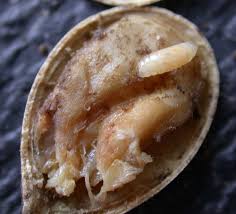
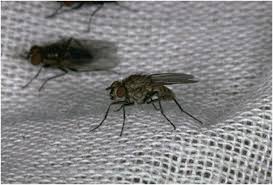
Seed corn maggot larvae and adult flies have been detected in early seeded zucchini squash fields in Gloucester County this week. They are most likely in other areas of Southern New Jersey. Seed corn maggots can also attack other vegetable crops like beans, peas, cucumbers, melons and sweet corn. Cool and wet weather increase activity and survivability of this early season pest. When adult maggots lay eggs near the planting hole, eggs can hatch in just a few days after being laid. Maggots then can burrow into seeds or seedlings, feed for a period of 2 to 3 weeks and then develop into egg-laying adults. There can be many generations per year, but activity is heightened during periods of cool and wet weather.

Adult flies are most abundant in fields with cover crops, fields that have just been tilled, or in fields that have had manure applied. When a seed or seedling is attacked, it may continue to grow, but will be weak and not produce a crop. Preventative control methods are most effective, since once larvae are found causing damage in the field, they are difficult to control underground. Some commercial insecticide seed treatments are available. See page 112 of the Mid-Atlantic Commercial Vegetable Production Recommendations, 2018 guide. This information can be downloaded at http://njaes.rutgers.edu/pubs/publication.php?pid=E001

Other preventative methods include row covers to create a barrier between the insect pest and the seeds or seedlings, waiting to plant in the field until soils and air temperatures are warm enough to quicken germination and plant growth, and selecting fields for early plantings with low organic matter and that do not remain wet for long periods.

Cucurbit Downy Mildew ALERT – 7/17/17

Cucurbit downy mildew was confirmed on cucumber in northern New Jersey (Hunterdon County) today in the cucurbit downy mildew sentinel plot at the Snyder Research and Extension Farm in Pittstown. This is the fourth report of CDM  on cucumber in New Jersey this growing season. No other cucurbit crops were affected.  All cucumber growers in NJ are encouraged to add downy mildew specific fungicides to their weekly maintenance spray programs. All growers should scout cucumber plantings as well as all other cucurbit crops for symptoms. CDM has also been reported on cucumber in MD, DE, and PA. To track the progress of cucurbit downy mildew in the US through the CDMpipe website through NCSU please click here.

Cucurbit Downy Mildew ALERT – 7/6/17

Cucurbit downy mildew was confirmed on cucumber in northern New Jersey (Warren County) today near Allamuchy. This is the third report of CDM  on cucumber in New Jersey this growing season. All cucumber growers in NJ are encouraged to add downy mildew specific fungicides to their weekly maintenance spray programs. All growers should scout cucumber plantings as well as all other cucurbit crops for symptoms. CDM has also been reported on cucumber in MD, DE, and PA. To track the progress of cucurbit downy mildew in the US through the CDMpipe website through NCSU please click here.

Cucurbit Downy Mildew ALERT – 7/3/17

Cucurbit downy mildew was confirmed on cucumber in southern New Jersey (Cumberland County) today. This is the second report of CDM in New Jersey this growing season. All cucumber growers in NJ are encouraged to add downy mildew specific fungicides to their weekly maintenance spray programs. All growers should scout cucumber plantings as well as all other cucurbit crops for symptoms. CDM has also been reported on cucumber in MD, DE, and PA. To track the progress of cucurbit downy mildew in the US through the CDMpipe website through NCSU please click here.

Cucurbit Downy Mildew ALERT – 6/28/17

Cucurbit downy mildew was confirmed on cucumber in southern New Jersey (Salem County) today. This is the first report of CDM in New Jersey this growing season. All cucumber growers are encouraged to add downy mildew specific fungicides to their weekly maintenance spray programs. All growers should scout cucumber plantings as well as all other cucurbit crops for symptoms. CDM was reported late last week in on cucumber in Maryland (Dorchester County). To track the progress of cucurbit downy mildew in the US through the CDMpipe website through NCSU please click here.

Controlling Purple Spot in Asparagus

Like clockwork, purple spot has appeared in some asparagus plantings during mid- to late-April for the past 3 years. Purple spot, caused the soil-borne fungus, Stemphylium vesicarium, can cause problems during cool, wet spring weather (much like we have had over the past week or so). Symptoms, just like its name, include numerous, sunken oval-shaped spots on spears during the harvest season and more importantly on ferns and stalks during the summer months as long as conditions are ideal for its development. Often, purple spot will disappear as quickly as in appears on spears during the spring production season depending on the local weather conditions. As soon as the weather becomes dry and warm (as it appears for the weekend), expect purple spot to disappear. [Read more…]