Large crabgrass can form robust root systems thanks to its numerous tillers and capacity to root at stem nodes, allowing it to out-compete crops for moisture and nutrients. Understanding the life cycle and biology of large crabgrass is key to figuring out the best options for its control on your farm. Learn more about non-herbicide life cycle disruptions that can be used in the development of a short and long term management plan through the large crabgrass decision tool fact sheet and an informational video. These resources are one of a five-part weed management series created by Extension Specialist Thierry Besancon and County Agricultural Agent Meredith Melendez, funded by USDA Specialty Crop Block Grant AM190100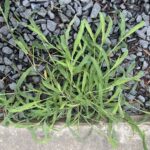 . Provide feedback on these resources through an online survey.
Fruit Crops Edition
Seasonal updates on diseases, insects, weeds impacting tree fruit and small fruit (blueberry, cranberry, and wine grape). Fruit Pest Alerts are also available via this category feed.
Subscriptions are available via EMAIL and RSS.
Non-herbicide Management Options for Large Crabgrass in Specialty Crops
Tree Fruit IPM Report for August 25, 2022
Peach:
Oriental Fruit Moth: A biofix point for OFM was set on 4/11 in southern counties, and on 4/14 in northern counties. The third generation timings are are over in all regions. Additional treatments should be made if trap captures are over 6 moths per trap.
| Insecticide Type | |||
| County/Region | Degree Days by 7/28 base 45 | Conventional
2000-2100 2350-2450 |
Diamide
2025–2150 2375-2450 |
| Gloucester – Southern | 2437 | 1st –past
2nd –Past |
1st –past
2nd –past |
| Middlesex – Northern | 2394 | 1st –past
2nd –past |
1st –past
2nd –past |
Apples and Pears:
Brown Marmorated Stink Bugs: Brown Marmorated Stink bugs are present at low to moderate levels in orchards statewide, However Activity is incresing form both Native and Invasive species. BMSB nymphs have also been seen in some orchards. See the NJ Tree Fruit Production guide for effective materials. In addition to the apple materials listed in the guide, Venerate has a +++ rating for stink bugs and a 0 day PHI.
Codling Moth (CM): Timings for the second generation are updated below. A biofix was set for CM on April 25th in southern counties, and May 6 in Northern counties (Middlesex County). Second generation treatments according to the degree day model are now over. Additional treatments should be made if trap captures are over 5 moths/trap. Some orchards have had continuing trap captures above threshold.
| Codling Moth Degree Day Timing | ||||||
| Application and Insecticide Type | ||||||
| County Area | Biofix | Intrepid; Diamides – Altacor, Voliam mixes:
1150-1200 + 1450-1500 DD
|
Cyd-X, Madex
1250 DD + every 7-9 days during brood hatch (later if first spray is an IGR) |
Standard Insecticides – Delegate, Avaunt, OP’s, carbamates, pyrethroids
1250 DD + 1550-1600 DD
|
||
| DD | 1150-1200 | 1450-1500 | 1250 | 1250 | 1550-1600 | |
| Southern | April 25 | Past | Past | Past | Past | Past |
| Northern | May 6 | Past | past | Past | Past | Past |
Lesser Appleworm: Some orchards in southern counties have had internal worm damage that we think is Lesser Apple Worm. This sporadic pest sometimes shows up in late summer and fall. The damage is similar to codling moth. Larvae complete their life cycle quickly and often by the time damage is seen the larvae is already gone. Typically LAW will feed in the fruit calyx and not go into the flesh, however they may also feed on fruit flesh excavating a small hole under the skin and occasionally tunneling into the fruit. Control options are the same as for codling moth.
Grape
Bunch Rots: Disease management continues to focus on downy and powdery mildew and also turns to bunch rot management. Refer to the NJ Commercial Grape Production Guide as well as the linked presentation from Dr. Nita in Virginia. Additional information can be found in this linked presentation from Dr. Bryan Hed at Penn Sate.
Grape Berry Moth: The timing for the third generation is past. In some hot summers a fourth generation may occur, however no further treatments should be needed, especially where insecticides are being applied for SLF and SWD.
Drosophilds and Sour Rot: SWD adults are being caught in and around commercial vineyards. As the sugars start to increase in early verities like Chardonnay, be aware of Spotted Wing Drosophila combined with native fruit fly species. These populations increase at this time of year and help spread sour rot. Sour rot will only be present when you also have injured fruit. Fruit splits and various insects can help cause that initial injury. It is thought that the spotted wing drosophila (SWD), because of its saw-like ovipositor, can help cause this initial injury, helping to make the fruit more attractive to native drosophilid species. After injury the fruit serves as a food source for ethanol-producing yeasts and acetic acid producing bacteria, the causal agents of sour rot. This in turn attracts more fruit flies to lay more eggs and spread the decay. Good canopy management for air circulation is useful to reduce sour rot incidence. However, this must be combined with insecticides and antimicrobials. A treatment regime that consists of weekly applications of an insecticide (Mustang Maxx (or other pyrethroid), Malathion, Delegate/Entrust, Verdepryn). Add Oxidate 2.0 if fruit cracking from rain or other causes is observed. Since it is important to rotate insecticide classes when treating this often, growers should use no pyrethroid or other insecticide class more that 2 times in a row. These treatments should be started before the onset of visible sour rot and fruit fly presence.
Spotted Lantern Fly: Spotted lantern fly adults are now appearing in vineyards. At this stage border treatments with effective materials should be adequate since most adults will be found on vineyard edges and populations will be low. As we move into September adult migration will increase and at that point growers should apply materials with long residual efficacy (refer to the table from Penn Sate below. *Chlorpyrifos is no longer labeled for food use.) More information on biology and control can be found from Penn State.
Tree Fruit Trap Counts – Southern Counties
| Weekending | STLM | TABM-A | CM | BMSB | OFM-A | DWB | OFM-P | TABM-P | LPTB | PTB |
| 4/9/2022 | 2 | 0 | 0 | |||||||
| 4/16/2022 | 0 | 2 | 3 | |||||||
| 4/23/2022 | 11 | 0 | 0 | 28 | 5 | 0 | 0 | |||
| 4/30/2022 | 5 | 0 | 1 | 31 | 4 | 0 | 0 | |||
| 5/7/2022 | 5 | 1 | 3 | 50 | 4 | 0 | 0 | |||
| 5/14/2022 | 8 | 5 | 3 | 19 | 2 | 0 | 0 | |||
| 5/21/2022 | 3 | 5 | 5 | 20 | 2 | 7 | 3 | |||
| 5/28/2022 | 0 | 19 | 3 | 13 | 0 | 11 | 36 | |||
| 6/4/2022 | 0 | 10 | 3 | 5 | 1 | 13 | 49 | 0 | ||
| 6/11/2022 | 0 | 9 | 2 | 6 | 36 | 0 | 8 | 47 | 3 | |
| 6/18/2022 | 0 | 4 | 1 | 0 | 62 | 0 | 3 | 13 | 1 | |
| 6/25/2022 | 16 | 0 | 0 | 6 | 3 | 16 | 0 | 0 | 18 | 4 |
| 7/2/2022 | 24 | 0 | 0 | 6 | 3 | 24 | 0 | 0 | 18 | 4 |
| 7/9/2022 | 10 | 4 | 2 | 15 | 6 | 31 | 0 | 0 | 15 | 3 |
| 7/16/2022 | 2 | 0 | 7 | 1 | 5 | 12 | 0 | 0 | 5 | 7 |
| 7/23/2022 | 15 | 0 | 5 | 1 | 2 | 12 | 0 | 0 | 14 | 2 |
| 7/31/2022 | 16 | 2 | 5 | 2 | 4 | 12 | 1 | 1 | 11 | 3 |
| 8/6/2022 | 10 | 0 | 4 | 0 | 3 | 31 | 2 | 0 | 21 | 4 |
| 8/13/2022 | 3 | 1 | 4 | 1 | 3 | 37 | 2 | 0 | 41 | 7 |
| 8/20/2022 | 1 | 1 | 9 | 4 | 6 | 56 | 2 | 2 | 21 | 6 |
Tree Fruit Trap Counts – Northern Counties
| Weekending | STLM | TABM-A | CM | BMSB | OFM-A | DWB | OFM-P | TABM-P | LPTB | PTB |
| 4/9/2022 | ||||||||||
| 4/16/2022 | 0 | 0 | 1 | |||||||
| 4/23/2022 | 0 | 0 | 2 | 0 | ||||||
| 4/30/2022 | 0 | 0 | 2.5 | 0 | ||||||
| 5/7/2022 | 0 | 1 | 4 | 0 | ||||||
| 5/14/2022 | 1 | 2 | 0 | 5 | 0.5 | 0 | 0 | |||
| 5/21/2022 | 6 | 8 | 4 | 27 | 2 | 5 | 6 | 5 | 0 | |
| 5/28/2022 | 34 | 19 | 3 | 6 | 13 | 1 | 23 | 15 | 0 | |
| 6/4/2022 | 17 | 21 | 4 | 4 | 11 | 1 | 27 | 17 | 0 | |
| 6/11/2022 | 22 | 25 | 2 | 1 | 4 | 0 | 30 | 9 | 0 | |
| 6/18/2022 | 66 | 20 | 2 | 2 | 2 | 5 | 2 | 27 | 7 | 0 |
| 6/25/2022 | 58 | 21 | 1 | 8 | 8 | 2 | 4 | 22 | 4 | 0 |
| 7/2/2022 | 55 | 7 | 1 | 1 | 14 | 15 | 2 | 9 | 4 | 1 |
| 7/9/2022 | 60 | 3 | 1 | 2 | 8 | 20 | 2 | 4 | 5 | 1 |
| 7/16/2022 | 64 | 1 | 1 | 3 | 2 | 19 | 3 | 1 | 4 | 3 |
| 7/23/2022 | 97 | 1 | 1 | 2 | 7 | 18 | 3 | 1 | 3 | 3 |
| 7/31/2022 | 46 | 1 | 2 | 2 | 13 | 22 | 4 | 1 | 2 | 3 |
| 8/6/2022 | 26 | 1 | 1 | 1 | 5 | 20 | 3 | 1 | 4 | 3 |
| 8/13/2022 | 26 | 1 | 1 | 2 | 6 | 29 | 2 | 2 | 4 | 3 |
| 17 | 3 | 0 | 3 | 23 | 28 | 2 | 4 | 5 | 3 |
| Pest Event or Growth Stage | Approximate Date | 2022 Observed Date |
| Bud Swell (Redhaven) | March 23 +/- 15 Days | March 20 |
| 1/4″ Green Tip Red Delicious | March 31 +/- 13 Days | March 21 |
| Pink Peach (Redhaven) | April 4 +/- 15 Days | March 31 |
| Tight Cluster Red Delicious | April 9 +/- 13 Days | March 31 |
| Full Bloom Peach (Redhaven) | April 9 +/- 14 Days | April 10 |
| Pink Apple (Red Delicious) | April 14 +/- 12 Days | April 14 |
| Full Bloom Apple (Red Delicious) | April 22 +/- 11 Days | April 21 |
| Petal Fall (Redhaven) | April 22 +/- 10 Days | April 14 |
| Petal Fall (Red Delicious) | April 27 +/- 13 Days | May 3 |
| Shuck Split (Redhaven) | April 30 +/- 11 Days | April 26 |
| Pit Hardening | June 15 +/- 9 Days | June 10 |
Your Input on Changes to the Next Farm Bill
House Agriculture Committee Farm Bill Review
“An integral part of the oversight and review process of the 2018 Farm Bill and further preparation for the 2023 Farm Bill is getting direct input from producers, stakeholders, and consumers on how various farm bill programs are working for them” – Click here to add your comments into the form posted on the House Agriculture Committee website with the option to answer the following questions:
- Which programs included in the 2018 Farm Bill do you think are performing well?
- Are there any new programs or ideas that you or the organization that you represent would like to see considered for the 2023 Farm Bill?
- Which programs included in the 2018 Farm Bill do you think could be improved upon or should be reconsidered?
Guidance on Farm Bill Sections.
“The farm bill refers to an authorization of mandatory and discretionary spending bills appropriated to provide assistance related to food and farms. It is a multi-year law that is primarily executed by the United States Department of Agriculture (USDA) and it governs a wide variety of agricultural and food programs” – Farm Bureau.org. Click here for a short summary and video on the history of the farm bill.
Title I, Commodity Programs. Under this authorization, USDA is reauthorized to provide and improve commodity and marketing loans, sugar, dairy and disaster programs. In addition to the links below for the farm bill overview, see the ERS link at https://www.ers.usda.gov/topics/farm-economy/farm-commodity-policy/title-i-crop-commodity-program-provisions-after-enactment-of-the-agriculture-improvement-act-of-2018/
Title II, Conservation. To read more about this title go to https://www.thefarmbill.com/title-2-other-conservation
or read more in https://sgp.fas.org/crs/misc/IF11199.pdf
Title III, Trade. To read more about this title go to https://www.thefarmbill.com/title-3-trade-programs
Title IV, Nutrition. To read more about this title go to https://www.thefarmbill.com/title-4-snap
Use the same website to scroll through each of the remaining titles:
Title V, Credit
Title VI, Rural Development
Title VII, Research, Extension, and Related Matters
Title VIII, Forestry
Title IX, Energy
Title X, Horticulture
Title XI, Crop Insurance. To read more about this title you can also go to https://www.ers.usda.gov/topics/farm-economy/farm-commodity-policy/crop-insurance-program-provisions-title-xi/
Title XII, Miscellaneous
2023 Farmer Grant Proposals from Northeast Sustainable Agriculture Research and Education (SARE)
Do you h ave an idea you would like to try on your farm that is related to sustainable agriculture? Stephen Komar, Rutgers SARE Coordinator and Sussex County Agricultural Agent, would like to announce that Northeast SARE will open the website for 2023 applications for Farmer Grants on October 1st. Approximately $750,000 has been allocated to fund projects for this grant cycle. Individual awards typically range from $5,000 to $30,000, depending upon a project’s complexity and duration. Projects must be related to sustainable agriculture and results are to be shared through a final report to SARE along with some type of outreach by the farmer as part of the project.
The online system for submitting proposals will open on Oct 1, 2022. Proposals are due no later than 5:00 p.m. EST on November 15, 2022. Go to Northeast-SARE-Farmer-Grant-Call-for-Proposals.pdf for more information.
Northeast SARE Farmer Grants provide the resources farmers need to explore new concepts in sustainable agriculture conducted through experiments, surveys, prototypes, on-farm demonstrations or other research and education techniques. Projects address issues that affect farming with long-term sustainability in mind. Northeast SARE funds projects in a wide variety of topics, including marketing and business, crop production, raising livestock, aquaculture, social sustainability, climate-smart agriculture practices, urban and indigenous agriculture and more.
The goals of SARE Farmer Grants are to help farmers try new things that could improve their operations and to share that information with others. There are also some other restrictions for budget items. Funds can be used to conduct the research project including paying farmers for their time, for project-related materials, for project costs like consulting fees or soil tests, and any communications or outreach expenses associated with telling others about project results. This grant program is not meant to help start or expand farm businesses. Farmer Grant funds cannot be used for capital costs associated with building a barn, greenhouse, or other major farm fixture, nor can funds be used to start a farm, purchase durable equipment like tractors or computers, or for any utility, telephone, or other costs that would be there in the absence of the project.
Farmer and employee wages can be included in a Farmer Grant budget for work done specifically on the grant project. Applicants should include a reasonable wage for their work on a grant project. In New Jersey, the current adverse wage rate used for the H2-A farm worker program is currently $15.54 per hour and could help gauge wages for employees time on the project. For farmer/project manager) wages, the rate to use would be higher and could be based on the complexity of the tasks on the project.
In addition, each project must include a technical advisor to assist with the project. Technical advisors can be anyone who is an agricultural service provider, such as your local cooperative extension agricultural agent, USDA personnel, an agricultural consultant, etc. In New Jersey and other states, SARE Coordinators are not eligible to be technical coordinators due to a conflict of interest of leadership in the program. Therefore, Agricultural Agents, Stephen Komar (Rutgers SARE Coordinator) and Michelle Infante-Casella (Rutgers SARE Assistant Coordinator) are not able to be technical advisors to grants. However, if you have questions about the grant process, they both can help answer questions or point farmers in the right direction to identify technical advisors.
A SARE Farmer Grant informational webinar featuring Tommye Lou Rafes, who has received multiple SARE Farmer Grants, will take place at 12:00 p.m. on October 4, 2022. This webinar information will help farmers thinking of applying for a SARE grant to learn about the process and types of projects that fit this program. To register for the webinar go to northeast.sare.org/farmergrantwebinar
The Northeast region includes Connecticut, Delaware, Maine, Massachusetts, Maryland, New Hampshire, New Jersey, New York, Pennsylvania, Rhode Island, West Virginia, Vermont, and Washington, D.C. Like other SARE Grants, Farmer Grants are competitive and will be judged against other applicants in the region.
To learn more about SARE project in New Jersey see New Jersey State Fact Sheet (sare.org)
Tree Fruit IPM Report for August 18, 2022
Peach:
Oriental Fruit Moth: A biofix point for OFM was set on 4/11 in southern counties, and on 4/14 in northern counties. The third generation timings are are over in all regions. Additional treatments should be made if trap captures are over 6 moths per trap.
| Insecticide Type | |||
| County/Region | Degree Days by 7/28 base 45 | Conventional
2000-2100 2350-2450 |
Diamide
2025–2150 2375-2450 |
| Gloucester – Southern | 2437 | 1st –past
2nd –Past |
1st –past
2nd –past |
| Middlesex – Northern | 2394 | 1st –past
2nd –past |
1st –past
2nd –past |
Scale Insects: White Peach Scale crawler emergence has ended for this generation. San Jose Scale Crawler emergence is past peak and declining. White Peach scale has a third generation in September and San Jose scale may have a third generation in October. Options at this point include: Assail, Belay (Group 4A); and the bioinsecticide Venerate. These products may provide some late season suppression where fruit damage is observed. Only Venerate has a 0 day PHI, making it useful for blocks near or at harvest.
Apples and Pears:
Diseases: Summer scab, rots and sooty blotch and fly speck are the main targets at this stage. Where scab is present rely primarily on protectant fungicides. Last year Captan plus a phosphorous acid like Prophyt was observed to slow scab development as well as provide good summer disease control. Merivon and Luna Sensation are good materials to use close to harvest. thaey are very effective for summer diseases and leave little residue.
Brown Marmorated Stink Bugs: Brown Marmorated Stink bugs are present at low to moderate levels in orchards statewide. See the NJ Tree Fruit Production guide for effective materials.
Codling Moth (CM): Timings for the second generation are updated below. A biofix was set for CM on April 25th in southern counties, and May 6 in Northern counties (Middlesex County). Second generation treatments according to the degree day model are now over. Additional treatments should be made if trap captures are over 5 moths/trap. Some orchards have had continuing trap captures above threshold.
| Codling Moth Degree Day Timing | ||||||
| Application and Insecticide Type | ||||||
| County Area | Biofix | Intrepid; Diamides – Altacor, Voliam mixes:
1150-1200 + 1450-1500 DD
|
Cyd-X, Madex
1250 DD + every 7-9 days during brood hatch (later if first spray is an IGR) |
Standard Insecticides – Delegate, Avaunt, OP’s, carbamates, pyrethroids
1250 DD + 1550-1600 DD
|
||
| DD | 1150-1200 | 1450-1500 | 1250 | 1250 | 1550-1600 | |
| Southern | April 25 | Past | Past | Past | Past | Past |
| Northern | May 6 | Past | past | Past | Past | Past |
Scale Insects: For San Jose scale see the peach section above.
Grape
Bunch Rots: Grapes are beginning veraison in southern counties. Disease management continues to focus on downy and powdery mildew and and now also turns to bunch rot management. Refer to the NJ Commercial Grape Production Guide as well as the linked presentation from Dr. Nita in Virginia. Additional information can be found in this linked presentation from Dr. Bryan Hed at Penn Sate.
Grape Berry Moth: The timing for the third generation is past. In some hot summers a fourth generation may occur, however no further treatments should be needed, especially where insecticides are being applied for SLF.
Spotted Lantern Fly: Spotted lantern fly adults are now appearing in vineyards. At this stage border treatments with effective materials should be adequate since most adults will be found on vineyard edges and populations will be low. As we move into September adult migration will increase and at that point growers should apply materials with long residual efficacy (refer to the table from Penn Sate below.) More information on biology and control can be found from Penn State.
Drosophilds and Sour Rot: SWD adults are being caught in and around commercial vineyards. As the sugars start to increase in early verities like Chardonnay, be aware of Spotted Wing Drosophila combined with native fruit fly species. These populations increase at this time of year and help spread sour rot. Sour rot will only be present when you also have injured fruit. Fruit splits and various insects can help cause that initial injury. It is thought that the spotted wing drosophila (SWD), because of its saw-like ovipositor, can help cause this initial injury, helping to make the fruit more attractive to native drosophilid species. After injury the fruit serves as a food source for ethanol-producing yeasts and acetic acid producing bacteria, the causal agents of sour rot. This in turn attracts more fruit flies to lay more eggs and spread the decay. Good canopy management for air circulation is useful to reduce sour rot incidence. However, this must be combined with insecticides and antimicrobials. A treatment regime that consists of weekly applications of an insecticide (Mustang Maxx (or other pyrethroid), Malathion, Delegate/Entrust, Verdepryn). Add Oxidate 2.0 if fruit cracking from rain or other causes is observed. Since it is important to rotate insecticide classes when treating this often, growers should use no pyrethroid or other insecticide class more that 2 times in a row. These treatments should be started before the onset of visible sour rot and fruit fly presence.
Tree Fruit Trap Counts – Southern Counties
| Weekending | STLM | TABM-A | CM | BMSB | OFM-A | DWB | OFM-P | TABM-P | LPTB | PTB |
| 4/9/2022 | 2 | 0 | 0 | |||||||
| 4/16/2022 | 0 | 2 | 3 | |||||||
| 4/23/2022 | 11 | 0 | 0 | 28 | 5 | 0 | 0 | |||
| 4/30/2022 | 5 | 0 | 1 | 31 | 4 | 0 | 0 | |||
| 5/7/2022 | 5 | 1 | 3 | 50 | 4 | 0 | 0 | |||
| 5/14/2022 | 8 | 5 | 3 | 19 | 2 | 0 | 0 | |||
| 5/21/2022 | 3 | 5 | 5 | 20 | 2 | 7 | 3 | |||
| 5/28/2022 | 0 | 19 | 3 | 13 | 0 | 11 | 36 | |||
| 6/4/2022 | 0 | 10 | 3 | 5 | 1 | 13 | 49 | 0 | ||
| 6/11/2022 | 0 | 9 | 2 | 6 | 36 | 0 | 8 | 47 | 3 | |
| 6/18/2022 | 0 | 4 | 1 | 0 | 62 | 0 | 3 | 13 | 1 | |
| 6/25/2022 | 16 | 0 | 0 | 6 | 3 | 16 | 0 | 0 | 18 | 4 |
| 7/2/2022 | 24 | 0 | 0 | 6 | 3 | 24 | 0 | 0 | 18 | 4 |
| 7/9/2022 | 10 | 4 | 2 | 15 | 6 | 31 | 0 | 0 | 15 | 3 |
| 7/16/2022 | 2 | 0 | 7 | 1 | 5 | 12 | 0 | 0 | 5 | 7 |
| 7/23/2022 | 15 | 0 | 5 | 1 | 2 | 12 | 0 | 0 | 14 | 2 |
| 7/31/2022 | 16 | 2 | 5 | 2 | 4 | 12 | 1 | 1 | 11 | 3 |
| 8/6/2022 | 10 | 0 | 4 | 0 | 3 | 31 | 2 | 0 | 21 | 4 |
| 8/13/2022 | 3 | 1 | 4 | 1 | 3 | 37 | 2 | 0 | 41 | 7 |
Tree Fruit Trap Counts – Northern Counties
| Weekending | STLM | TABM-A | CM | BMSB | OFM-A | DWB | OFM-P | TABM-P | LPTB | PTB |
| 4/9/2022 | ||||||||||
| 4/16/2022 | 0 | 0 | 1 | |||||||
| 4/23/2022 | 0 | 0 | 2 | 0 | ||||||
| 4/30/2022 | 0 | 0 | 2.5 | 0 | ||||||
| 5/7/2022 | 0 | 1 | 4 | 0 | ||||||
| 5/14/2022 | 1 | 2 | 0 | 5 | 0.5 | 0 | 0 | |||
| 5/21/2022 | 6 | 8 | 4 | 27 | 2 | 5 | 6 | 5 | 0 | |
| 5/28/2022 | 34 | 19 | 3 | 6 | 13 | 1 | 23 | 15 | 0 | |
| 6/4/2022 | 17 | 21 | 4 | 4 | 11 | 1 | 27 | 17 | 0 | |
| 6/11/2022 | 22 | 25 | 2 | 1 | 4 | 0 | 30 | 9 | 0 | |
| 6/18/2022 | 66 | 20 | 2 | 2 | 2 | 5 | 2 | 27 | 7 | 0 |
| 6/25/2022 | 58 | 21 | 1 | 8 | 8 | 2 | 4 | 22 | 4 | 0 |
| 7/2/2022 | 55 | 7 | 1 | 1 | 14 | 15 | 2 | 9 | 4 | 1 |
| 7/9/2022 | 60 | 3 | 1 | 2 | 8 | 20 | 2 | 4 | 5 | 1 |
| 7/16/2022 | 64 | 1 | 1 | 3 | 2 | 19 | 3 | 1 | 4 | 3 |
| 7/23/2022 | 97 | 1 | 1 | 2 | 7 | 18 | 3 | 1 | 3 | 3 |
| 7/31/2022 | 46 | 1 | 2 | 2 | 13 | 22 | 4 | 1 | 2 | 3 |
| 8/6/2022 | 26 | 1 | 1 | 1 | 5 | 20 | 3 | 1 | 4 | 3 |
| 26 | 01 | 1 | 2 | 6 | 29 | 2 | 2 | 4 | 3 |
| Pest Event or Growth Stage | Approximate Date | 2022 Observed Date |
| Bud Swell (Redhaven) | March 23 +/- 15 Days | March 20 |
| 1/4″ Green Tip Red Delicious | March 31 +/- 13 Days | March 21 |
| Pink Peach (Redhaven) | April 4 +/- 15 Days | March 31 |
| Tight Cluster Red Delicious | April 9 +/- 13 Days | March 31 |
| Full Bloom Peach (Redhaven) | April 9 +/- 14 Days | April 10 |
| Pink Apple (Red Delicious) | April 14 +/- 12 Days | April 14 |
| Full Bloom Apple (Red Delicious) | April 22 +/- 11 Days | April 21 |
| Petal Fall (Redhaven) | April 22 +/- 10 Days | April 14 |
| Petal Fall (Red Delicious) | April 27 +/- 13 Days | May 3 |
| Shuck Split (Redhaven) | April 30 +/- 11 Days | April 26 |
| Pit Hardening | June 15 +/- 9 Days | June 10 |
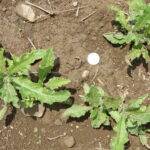
Non-herbicide Management Options for Canada Thistle in Specialty Crops
Canada thistle can be difficult to manage because of its deep taproot, perennial growth, and ability to reproduce through both seed dispersal and root shoots. Learn more about non-herbicide life cycle disruptions that can be used in the development of a short and long term management plan through the Canda thistle decision tool fact sheet and an informational video. These resources are one of a five-part weed management series funded by USDA Specialty Crop Block Grant AM190100.