On-Farm Food Safety Section

Keep up with the latest news on this dynamic topic that impacts growers on multiple levels. Developing a farm food safety plan is a good idea for all growers, and may be required as part of food safety audits if you sell to certain buyers.

View NJAES On-Farm Food Safety Essentials

Subscriptions are available via EMAIL and RSS.

Farm Food Safety: Think About Worker Training Now

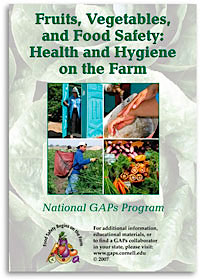
Farm-Health-HygieneWorker health and hygiene training for farm workers, including family members, is an important step in reducing the risk for human pathogen spread on farms.  Training of workers does not need to be complicated, but does need to be specific to your operation and your farm food safety plan (everyone should have one).


Worker health and hygiene training is required for passing a third party audit.  Documentation must be kept regarding what workers were trained, when they were trained and what materials were used for the training.

A 15 minute training DVD produced by Cornell is available for $20 at both the Rutgers Cooperative Extension of Cumberland County office and the Rutgers Cooperative Extension of Mercer County office.  This DVD is an excellent starting point for the training of farm workers on proper health and hygiene practices.

Farm Storage Facility Loans & Food Safety Equipment

The USDA has expanded the Farm Storage Facility Loan Program, giving growers the opportunity to purchase equipment to enhance food safety. Visit your FSA county office to learn more.

Farm Storage and Facility Loans security requirements have been eased for loans between $50,000 and $100,000. Previously, all loans in excess of $50,000 required a promissory note and additional security, such as a lien on real estate. Now loans up to $100,000 can be secured by only a promissory note.

The low-interest funds can be used to build or upgrade permanent facilities to store commodities. Eligible commodities include grains, oilseeds, peanuts, pulse crops, hay, honey, renewable biomass commodities, fruits and vegetables. Qualified facilities include grain bins, hay barns and cold storage facilities for fruits and vegetables.
http://goo.gl/o0OYEI

2014 Food Safety Workshops

There are two remaining farm food safety workshops scheduled for the 2014 growing season.

Wednesday March 19, 9:00 – 4:00
Introduction to Food Safety and Third Party Audits
Rutgers Snyder Research Farm, Pittstown
$40.00 includes materials and lunch
RSVP with 3/19/14 registration form

Wednesday March 26, 9:00 – 4:00
GAPs and Farm Food Safety Writing Workshop
Rutgers Cooperative Extension of Mercer County
$40.00 includes materials and lunch
RSVP with 3/26/14 registration form

FSMA Comment Period Extended to November 22

The comment period for both the Produce Safety Rule and the Preventive Controls for Human Food Rule has been extended until November 22, 2013.  To review these rules and to comment please click on their titles above.

Food Safety Workshops 2013-2014

Seven food safety workshops will be presented from December 2013 through February 2014.

TOPICS:

  • Harmonized Food Safety Standards
  • How to develop a food safety plan for your operation
  • Produce sampling results from 2013
  • Risk Assessment
  • Writing Standard Operating Procedures (SOP)

[Read more…]

FSMA Produce Rules Comment Deadline: November 15

New Jersey farmers are urged to send in comments by November 15th regarding the Proposed Produce Safety Rule and the Proposed Preventive Controls Rule. It is expected that about 20% of New Jersey farms will be expected to comply with the Produce Safety Rule. Several components of this rule have the potential to impact the financial stability of non-exempted farms and limit the growth of exempted farms.

At the Food Safety Modernization Act meeting held at the EcoComplex on Tuesday October 22nd growers expressed their concerns to FDA representatives. The most concerning portions of the rules are:

PRODUCE SAFETY RULE

Agricultural Water Testing Requirements – Subpart E

  • Municipal water – You must have a copy of the municipal water testing certificate on hand
  • Well water – At the beginning of the season and every three months during production
  • Surface water (pond, stream, etc) – Every 7 days during production
  • Surface water (well water pumped into a pond) – Once a month if there is no potential for contamination

Biological Soil Amendments of Animal Origin – Subpart F

  • Raw manure applications – 9 month wait time from application to harvest of crop
  • Purchased soil amendments – Must have a certificate of conformance from producer of product
  • Compost – 0 – 45 day wait time from application to harvest of crop based on composting methods used

[Read more…]