NJ Crop Insurance News Reminder

Jan 31: nursery contract change date; potato sales closing/cancellation date

Created to inform New Jersey ag producers about crop insurance, the Garden State Crop Insurance Education Initiative Team makes available important information through multiple media outlets. Get the latest news by visiting the website or follow via blog, Facebook, or Twitter.


[Read more…]

Andy Wyenandt: Post Archive

[pt_view id=”0af62754d4″]

North Jersey Twilight Meeting: Strawberries & Tree Fruit

Strawberry-Twilight-Jun-2014

Click Image to View Program

Date: June 10, 2014 5:30-8:45pm
Location: Donaldson Farms, 358 Allen Road, Hackettstown, NJ 07840.

Third Annual North Jersey Twilight Fruit Meeting Featuring Strawberries and Tree Fruit.
Meeting will be held rain or shine.
Please RSVP to Diana Boesch at (908) 788-1339.
Registration Donation: $10.00 – Payable at the Meeting.

Considerations for Estimating Cold Hardiness in Wine Grape

The severity of the current winter weather has growers and ag agents questioning how to accurately assess vineyard damage and develop a plan for coping with the damage through cultural management.

Fruit Specialist Dan Ward supplies comprehensive answers.

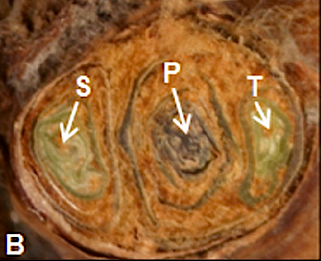
Cross sections of grapevine compound buds showing the location of primary (P), secondary (S), and tertiary (T) buds. P bud is dead, while S and T buds are alive;

Cross sections of grapevine compound buds showing the location of primary (P), secondary (S), and tertiary (T) buds.
P bud is dead, while S and T buds are alive.
Photo courtesy WSU Extension

The hardiness of grape buds and wood ranges widely among cultivars and different antecedent weather and physiological conditions. Any estimate of cold hardiness needs to be considered as specific to either the buds or the wood, given the cultivar, under the previous Fall’s conditions for the development of hardiness, given the weather conditions preceding the cold event in question. [Read more…]

Assessing Grapevine Winter Cold Injury Workshop

Date: Thursday, February 6, 2014   6:00 to 7:30pm
Location: Rutgers Agricultural Research and Extension Center, 121 Northville Road, Bridgeton, NJ

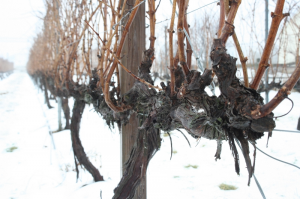
Heritage Vineyards 2009Accurate self-assessment of bud viability and fruitfulness is sound vineyard management when dealing with the effects of the unusually cold temperatures experienced this winter.

Join the Outer Coastal Plain Vineyard Association (OCPVA) and Rutgers NJAES for a free mini-workshop to train winegrape growers on the details of accurate cold injury damage assessment. Bring your own hand lens or other magnifier and, if you wish, some pieces of grape cane to evaluate.

Abnormally Dry to Moderate Drought Condition
in Much of NJ

By Jim Murphy

I mentioned in my previous post that dormancy has been apparent in many non-irrigated turfs. These conditions still persist throughout the central and northern NJ.

Drought Turf New Brunswick, NJ

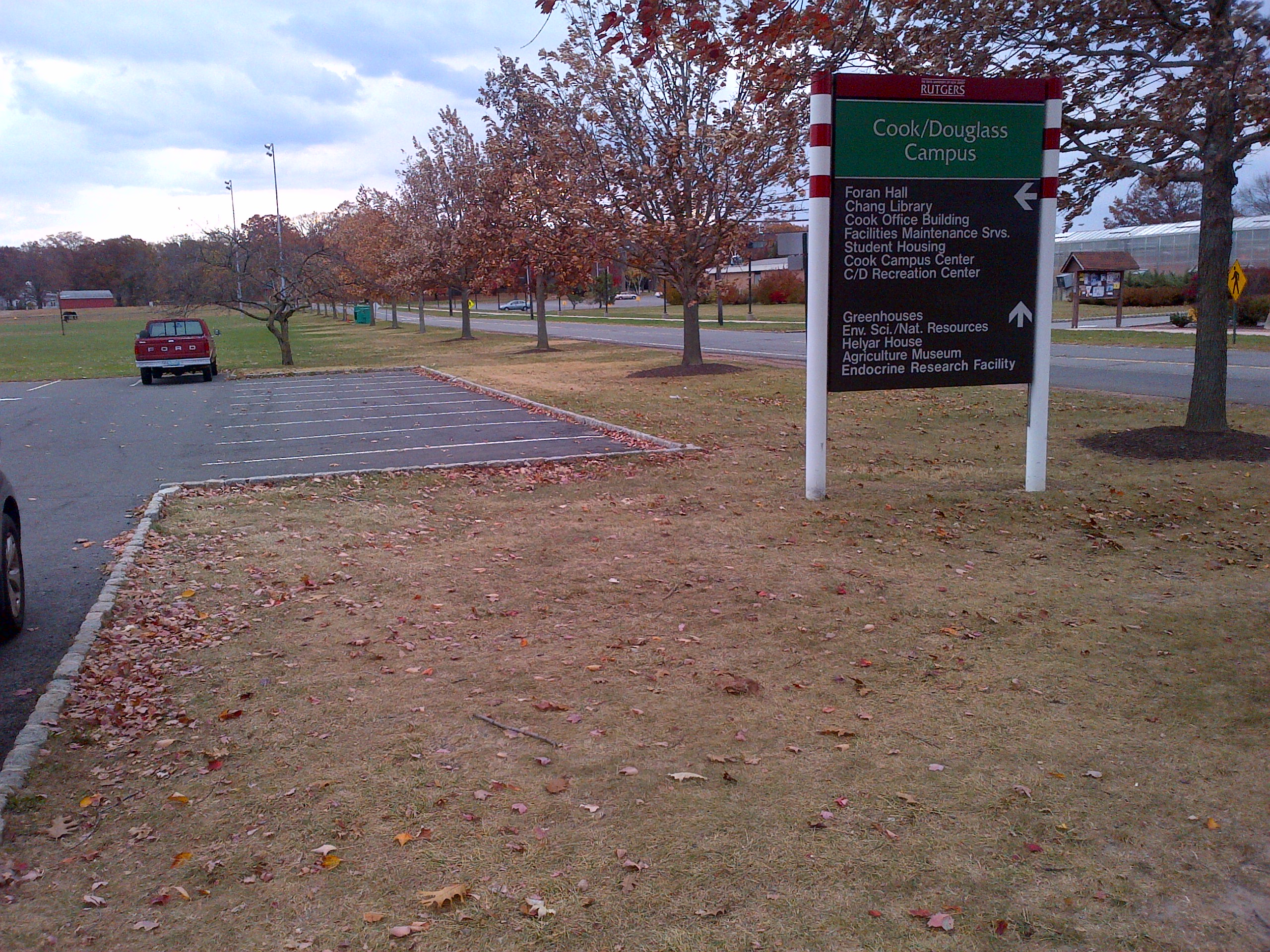
Drought induced dormancy in non-irrigated turf areas on Cook Campus of Rutgers University during early November.

Drought Turf New Brunswick, NJ

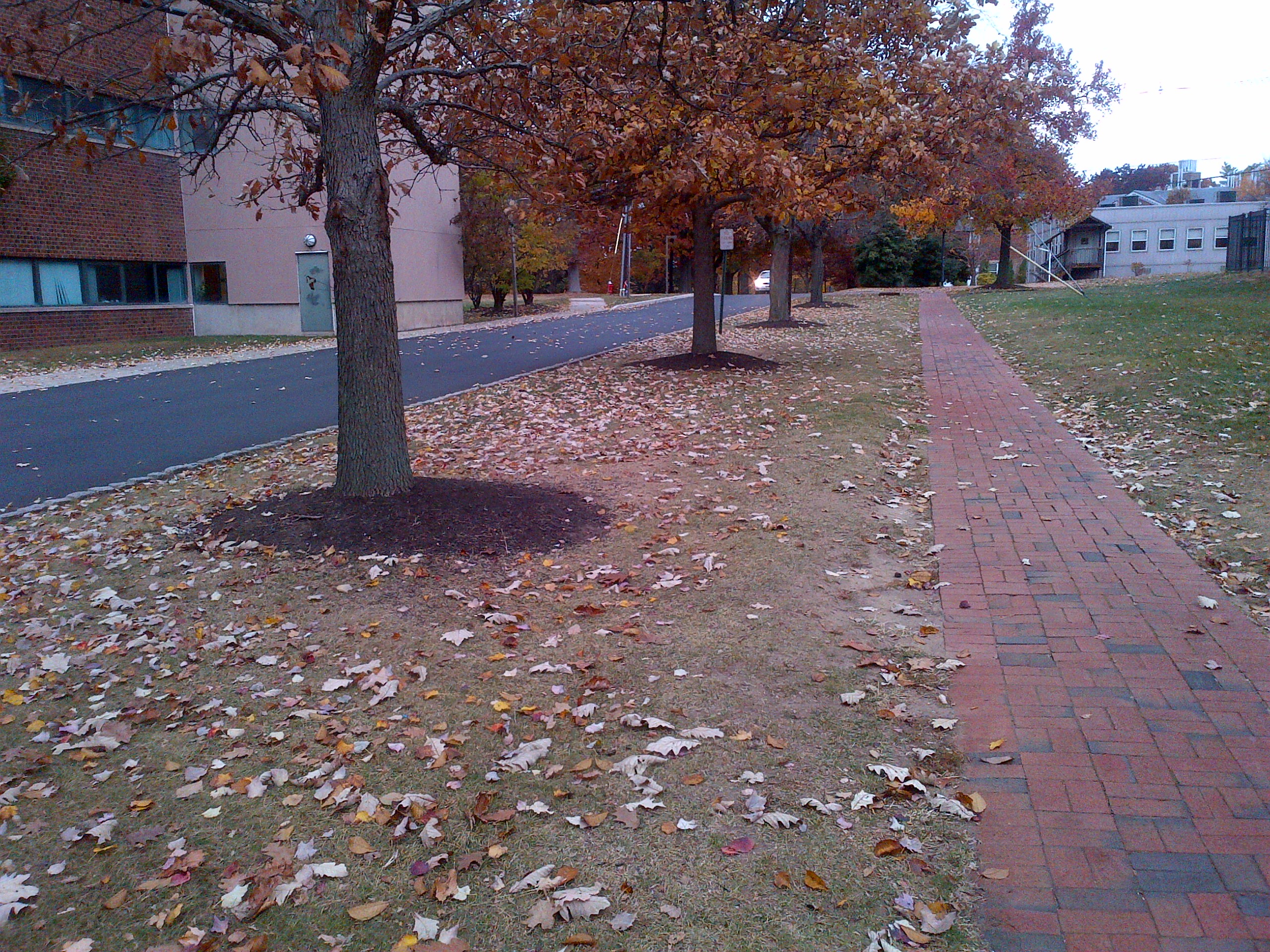
Drought induced dormancy under trees where the root competition and rain shadow effects have resulted in very dry soil conditions.


You can view the distribution and severity of the dry conditions throughout the northeastern U.S. at http://www.nrcc.cornell.edu/page_drought.html This map shows that southern NJ is not experiencing drought conditions; whereas, central NJ is experiencing abnormally dry conditions, and northern NJ is experiencing moderate drought. This dryness typically doesn’t last through winter but it is something to watch. Moreover, you should assess your landscapes for any potential susceptibility to winter desiccation.

I want to share a some observations and ideas that have come up while discussing this topic with turf managers.

  1. In those areas experiencing limited rain this fall, there has been very little recovery from summer stresses on non-irrigated turfs (and other plantings). These turfs may benefit from an application of a slow release N source to ensure recovery starts when water levels improve in late winter and early spring. Recall that NJ prohibits N applications to turf by professionals after December 1st (except on golf courses).
  2. While dry soil conditions this fall may have induced dormancy of the grass, the grass may be vulnerable to extended dryness through the winter especially in localized areas of turf that are sloped (water runs off) and exposed. These dry areas could experience desiccation damage if there are cold harsh winds combined with little to no snow or rain. If feasible, some irrigation of these areas before winter sets-in may be helpful in avoiding winter damage.
  3. Localized dry areas may have developed water repellency (become hydrophobic). These areas could benefit from an application of wetting agents to improve infiltration of rain and snow melt into the soil. Even if the soil is not hydrophobic, wetting agents will improve water infiltration of irrigation or winter precipitation.

Let’s hope that precipitation becomes more typical where it is currently dry.
Have a Happy Thanksgiving!

Source: Read More on the Rutgers Turf Blog