Andy Wyenandt

This is an archive of Dr. Wyenandt's posts on the Plant and Pest Advisory.

Vegetable Disease Update – 5/17/15

Pepper

 
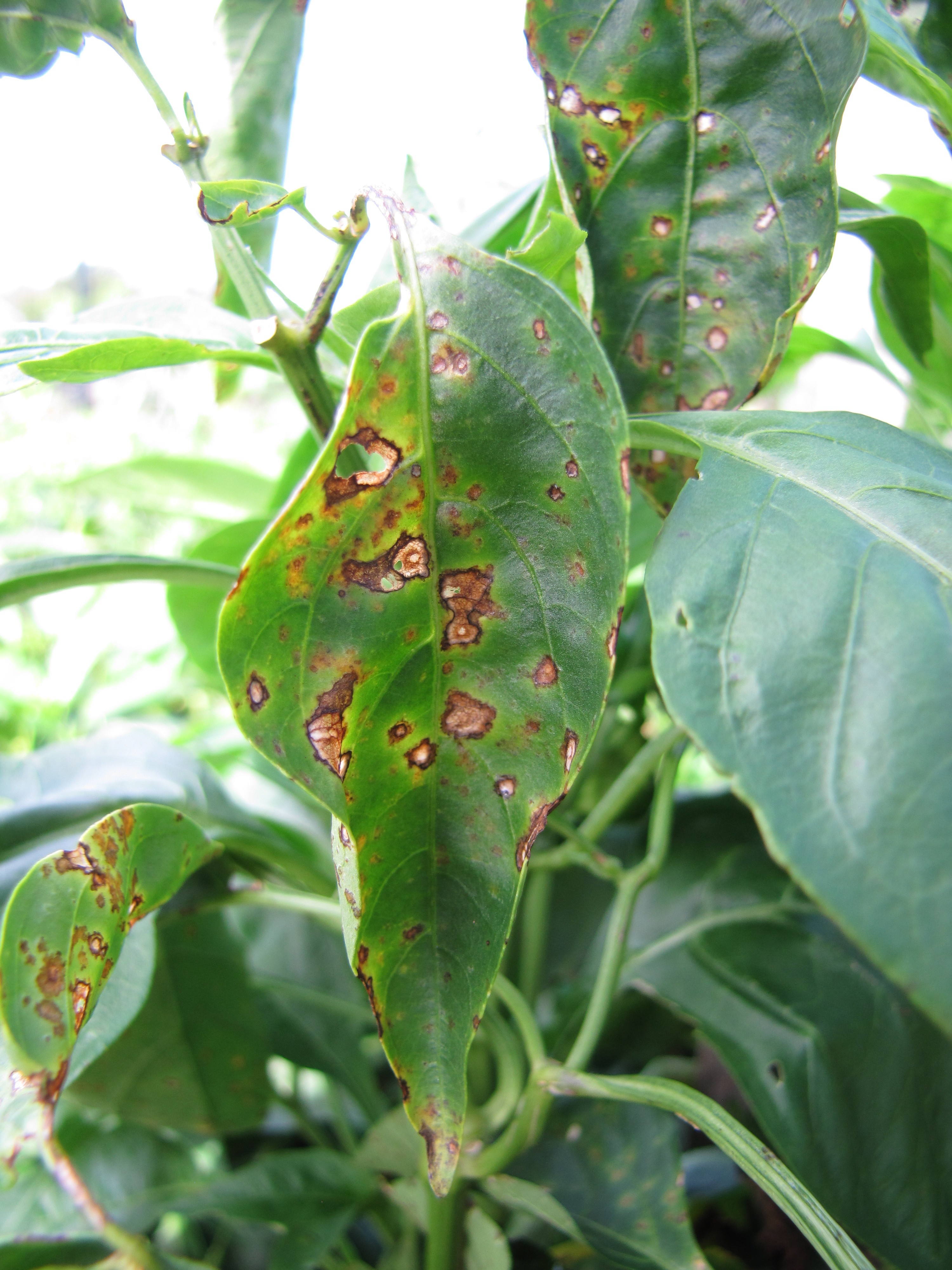
Bacterial leaf spot – Symptoms of bacterial leaf spot on pepper leaves include small, brown water-soaked lesions that turn brown and necrotic in the centers. Spots may coalesce and form large blighted areas on leaves and premature defoliation can occur. On fruit, brown lesions can form which have a roughened, cracked wart-like appearance. High temperatures, high relative humidity and rainfall favor Bacterial spot development. Loss from Bacterial spot can be reduced somewhat by maintaining high levels of fertility, which will stimulate new growth. Applying a fixed copper (M1) at labeled rates or may help suppress spread. Quintec (quinoxyfen, 13) at 6.0 fl. oz/A is now labeled for the suppression of bacterial leaf spot in pepper in the mid-Atlantic region. Please see the 2015 New Jersey Commercial Vegetable Production Recommendations Guide for more information.
[Read more…]

Understanding Strobilurin Fungicides (FRAC group 11) in 2015

The strobilurin, or QoI fungicides (FRAC group 11) are extremely useful in controlling a broad spectrum of common vegetable pathogens.

You may know some of older strobilurins as azoxystrobin (Quadris), trifloxystrobin (Flint), pyraclostrobin (Cabrio), or Pristine (pyraclostrobin + boscalid, 11 + 7). For example, FRAC group 11 active ingredients such as azoxystrobin are also now available in combination products as Quadris Top (azoxystrobin + difenoconazole, 11 + 3), Quilt (azoxystrobin + propiconazole, 11 + 3), or Quadris Opti (azoxystrobin + chlorothalonil, 11 + M5).

All strobilurin fungicides inhibit fungal respiration by binding to the cytochrome b complex III at the Q0 site in mitochondrial respiration. Simply said, the fungicide works by inhibiting the fungi’s ability undergo normal respiration. The strobilurin chemistries have a very specific target site, or mode-of-action (MOA).

Although highly effective, fungicide chemistries like those in FRAC group 11, with a very specific MOA, are susceptible to fungicide resistance development by some fungi. Why is that? In the strobilurin’s, a single nucleotide polymorphism of the cytochrome b gene leads to an amino acid substitution of glycine with alanine at position 143 of the cytochrome b protein.

For us, knowing the specifics on the technical jargon isn’t so important, it’s understanding what is at stake. So, if we hear someone speak about G143A resistance development to the QoI fungicides (where resistance is already known in cucurbit Powdery mildew and Downy mildew), we know what they are talking about and how important it is! So much so, if cucurbit powdery mildew develops resistance to one strobilurin compound it may develop what is known as cross resistance and become resistant to all chemistries in FRAC group 11, even if only one chemistry has been used!

[Read more…]

Early-season Phytophthora blight control in pepper

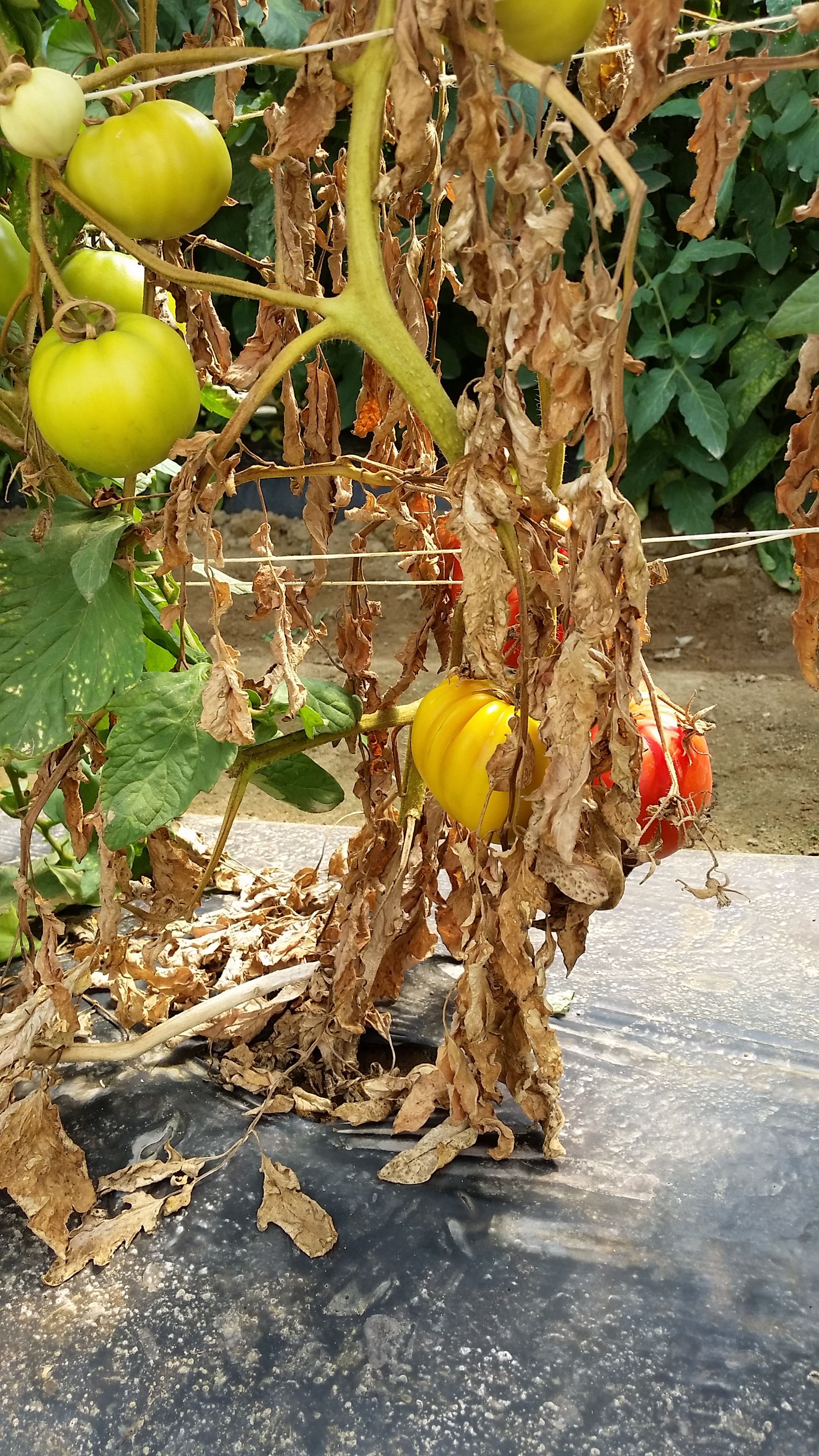
Phytophthora blight typically develops in low-lying areas after a heavy rain and can spread quickly throughout the entire field.

Cultural Recommendations

Planting on a ridge or raised, dome-shaped bed will help provide better soil drainage. Use a minimum 3-year crop rotation with crops other than pepper, cucurbit, lima and snap beans, eggplant, or tomato. In fields with low-lying or wet areas, plant only Phytophthora-resistant/tolerant bell pepper cultivars such as ‘Paladin’, ‘Turnpike’,  ‘Aristotle’, ‘1819’, ‘Intruder’, ‘Archimedes’, or ‘Revolution’. In heavily-infested pepper fields with a known history of Phytophthora blight, plant only tolerant cultivars to help reduce plant losses. If mefenoxam-insensitivity is known to exist in a field/farm, plant only tolerant cultivars. Do not apply mefenoxam or metalaxyl in fields where insensitivity is known to exist.
[Read more…]

Vegetable Disease Briefs – 5/10/15

  • Anthracnose has been found in spinach in southern New Jersey.
  • All leafy greens can be predisposed to leaf spots and blights when overhead irrigation has been used extensively during periods of hot, dry weather. This has especially been true in southern NJ this past week.
  • There have been no new reports of basil downy mildew in NJ this past week.

Vegetable Disease Update – 5/10/15

Cole crops

Downy Mildew and Alternaria – Symptoms of downy mildew include purple to yellowish-brown spots on upper leaf surfaces. A grayish-white spore mass will develop and cover the underside of leaves under ideal temperatures (night temperatures of 46 to 61°F and day temperatures below 75°F. Downy mildew can kill young plants. Heavily infected leaves may drop providing entry points for bacterial infections (black rot and soft rot). Symptoms of Alternaria on infected leaves include small, expanding circular lesions with concentric rings that may have a ‘shot-hole’ appearance as lesions age.  Heavily infected seedlings may result in damping-off. Control of Downy mildew and Alternaria begin with preventative fungicide applications. Please refer to pages F34-35 of the 2015 NJ Commercial Vegetable Production Recommendations to determine which fungicides are labeled for each specific crop and disease. [Read more…]

Angular Leaf Spot in Strawberries

Often considered a minor pathogen, angular leaf spot caused by the bacterium, Xanthomonas fragariae, can cause serious leaf and calyx infections ruining the marketability of fruit if left uncontrolled. Like all bacterium, the pathogen will infect leaves and the calyx through natural openings or wounds.

Fig. 1. Water-soaked lesions caused by angular leaf spot on infect strawberry leaf. Photo by P. Nitzsche

Infections can often start in production operations and come in on infected bare root transplants or cuttings. Symptoms on leaves include initial small, irregular water-soaked lesions (Fig. 1).
[Read more…]