Archives for July 2015

Quintec: Now Registered for Bacterial Leaf Spot in Tomato

Quintec is now registered for suppression of bacterial leaf spot in tomatoes.
See label for details.

ATTENTION
• This recommendation is made as permitted under FIFRA Section 2(ee) and has not been submitted to or approved by EPA.
• It is a violation of federal law to use this product in a manner inconsistent with its labeling.
• Read the label affixed to the container for Quintec® fungicide before applying. Carefully follow all precautionary statements and applicable use directions except as specified below.
• Use of Quintec according to this Section 2(ee) recommendation is subject to all use precautions and limitations imposed by the label affixed to the container for Quintec.

Quintec 2ee Product Bulletin (not for use in CA,TX not accepted in NY) issued 5/13/2015
Vegetable Disease Briefs – Cucurbit downy mildew ALERT – 7/3/15

Cucurbit downy mildew was reported on watermelon in Dorchester County, Maryland and Sussex County, DE on 7/2.

This is the first report of cucurbit downy mildew in the region to date.  The most recent reports of cucurbit downy mildew on the east coast have been in cucumber and watermelon. There are at least 5 or 6 reported races of downy mildew on cucurbit in the US with each affecting a different set of cucurbit hosts. Unfortunately, very little is known about what races may be present in our region.

All cucurbit growers need to scout on a daily basis and consider adding a downy mildew specific fungicide to their regular maintenance programs. To track the progress of CDM in the US please visit http://cdm.ipmpipe.org/. For more information on the control of cucurbit downy mildew please see the 2015 Commercial Vegetable Production Guide.

Cranberry: Post-bloom Insect Pest Control Recommendations

As we approach the end of bloom, growers should consider the need for any post-bloom applications.  The main pest targets for these applications are mainly Sparganothis fruitworm and spotted fireworm. [Read more…]

Fruit IPM Report 6-30-2015

Peach

Oriental Fruit Moth (OFM): We are between 2nd and 3rd generation broods in southern counties, but still treating emerging larvae in northern counties. Growers who have trap counts that are less than 6 moths per trap can skip insecticides that are intended for OFM. If trap counts are higher, then time your sprays according to the following table:
[Read more…]

Veg IPM Update: Week Ending 7/1/15

Click to View

Click to View

Sweet Corn

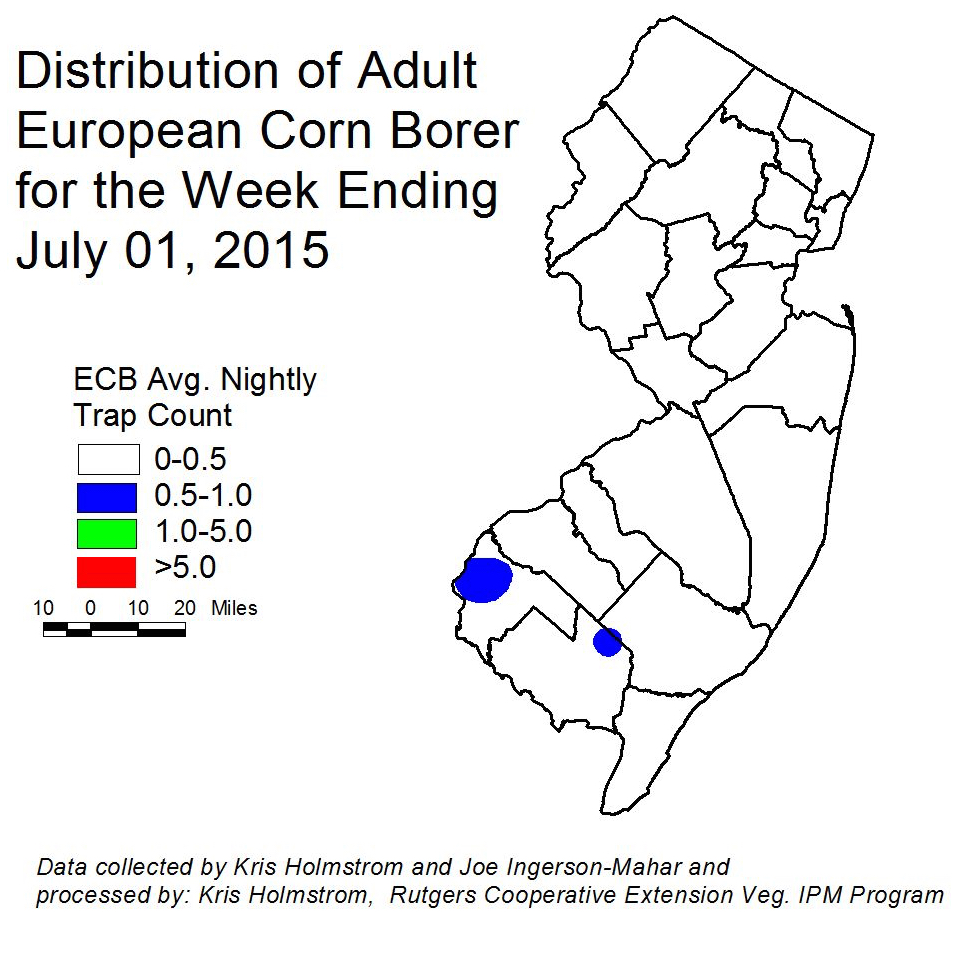
We are between European corn borer (ECB) adult generations at this time. Only scattered individuals are being captured throughout NJ (see ECB map). ECB infestations are still present in some sweet corn plantings, but whorl stage corn is now largely free of ECB injury.

As always, consider treating when the number of infested plants in a 50 plant sample exceeds 12%. Any planting remaining at or above threshold as it proceeds to full tassel should be treated, as this is the last stage at which ECB larvae will be exposed and vulnerable to insecticidal sprays.

See the 2015 Commercial Vegetable Recommendations Guide for insecticide choices.
[Read more…]

Too Much of Everything is Just Enough

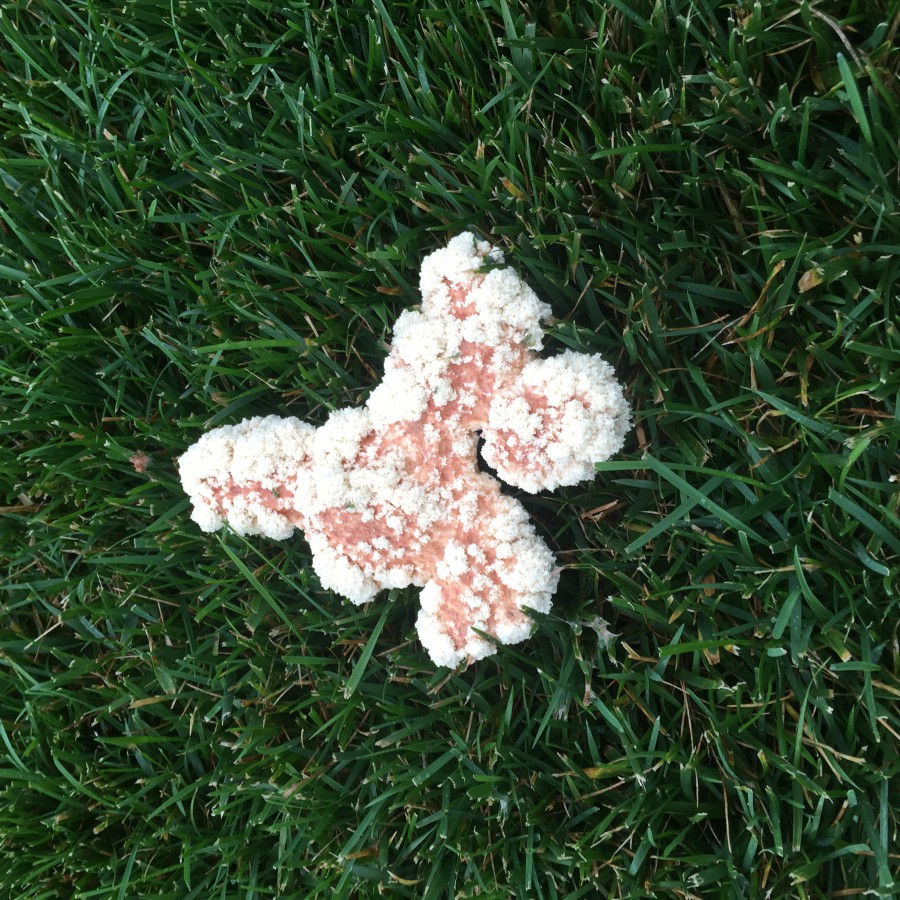
Right along with stormy skies, the Plant Diagnostic Laboratory is firing up with golf turf samples. We’ve seen it all lately: anthracnose, summer patch, slime molds, take-all, Pythium root diseases, annual bluegrass weevils, black turfgrass ataenius, and lots of wear and tear. Here are a couple of random notes from the last week or two:

Slime mold-just because they are cool. Photo: Howard Szczurek

Slime mold–just because it’s cool. Does this look like dog yak? Photo: Howard Szczurek

[Read more…]