Veg IPM Update: Allium leaf miner 04/06/18

Allium Leaf Miner


Allium leaf miner (ALM) traps (sticky cards) were deployed on March 20, in overwintered allium crops at sites in Lawrenceville and Pennington (Mercer County), and Milford, Pittstown and Asbury (Hunterdon County).  These traps have been checked weekly since that time and have returned no positive ALM catches.  Host crops at these sites (chive, scallion and garlic)  were free of injury as of April 5.  In 2017, traps placed at these locations were already catching ALM adults by the end of March, and feeding injury was easily discovered on chives.  Indications are that we are 2-3 weeks behind last year’s development.

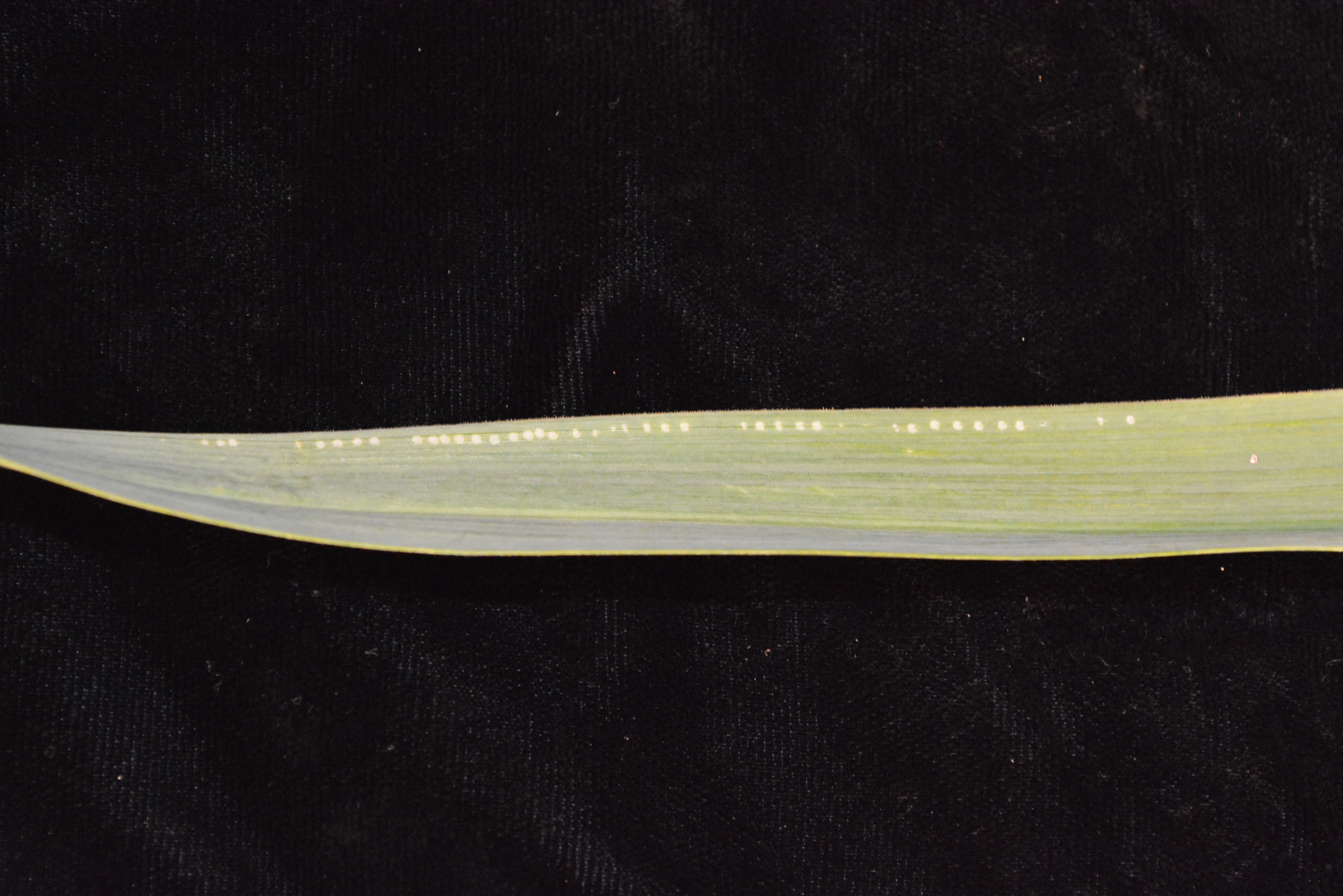
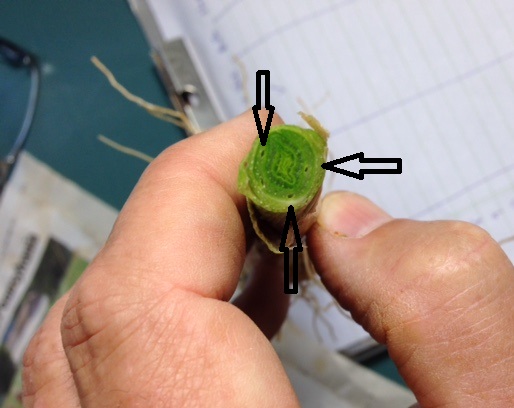
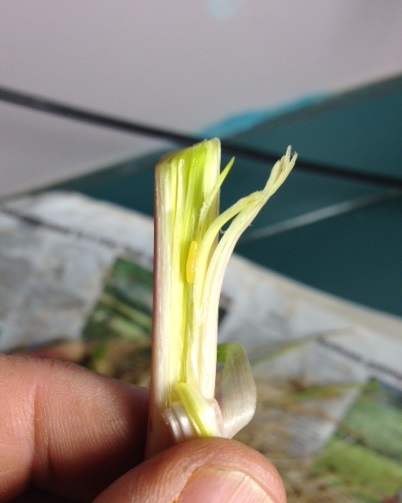
We do have confirmed injury and sighting of adult ALM on scallions in high tunnel production in the Pennington area, but insect development in this warmer protected environment is not indicative of what is occurring outdoors.  As weather warms, expect adults to emerge and become active.  They will feed on available allium crops, which will include overwintered chives and garlic as well as newly transplanted onions and scallions and leeks.  Look for characteristic dots (see photo at center) on the upper portion of upright leaves.  Expect that any plant with these feeding/egg laying scars is infested.  Larvae will tunnel downward (see photo at right); ultimately pupating in the neck of the plant (see late instar larva at left).

Floating row covers, kept on until the first flight ends will help minimize access to plants.  Insecticide applications targeting adults may be helpful as well, although frequency of applications is uncertain.  Spinosyn materials (Radiant, Entrust (OMRI approved)), pyrethroids (Mustang Maxx, Warrior), and pyrethrin materials (Pyganic (OMRI approved)), neonicotinoids (Scorpion, Venom) and the insect growth regulator Trigard are labeled for miner control.

Adult activity and observations of feeding will be reported on in the IPM Update as they occur.  We will attempt to identify the beginning and end of the first flight so that growers know when they should initiate control tactics and when the risk of infestation has abated.


Veg IPM Update: Allium leaf miner 10/25/17

Allium Leaf Miner


A sample of unsprayed/unprotected volunteer garlic near Asbury on the Hunterdon/Warren County border today showed 68% of plants infested with allium leaf miner (ALM).  These maggots were all later stage, and found in the necks, about 1″ above the bulb (see photo at upper left).  We should expect that all untreated/unprotected allium crops are similarly affected at this time.  Interestingly, 100% of infested plants had visible feeding/egg laying scars (see photo at center above), while 100% of uninfested plants showed no visible signs.  None of the plants had mines visible on the surface, but cross sections of the neck revealed clean tunnels the maggots had created on their way down (see photo at right, above).

Our colleagues at Cornell, operating in the Hudson Valley had notified us that they had had no success catching ALM adults on sticky cards, and we have had the same difficulty in NJ this Fall.  This is unlike our experience in the Spring, when we were able to catch numerous individuals at nearly every trap site.  Additionally, the generation of adults emerging in the Spring here in NJ heavily infested chives; the earliest possible host.  This Fall, chives appear to be largely uninfested, while onions, scallions, and leeks are showing the most feeding/egg laying scars.

Be aware that if no program of protection was enacted roughly 3 weeks ago, Fall allium crops may be heavily infested at this time.


Veg IPM Update: Week Ending 10/04/17

Note:  Today’s edition is the last regular IPM Update of the season.  We will continue to monitor late season crop pests and will publish updates as necessary.

Sweet Corn
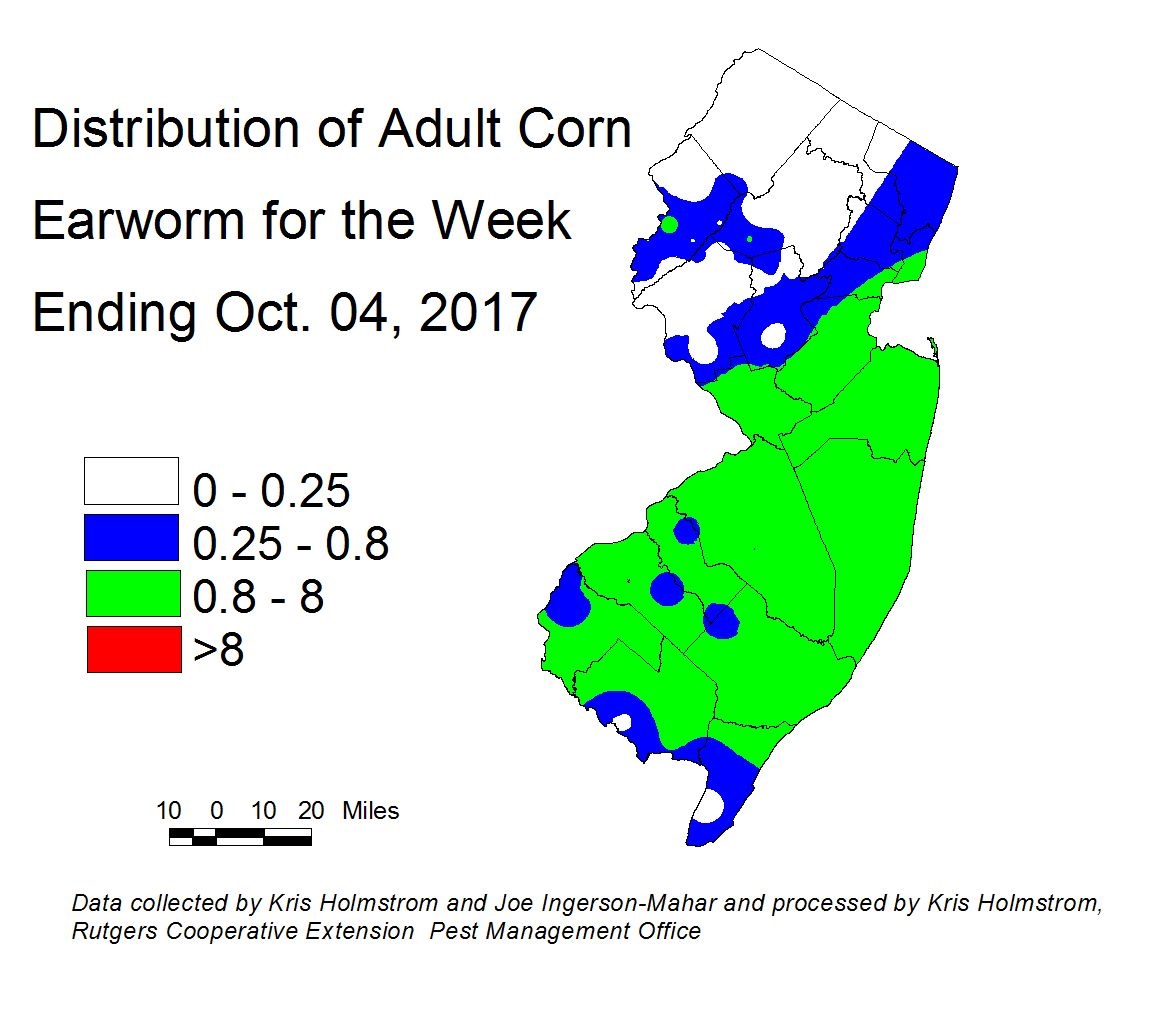
Corn earworm (CEW) moth catches declined dramatically over this past week with evening temperatures dropping into the high 40s in many locations (see CEW blacklight map at left).   In this map, areas in green roughly correspond to a 3-day schedule, while blue areas are in the 4-5 day range.  Blue points within larger green areas should be considered “outliers”, and the broader color scheme in any particular region is more representative of the population. The current situation may change with somewhat warmer night temperatures forecast toward the end of the week.  Should night temperatures begin to approach 60F or more, growers should consider treating remaining silks on a 3-4 rather than a 4-5 day schedule.   Be aware that synthetic pyrethroids have become less effective at managing ear infestations from this pest over the past several years.  For this reason, it is advisable to include products in the IRAC group 28 (Coragen, Besiege) or IRAC group 5 (Radiant, Entrust (OMRI approved)).

The highest nightly CEW blacklight trap catches are as follows:

Georgetown   5 Farmingdale   2 Chester   1
New Egypt   5 Allamuchy   1 Centerton   1
Crosswicks   3 Beckett   1 Eldora   1
Matawan   3 Belvidere   1 Eldora   1

[Read more…]

Veg IPM Update: Week Ending 9/27/17

Sweet Corn
European corn borer (ECB) catches have again fallen to levels too low to register a map image.  This pest is not much of a threat at this point, with most remaining plantings in silk.  ECB feeding in less mature NJ sweet corn plantings is nearly non-existent now.  Sprays for fall armyworm and corn earworm will manage any ECB larvae at this time.  [Read more…]

Veg IPM Update: Week Ending 9/20/17

Sweet Corn
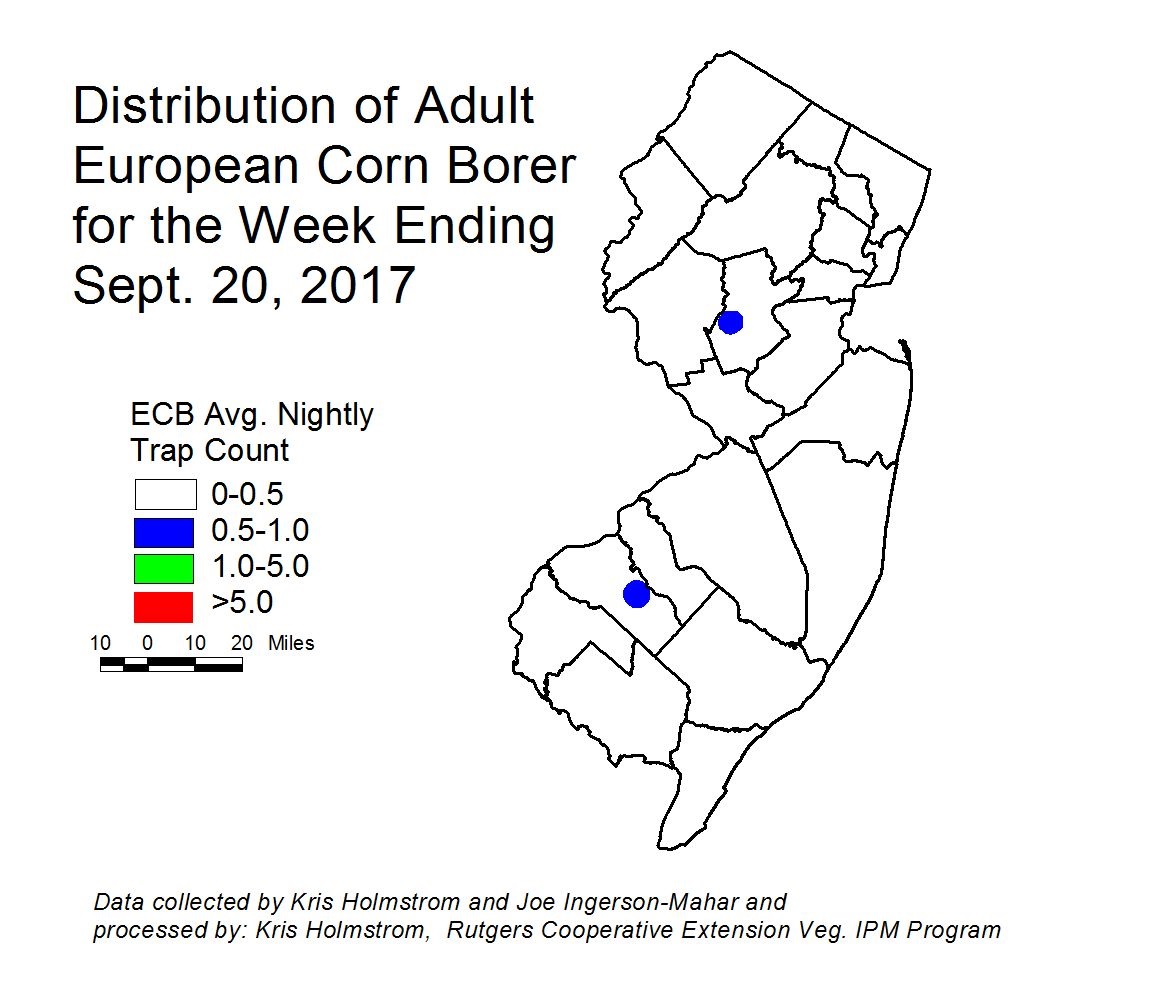
European corn borer (ECB) catches are still very low, but enough adults were caughted this week to register a map image.  This pest is not much of a threat at this point, with most remaining plantings in silk.  ECB feeding in less mature NJ sweet corn plantings is nearly non-existent now.  Sprays for fall armyworm and corn earworm will manage any ECB larvae at this time.  [Read more…]

Veg IPM Update: Week Ending 9/13/17

Sweet Corn
European corn borer (ECB) catches remain too low to register a map image.  This flight has been extremely low and very spotty.  ECB feeding in NJ sweet corn plantings is nearly non-existent now.  What remains has been overshadowed by fall armyworm (FAW) feeding.  Check 5 plants each in 10 random locations for a 50 plant sample.  Look  for “shot-hole” injury, and  consider treating when the number of infested (from ECB or FAW) plants in a 50 plant sample exceeds 12%.  Once plants hit full tassel, ECB larvae will move downward on the stalk and re-enter the plant near the area where ears are forming.  This can result in direct injury to the ear.  For growers who still have corn that has yet to silk, consider an insecticide application at the full tassel stage to target ECB larvae as they migrate downward.  This application can eliminate larvae that have escaped any earlier insecticide applications. [Read more…]