Search Results for: hornet

Vegetable IPM Update 9/04/24

Sweet Corn

Fall armyworm (FAW)  infestations have increased again, as per reports from south Jersey.  It seems as though there was an increase in adult numbers with warm weather last week, concurrent with an increase in corn earworm (see below) .  Re-infestations following treatment can and have occurred.    Because FAW moths are highly mobile, it is important to monitor fields at least weekly for signs of infestation.   Whorl, and even seedling stage plants are prime targets for egg laying.  Delays in treating whorl stage infestations can lead to stunted plants and poor ear size.
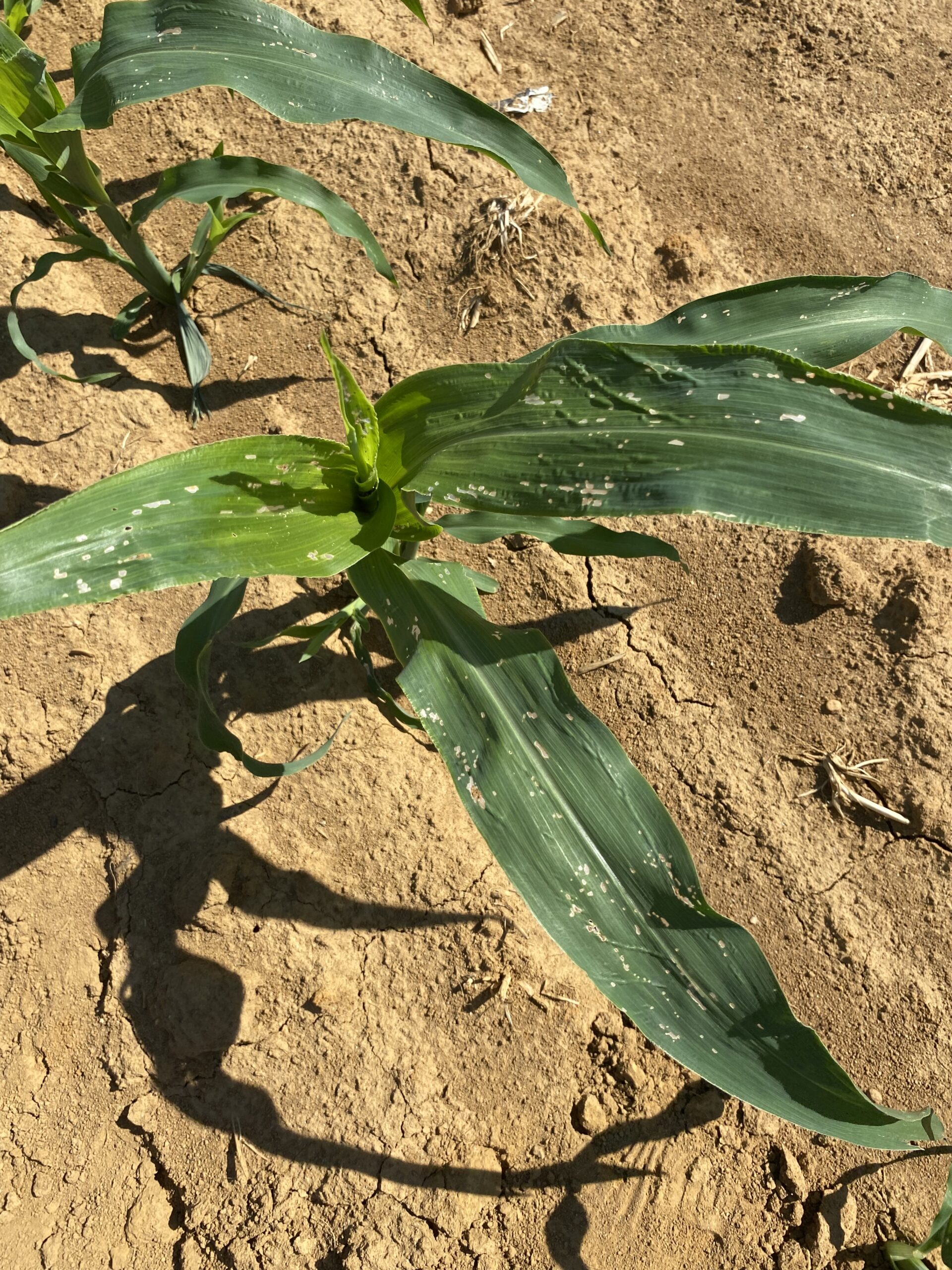
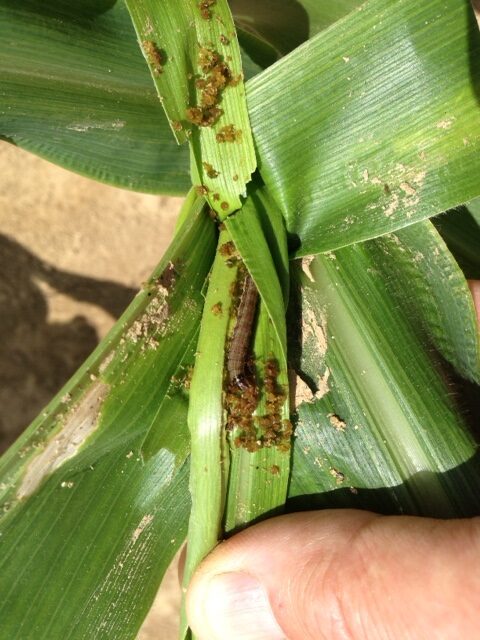
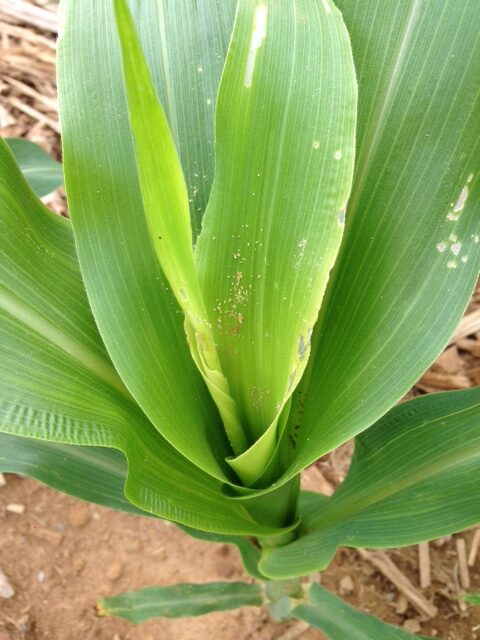
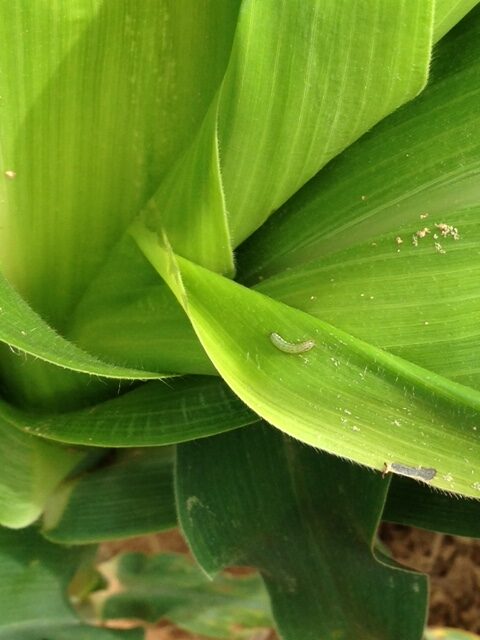
Newly hatched FAW larvae cause holes and scratches on leaves that are similar to ECB feeding, except that they tend to be more concentrated and always lead down into the whorl  (see photo at upper left).  As the larvae grow, the feeding becomes more destructive, with large ragged holes and obvious droppings deposited in the whorl (see photo at right)Infected plant


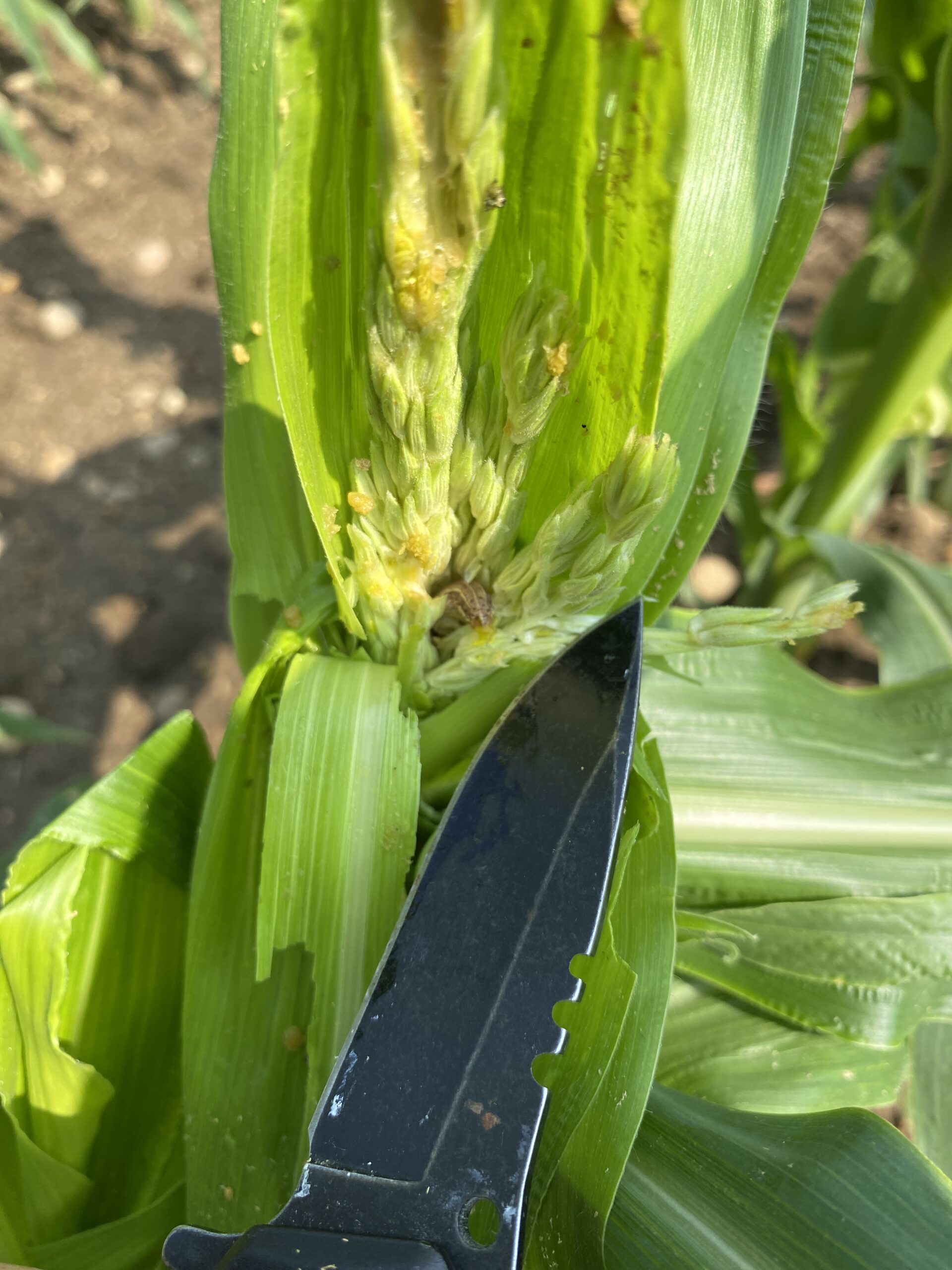
We will provide updates on new FAW appearances and severity as reports come in.  FAW are resistant to synthetic pyrethroids.  Effective sprays should include IRAC grp. 5 (spinosyns) or IRAC grp. 28 (diamides).  The carbamate (IRAC grp. 1A) Lannate is also still effective.  Sufficient water should be used in the applications to allow the solution to reach larvae that are partially protected while feeding on the immature tassel (photo at lower left), and to penetrate the layer of droppings that may have formed above the caterpillars.
[Read more…]

Vegetable IPM Update 8/28/24

Sweet Corn

Fall armyworm (FAW)  infestations continue in most scouted locations in central and northern NJ counties, although numbers are down.  Pockets of heavier pressure remain.  Re-infestations following treatment can and have occurred.    Because FAW moths are highly mobile, it is important to monitor fields at least weekly for signs of infestation.   Whorl, and even seedling stage plants are prime targets for egg laying.  Delays in treating whorl stage infestations can lead to stunted plants and poor ear size.

Newly hatched FAW larvae cause holes and scratches on leaves that are similar to ECB feeding, except that they tend to be more concentrated and always lead down into the whorl  (see photo at upper left).  As the larvae grow, the feeding becomes more destructive, with large ragged holes and obvious droppings deposited in the whorl (see photo at right)Infected plant


We will provide updates on new FAW appearances and severity as reports come in.  FAW are resistant to synthetic pyrethroids.  Effective sprays should include IRAC grp. 5 (spinosyns) or IRAC grp. 28 (diamides).  The carbamate (IRAC grp. 1A) Lannate is also still effective.  Sufficient water should be used in the applications to allow the solution to reach larvae that are partially protected while feeding on the immature tassel (photo at lower left), and to penetrate the layer of droppings that may have formed above the caterpillars.
[Read more…]

Vegetable IPM Update 9/13/23

Sweet Corn

Fall armyworm (FAW) infestations in whorl stage plantings in northern and central counties have dropped to very low levels.    This may not be the case in southern counties.  Growers are advised to check whorl and seedling stage corn plantings weekly for signs of FAW.  Consider treating if infestation rates exceed 10%.  This pest is capable of significant injury to sweet corn plants, resulting in severe stunting and failure to produce viable ears.  Note that growers of Attribute II type genetically engineered corn are unlikely to see damage from FAW.

Fall armyworm infected cornFall armyworm infected cornNewly hatched FAW larvae cause holes and scratches on leaves that are similar to European corn borer (ECB) feeding, except that they tend to be more concentrated and always lead down into the whorl  (see photos at left).  As the larvae grow, the feeding becomes more destructive, with large ragged holes and obvious droppings deposited in the whorl (see photo at right)Fall armyworm infected corn

We will provide updates on new FAW appearances and severity as reports come in.  FAW are resistant to synthetic pyrethroids.  Effective sprays should include IRAC grp. 5 (spinosyns) or IRAC grp. 28 (diamides).  The carbamate (IRAC grp. 1A) Lannate is also still effective.  Sufficient water should be used in the applications to allow the solution to penetrate the layer of droppings that may have formed above the caterpillar.


[Read more…]

Vegetable IPM Update 9/06/23

Sweet Corn

Fall armyworm (FAW) infestations in whorl stage plantings in northern and central counties have dropped to very low levels.    This may not be the case in southern counties.  Growers are advised to check whorl and seedling stage corn plantings weekly for signs of FAW.  Consider treating if infestation rates exceed 10%.  This pest is capable of significant injury to sweet corn plants, resulting in severe stunting and failure to produce viable ears.  Note that growers of Attribute II type genetically engineered corn are unlikely to see damage from FAW.

Fall armyworm infected plantFall armyworm infected plantNewly hatched FAW larvae cause holes and scratches on leaves that are similar to European corn borer (ECB) feeding, except that they tend to be more concentrated and always lead down into the whorl  (see photos at left).  As the larvae grow, the feeding becomes more destructive, with large ragged holes and obvious droppings deposited in the whorl (see photo at right)Fall armyworm infected plant

We will provide updates on new FAW appearances and severity as reports come in.  FAW are resistant to synthetic pyrethroids.  Effective sprays should include IRAC grp. 5 (spinosyns) or IRAC grp. 28 (diamides).  The carbamate (IRAC grp. 1A) Lannate is also still effective.  Sufficient water should be used in the applications to allow the solution to penetrate the layer of droppings that may have formed above the caterpillar.


[Read more…]

Vegetable IPM Update 8/30/23

Sweet Corn

Fall armyworm (FAW) infestations in whorl stage plantings remain a presence, although in many scouted fields in northern and central counties, the incidence of FAW has declined.  Re-infestation rates are fairly low, even in coastal areas.    This may not be the case in southern counties.  Growers are advised to check whorl and seedling stage corn plantings weekly for signs of FAW.  Consider treating if infestation rates exceed 10%.  This pest is capable of significant injury to sweet corn plants, resulting in severe stunting and failure to produce viable ears.  Note that growers of Attribute II type genetically engineered corn are unlikely to see damage from FAW.

Newly hatched FAW larvae cause holes and scratches on leaves that are similar to European corn borer (ECB) feeding, except that they tend to be more concentrated and always lead down into the whorl  (see photos at left).  As the larvae grow, the feeding becomes more destructive, with large ragged holes and obvious droppings deposited in the whorl (see photo at right)

We will provide updates on new FAW appearances and severity as reports come in.  FAW are resistant to synthetic pyrethroids.  Effective sprays should include IRAC grp. 5 (spinosyns) or IRAC grp. 28 (diamides).  The carbamate (IRAC grp. 1A) Lannate is also still effective.  Sufficient water should be used in the applications to allow the solution to penetrate the layer of droppings that may have formed above the caterpillar.


[Read more…]

Landscape Pest Notes: Some Late Summer Pests & Concerns

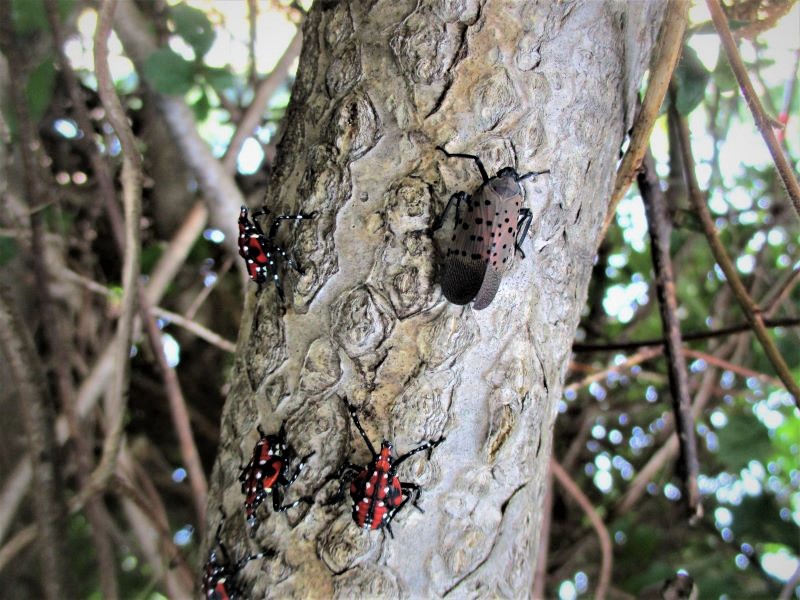
SPOTTED LANTERNFLY (Lycorma delicatula)(1st Flying Adults = 1700 GDD): There are still some red-colored 4th instar nymphs being observed but most areas of NJ are now seeing the adult stage of this invasive planthopper. Adult spotted lanternflies will initiate a migration period beginning in late August that will continue into the weeks of September. It is during this time that this insect will become a major nuisance in residential sites & also within more urban areas. Although spotted lanternfly adults are better hoppers than flyers, they are proficient gliders & are capable of traveling a few miles. Throughout these late weeks of summer, the insects are searching for ideal trees to feed on & then potentially lay overwintering egg masses.

Spotted lanternfly adult & 4th instar nymph

Spotted lanternfly adult & 4th instar nymphs. By late August, NJ will have these stages active. (Photo Credit: Steven K. Rettke, Rutgers Coop. Ext.)

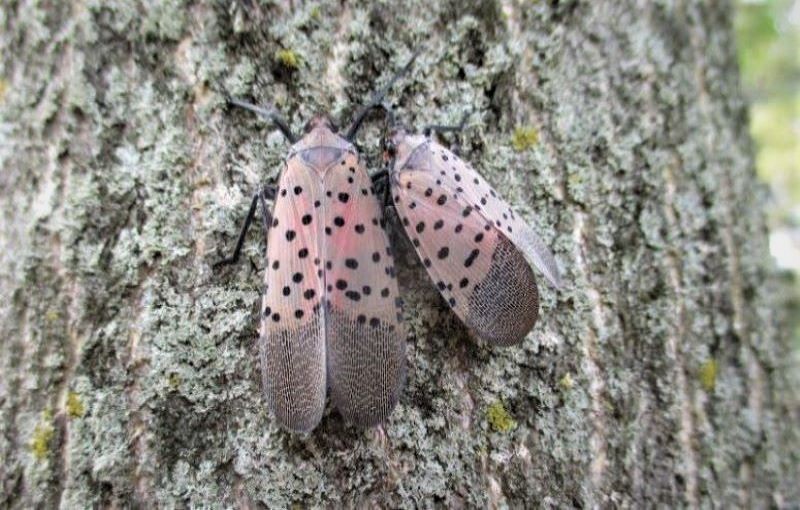
Adult female & male spotted lanternflies.

Adult female & male spotted lanternflies. Females will typically be 20% larger than males. They will pair-up & be side-by-side during the mating weeks of the fall. Sometimes an additional male or two will also be close by, “seeking the attention of the female.” (Photo Credit: Steven K. Rettke, Rutgers Coop. Ext.)


Some of the most common trees selected will include tree-of-heaven, red maple, black walnut, willow, birch, & grapes. Eggs Masses can potentially begin to be laid in mid-September, but the majority of adult females will not start egg-laying until the end of the month & will continue into the month of November. The majority of the egg masses are laid during October. With large deciduous trees, between 85-90% of eggs will be found above 10 feet off of the ground. Typically, they are laid in clusters underneath larger scaffold branches & at branch collars. Each female will usually lay two egg masses that contain 30-50 eggs each. Most adults will be killed with the onset of colder temperatures in late November. The NJ winters are rarely cold enough to kill the overwintering eggs.

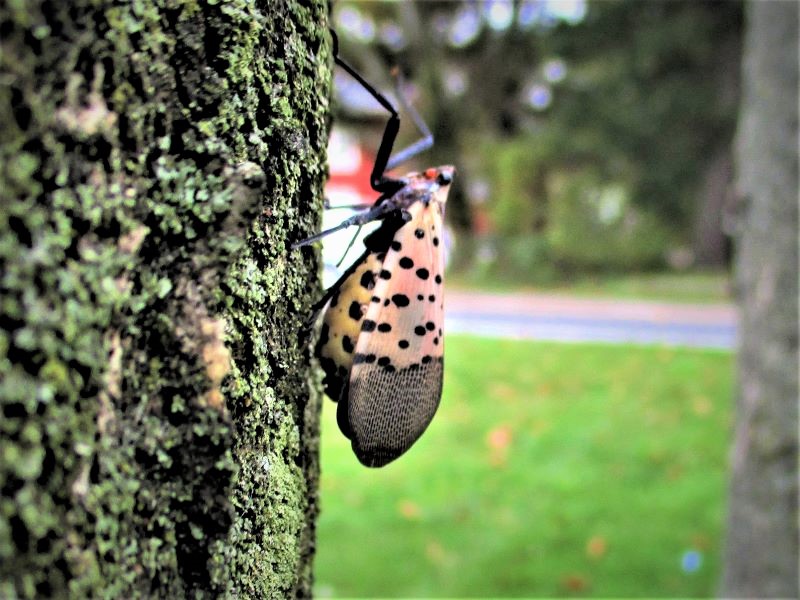
Spotted lanternfly gravid female. The enlarged yellow-colored abdomen indicates this female will soon begin to lay egg masses. (Photo Credit: Steven K. Rettke, Rutgers Coop. Ext.)

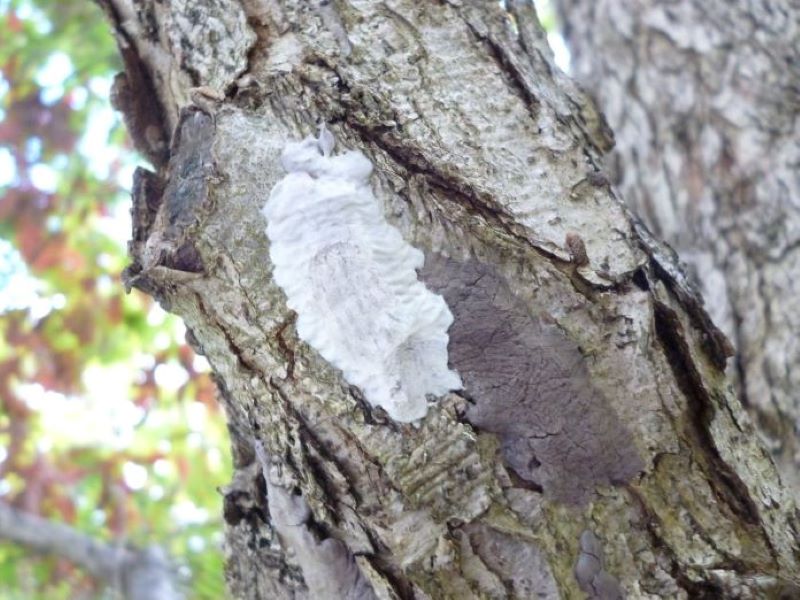
Spotted lanternfly egg masses

Spotted lanternfly egg masses. The white colored egg mass is only a few hours old. After less than a day the egg mass will turn a darker gray color & blend in with the bark of the tree. The masses contains 30-50 eggs each. (Photo Credit: Steven K. Rettke, Rutgers Coop. Ext.)


[Read more…]