Vegetable Crops Edition

Seasonal updates and alerts on insects, diseases, and weeds impacting vegetable crops. New Jersey Commercial Vegetable Production Recommendations updates between annual publication issues are included.
 
Subscriptions are available via EMAIL and RSS.
 
Quick Links:

NJ Commercial Vegetable Production Recommendations

Rutgers Weather Forecasting - Meteorological Information important to commercial agriculture.

Got humidity? Get rid of it!

Unfortunately, closed greenhouses retain heat and humidity which can spell problems if left unchecked.

Remember, high relative humidity equals wet leaves which favor the development of fungal diseases such as Botrytis or bacterial diseases such as bacterial leaf spot. To avoid potential problems, do your best to vent out as much humidity as possible in the late afternoon and/or early morning. Turn on circular fans to promote air movement and finish watering earlier enough in the day so leaves have enough time to dry out before nightfall.

As a side note, stressed transplants where water and/or fertility have been withheld are also more prone to disease development. A light fertilizer application may go a long way in improving transplant health before setting in the field.

Please see Table E-14 and pages E52-E54 of the 2016-2017 Commercial Vegetable Recommendations Guide for a list of control options.

Wet Weather Ripe for Strawberry Fruit Rots

Anthracnose fruit rot of strawberry

Anthracnose Fruit Rot of Strawberry

Fruit rots in strawberry can cause significant losses if not recognized early and controlled. The use of good cultural practices such as: keeping fields weed-free and promoting good drainage; long crop rotations, and preventative fungicide applications are critical.

Pathogens such as anthracnose, gray mold (Botrytis), and leather rot can become systemic problems in strawberry plantings once established. All three fungal diseases are soil-borne and once in fields can be difficult to manage over the lifetime of the planting.

For growers new to strawberry production and/or those just looking for valuable resource(s), please visit Cornell University’s strawberry production website here. An Organic Strawberry Production Guide is also available.

The use of mulch (matted rows) to prevent/reduce soil splashing and keeping fruit from coming into direct contact with the soil surface can be beneficial in organic production systems where conventional fungicides cannot be used. Use of long crop rotations and staying away from areas of the farm with known instances of any of these pathogens is also important. Remember that same species of Colletotrichum that causes fruit rot in pepper and other crops can also infect strawberry.

[Read more…]

Veg IPM Update: Week Ending 5/3/16

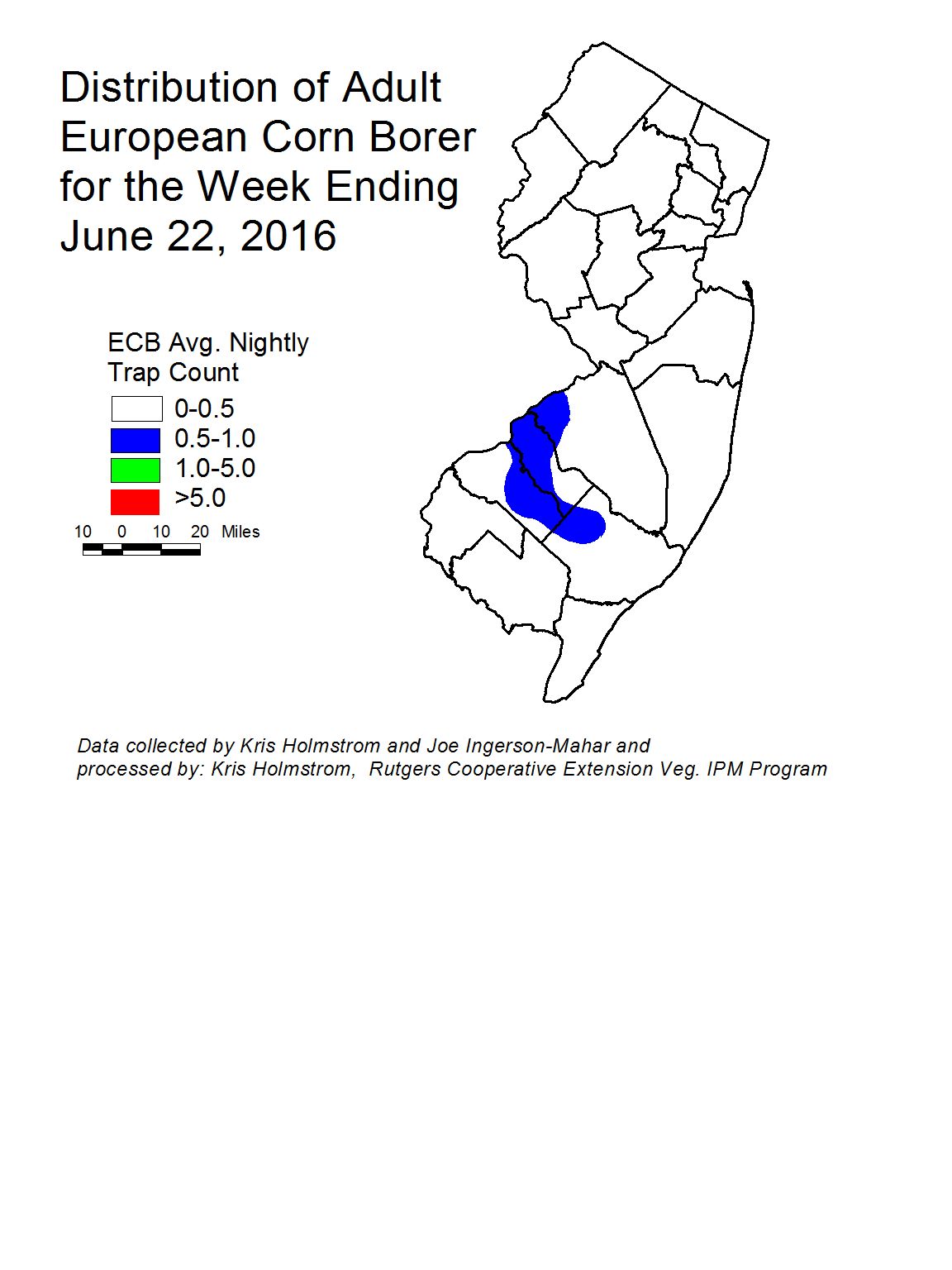
Note: The black light trap network has been deployed and is being monitored by IPM Program personnel. The corn earworm (CEW) pheromone trap network is not yet deployed. As adult European corn borer (ECB) and CEW begin to arrive in traps, population maps of these pests will be published in the Plant and Pest Advisory on a weekly basis. Additionally, maps of the brown marmorated stink bug (BMSB) will also appear in this publication. As the CEW pheromone traps in southern NJ begin to register catches, maps of these pest captures will also be published.

Cole Crops

Last week’s warm, sunny days, resulted in some infestations of crucifer flea beetle. Current cold, wet conditions are less favorable for flea beetle activity. These beetles can build to high populations quickly, especially where wild mustard and related cruciferous weeds are common. Mustard greens, radishes, arugula and Tuscan kale are favored hosts. Extreme feeding on small transplants can cause irreversible damage if not controlled promptly.

While flea beetles may be controlled with foliar applied insecticides, it is possible to get 2-3 weeks of protection by using a soil applied systemic insecticide at planting. This insures good establishment of the transplants without significant flea beetle injury.

Soil applied materials include [active ingredient – trade name (IRAC* code)]:
Clothianidin – Belay (4A)
Cyantranilaprole – Verimark (28)
Dinotefuran – Scorpion/Venom (4A)
Imidacloprid – Admire Pro (4A)

 
As yet, no imported cabbage worm or diamondback moth larvae have been detected in new field plantings. As these pests appear, identification, scouting procedures and control measures will be outlined in the update.

On-Farm Food Safety:
The Difference Between an Audit & an Inspection

Over the last 15 years we have talked about third party audits to verify your food safety plan. Now you are hearing about inspections.
What is the difference?

Audits

Audits are voluntary evaluations that growers are doing at the request of their buyers. Some growers may not think that audits are voluntary since some growers have been told if they did not have one, a specific buyer would not purchase their produce. That is true, but you still had the choice to sell to someone else if you did not want to go through the audit process. The audit was verifying what you said you were doing for food safety.

Inspections

The Food Safety Modernization Act (FSMA) has added the inspection component to food safety. The final FSMA rule went into effect January 2016. As FSMA is implemented over the next two to four years, growers will hear more about inspections and how it may impact their operations. The Food and Drug Administration (FDA) now has more authority for fresh produce which adds another layer of compliance for growers. Inspections will be done by a government entity with specific requirements and implies some type of enforcement in the future. FDA is not in any hurry to start an enforcement program. They have made it clear that education is the first priority, but in reality sometime in the future there will be enforcement. Who will do the inspections is still being decided between FDA and the different states. In New Jersey, the New Jersey Department of Agriculture will probably be the lead agency as it relates to farms and on farm packinghouses.

Coping with New Rules: On-Farm Readiness Review

There is a group of extension personnel from Florida, Michigan, New Jersey and North Carolina working with the National Association State Departments of Agriculture on a grant from the FDA to develop an On Farm Readiness Review. This will be a self-assessment tool for growers, extension personnel and inspectors to help everyone when a farm is inspected. The plan is to have the final version available next year.

Growers will receive training over the next year to help comply with the Produce Rule in FSMA. The good news is growers who have been through a third party audit already meet or exceed most requirements for FSMA. Water testing is the one area where there are differences, but the training will help clarify those differences.

[Read more…]

Allium Leafminer, a New Invasive Pest

Allium leafminer, a leafmining fly, was found about two weeks ago in Lancaster County, Pennsylvania. Since then the leafminer, which feeds on onions and related plants, has been found in four more counties in eastern Pennsylvania; Dauphin, Delaware, Chester, and Lehigh.  This is the first time that this fly has been found in the western hemisphere.  It belongs to the family Agromyzidae, which has many leafmining species.

Weakened leaves caused by larvae of allium leafminer

Weakened leaves caused by larvae of allium leafminer. Photo by L. Donovall

The allium leafminer feeds on plants belonging to the onion group, including, leeks, onion, chives, shallot, green onion and garlic. The adult flies are cold tolerant and emerge in late February and March when the female, after mating, will lay eggs in the leaves of the host plant.  Upon hatching the larvae (maggots) will tunnel in the leaves eventually entering the bulb.  Reaching maturity the larvae will pupate as brown capsules between the leaves, in the bulb, or in the soil nearby.  They will go into a summer diapause with adult flies emerging in September and October to lay eggs.  The second generation larvae will mine leaves and pupate until time for adult emergence in the following February.
[Read more…]

Vegetable Disease Briefs – 5/1/16

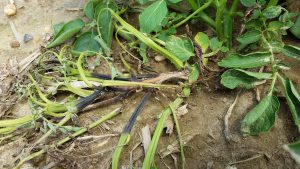
  • Dickeya sp., an aggressive form of Black leg, has been confirmed on potato in New Jersey in 2016. Symptoms of Dickeya infection look similar to Black leg infection and can cause significant rot above ground (stems and foliage) and below ground (tubers). All potato growers should scout on a regular basis and report any suspect plants or fields.
  • There have been no new reports of cucurbit downy mildew.
  • With the cool, prolonged wet weather, basil downy mildew may become active in greenhouses or high tunnels that have been closed up to retain heat. Appropriate venting to keep relative humidity low and leaf wetness to a minimum is critically important to keep the pathogen from sporulating and spreading rapidly.