Christmas Trees Edition
EMAIL | RSS
Seasonal pest alerts and news about insects, diseases, and weeds impacting Christmas Tree production including Commercial Ag Updates (meetings and marketing); and Pesticide Program updates from the Rutgers Pest Management Office News Blog.
Companion Website Links:
 Rutgers Weather Forecasting - Meteorological Information important to commercial agriculture.
Pesticide Product Management Practices, Proper Disposal Methods, and Container Recycling Options for NJ Farms
Notice of Public Hearing on SADC Rule Proposal Establishing Soil Protection Standards on Preserved Farmland
Proposed rules: PRN_2023-079_SADC_2_76-25
Original Notification of Public Hearing: Notice of public hearing SPS rule proposal
Important information:
DATE: September 27, 2023
TIME: 6:00 p.m. to 9:00 p.m
LOCATION: TEAMS Virtual Meeting
To join the hearing via computer: Click here to join the meeting
To join the hearing via phone: Call (856)338-7074
Conference ID: 268 371 32#
Meeting Link and Call-In information is also available on the SADC website at https://www.nj.gov/agriculture/sadc/
NOTE: If you wish to provide oral testimony at the virtual public hearing, you must
register with the SADC no later than 5:00 p.m. Monday, September 25, 2023. Participants
may register by emailing Jessica.uttal@ag.nj.gov or calling her at (609) 913-6567.
From original notice:
STATE AGRICULTURE DEVELOPMENT COMMITTEE
Notice of Public Hearing on SADC Rule Proposal Establishing Soil Protection Standards
on Preserved Farmland
Proposal of new rules, N.J.A.C. 2:76-25, Soil Disturbance on Preserved Farmland; N.J.A.C.
2:76-25A, Supplemental Soil Disturbance Standards
PUBLIC NOTICE
Take notice that the New Jersey State Agriculture Development Committee (SADC) is holding
a virtual public hearing for the proposed new rules defining what activities on preserved
farmland constitute soil disturbance, establishing a soil disturbance limitation on preserved
farms, allowing for waivers of the soil disturbance limit under certain conditions, providing
preserved farm landowners written notice of and an opportunity to be heard on mapped soil
disturbances, and promulgating technical standards for certain agricultural practices for
compliance with the soil disturbance limitation.
The notice of proposal was published in the New Jersey Register on August 7, 2023, at 55
N.J.R. 8(1).
The SADC will be holding a virtual public hearing on Wednesday, September 27, 2023 at
6:00 p.m. through the SADC’s video conferencing software (Microsoft TEAMS).
Registration: If you wish to provide oral testimony at the virtual public hearing, you must
register with the SADC no later than 5:00 p.m. Monday, September 25, 2023. Participants
may register by emailing Jessica.uttal@ag.nj.gov or calling her at (609) 913-6567. Please
provide your name, organization, telephone number, and email address. A verbal or written
confirmation will be provided of your interest to testify at the hearing.
Please note that the SADC will take oral testimony at the hearing by alphabetical order of the
testifying person’s last name, and that this hearing will be recorded.
DATE: September 27, 2023
TIME: 6:00 p.m. to 9:00 pm
LOCATION: TEAMS Virtual Meeting
To join the hearing via computer: Click here to join the meeting
To join the hearing via phone: Call (856)338-7074
Conference ID: 268 371 32#
Meeting Link and Call-In information is also available on the SADC website at https://www.nj.gov/agriculture/sadc/
The SADC is also accepting written and/or electronic comments on the proposed rule
through October 6, 2023. Please submit electronic comments to SADC@ag.state.nj.us. In
the alternative, comments may be submitted on paper to:
Susan E. Payne, Executive Director
State Agriculture Development Committee
P.O. Box 330
Trenton, NJ 08625-0330
Please refer to the original notice of proposal for detailed information regarding the proposed
rules.
DCPA (Dacthal) Technical Herbicide Product Suspended by EPA
Snyder Farm Twilight Tour & Meeting, Wed. August 23, 2023
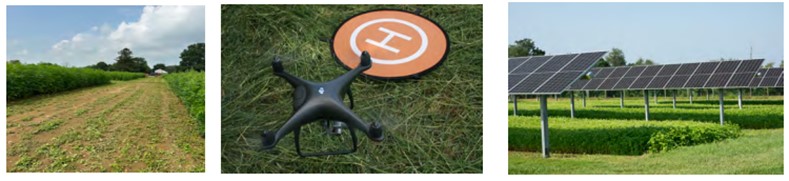
Twilight Tour and Meeting*
Fiber Hemp Production
Drones in Agriculture
Agrivoltaics Research
Date/Time:
Wednesday, August 23, 2023
6:00 – 8:00 PM
Location:
Snyder Research and Extension Farm
140 Locust Grove Rd.
Pittstown, NJ 08867
This program is offered to assist producers, and anyone interested in learning more about Fiber Hemp Production and current Agrivoltaics research in NJ.
Topics Include:
- Tour of Rutgers Fiber Hemp Plots
See what the hemp is going on with production and management. Is hemp viable in NJ? - Drone sprayers and ground driven sprayers in agriculture
Learn how drones can be used in agricultural production. Learn the requirements for applying pesticides using drones. - Tour of Rutgers Agrivoltaics Research Plot
Learn about current and planned agrivoltaics research at Rutgers. Are agriculture and solar energy production compatible?
For more information contact: RCE, Sussex County 973-948-3040
*Pesticide credits pending
Soil Fertility from Non-Commercial Nutrient Sources
All essential plant nutrients cycle through the ecosystem of soil, water, air, plant, microbe, and animal. Agronomic information about the composition and beneficial use of waste materials and how the nutrients can be recycled can help growers reduce the need to purchase soil fertility inputs. Many different types of non-commercial nutrient sources are available in New Jersey. Examples include horse manure with bedding, shade tree leaves, lawn clippings, wood chips, food waste, coffee grounds, eggshells, wood ash and more.
With 43,000 horses in New Jersey, there is an abundance of horse manure produced. One horse can produce about 65 pounds of manure plus bedding per day. The quantity of horse manure is substantial on a statewide basis. Unfortunately, sometimes horse manure goes to landfills when it should be used to build and sustain soil fertility.
The Soil Profile Newsletter 2023 issue posted at Rutgers NJAES explains how to build and maintain soil fertility harnessing the nutrient supplying ability of horse manure and many other types of non-commercial materials. The chemical composition and soil fertility value of each material is presented for beneficial use. Available on the web at Rutgers NJAES ‘The Soil Profile’: https://njaes.rutgers.edu/soil-profile/pdfs/sp-v28.pdf
