Andy Wyenandt

This is an archive of Dr. Wyenandt's posts on the Plant and Pest Advisory.

Phytophthora and Pythium control during wet weather

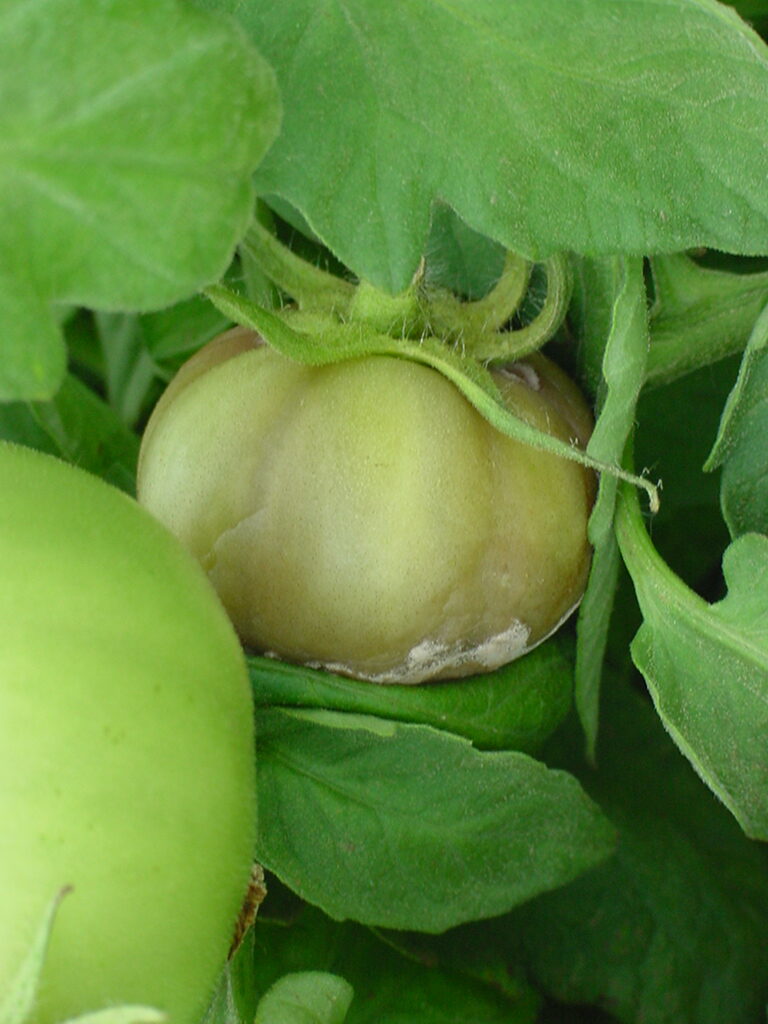
Most of New Jersey has been wet making current conditions ideal for pathogens such as Phytophthora and Pythium. Unfortunately, Pythium cottony leak and Phytophthora blight can be found on most farms in the southern part of the state. Poor crop rotations with susceptible hosts only make matters worse. The Phytophthora pathogen has an increasing host range that now includes snap and lima beans; and all crops, other than a few resistant bell pepper cultivars, lack any resistance to the pathogen. Under ideal conditions (hot, humid, and wet) Pythium cottony leak can develop on infected fruit.

[Read more…]

Understanding and controlling angular leaf spot in strawberries

Often considered a minor pathogen, angular leaf spot caused by the bacterium, Xanthomonas fragariae, can cause serious leaf and calyx infections ruining the marketability of fruit if left uncontrolled. [Read more…]

Identifying and controlling common leaf spot in strawberry

Strawberry leaf spot, caused by the soil-borne fungal pathogen, Mycosphaerella fragariae, can infect leaves, petioles, runners, fruit stalks (pedicels), and berry caps or calyxes. Small, dark purple to reddish-purple, round spots, 1/8 to 1/4 inch in diameter (3 to 6 millimeters), appear on the upper leaf surfaces. The center of the spots soon become tan or gray and eventually almost white, while the broad margins remain dark purple. Later in the season, dark specks (sclerotia and/or perithecia) may be seen in the older lesions. Tannish areas form on the undersides of infected leaves. The symptoms on the other plant parts, except the fruit, are almost identical to those that develop on the upper leaf surface. [Read more…]

NEWA Disease and Insect Forecasting System

Since 2011 the vegetable working group has teamed up with Cornell University’s NEWA to bring tomato and potato late blight and early blight forecasting to vegetable growers throughout New Jersey. Over 50 weather stations from Sussex to Cape May County now offer disease as well as insect forecasting services for numerous important pests. [Read more…]

Identifying and controlling Botrytis in high tunnel and greenhouse tomato production

Botrytis, or gray mold, caused by the fungus, Botrytis cinerea, can cause significant losses in high tunnel and greenhouse tomato production if not controlled properly. The pathogen can rapidly spread during periods when structures are closed and when relative humidity remains high for long periods of time. This often occurs when outside weather remains cool and damp while heating is needed. Gray mold is favored by temperatures from 64° to 75°F and requires only high humidity (not leaf wetness) to become established. The pathogen has a large host range and once established in an enclosed structure it can be very difficult to control (UMASS). The fungus can survive/overwinter as mycelia or sclerotia in plant debris and in organic soil matter (NCSU).

[Read more…]

Diagnosing Important Diseases In Tomato – Reference Guide

The following images consist of important diseases in tomato. These images can be used as a quick reference for diagnosing important fungal and bacterial pathogens. For best results, please turn your device (i.e., cell phone) sideways. For information on commercial control recommendations, please visit the tomato section of the 2022/2023 Mid-Atlantic Commercial Vegetable Production Guide. Additional information for home gardeners is located at the bottom of the Table.

Early blight Septoria leaf spot Anthracnose fruit rot
Early blight on tomato
Early blight lesion on fruit Ground rot infected green fruit Ground rot sporulating on fruit
Bacterial leaf spot Bacterial canker Bacterial speck
White mold Southern blight Late blight on foliage
White mold sclerotia in infected stem Southern blight sclerotia on infected stem Late blight infected fruit
Collar Rot caused by Alternaria spp.

For the homeowner or non-commercial grower there are a number of Rutgers/NJAES Fact Sheets available on-line:

Rutgers University/NJAES Fact Sheet (FS547) ‘Diagnosing and controlling important fungal pathogens of tomato in the home garden‘.

Rutgers University/NJAES Fact Sheet (FS548) ‘Diagnosing and controlling Phytophthora blight in the home garden’.

Rutgers University/NJAES Fact Sheet (FS1124) ‘Vegetable disease control recommendations for the home garden’.

For other Rutgers University/NJAES Fact Sheets for tomato please click here.