Veg IPM Update: Week Ending 6/17/15

Sweet Corn

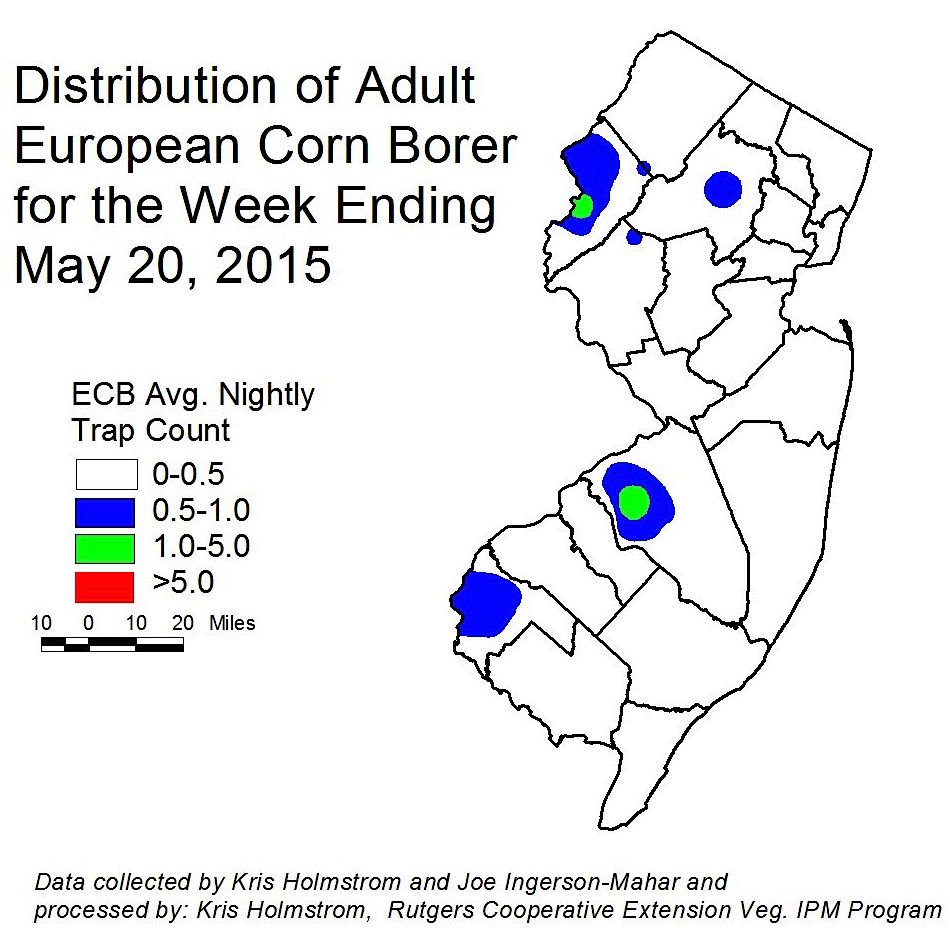
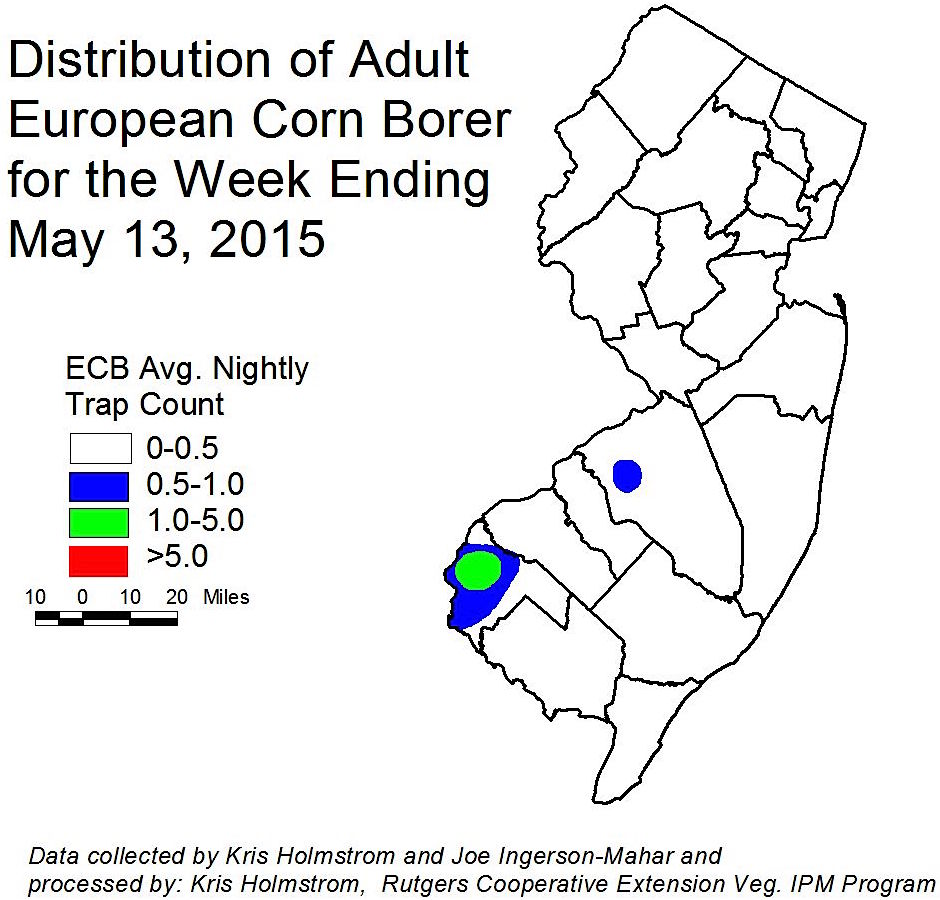
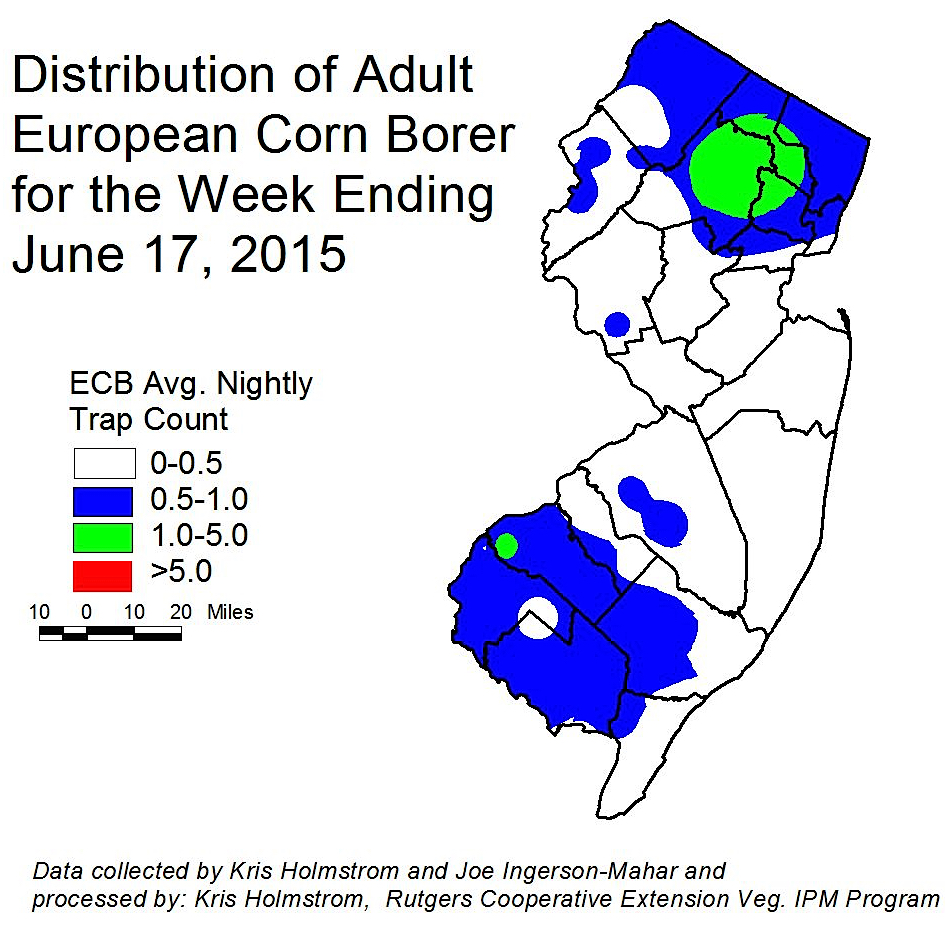
ECB 6-17-15

Click to View

Warmer evening temperatures have resulted in a slight resurgence of European corn borer (ECB) adults in the blacklight network. A residual first generation population remains in northern NJ, while the activity in the southwestern part of the state may represent the beginning of a second flight. The nature of the southern NJ activity should become clear over the next 1-2 weeks. Areas of highest activity include parts of Morris and Gloucester counties (see ECB map). ECB infestations continue to rise in sweet corn plantings. Feeding ranges from single digits to over 50% in areas where IPM personnel are operating.
[Read more…]
Veg IPM Update: Week Ending 6/10/15

Click to View

Click to View

Sweet Corn

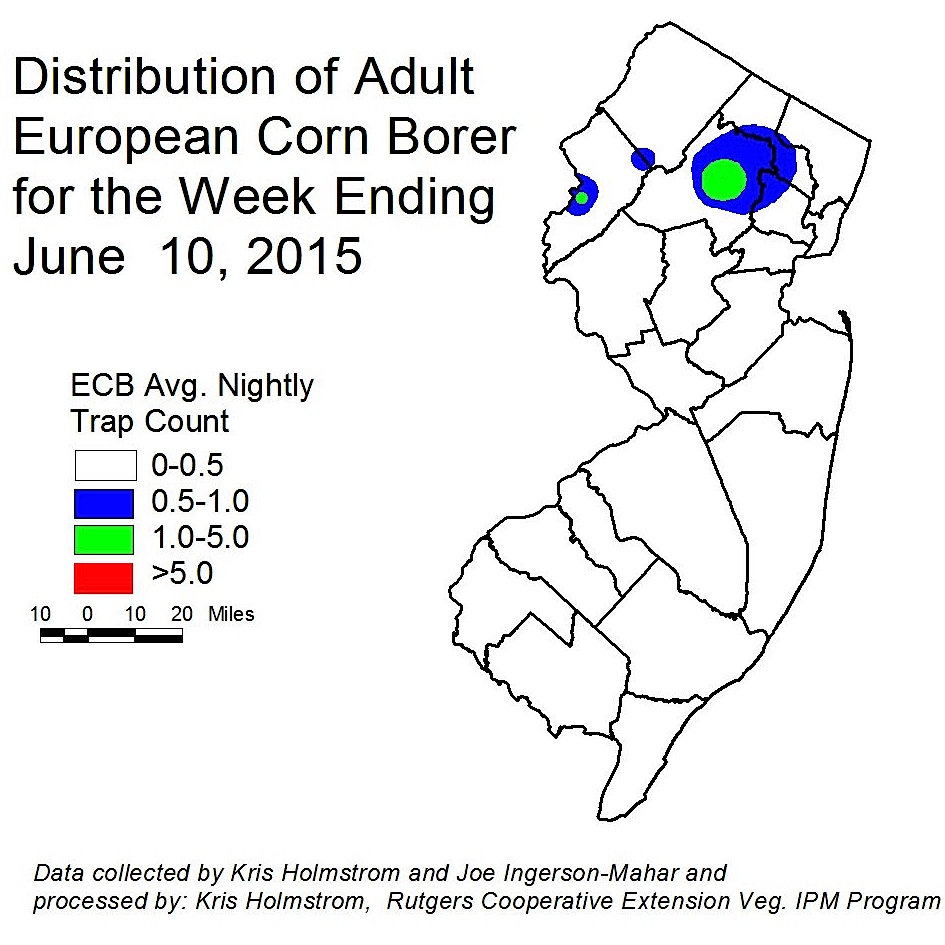
Catches of European corn borer (ECB) are now in decline through much of the state. Remaining areas of highest activity include parts of Morris and Warren counties (see ECB map).

ECB infestations are now rising in sweet corn plantings. Feeding ranges from single digits to 12% in areas where IPM personnel are operating.

[Read more…]
Veg IPM Update: Week Ending 6/3/15

Sweet Corn

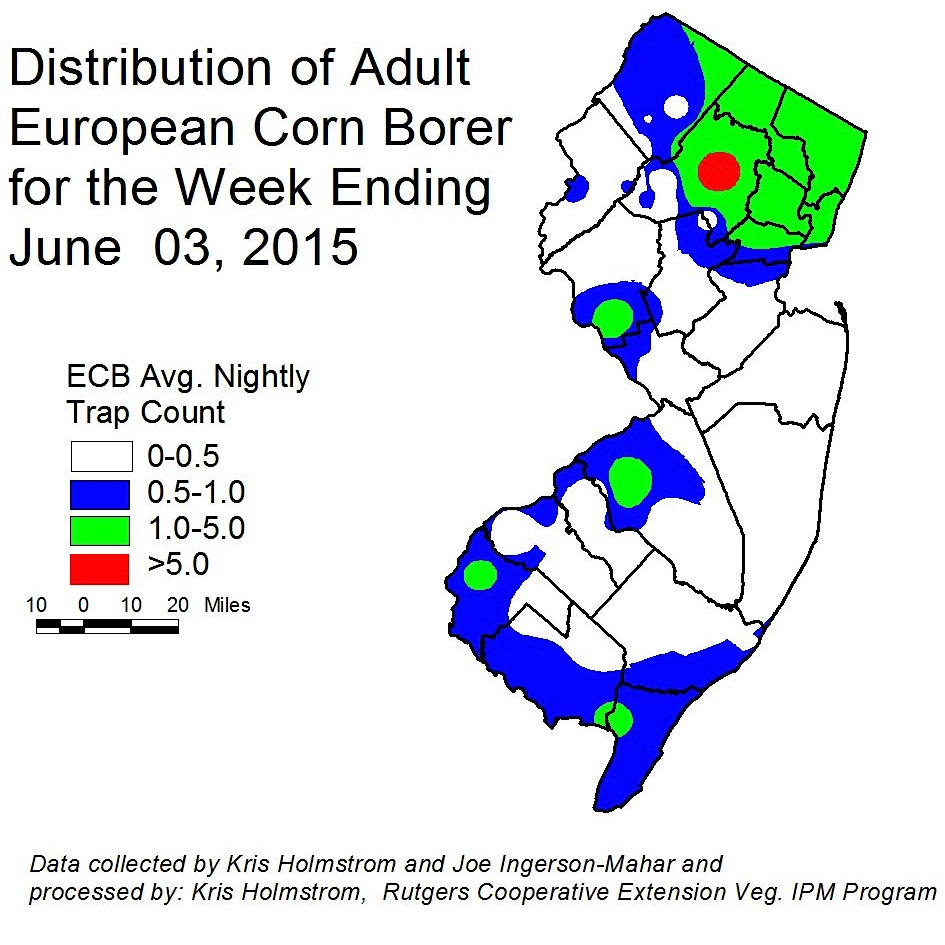
ecb06032015Cold temperatures and rain this week have prevented catches of European corn borer (ECB) from rising, and much of the activity represented in the map occurred over the weekend. Areas of highest activity include parts of Hunterdon, Morris and Burlington counties (see ECB map). Low level ECB infestations are present in early sweet corn plantings, and will become more significant with the return of drier weather.
[Read more…]

Veg IPM Update: Week Ending 5/27/15

Sweet Corn

European corn borer map  May 27, 2015

European corn borer map
May 27, 2015

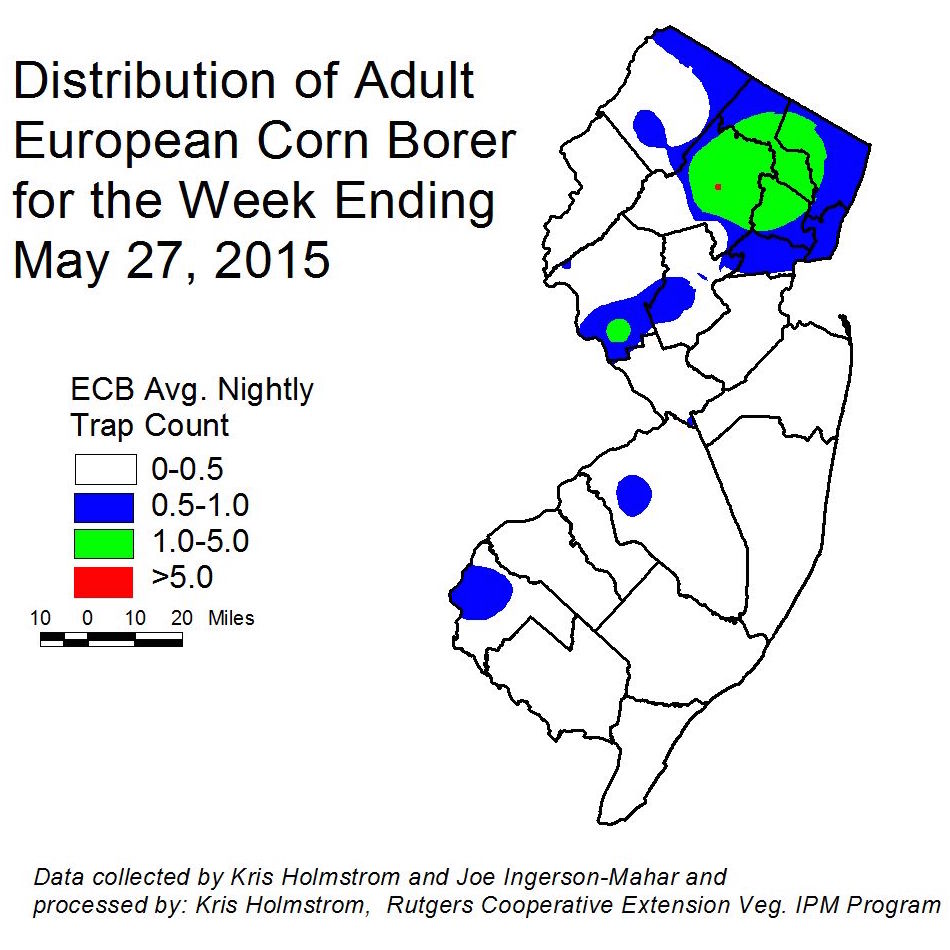
European corn borer (ECB) adults are being captured with increasing frequency now. Areas of highest activity now include parts of Hunterdon and Morris counties (see ECB map). Within the past 3 days, IPM personnel have found low level ECB infestations in some of the earliest sweet corn plantings. At present, reports of feeding are from Ocean and Somerset counties, however it is likely that feeding is occurring in many early plantings to the south.
[Read more…]

Veg IPM Update: Week Ending 5/20/15

Sweet Corn

Click to View

Click to View

European corn borer (ECB) adults are being captured with increasing frequency now. At the present, areas of highest activity include Burlington and Warren counties (see ECB map). Cooler nights for later this week may suppress catches for the next several days.

Most early sweet corn plantings are too young to support ECB larval infestations. However, over the next two weeks we should begin to see feeding in the most advanced plantings. Be sure to begin monitoring the earliest plantings for ECB feeding while they are still in the whorl stage. For detailed information see:


The highest nightly ECB catches for the previous week are as follows:
Belvidere 2 Allamuchy 1 Port Colden 1
Blairstown 2 Califon 1 Sergeantsville 1
Denville 2 Centerton 1 Tabernacle 1
Medford 2 Pedricktown 1 Woodstown 1

[Read more…]

Veg IPM Update: Week Ending 5/13/15

Sweet Corn

ECB-5-13-2015

ECB May 13, 2015
Click to View

The black light trap network has been deployed and is being monitored by IPM Program personnel. The corn earworm (CEW) pheromone trap network is currently being deployed. As adult European corn borer (ECB) and CEW begin to arrive in traps, population maps of these pests will be published in the Plant and Pest Advisory on a weekly basis. Additionally, maps of the brown marmorated stink bug (BMSB) will also appear in this publication.

A few European corn borer (ECB) adults have been captured in New Jersey over the past week. At this time, the highest number of moths captured has been from Salem County (see ECB map). As warmer weather becomes consistent, catches should increase across the state. Night time temperatures in the low 50°F range or lower will cause catches to develop more slowly. Larval infestations should not occur for some time yet. We will first see a significant increase in the number of traps registering catches. [Read more…]