Archives for May 2014

Cereal Leaf Beetle in Wheat

clbI was out scouting some wheat fields in Burlington County today.  In general the fields looked in good shape and there were no major concerns.

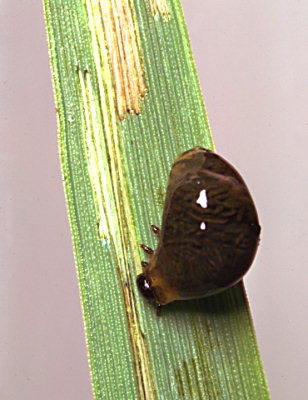
I did see some rather low numbers of cereal leaf beetle larvae in one field. The larva numbers were well below threshold. We need to keep an eye on fields for larval damage, especially when we are in the flag leaf stage. Most growers are familiar with walking through a wheat field and getting little black dots across their pants. Those little black dots are from the larvae of the cereal leaf beetle. The larvae will eat long strips of green tissue between the leaf veins and give the plant a skeletonized appearance. Yield reductions of 10 to 20 % are not uncommon in infested fields. Scouting and control information can be found in the Mid Atlantic Pest Management Guide for Field Crops (EB No. 237).
Copper Bactericides for Peach Bacterial Spot Management

Fruit Infection

Effective management of bacterial spot on peach and nectarine necessitates application of bactericides during the post-bloom cover spray period. Early fruit infections during the first two to three weeks of this period generally result in large, deeply pitted blackened lesions that often ooze with sap. Later season fruit lesions are less pitted and much more shallow, but can be numerous, particularly on highly susceptible cultivars. Either way, considerable yield loss can occur on susceptible cultivars when the environment is favorable and/or inoculum levels are high. [Read more…]

Veg IPM Update: Week Ending 5/14/14

Vegetable IPM Report 5-14-14 – Click to View | Download | Print

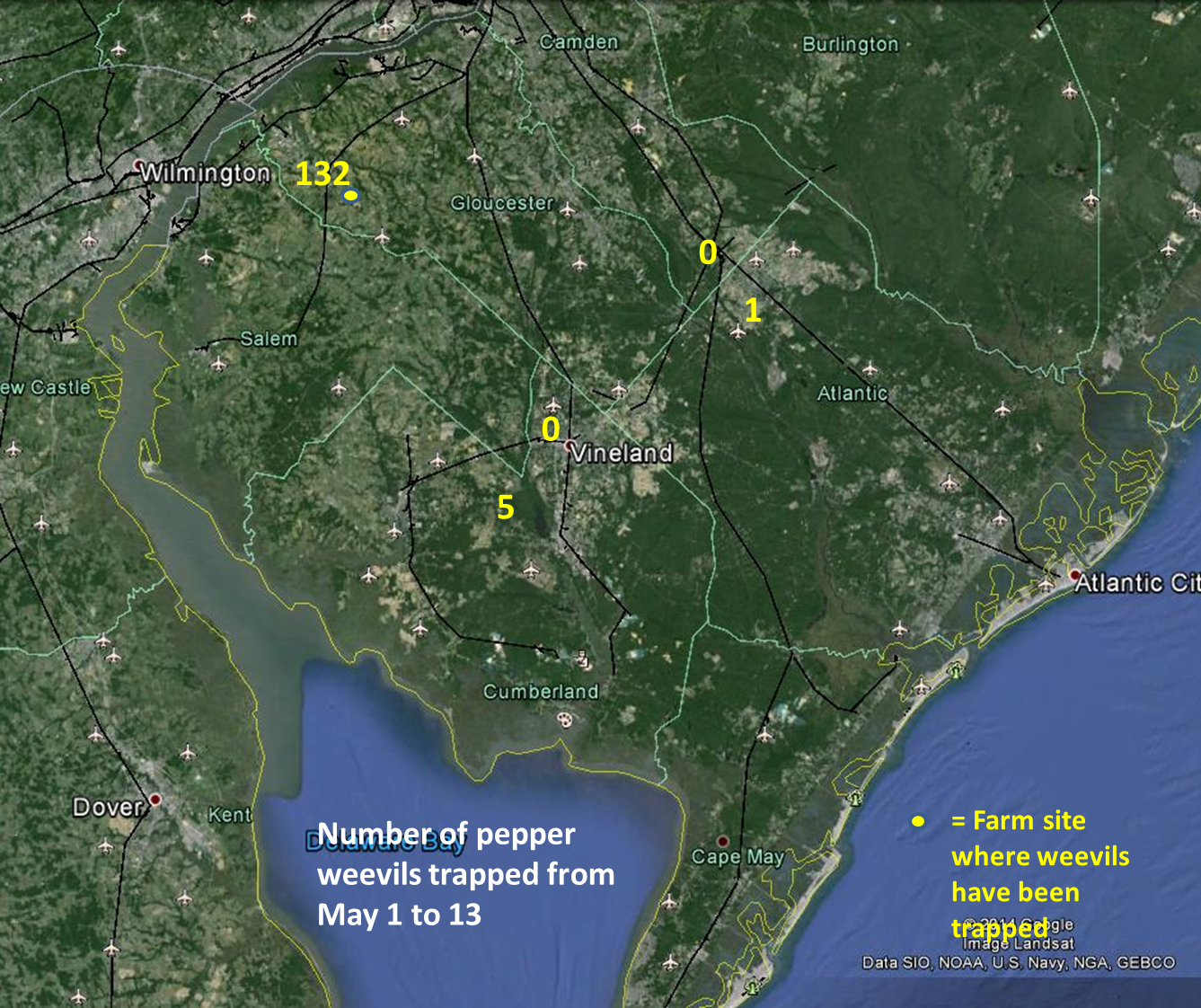
Map Pepper Weevil May1-13Maps for the Week
Pepper Weevil Trap Catch Map
European Corn Borer Population Map

Topics for the Week

  • Sweet Corn
  • Cole Crops
  • BMSB
  • Pepper Weevil Update

[Read more…]

Potato Disease Forecasting Report 5-13-14

Potato Disease Forecasting Report 5-13-14 – Click to Download

We will be tracking DSVs for Late blight development and calculating P-days for initiating the first early blight fungicide application.

The first late blight fungicide application is recommended once 18 DSVs accumulate from green row. Green row typically occurs around the first week in May in southern New Jersey. An early season application of a protectant fungicide such as mancozeb (Dithane, Manzate, Penncozeb) or Bravo (chlorothalonil) as soon the field is accessible is suggested. Please be vigilant and keep a look out for suspect late blight infections on young plants. No late blight has been reported in our region to date.

Remember the threshold for P-days is 300!  Once 300 P-days is reached for your location early blight fungicide applications should be initiated. Growers who are interested in using this model should chose the location above that is closest in proximity to their farming operation and should regularly check the Cornell NEWA website (http://newa.cornell.edu/) where this information is compiled from. Click on Pests Forecasts from the menu, select your weather station, and click on tomato diseases, set accumulation start date and a table of daily and total DSVs will be generated.

Tomato Disease Forecasting Report 5-13-14

5-13-14 Tomato Report – Click to Download

Disease severity values (DSVs) for early blight, septoria leaf spot, and tomato anthracnose development are determined daily based on leaf wetness (due to rainfall, dew) and air temperature.

On a daily basis DSV values can range from 0 to 4 where 0 = no chance for disease development to 4 = high chance for disease development.
DSVs are accumulated during the production season.

Fungicide applications are based on an individually determined DSV threshold. The first fungicide application for the control of these three diseases is not warranted until 35 DSVs have accumulated from your transplanting date. After that, growers can base fungicide applications on different DSV thresholds.

Sunscald Injury in Transplants

Now that the weather is beginning to cooperate and temperatures are warming up, be cautious about sunscald developing on the stems of transplants, especially those being set onto black plastic mulch. With a little planning ahead potential losses to sunscald injury can reduced significantly.

Sunscald

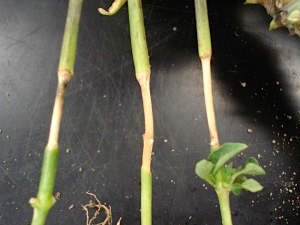
Sunscald injury on stems of newly transplanted pepper seedlings caused by stems laying against edges of black plastic mulch on hot, sunny days.

A transplant coming straight out of the greenhouse and directly into the field has not been exposed to much direct sunlight. Add that with black plastic mulch and you have a lot of heat aim directly at the tender tissue of the transplant. All transplants should have some time to harden-off outside the greenhouse before going into the field, a day or two, is better than none at all, the longer the better if time and space allow.

Sunscald typically appears as the slow bleaching out of the stem that will typically appear only on one side. Often this starts to appear right where the stem meets the black plastic mulch. In many cases if the stem is touching the mulch, the sunburn will start there and the transplant will begin to fall over as if the stem was broken.

When transplanting, make sure the holes in the plastic are wide enough to keep the stem from coming into contact with it. In some cases growers will fill in the transplant hole with soil to help keep the transplant upright before between-row herbicides are applied. ‘Leggy’ transplants that lay across plastic mulch and even those transplanted onto bare ground are prone to sunscald injury.
